Family Cultural Exploration in Kyoto
Day 2: Kyoto's Bamboo Whispers and Monkey Mischief: A Day in Arashiyama
Immerse yourself in Arashiyama's serene bamboo forest, ancient temples, and playful monkeys. A Kyoto adventure for the whole family!
Arashiyama's Enchanting Embrace
Today, Arashiyama unfolded before us like a meticulously painted scroll, revealing layers of natural beauty and cultural richness. From the towering bamboo forest to the mischievous monkeys atop the mountain, every moment was a sensory delight. It’s moments like these that remind me why I love to travel – to immerse myself in a place and let it change me, even in small ways.
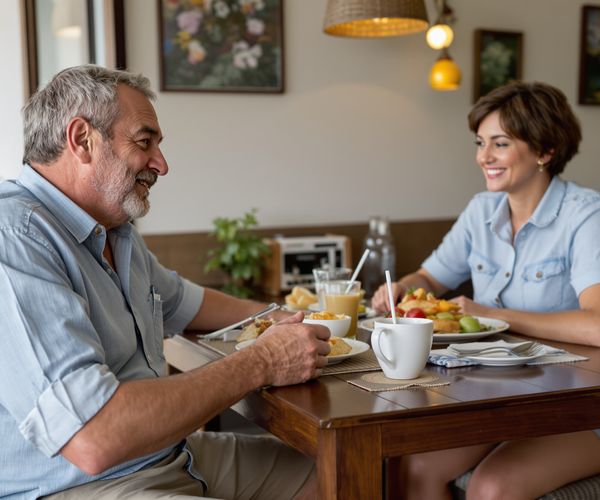
Our day began early, fueled by excitement and a hearty breakfast at Pound Sanjo-Kiyamachi. I must say, their offerings were a delightful start to what promised to be an adventurous day. The crisp morning air hinted at the warmth to come, perfect for exploring the wonders of Arashiyama. As we journeyed towards the famed Arashiyama Bamboo Forest, I couldn't help but reflect on the simple joys of traveling with family. Hans, ever the pragmatist, made sure we were well-prepared, while Lara's boundless curiosity kept us all on our toes.
The Arashiyama Bamboo Forest was truly breathtaking. Sunlight filtered through the towering stalks, casting an ethereal glow on the path. The gentle rustling of the bamboo created a soothing symphony, a world away from the bustling city. It was easy to get lost in the tranquility, a feeling I desperately needed after our hectic lives back in Dresden. Lara was especially captivated, her eyes wide with wonder as she reached out to touch the cool, smooth bamboo.

Experience the serene beauty of Arashiyama Bamboo Forest in Kyoto, where nature and tranquility come together in a breathtaking landscape.
Sometimes, the most profound experiences are found in the quietest corners of the world.
Navigating the bamboo forest was surprisingly easy. The paths were well-maintained, which was a relief, and it allowed for easy rolling. It was wonderful to be able to experience the towering bamboo. It was peaceful and calming to see the tall bamboo. I really enjoyed being immersed and learning more about bamboo. The Arashiyama Bamboo Grove dates back to the Heian period (794–1185), when Kyōto was Japan's imperial capital. Back then, the bamboo forest was part of aristocratic gardens, offering a peaceful retreat for the elite. In Japanese culture, bamboo symbolizes purity and resilience – its ability to bend without breaking represents inner strength during challenging times. I was pleased to see that the forest was quite accessible, allowing everyone to share in its beauty.
Next on our itinerary was Tenryu-ji, a temple nestled at the foot of the Arashiyama mountains. Founded in 1339 by Shogun Ashikaga Takauji, it was built to honor Emperor Go-Daigo. The temple's history is rich with tales of power struggles and spiritual devotion. The gardens, designed by Muso Soseki, were a masterpiece of Zen landscaping. The serene pond, framed by meticulously placed rocks and ancient pine trees, reflected the surrounding mountains like a mirror. I found myself drawn to the tranquility of the space, a welcome respite from the crowds.

Experience the serene beauty and rich history of Tenryu-ji Temple, a UNESCO World Heritage site in Kyoto, Japan, renowned for its stunning Zen gardens and architecture.
As I wandered through Tenryu-ji's gardens, I thought about the temple's resilience. It has been ravaged by fires eight times, yet it continues to stand, a testament to the enduring spirit of Kyoto. The garden, thankfully, survived in its original form. The azaleas were in full bloom, adding vibrant splashes of color to the serene landscape. The garden was created by the famous garden designer of the time, Muso Soseki, and is considered one of the best examples of “borrowed scenery”, leveraging the gorgeous Arashiyama Mountains beyond the temple and gardens. It was a calm day so we were able to see the beautiful reflection of greenery in the pond. The temple is known for its exquisite architecture and beautiful gardens, which are considered some of the best examples of Japanese garden design. The Hatto Hall has a huge circular Unryu ("Cloud Dragon") painted on its ceiling.
Lara, of course, was more interested in the koi fish swimming in the pond. She squealed with delight as they darted towards her, their scales shimmering in the sunlight. Hans, ever the patient father, helped her find the perfect spot to watch them, sharing stories of the temple's history.
Our final stop for the day was Iwatayama Monkey Park. The climb up the mountain was a bit challenging, especially in the midday sun, but the promise of playful monkeys kept us motivated. The path was well-maintained, though steep in sections, and I was grateful for the occasional bench where we could catch our breath. I would recommend wearing comfortable shoes, because it's a solid 15-30min hike up to the top of the hill where the monkeys are. As we ascended, we spotted a few monkeys scampering through the trees, their curious eyes watching our progress. We visited Arashiyama Monkey Park in October so the weather was bearable.
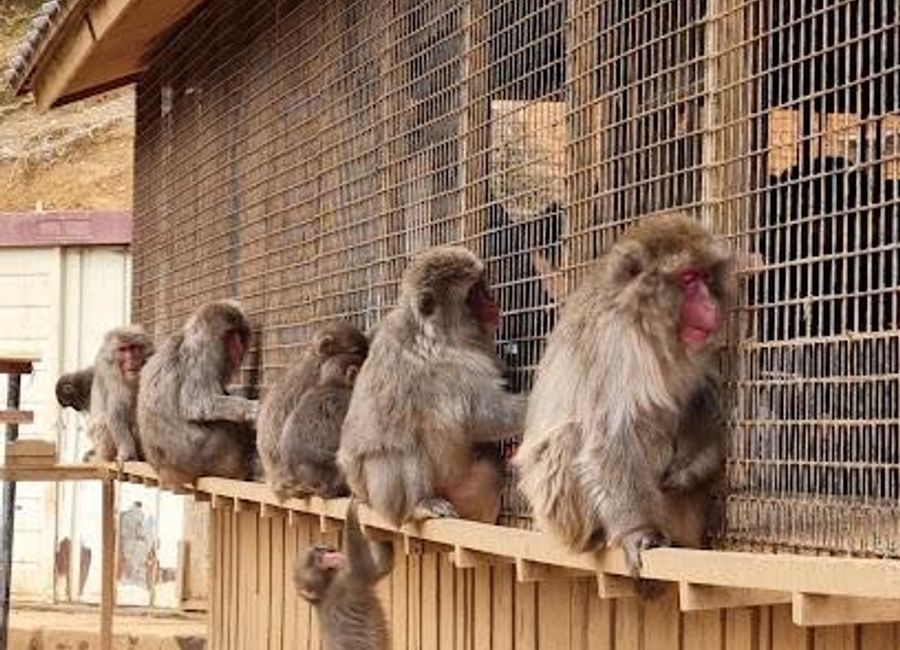
Discover the playful world of Japanese macaques at Arashiyama Monkey Park Iwatayama, a stunning wildlife experience in the heart of Kyoto.
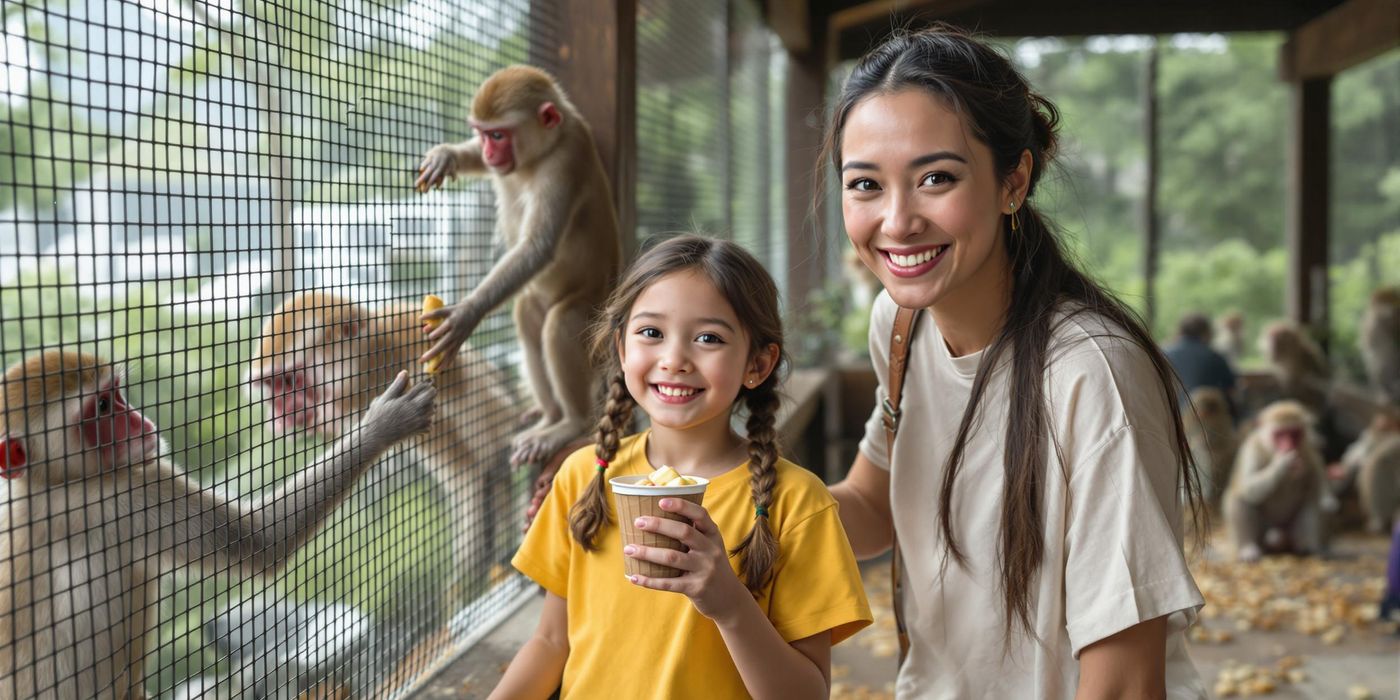
Reaching the summit, we were greeted by a troop of Japanese macaques, also known as snow monkeys. They roamed freely, unfazed by the presence of humans. It was an incredible experience to observe them in their natural habitat. Lara was thrilled, her initial apprehension quickly replaced by fascination. We bought some monkey snacks (usually little chunks of apple, bananas, or peanuts) at the park, and fed them from within an enclosure for our safety and theirs. The monkeys waiting for food at the feeding hut! It was something I'll remember for a long time. The park is located in Arashiyama, one of Kyoto's busiest tourist areas, and is easily accessible by train. It boasts about 120 snow monkeys, which are also called Japanese Macaque. They are native to Japan. At present, there are 130 wild Japanese macaque monkeys enjoying freedom in the park. And, visitors can observe those lives without the hindrance of fences or walls. Moreover, feed can be purchased at the park shop and fed to the monkeys. And, a visit in spring increases the chance of seeing newborn baby monkeys. The park also affords a brilliant view of Kyoto city, right across to the mountains on the eastern side. It’s regularly voted a must-see tourist site in Kyoto, and even Tom Cruise is a noted fan.
From the park, the panoramic views of Kyoto were simply stunning. The city stretched out before us, a tapestry of ancient temples and modern skyscrapers. I took a moment to soak it all in, feeling grateful for the opportunity to share this experience with my family. It was a reminder that travel is not just about seeing new places, but about creating lasting memories with the people we love.
After our monkey encounter, we descended the mountain, our legs tired but our spirits high. Before leaving Arashiyama, we stopped at Souvenir Kyoto. I found some charming trinkets to remind us of our visit. I picked up a few small handmade ceramics from local vendors. The Arashiyama area is full of less crowded gems waiting to be discovered.
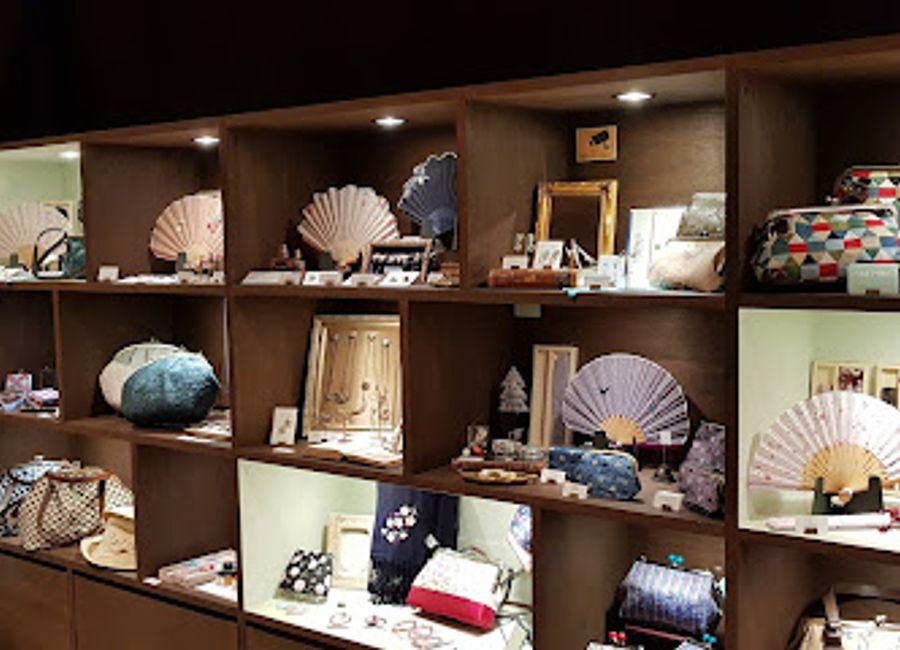
Discover unique Japanese souvenirs and cultural treasures at Souvenir Kyoto, where every item tells a story of tradition and craftsmanship.
As the sun began to set, we made our way to Gion Mikaku for dinner. This long-standing wagyu specialty restaurant is located along the Shirakawa River. They exclusively serve unbred Tajima female cattle, allowing you to enjoy the deliciousness prepared by skilled chefs on the teppan. The calm and traditional Japanese atmosphere in the store creates a sophisticated space that offers a high-quality experience. Along with grilled shabu-shabu and teppanyaki sukiyaki, you can enjoy the breathtaking seasonal views of Shirakawa, making for a blissful experience. The steak, carefully grilled on a hot plate, is characterized by its tender and juicy texture. You can enjoy the rich taste of the meat enhanced by our special sauces and condiments. It has been particular about the quality of Wagyu beef and cooking techniques, receiving high praise from food enthusiasts both domestically and internationally. The restaurant offers a course including a variety of delicious meat dishes. I savored every bite, reflecting on the day's adventures. Lara, exhausted from our explorations, fell asleep in my arms, her face flushed with contentment. Hans and I exchanged a knowing glance, a silent acknowledgment of the magic of travel.
Tomorrow, we plan to visit Fushimi Inari Taisha, with its thousands of vibrant red torii gates. I've heard it's a truly awe-inspiring sight, and I'm eager to experience it firsthand. I am also interested in seeing Toji Temple, and Tōfuku-ji Temple. We will also be having breakfast at Anzukko, lunch at Yasakadori Enraku, and dinner at Premium Pound Gion. We will end the day at Bar K6.
As I write this, nestled in our cozy hotel room at Hotel Rings Kyoto, I feel a sense of profound contentment. Today was a reminder that the best travel experiences are those that engage all our senses, that challenge us, and that connect us to the world and to each other. I am so grateful for these moments with my family, and I can't wait to see what adventures tomorrow will bring.
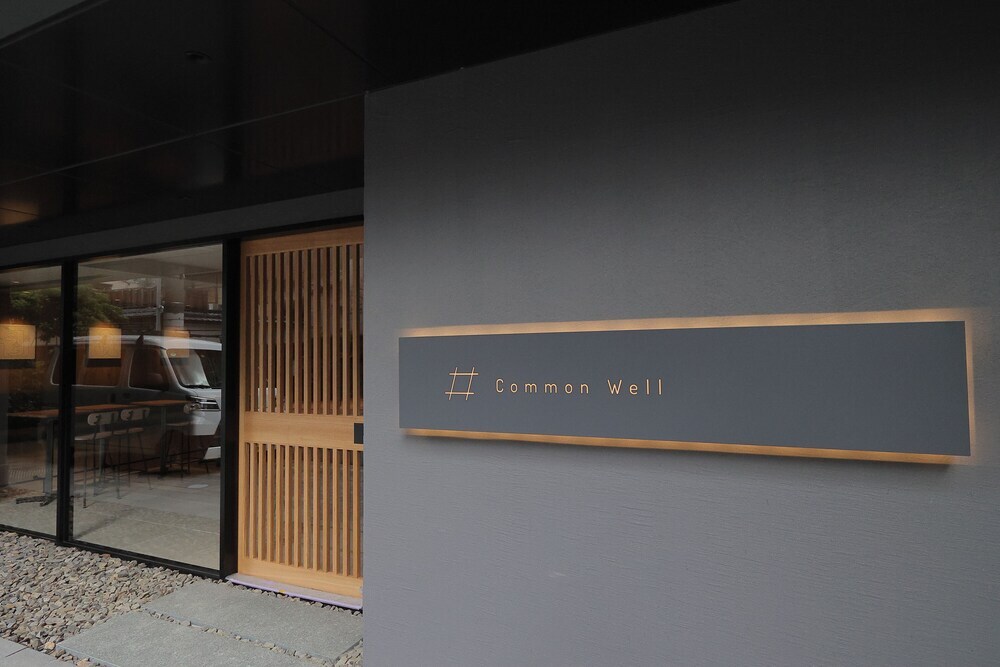
Discover comfort and convenience at Hotel Rings Kyoto, your ideal base for exploring the enchanting city of Kyoto with free Wi-Fi and on-site dining!
The weather in Kyoto in May is generally pleasant, with temperatures ranging from 68°F to 77°F (20°C to 25°C). It's a fantastic time to visit, as spring evolves into early summer, bringing forth plenty of warm sunshine and lush landscapes adorned with vivid colors. It is also the time of year with warmer water, with an average temperature above 76°F.
The Arashiyama Bamboo Forest is accessible to everyone. The paths are well-maintained, allowing easy navigation for wheelchairs and strollers. The path is paved with no steps. It is mostly paved and smooth. It’s quite uphill in parts. There is no gate or anything so can go as early as you want.
I am excited for what tomorrow will bring!


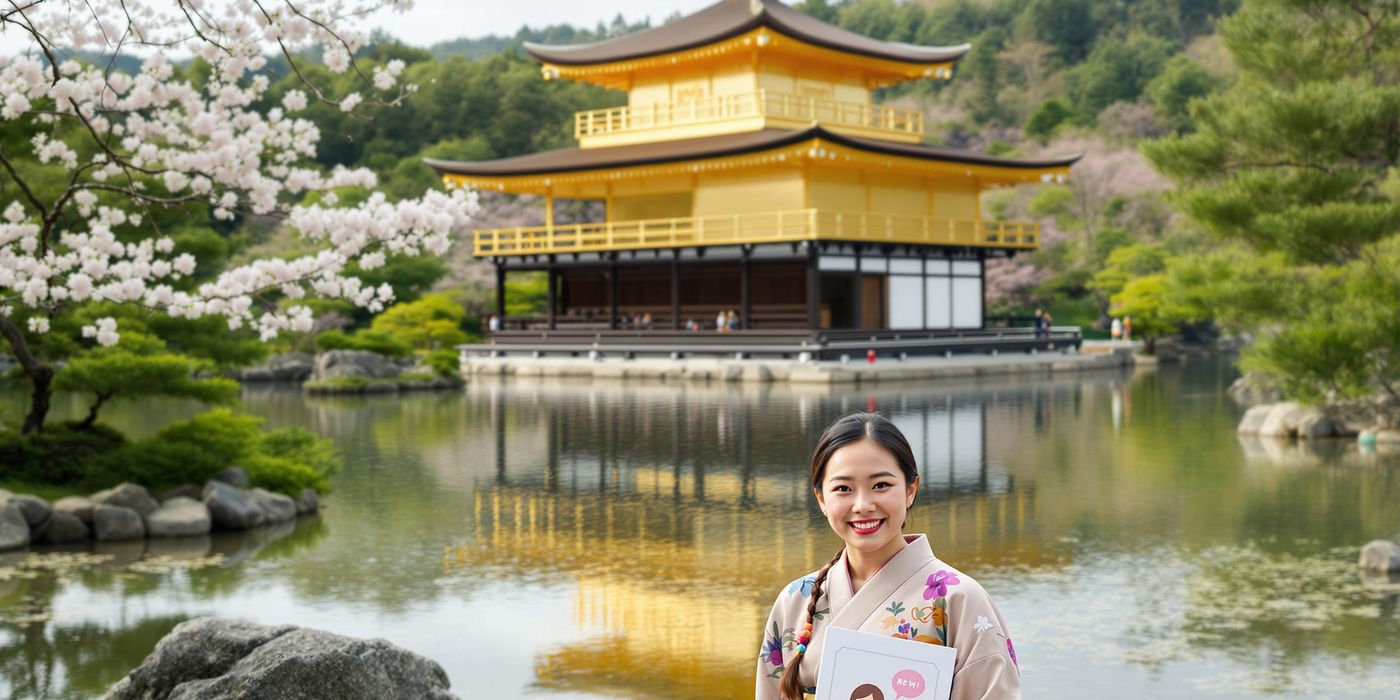
Explore the cultural treasures of Kyoto with family, from historic temples to serene gardens, while enjoying a comfortable stay at Hotel Rings Kyoto.
Meet this Featured Explorer
-
 Occupation:
Librarian specializing in Southeast Asian history and culture
Occupation:
Librarian specializing in Southeast Asian history and culture
-
 Country:
Germany
Country:
Germany
-
 Age:
46
Age:
46
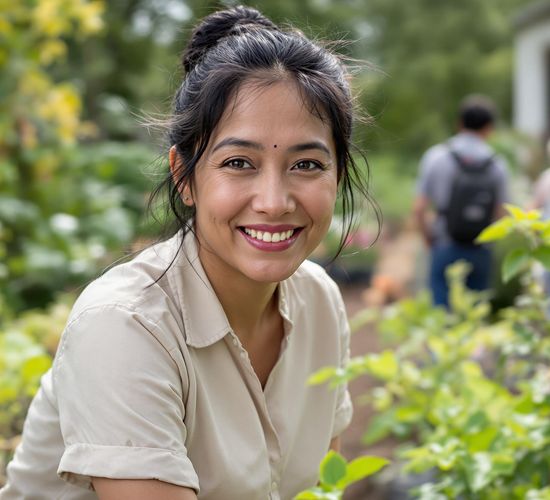
Sawasdee and hello! I'm Sophea, a librarian from Dresden with a heart deeply rooted in Cambodia. My blog is a journey through Southeast Asia and beyond, sharing my experiences, insights, and love for cultural exploration. Join me as I uncover hidden gems, savor exotic flavors, and connect with communities around the world. Together with my husband, Hans, and our daughter, Lara, we seek enriching adventures that broaden our horizons and create lasting memories. Through my writing, I hope to inspire you to embrace the world with curiosity, respect, and a sense of wonder.
- Southeast Asian history
- Khmer literature
- Buddhist philosophy
- Cultural preservation
- Community engagement
Find Similar Travel Diaries
Explore locations from this diary
-
Hotel Rings Kyoto
Discover comfort and convenience at Hotel Rings Kyoto, your ideal base for exploring the enchanting city of Kyoto with free Wi-Fi and on-site dining!
-
Arashiyama Bamboo Forest
Experience the serene beauty of Arashiyama Bamboo Forest in Kyoto, where nature and tranquility come together in a breathtaking landscape.
-
Tenryu-ji
Experience the serene beauty and rich history of Tenryu-ji Temple, a UNESCO World Heritage site in Kyoto, Japan, renowned for its stunning Zen gardens and architecture.
-
Arashiyama Monkey Park Iwatayama
Discover the playful world of Japanese macaques at Arashiyama Monkey Park Iwatayama, a stunning wildlife experience in the heart of Kyoto.
-
Pound Sanjo-Kiyamachi
Experience Kyoto's vibrant food scene with authentic yakiniku at Pound Sanjo-Kiyamachi, where every bite tells a delicious story.
-
Arash's Kitchen
Experience authentic Asian cuisine at Arash's Kitchen in Kyoto—a culinary delight for every traveler seeking unique flavors.
-
Gion Mikaku
Discover Gion Mikaku, where exceptional steak meets authentic Japanese culture in Kyoto's enchanting Gion district.
-
Souvenir Kyoto
Discover unique Japanese souvenirs and cultural treasures at Souvenir Kyoto, where every item tells a story of tradition and craftsmanship.