Equestrian statue of Friedrich Wilhelm III. Travel Guide
Free Guide: Discover Cologne's Prussian heritage at the Equestrian Statue of Friedrich Wilhelm III on Heumarkt, a historic square offering culture, events, and Rhineland charm in the heart of the city.


A brief summary of Equestrian statue of Friedrich Wilhelm III.
Discover Cologne's Prussian heritage at the Equestrian Statue of Friedrich Wilhelm III on Heumarkt, a historic square offering culture, events, and Rhineland charm in the heart of the city.
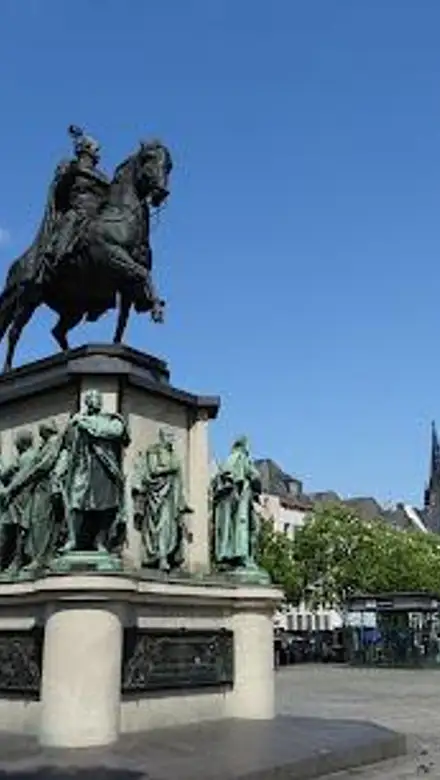
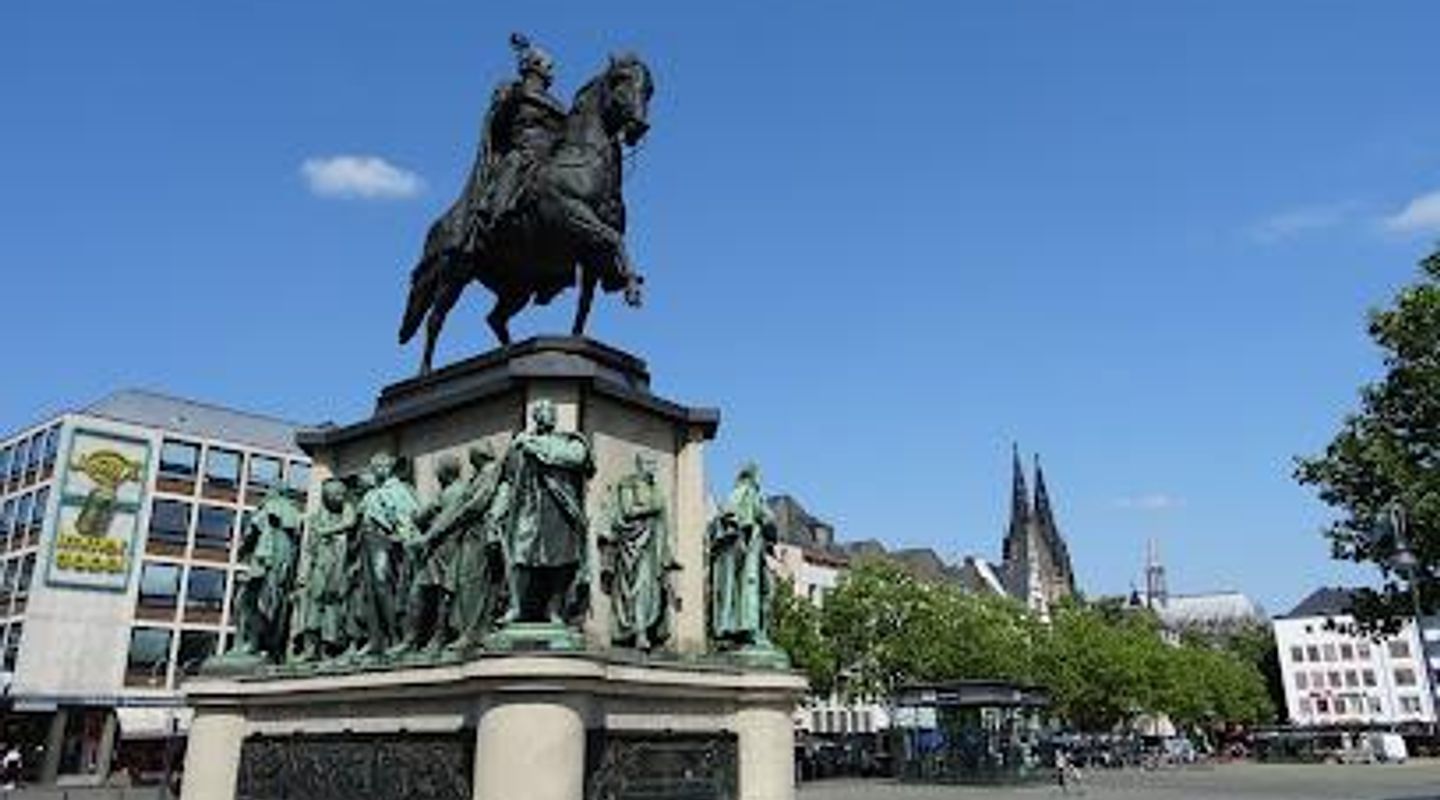
Dominating Cologne's Heumarkt, the equestrian statue of Friedrich Wilhelm III is a powerful symbol of Prussian history and the city's complex past. Erected in 1878, it honors King Friedrich Wilhelm III, who led Prussia through the Napoleonic Wars and initiated significant reforms. The statue, featuring the king on horseback surrounded by figures representing key figures and values of the era, has had a tumultuous history, surviving war damage and even being dismantled. Reconstructed and restored, it now stands as a reminder of Cologne's historical ties to Prussia and a focal point for reflection on the region's evolution. The statue is a popular spot for tourists and locals alike, offering a glimpse into the Rhineland's rich heritage.
Opening hours
- Every dayOpen 24 hours
Opening hours as listed on the venue’s Google Business Profile. Hours can change for services and special events, so check with the venue before you go.
- Address
- Heumarkt 43, 50667 Köln
Getting there
Public Transport
Walking
Taxi/Ride-Share
Driving
Discover more about Equestrian statue of Friedrich Wilhelm III.
Overview
The equestrian statue of Friedrich Wilhelm III, prominently situated on Cologne's Heumarkt, serves as a compelling reminder of the city's intricate relationship with Prussian history. This imposing monument commemorates King Friedrich Wilhelm III, who reigned over Prussia from 1797 to 1840, a period marked by significant upheaval and transformation in Europe. His reign encompassed the Napoleonic Wars, a time when Prussia faced military defeat and subsequent occupation by French forces. Despite these challenges, Friedrich Wilhelm III is also remembered for his role in leading the coalition against Napoleon and for initiating crucial reforms that modernized the Prussian state. The statue itself is a masterful work of art, reflecting the prevailing artistic styles and political sentiments of the late 19th century. The king is depicted astride a majestic horse, exuding an air of authority and determination. The bronze sculpture rests upon a substantial concrete pedestal clad in basalt, further emphasizing its grandeur. The monument's dimensions are impressive, with the equestrian figure reaching nearly 7 meters in height and the entire structure spanning approximately 12 meters in width. At the time of its completion, it ranked among the largest equestrian statues in the world. Surrounding the central equestrian figure are numerous figures and reliefs, each carefully crafted to convey specific aspects of Friedrich Wilhelm III's reign and the values of the Prussian state. These figures represent senior military officers, state reformers, and individuals who contributed to the economic and cultural progress of the Rhine Province. The arrangement of these figures reflects the historical social hierarchy, with the most prominent positions accorded to military leaders and key advisors. The history of the equestrian statue is as eventful as the era it commemorates. The monument was officially inaugurated on September 26, 1878, after decades of planning and fundraising. However, its existence was threatened during World War II when it sustained significant damage. The bronze elements were dismantled and stored, with some parts, including the king's head and the horse's tail, being preserved. In a controversial decision, the remaining bronze was melted down in 1959. Despite the destruction, efforts to restore the monument began in the 1980s. A synthetic copy was briefly erected in 1985, but it was soon destroyed by a storm. Undeterred, restoration initiatives continued, culminating in the monument's reconstruction and reinstallation on Heumarkt in 2009. The restored statue now stands as a testament to Cologne's resilience and its commitment to preserving its historical heritage. Today, the equestrian statue of Friedrich Wilhelm III is more than just a historical artifact; it is a focal point for reflection on Cologne's past and its place within the broader context of German history. The statue has become a popular gathering place for locals and tourists alike, offering a space for contemplation and appreciation of the city's rich cultural heritage. Its location on Heumarkt, a bustling square in the heart of Cologne's Old Town, ensures that it remains a prominent landmark for generations to come. Heumarkt itself is a vibrant and historically significant square. Its name, meaning "Hay Market," reflects its origins as a medieval marketplace for hay and other goods. Over the centuries, Heumarkt has evolved into a central hub for trade, social gatherings, festivals, and events. The square is surrounded by charming cafes, traditional restaurants, and unique shops, offering a variety of dining and shopping experiences. Notable attractions near Heumarkt include St. Maria im Kapitol church, the Farina Fragrance Museum, and the Wallraf-Richartz Museum, all of which contribute to the area's cultural richness. Throughout the year, Heumarkt hosts various cultural events and festivals, the most famous being the Cologne Carnival, with its grand parade passing through the square. During the Christmas season, Heumarkt transforms into a magical winter wonderland with a traditional Christmas market. The square is easily accessible by public transportation, with tram lines stopping directly at the "Heumarkt" station. Its central location also makes it a convenient starting point for exploring other popular attractions in Cologne, such as the Cologne Cathedral and the Rhine River. The equestrian statue of Friedrich Wilhelm III and the surrounding Heumarkt offer a unique blend of history, culture, and vibrant city life. Whether you are a history enthusiast, an art lover, or simply seeking a lively atmosphere, a visit to this iconic Cologne landmark is sure to be a memorable experience. The statue stands as a reminder of the past, while Heumarkt continues to evolve as a dynamic and engaging space for the present and future.
Evendo Review Centre
 Google
Guest reviews
Explore Equestrian statue of Friedrich Wilhelm III. on the map
A handpicked selection of must-see spots near Equestrian statue of Friedrich Wilhelm III., mapped for you.
Get your free copy of our complete guide to Equestrian statue of Friedrich Wilhelm III., delivered straight to you.
Everything on this page, from opening hours and how to get there to Eve’s tips and the best time to go, in one PDF you can read offline, print or share.
Already have an account? Sign in
Your Equestrian statue of Friedrich Wilhelm III. guide is ready.
We'll send it to · Not you? Sign out

Getting your guide ready…
We are putting together a fresh copy of the Equestrian statue of Friedrich Wilhelm III. guide. This can take up to a minute.
This can take a few moments. If your browser asks, choose Allow so the download can start. You'll find the guide in your Downloads folder.
Nothing happened? Download it again
Sorry, the guide is taking longer than usual. Please try again in a minute, or get it by email instead.
Other nearby places you may find interesting
The closest places of the same kind, if this one is not quite what you had in mind.
-
-
-
-
-


Swipe for more places
More to explore near Equestrian statue of Friedrich Wilhelm III.
-
 Best experiences near Equestrian statue of Friedrich Wilhelm III.
-
 Best hotels near Equestrian statue of Friedrich Wilhelm III.
-
 Best landmarks near Equestrian statue of Friedrich Wilhelm III.
-
 Best attractions near Equestrian statue of Friedrich Wilhelm III.
-
 Best shops near Equestrian statue of Friedrich Wilhelm III.
-
 Best restaurants near Equestrian statue of Friedrich Wilhelm III.
-
 Best bars near Equestrian statue of Friedrich Wilhelm III.


Do you manage this location?
Take control to get all the benefits, like improved information, better appearance, and stronger visibility across AI-powered discovery.
Explore more

Explore more of Eifel
Discover the Eifel in Germany: A serene escape featuring lush landscapes, historical sites, and outdoor adventures in the heart of Western Germany.
Explore Eifel
Explore more of Germany
Experience Germany: where history meets innovation, and urban energy blends with natural beauty. Discover diverse cultures, delicious cuisine, and stunning landscapes.
Explore Germany