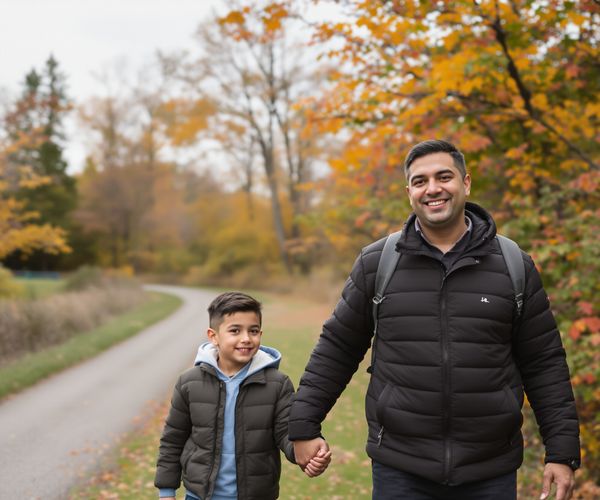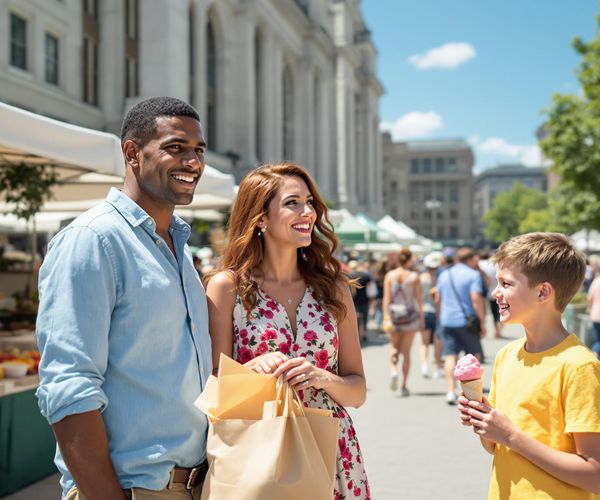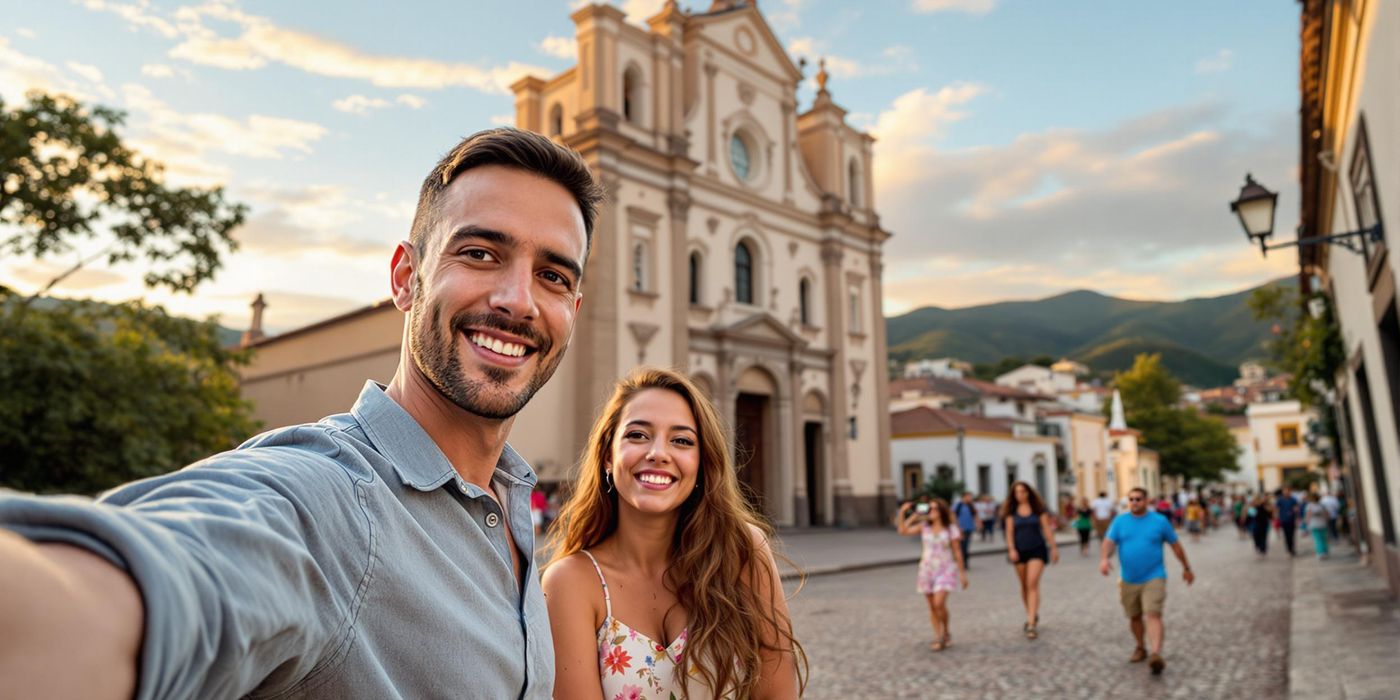
Olá, fellow travelers! Jose Silva here, your guide to capturing those unforgettable travel moments through the lens. As someone who grew up surrounded by the baroque architecture of Ouro Preto, Brazil, and now explores the historical sites of Kingston, Canada, I've learned a thing or two about taking travel photos that tell a story. Don't worry if you're just starting out; these tips are designed for beginners like you!
Understanding Your Camera Basics
Let's start with the fundamentals. Think of your camera as a tool to paint with light. Three key settings control how much light enters your camera: aperture, shutter speed, and ISO.
- Aperture: This controls the size of the lens opening. A wider aperture (smaller f-number like f/2.8) lets in more light and creates a shallow depth of field, blurring the background. This is great for portraits where you want to isolate your subject.
- Shutter Speed: This is the amount of time the camera's shutter is open, exposing the sensor to light. A fast shutter speed (like 1/500s) freezes motion, perfect for capturing action shots. A slow shutter speed (like 1 second) lets in more light and can create motion blur, ideal for capturing the movement of water or light trails.
- ISO: This measures the sensitivity of your camera's sensor to light. A low ISO (like 100) is best for bright conditions and produces the cleanest images. A high ISO (like 3200) is useful in low light, but it can introduce noise or grain into your photos.
Before your trip, spend some time experimenting with these settings. Get comfortable adjusting them in different lighting conditions. The more you practice, the more intuitive it will become. Don't be afraid to switch to manual mode (often labeled as 'M' on your camera dial). It gives you full control over your settings and allows you to achieve exactly the look you want.
Composition Techniques for Stunning Shots
Composition is how you arrange elements within your frame to create a visually appealing image. Here are a few techniques to elevate your travel photos:
- Rule of Thirds: Imagine dividing your frame into nine equal parts with two horizontal and two vertical lines. Place key elements of your scene along these lines or at their intersections. This creates a more balanced and engaging composition than simply centering your subject.
- Leading Lines: Use lines to guide the viewer's eye through the image and towards your subject. Roads, rivers, fences, and even shadows can serve as leading lines, adding depth and interest to your photos.
- Framing: Use natural elements like trees, arches, or doorways to frame your subject. This draws attention to the main point of interest and adds context to the scene.
- Experiment with Angles: Don't always shoot from eye level. Try shooting from a low angle to make your subject appear larger and more imposing, or from a high angle to provide a broader perspective. Get creative and find unique viewpoints.
Mastering Light: The Key to Great Photos
Light is arguably the most important element in photography. Understanding how to work with light can dramatically improve your travel photos.
- Golden Hour: The hour after sunrise and the hour before sunset are known as the 'golden hour' because the light is warm, soft, and flattering. This is the ideal time to capture landscapes and portraits with a beautiful, natural glow.
- Handling Harsh Light: Midday sun can create harsh shadows and blown-out highlights. If you're shooting in bright sunlight, try to find shade or use it creatively to your advantage. Look for opportunities to capture dramatic shadows or silhouettes.
- Overcast Days: Don't despair if the weather is cloudy! Overcast days provide soft, even lighting that is perfect for portraits and detail shots. The diffused light eliminates harsh shadows and allows you to capture accurate colors.
- Tripods for Low Light: When shooting in low light, a tripod is your best friend. It allows you to use longer shutter speeds without blurring your images. This is essential for capturing sharp photos in museums, churches, or at night.
Incorporating Cultural Elements
Travel photography is about more than just capturing pretty pictures; it's about telling a story and sharing the culture of the places you visit. Here are some tips for incorporating cultural elements into your photos respectfully:
- Research Local Customs: Before you start snapping away, take the time to learn about the local customs and traditions. Are there any restrictions on photography in certain areas? Are there any cultural sensitivities you should be aware of?
- Seek Permission: Always ask for permission before taking photos of people, especially in more traditional communities. A simple gesture and a smile can go a long way. Respect their wishes if they decline.
- Capture Cultural Events: Festivals, parades, and traditional ceremonies offer fantastic opportunities to capture the richness and diversity of local cultures. Be mindful of your surroundings and avoid being intrusive.
- Ethical Considerations: Be mindful of stereotypes and avoid representing cultures in a way that is disrespectful or inaccurate. Aim to capture authentic moments and tell genuine stories.
By following these simple tips, you'll be well on your way to capturing stunning travel photos that not only document your adventures but also tell a story and celebrate the beauty of the world around us. Boa viagem (good travels)!
Essential photography tips to capture memorable travel moments, with an emphasis on historical and cultural sites. Focus on camera settings, composition, lighting, and cultural elements.