

Babur Garden, Kabul Travel Guide
Free Guide: Explore Bagh-e Babur, Kabul's historical Mughal garden: a serene escape with stunning views, rich history, and architectural beauty.


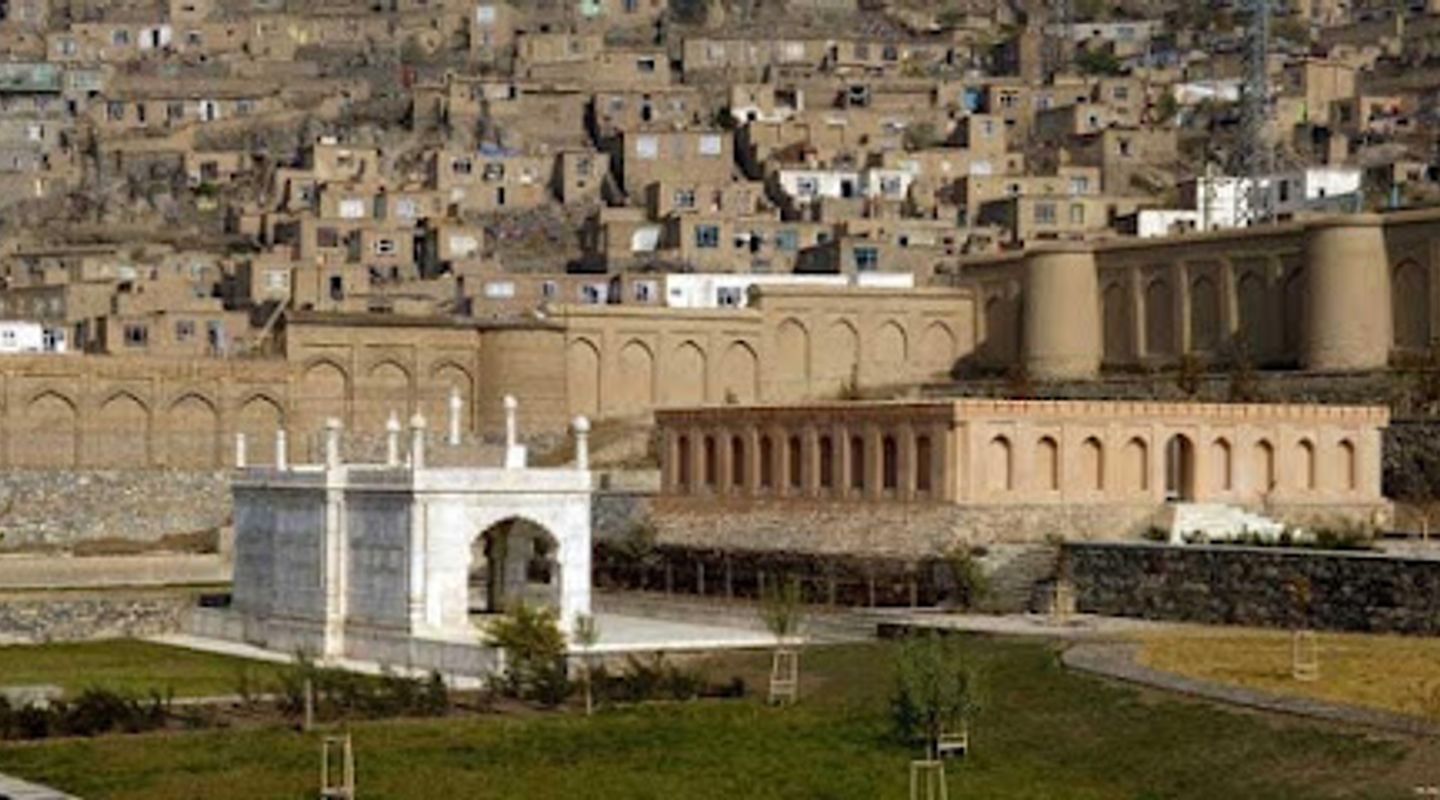
A brief summary of Babur Garden
Explore Bagh-e Babur, Kabul's historical Mughal garden: a serene escape with stunning views, rich history, and architectural beauty.
Bagh-e Babur, a historic garden in Kabul established in 1528 by the first Mughal Emperor Babur, serves as his final resting place [4, 17]. This terraced garden, reflecting Islamic and Timurid architectural styles, offers a tranquil escape with its landscaped gardens, water features, and historical monuments [17].
Opening hours
- Every day8 am–4 pm
Opening hours as listed on the venue’s Google Business Profile. Hours can change for services and special events, so check with the venue before you go.
- Address
- 34.503°N 69, Block 157-158 Walkway, Kabul, Afghanistan
- Phone
Getting there
Taxi
Walking
Discover more about Babur Garden
Overview
Bagh-e Babur, also known as Babur's Garden, is a significant historical site in Kabul, Afghanistan, with a history spanning nearly five centuries [5]. Established around 1528 by Zahir-ud-din Muhammad Babur, the founder of the Mughal Empire, the garden served as his final resting place, reflecting his deep appreciation for nature [4, 17]. Babur, who loved Kabul, requested to be buried in a roofless tomb there [2, 11].The garden is designed as a series of 15 stepped terraces on a hillside, arranged along a central axis that points towards Mecca [2, 3]. From the top terrace, visitors can enjoy a panoramic view of the garden, the city, and the surrounding mountains [3]. The site showcases Mughal garden design, featuring water channels, fountains, and pools, creating a harmonious atmosphere [17]. Shah Jahan, one of Babur's heirs, added features such as a marble platform with lattice work, a mosque and a caravanserai [3].Over the centuries, Bagh-e Babur has undergone several transformations. In the 1930s, it was converted into a public park with the construction of pools and flower gardens [2]. However, the garden suffered significant damage during the Afghan Civil War in the 1990s [7, 11]. Restoration efforts, which began in 2002, have focused on revitalizing the garden, preserving its historical monuments, and promoting it as a cultural and recreational space [5, 17]. Today, Bagh-e Babur is a popular destination for locals and tourists alike, attracting thousands of visitors each year [4, 8]. It hosts cultural and artistic festivals and provides a tranquil environment for families and friends to spend time in nature [4]. The garden contains seven historical monuments, including the Queen's Palace, Babur Shah's tomb, Shah Jahan's tomb, a historic wall, a water canal and a caravanserai [5].
Evendo Review Centre
 Google
Guest reviews
Explore Babur Garden on the map
A handpicked selection of must-see spots near Babur Garden, mapped for you.
Get your free copy of our complete guide to Babur Garden, delivered straight to you.
Everything on this page, from opening hours and how to get there to Eve’s tips and the best time to go, in one PDF you can read offline, print or share.
Already have an account? Sign in
Your Babur Garden guide is ready.
We'll send it to · Not you? Sign out

Getting your guide ready…
We are putting together a fresh copy of the Babur Garden guide. This can take up to a minute.
This can take a few moments. If your browser asks, choose Allow so the download can start. You'll find the guide in your Downloads folder.
Nothing happened? Download it again
Sorry, the guide is taking longer than usual. Please try again in a minute, or get it by email instead.
Other nearby places you may find interesting
The closest places of the same kind, if this one is not quite what you had in mind.
-
-

-
-
-


Swipe for more places
More to explore near Babur Garden

 Best experiences near Babur Garden
 Best hotels near Babur Garden
 Best landmarks near Babur Garden
 Best attractions near Babur Garden
 Best shops near Babur Garden
 Best restaurants near Babur Garden
 Best bars near Babur Garden
Do you manage this location?
Take control to get all the benefits, like improved information, better appearance, and stronger visibility across AI-powered discovery.
Explore more

Explore more of Kabul
Discover Kabul: A city where ancient history meets modern vibrancy, offering rich culture, beautiful gardens, and unforgettable experiences in the heart of Afghanistan.
Explore Kabul
Explore more of Afghanistan
Discover Afghanistan's rich history, stunning landscapes, and diverse cultures. From ancient cities to breathtaking nature, this Central Asian gem offers a unique travel experience.
Explore Afghanistan
