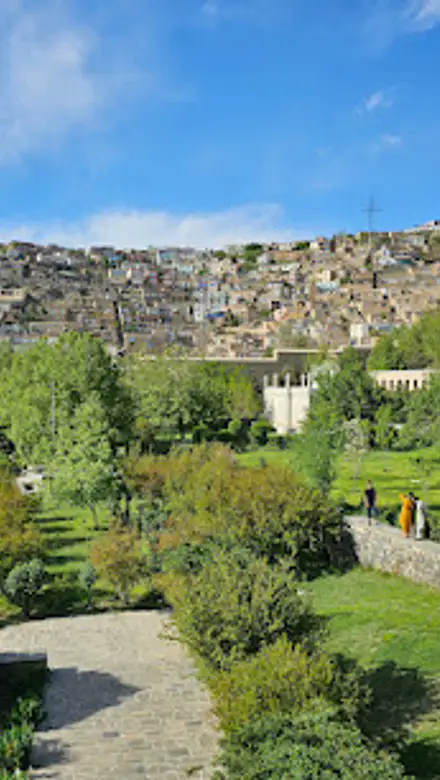
Babur Garden Travel Guide
Free Guide: Explore Kabul's serene Babur Garden, the final resting place of the Mughal emperor and a testament to Afghan history and beauty.


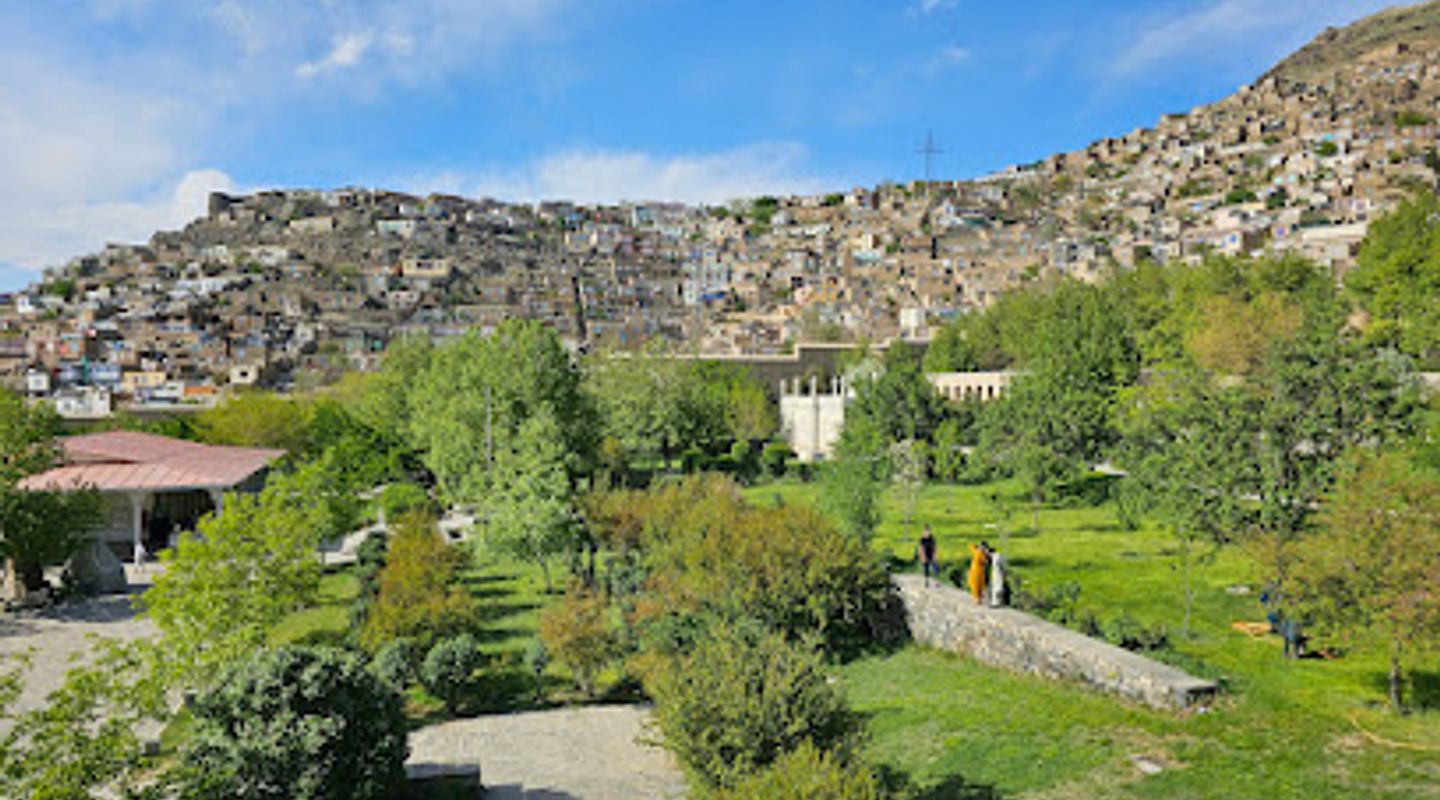
A brief summary of Babur Garden
Explore Kabul's serene Babur Garden, the final resting place of the Mughal emperor and a testament to Afghan history and beauty.
Babur Garden, also known as Bagh-e Babur, is a historic park in Kabul, Afghanistan, established in the 16th century by the first Mughal Emperor, Babur [6, 17]. Serving as his final resting place, the garden is a serene retreat showcasing terraced lawns, flowing water, and diverse flora [6]. It is a significant cultural and historical landmark, attracting locals and tourists alike [4, 5].
Opening hours
- Every day8 am–4 pm
Opening hours as listed on the venue’s Google Business Profile. Hours can change for services and special events, so check with the venue before you go.
- Address
- 34.503°N 69, Block 157-158 Walkway, Kabul, Afghanistan
- Phone
Getting there
Walking
Public Transport
Taxi
Discover more about Babur Garden
Overview
Bagh-e Babur, or Babur's Garden, is a significant historical site in Kabul, Afghanistan, offering a tranquil retreat and a glimpse into the region's rich cultural heritage [11]. Established by Zahiruddin Muhammad Babur, the founder of the Mughal dynasty, in the early 16th century, the garden served as his final resting place and became a symbolic location for the Mughal empire [6, 11, 17]. Located on the southwestern slopes of the Sher Darwaza Mountain, the 11-hectare garden is a terraced landscape that has evolved through various periods, reflecting Timurid, Mughal, and more recent influences [11, 13].Babur, who captured Kabul in 1504, had a deep appreciation for gardens and personally designed several in his capital [11]. Bagh-e Babur was his favorite, and he expressed his desire to be buried there [11]. Although he initially died in Agra in 1530, his remains were moved to Kabul and interred in the garden around 1540 [11]. The garden's layout originally featured a central water channel, characteristic of Timurid char baghs, with running water, flowers, and fruit trees [11, 13]. This design influenced later Mughal funerary gardens [11].Over the centuries, Babur's Garden underwent several transformations. His successors, including Jahangir and Shah Jahan, contributed to its development [3, 11]. Jahangir ordered the construction of walls around the gardens in Kabul, a prayer platform in front of Babur's grave, and an inscribed headstone [3, 11, 12]. Shah Jahan erected a marble screen around Babur's tomb and built a mosque on the terrace below in 1647 [2, 11]. The mosque, crafted from white marble, features intricate carvings and a fine inlaid marble inscription [11].The garden's design includes fifteen terraces descending westward towards the Kabul River [3, 11, 13]. Each terrace forms a small garden with pomegranates, roses, and flowering shrubs planted among stone paving around a water pool [11]. Babur's memoirs provide valuable insights into the types of trees he planted, including apricots, apples, cherries, and peaches [11].Bagh-e Babur fell into disrepair during the decline of the Mughal Empire and suffered damage in the 1842 earthquake [13]. Amir Abdur Rahman Khan invested in the garden in the late nineteenth century and refashioned it in a European manner [2, 13]. A garden pavilion was built over the central axis, which was remodeled with seven parterres and fountains [13]. Bagh-e Babur became a public park during the reign of Muhammad Nadir Shah (1929-1933) [4, 13]. After the fall of the Taliban regime, the garden underwent a process of restoration beginning in 2002 with the support of international organizations, such as the Aga Khan Trust for Culture [6, 15, 17].
Evendo Review Centre
 Google
Guest reviews
Explore Babur Garden on the map
A handpicked selection of must-see spots near Babur Garden, mapped for you.
Get your free copy of our complete guide to Babur Garden, delivered straight to you.
Everything on this page, from opening hours and how to get there to Eve’s tips and the best time to go, in one PDF you can read offline, print or share.
Already have an account? Sign in
Your Babur Garden guide is ready.
We'll send it to · Not you? Sign out

Getting your guide ready…
We are putting together a fresh copy of the Babur Garden guide. This can take up to a minute.
This can take a few moments. If your browser asks, choose Allow so the download can start. You'll find the guide in your Downloads folder.
Nothing happened? Download it again
Sorry, the guide is taking longer than usual. Please try again in a minute, or get it by email instead.
Other nearby places you may find interesting
The closest places of the same kind, if this one is not quite what you had in mind.
-
-
-
-
-


Swipe for more places
More to explore near Babur Garden

 Best experiences near Babur Garden
 Best hotels near Babur Garden
 Best landmarks near Babur Garden
 Best attractions near Babur Garden
 Best shops near Babur Garden
 Best restaurants near Babur Garden
 Best bars near Babur Garden
Do you manage this location?
Take control to get all the benefits, like improved information, better appearance, and stronger visibility across AI-powered discovery.
Explore more
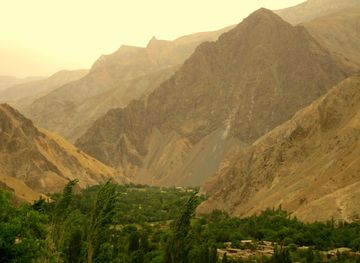
Explore more of Sar-e Pol
Discover Sar-e Pol, Afghanistan's hidden gem, offering a captivating blend of natural beauty, historical sites, and authentic Afghan culture.
Explore Sar-e Pol
Explore more of Afghanistan
Discover Afghanistan's rich history, stunning landscapes, and diverse cultures. From ancient cities to breathtaking nature, this Central Asian gem offers a unique travel experience.
Explore Afghanistan