
Background

Dancy-Polk House: A Window to Decatur's Past

Discover Decatur's oldest home, the Dancy-Polk House, a survivor of the Civil War and a testament to the city's enduring spirit.

4.8

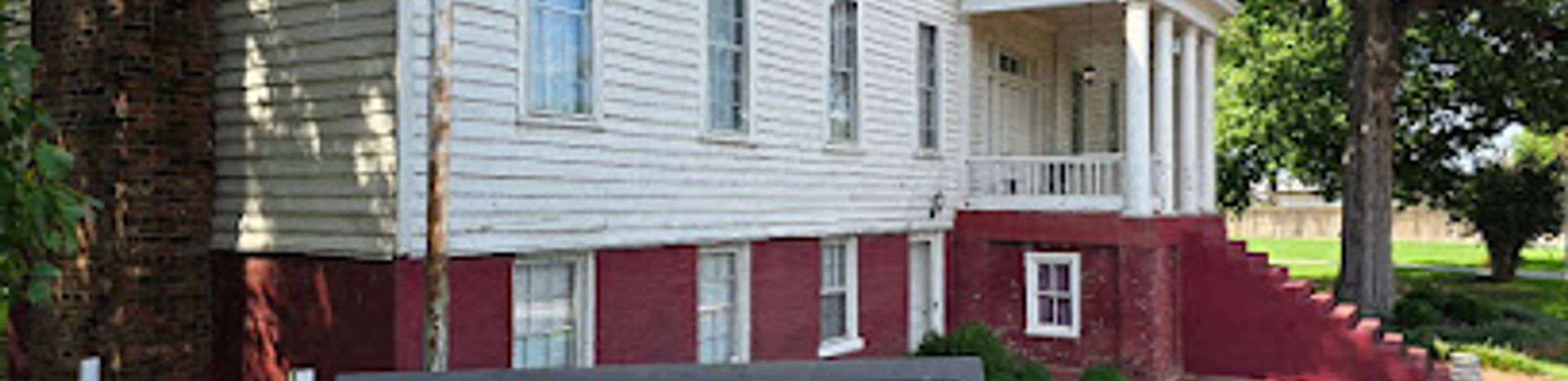
The Dancy-Polk House in Decatur, Alabama, is a historic landmark dating back to 1829. It is one of only four structures in the city that survived the Civil War's Battle of Decatur and offers a glimpse into the lives of early settlers and the impact of the war on the region.

A brief summary to Dancy-Polk House

  • 901 Railroad St NW, Decatur, Alabama, 35601, US

Local tips

  • Check the Decatur Convention and Visitors Bureau website for seasonal events and guided tour schedules.
  • Combine your visit with a walk through Decatur's historic downtown to see other well-preserved antebellum architecture.
  • Consider visiting during the annual Civil War reenactment for a more immersive historical experience.
widget icon

Getting There

  • Walking

    From the Historic Decatur Union Depot, walk west along Church Street NW. Cross the railroad tracks using the pedestrian bridge. The Dancy-Polk House will be on your left, at the corner of Church Street NW and Railroad Street NW. This is a short walk of approximately 5 minutes. No costs are associated with this approach.

  • Driving

    If driving from downtown Decatur, take US-31/6th Ave NW north. Turn left onto Railroad St NW. The Dancy-Polk House will be on the left. Limited street parking is available near the house. Parking is free.

Unlock the Best of Dancy-Polk House

Buy tickets

    No tickets available

Book tours with entry

    No tours available

Book tours without entry

    No tours available

Discover more about Dancy-Polk House

The Dancy-Polk House, located at 901 Railroad St NW in Decatur, Alabama, is more than just a building; it's a portal into the city's rich and complex history. Constructed in 1829 for Colonel Francis Dancy, a prominent early settler, this stately residence stands as the oldest surviving structure in Decatur and one of only four to weather the storm of the Civil War. Its walls have witnessed pivotal moments in American history, and its very existence is a testament to the enduring spirit of the city. Architecturally, the Dancy-Polk House exemplifies the Early Classical Revival style, a design that reflects the elegance and refinement of the era. The two-story frame house features a symmetrical facade, a hipped roof, and a striking double-height portico adorned with Doric columns. These architectural details offer a glimpse into the aesthetic sensibilities of the early 19th century and the aspirations of those who sought to create a refined society in the burgeoning American South. When completed in 1829, the Dancy-Polk house was one of the most formally composed residences in Alabama. Its treatment and massing echoed not only older American and British design precepts but also, faintly and distantly, the far-ranging influence of Palladio and the Renaissance villas of the Veneto. Originally built as a private residence, the Dancy-Polk House remained in the Dancy family for several decades. However, its role evolved over time, reflecting the changing fortunes of the city. In 1872, it transitioned into a boarding house and hotel, catering to travelers arriving by train at the nearby L&N passenger depot. During the Civil War, the Dancy-Polk House found itself at the heart of the conflict. Decatur was a strategic location, and the house occupied a prominent position within the Union fortifications during the Battle of Decatur in October 1864. It served as officers' quarters for Federal troops, further embedding it in the narrative of the war. Scars of this period remain, with local legends recounting damage to the main staircase inflicted by Federal cavalrymen and a column that was damaged by a cannonball.

Popular Experiences near Dancy-Polk House

Popular Hotels near Dancy-Polk House

Select Currency