Father Kino Monument, Tucson Travel Guide
A historical landmark in Tucson honoring Father Kino, a Jesuit missionary who shaped the Southwest's cultural landscape.
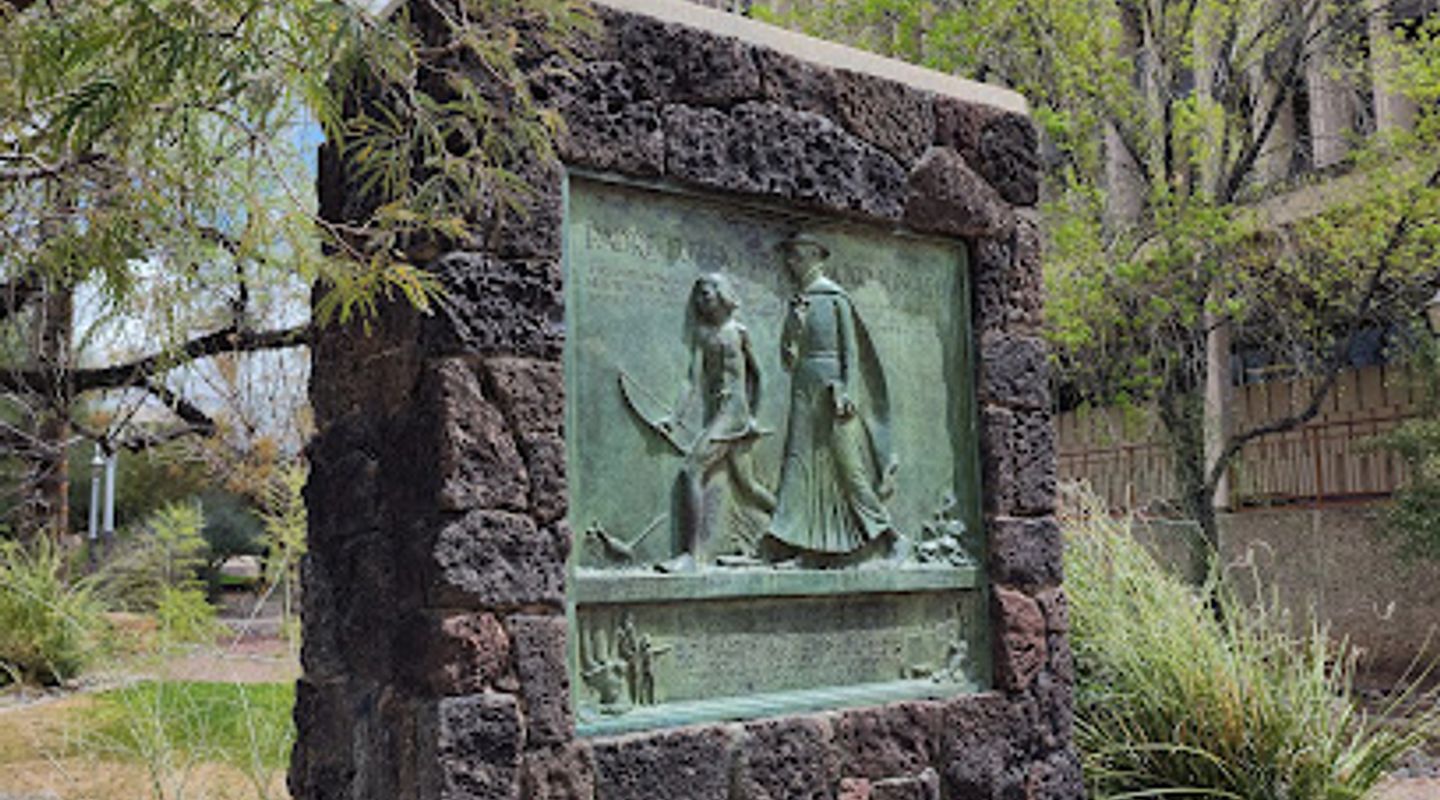
The Father Kino Monument in downtown Tucson honors Eusebio Francisco Kino, a Jesuit missionary, explorer, and cartographer who significantly impacted the cultural and spiritual landscape of the Southwestern United States and Northern Mexico in the late 17th and early 18th centuries. The monument features a statue of Father Kino and offers a serene space for reflection on his contributions.
A brief summary to Father Kino Monument
- 140 N Main Ave, Tucson, Downtown, Arizona, 85701, US

Know before you go
Hi, I'm Eve. Here are a few practical things to know before exploring Father Kino Monument.
- Visit in the early morning or late afternoon for the best lighting and fewer crowds.
- Take time to read the educational plaques to fully appreciate Father Kino's contributions to the region.
- Combine your visit with a tour of nearby historical sites to enrich your understanding of Tucson's history.
Do you manage this location?
Take control to get all the benefits, like improved information, better appearance, and stronger visibility across AI-powered discovery. Learn more about listing your business on Evendo
Activate your presenceOther nearby places you may find interesting
The closest places of the same kind, if this one is not quite what you had in mind.
Explore Father Kino Monument on the Map
A handpicked selection of must-see spots near Father Kino Monument, mapped for you.
Getting There
-
Walking
If you are in downtown Tucson, the Father Kino Monument is easily accessible by foot. From the Tucson Convention Center at 260 S Church Ave, walk north on Church Ave until you reach Congress St, then turn right. Continue east on Congress St for about four blocks until you reach Main Ave. Turn left onto Main Ave and walk north for about two blocks. The monument is located at 140 N Main Ave on your right.
-
Public Transport
From downtown Tucson, you can take the Sun Tran bus #1 or #3. Board the bus at the nearest station, such as the one at Congress St & Stone Ave. Ride the bus for approximately 15-20 minutes and get off at the stop at Main Ave & Pennington St. From there, walk north on Main Ave for about two blocks until you reach the Father Kino Monument at 140 N Main Ave. As of July 2025, Sun Tran rides are fare-free.
-
Parking
If driving, there are metered parking spaces available on the streets near the Father Kino Monument. Metered parking costs $1 per hour and is enforced Monday through Friday from 8 a.m. to 5 p.m.. Payment can be made with coins, credit/debit cards, or the GoTucson Parking mobile app. Several parking garages are also located within walking distance, including the La Placita Garage at 211 S Church Ave.
Discover more about Father Kino Monument













Your all‑in‑one travel companion app
Explore expert travel guides, compare and book tours, experiences, hotels, and more—all from the palm of your hand. Download now for seamless trip planning wherever your wanderlust takes you.


Explore More of Tucson

Looking beyond Father Kino Monument? Discover Tucson for broader travel guides, local hot-spots, and regional highlights.
Explore Tucson