

Lalbagh Fort, Dhaka Travel Guide
Free Guide: Explore Lalbagh Fort: Dhaka's iconic 17th-century Mughal marvel, blending history, architecture, and untold stories by the Buriganga River.


A brief summary of Lalbagh Fort
Explore Lalbagh Fort: Dhaka's iconic 17th-century Mughal marvel, blending history, architecture, and untold stories by the Buriganga River.
Lalbagh Fort, an incomplete 17th-century Mughal fortress in Dhaka, Bangladesh, offers a glimpse into the grandeur of the Mughal era. Construction began in 1678 by Prince Muhammad Azam, son of Emperor Aurangzeb, but was never finished, leaving behind a fascinating blend of completed and incomplete structures.
Opening hours
- Mon2 pm–5 pm
- Tue10 am–1 pm, 1:30 pm–5 pm
- Wed10 am–1 pm, 1:30 pm–5 pm
- Thu10 am–1 pm, 1:30 pm–5 pm
- Fri10 am–12:30 pm, 3 pm–5 pm
- Sat10 am–1 pm, 1:30 pm–5 pm
- SunClosed
Opening hours as listed on the venue’s Google Business Profile. Hours can change for services and special events, so check with the venue before you go.
- Address
- Lalbagh Rd, Dhaka 1211
- Website
Getting there
Public Transport
Taxi/Ride-Share
Walking
Discover more about Lalbagh Fort
Overview
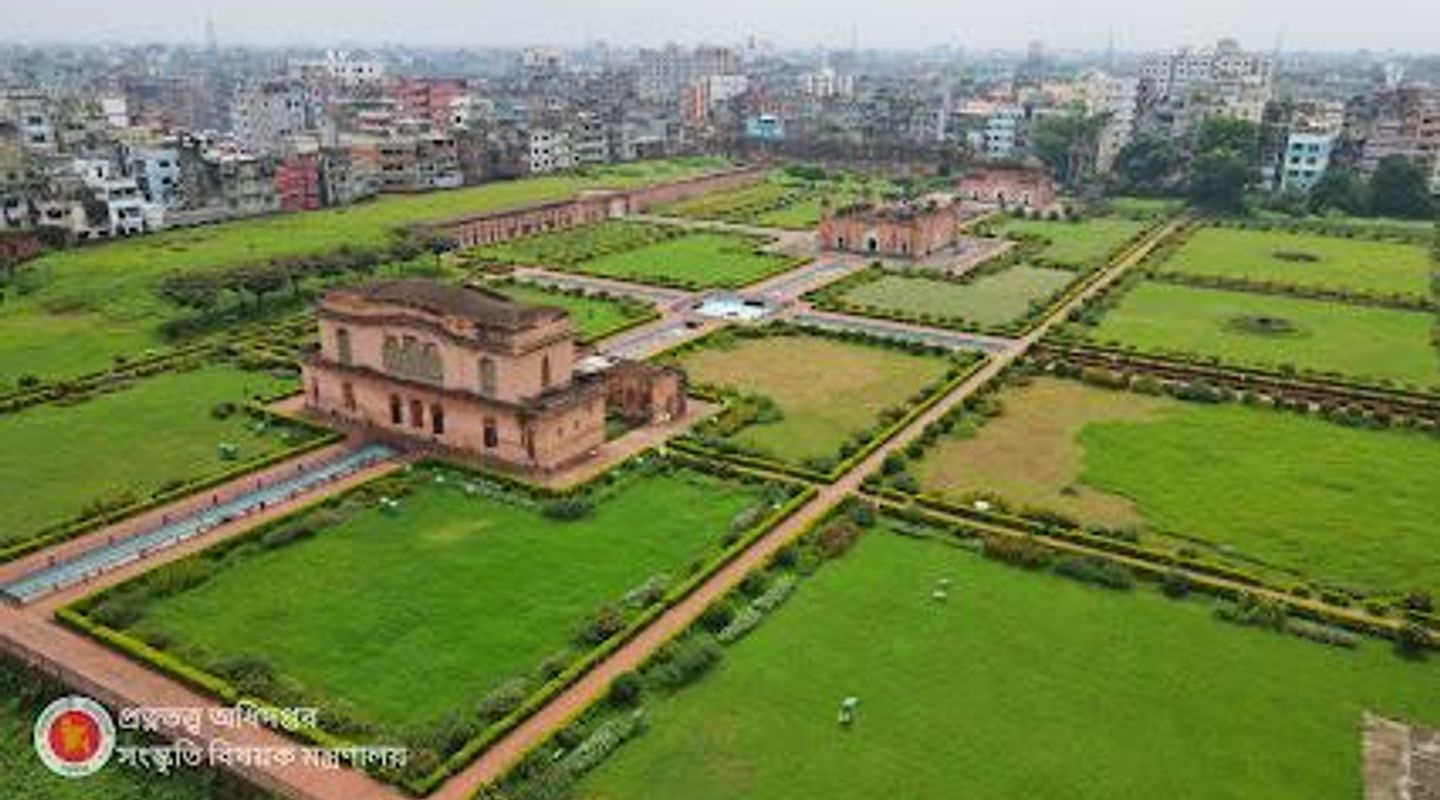
Lalbagh Fort, also known as Fort Aurangabad, stands as a magnificent yet unfinished testament to Mughal architecture in Dhaka. Situated on the Buriganga River's bank, this 17th-century fort was envisioned as a strategic and palatial complex. Prince Muhammad Azam, son of Emperor Aurangzeb, initiated its construction in 1678 during his vice-royalty in Bengal. However, his stay was cut short, and the fort remained incomplete when he was summoned back to Delhi by his father.Shaista Khan, the new governor, continued the work, but the untimely death of his daughter, Pari Bibi, in 1684 led him to deem the fort unlucky, halting construction altogether. This abandonment resulted in the unique blend of finished and unfinished structures that visitors can explore today. Key features include the Mausoleum of Pari Bibi, a white marble structure with a central tomb; the Diwan-i-Aam, or Hall of Audience; and the Quilla Mosque, showcasing intricate tile work and floral motifs.Recent excavations have revealed additional structures, including a network of underground tunnels, utility buildings, and a roof garden with fountains. The fort's southern gateway stands out as an impressive three-story structure, exemplifying Mughal design. Despite its incomplete state, Lalbagh Fort remains a popular tourist attraction, drawing millions of visitors annually. It serves as a public museum and park, offering a spacious garden area that provides respite from the bustling city. Visitors can explore the fort's historical significance, architectural beauty, and the stories of unfulfilled dreams and family tragedy that surround it.
Evendo Review Centre
 Google
Guest reviews
Explore Lalbagh Fort on the map
A handpicked selection of must-see spots near Lalbagh Fort, mapped for you.
Get your free copy of our complete guide to Lalbagh Fort, delivered straight to you.
Everything on this page, from opening hours and how to get there to Eve’s tips and the best time to go, in one PDF you can read offline, print or share.
Already have an account? Sign in
Your Lalbagh Fort guide is ready.
We'll send it to · Not you? Sign out

Getting your guide ready…
We are putting together a fresh copy of the Lalbagh Fort guide. This can take up to a minute.
This can take a few moments. If your browser asks, choose Allow so the download can start. You'll find the guide in your Downloads folder.
Nothing happened? Download it again
Sorry, the guide is taking longer than usual. Please try again in a minute, or get it by email instead.
Unlock the best of Lalbagh Fort
Skip-the-line tickets, guided tours with entry, and walking tours of the area, booked in a few clicks.


Other nearby places you may find interesting
The closest places of the same kind, if this one is not quite what you had in mind.
-
-
-
-
-


Swipe for more places
More to explore near Lalbagh Fort

 Best experiences near Lalbagh Fort
 Best hotels near Lalbagh Fort
 Best landmarks near Lalbagh Fort
 Best attractions near Lalbagh Fort
 Best shops near Lalbagh Fort
 Best restaurants near Lalbagh Fort
 Best bars near Lalbagh Fort
Do you manage this location?
Take control to get all the benefits, like improved information, better appearance, and stronger visibility across AI-powered discovery.
Explore more

Explore more of Dhaka
Explore Dhaka: A vibrant city of history, culture, and culinary delights in the heart of Bangladesh.
Explore Dhaka
Explore more of Bangladesh
Discover Bangladesh: A land of rivers, rich culture, and breathtaking landscapes. Explore ancient sites, vibrant cities, and the unique flavors of this South Asian gem.
Explore Bangladesh
