

Lalbagh Fort, Dhaka Travel Guide
Free Guide: Explore the unfinished Mughal marvel of Lalbagh Fort in Dhaka, a 17th-century testament to love, loss, and architectural grandeur, offering a serene escape into history.


A brief summary of Lalbagh Fort
Explore the unfinished Mughal marvel of Lalbagh Fort in Dhaka, a 17th-century testament to love, loss, and architectural grandeur, offering a serene escape into history.
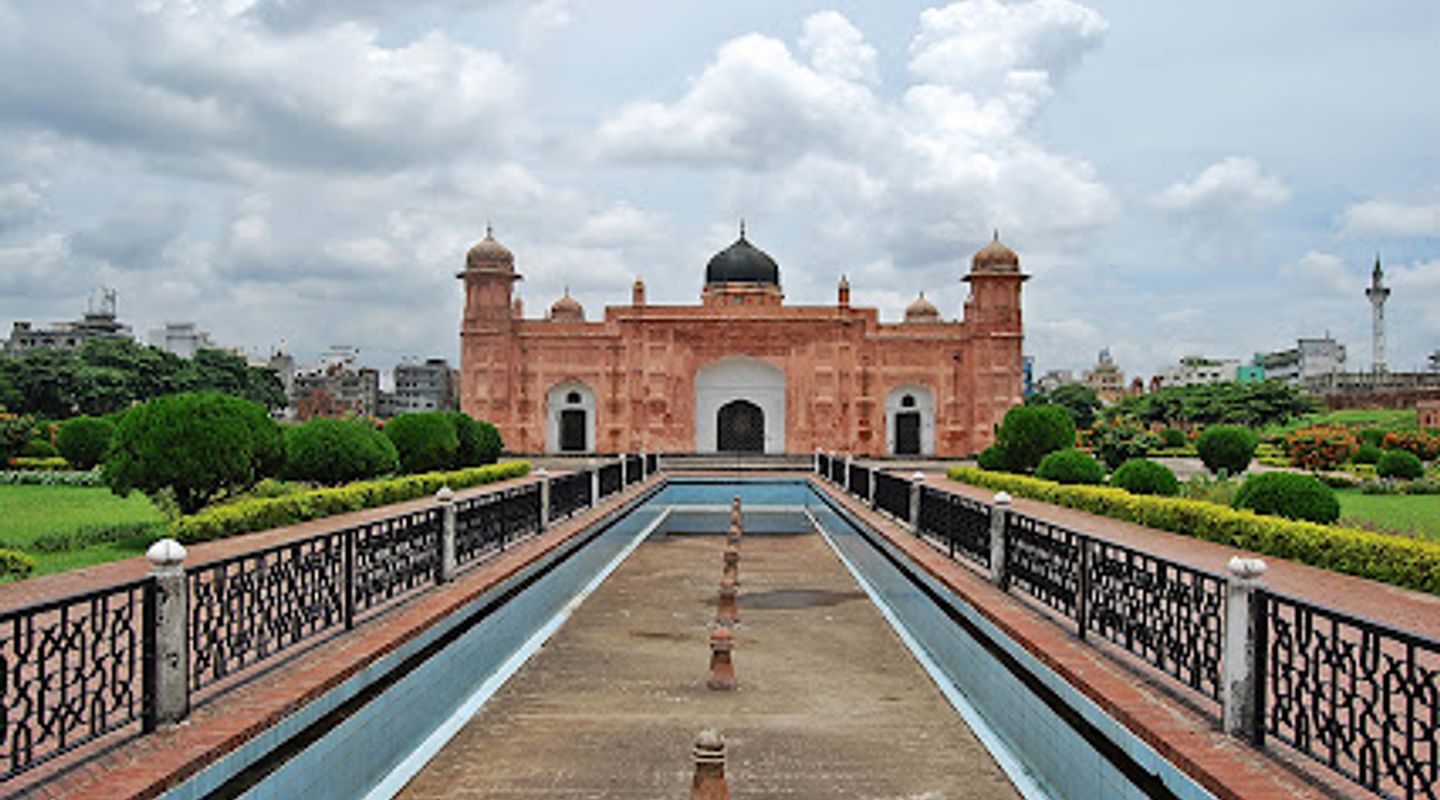
Lalbagh Fort, an unfinished 17th-century Mughal masterpiece in Dhaka, Bangladesh, offers a captivating glimpse into the region's rich history and architectural prowess. Commissioned in 1678 by Prince Muhammad Azam, son of Emperor Aurangzeb, the fort's construction was later taken over by Shaista Khan. However, the untimely death of Khan's daughter, Pari Bibi, led to its abandonment, leaving it an incomplete yet stunning testament to Mughal ambition. Spanning 18 acres, the fort complex features impressive structures like the Diwan-i-Aam (Hall of Public Audience), the Tomb of Pari Bibi, and a three-domed mosque, all interconnected by water channels and lush gardens. Despite its unfinished state, Lalbagh Fort remains a popular tourist destination, drawing visitors with its historical significance, architectural beauty, and serene atmosphere, offering a unique window into Mughal Bengal's power and culture.
Opening hours
- Mon2 pm–5 pm
- Tue10 am–1 pm, 1:30 pm–5 pm
- Wed10 am–1 pm, 1:30 pm–5 pm
- Thu10 am–1 pm, 1:30 pm–5 pm
- Fri10 am–12:30 pm, 3 pm–5 pm
- Sat10 am–1 pm, 1:30 pm–5 pm
- SunClosed
Opening hours as listed on the venue’s Google Business Profile. Hours can change for services and special events, so check with the venue before you go.
- Address
- Lalbagh Rd, Dhaka 1211
- Website
Getting there
Public Transport
Taxi/Ride-Share
Walking
Discover more about Lalbagh Fort
Overview
Lalbagh Fort, also known as Fort Aurangabad, stands as a striking, albeit incomplete, example of Mughal architecture in Dhaka, Bangladesh. Construction commenced in 1678 by Prince Muhammad Azam, the son of Emperor Aurangzeb, during his tenure as the viceroy of Bengal. However, his stay was short-lived, and he was soon called back to Delhi by his father, leaving the fort's fate uncertain. The project was then taken over by Shaista Khan, the next subahdar (governor) of Dhaka. Yet, destiny had other plans. In 1684, tragedy struck when Khan's beloved daughter, Iran Dukht, affectionately known as Pari Bibi, passed away. Overwhelmed by grief and considering the fort unlucky, Shaista Khan abandoned the construction, leaving it unfinished. This poignant event forever shaped the fort's identity, transforming it into a symbol of unfulfilled dreams and enduring love. For a long time, the fort was thought to be a combination of three buildings: the mosque, the tomb of Bibi Pari, and the Diwan-i-Aam, along with two gateways and a portion of the partly damaged fortification wall. However, recent excavations by the Department of Archaeology of Bangladesh have unveiled the existence of other structures, revealing a more complex and elaborate design than previously imagined. The fort complex, sprawling across approximately 18 acres, showcases a blend of residential quarters, gardens, and strategic defenses. The southern fortification wall features five bastions at regular intervals, each two stories high, while the western wall boasts two bastions, the largest of which stands near the main southern gate. These bastions once housed tunnels, adding to the fort's defensive capabilities. The central area of the fort is occupied by three prominent buildings: the Diwan-i-Aam and the hammam (bathhouse) to the east, the mosque to the west, and the Tomb of Pari Bibi nestled in between. These structures are aligned in a single line but are not equidistant, creating a unique visual dynamic. A water channel, adorned with fountains at regular intervals, connects these three buildings from east to west and north to south, adding to the fort's aesthetic appeal. The mosque, a three-domed structure, stands as a testament to Mughal architectural finesse. Its intricate tile work and floral motifs are a sight to behold. Even today, it continues to serve as a place of worship for locals. The Tomb of Pari Bibi, a central feature of the fort, serves as the mausoleum of Shaista Khan's daughter. Constructed with marble and black basalt, it is surrounded by a meticulously maintained garden, creating a serene and picturesque setting. The Diwan-i-Aam, or Hall of Public Audience, served as a venue for public gatherings and administrative meetings. This area features arched entrances and decorative stucco work, reflecting the grandeur of the Mughal era. Historical records suggest that the central hall may have housed an ornamental fountain, adding a touch of opulence to the residence. Lalbagh Fort also holds secrets beneath its surface. Several secret tunnels are said to exist within the fort, two of which purportedly led to the now-ruined Zinzira Fort on the other side of the Buriganga River. Other tunnels were designed as mazes, intended to disorient and trap attackers. During the colonial period, these tunnels became a refuge for sepoys during the Sepoy Mutiny, and many perished within their depths. These tunnels have since been permanently sealed. Over the centuries, Lalbagh Fort has undergone several transformations. After Shaista Khan's departure, the fort lost its prominence, and the capital shifted from Dhaka to Murshidabad. In 1844, the area was renamed Lalbagh, replacing Aurangabad, and the fort became known as Lalbagh Fort. Today, Lalbagh Fort stands as a symbol of Dhaka's Mughal heritage and history. It attracts thousands of visitors annually, including history enthusiasts, students, and tourists. The fort offers a fascinating glimpse into the past, allowing visitors to learn about the Mughal legacy and Dhaka's historical development. Visitors can explore the various structures within the complex, including the Diwan-i-Aam, the Tomb of Pari Bibi, and the Lalbagh Mosque. The fort also houses a museum showcasing artifacts and exhibits related to its history and the Mughal period. Visiting Lalbagh Fort is an immersive experience. As you wander through the complex, you can almost hear the echoes of the past, imagining the bustling activity of Mughal court life and the poignant stories of love and loss that unfolded within its walls. The fort's well-maintained gardens provide a tranquil escape from the city's hustle and bustle, offering a space for reflection and contemplation. Lalbagh Fort is more than just a historical site; it is a living testament to the rich cultural heritage of Bangladesh. It serves as a reminder of the Mughal Empire's influence on the region and the enduring legacy of its art, architecture, and culture. A visit to Lalbagh Fort is an enriching experience that will leave you with a deeper appreciation for the history and beauty of Bangladesh.
Evendo Review Centre
 Google
Guest reviews
Explore Lalbagh Fort on the map
A handpicked selection of must-see spots near Lalbagh Fort, mapped for you.
Get your free copy of our complete guide to Lalbagh Fort, delivered straight to you.
Everything on this page, from opening hours and how to get there to Eve’s tips and the best time to go, in one PDF you can read offline, print or share.
Already have an account? Sign in
Your Lalbagh Fort guide is ready.
We'll send it to · Not you? Sign out

Getting your guide ready…
We are putting together a fresh copy of the Lalbagh Fort guide. This can take up to a minute.
This can take a few moments. If your browser asks, choose Allow so the download can start. You'll find the guide in your Downloads folder.
Nothing happened? Download it again
Sorry, the guide is taking longer than usual. Please try again in a minute, or get it by email instead.
Unlock the best of Lalbagh Fort
Skip-the-line tickets, guided tours with entry, and walking tours of the area, booked in a few clicks.


Other nearby places you may find interesting
The closest places of the same kind, if this one is not quite what you had in mind.
-
-
-
-
-


Swipe for more places
More to explore near Lalbagh Fort

 Best experiences near Lalbagh Fort
 Best hotels near Lalbagh Fort
 Best landmarks near Lalbagh Fort
 Best attractions near Lalbagh Fort
 Best shops near Lalbagh Fort
 Best restaurants near Lalbagh Fort
 Best bars near Lalbagh Fort
Do you manage this location?
Take control to get all the benefits, like improved information, better appearance, and stronger visibility across AI-powered discovery.
Explore more

Explore more of Dhaka
Explore Dhaka: A vibrant city of history, culture, and culinary delights in the heart of Bangladesh.
Explore Dhaka
Explore more of Bangladesh
Discover Bangladesh: A land of rivers, rich culture, and breathtaking landscapes. Explore ancient sites, vibrant cities, and the unique flavors of this South Asian gem.
Explore Bangladesh
