

St Martin's Church, Aalst Travel Guide
Discover Aalst's architectural gem, St. Martin's Church, a Gothic masterpiece housing Rubens' art and centuries of history, currently undergoing restoration until 2027.
St. Martin's Church, a towering Gothic edifice in Aalst, stands as a testament to centuries of faith and artistry. Construction began in 1480 and continued until 1660, resulting in a remarkably homogenous Brabant Gothic style. Inside, discover a treasure trove of art, including a painting by Peter Paul Rubens, a magnificent high altar carved by Janssens, and a splendid tabernacle crafted by J. Duquesnoy and his sons. Explore the chapels erected by various guilds, each adorned with unique altars. Don't miss the copper meridian line dating back to 1840, used to set clocks, and the tombstone of Dirk Martens, a printing pioneer. While undergoing restoration until 2027, the church remains open, inviting visitors to immerse themselves in its rich history and architectural grandeur.
A brief summary to St Martin's Church
- Priester Daensplein, Aalst, 9300, BE
- Click to display
- Click to display
- Monday 9 am-5 pm
- Tuesday 9 am-5 pm
- Wednesday 9 am-5 pm
- Thursday 9 am-5 pm
- Friday 9 am-5 pm
- Saturday 10 am-5 pm
- Sunday 10 am-5 pm

Know before you go
Hi, I'm Eve. Here are a few practical things to know before exploring St Martin's Church.
- Check the deanery's or tourism website for the latest accessibility updates due to ongoing restoration work until 2027.
- Explore the chapels dedicated to various guilds to discover unique altars and learn about Aalst's rich history.
- Don't miss the copper meridian line, an ingenious device used in the 19th century to set clocks accurately.
- Visit the tombstone of Dirk Martens, the first printer in the Southern Netherlands, located within the church.
Do you manage this location?
Take control to get all the benefits, like improved information, better appearance, and stronger visibility across AI-powered discovery. Learn more about listing your business on Evendo
Activate your presenceOther nearby places you may find interesting
The closest places of the same kind, if this one is not quite what you had in mind.
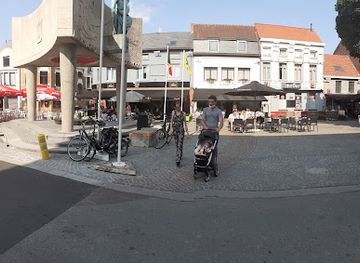
Explore St Martin's Church on the Map
A handpicked selection of must-see spots near St Martin's Church, mapped for you.
Getting There
-
Walking
St. Martin's Church is centrally located on Priester Daensplein in Aalst, making it easily accessible on foot from most points in the city center. From the Grote Markt (main market square), walk south towards the belfry, then continue along Hopmarkt. Turn left onto Priester Daensplein; the church will be directly ahead. The walk is short and straightforward, approximately 5-10 minutes.
-
Public Transport
If arriving by train at Aalst Station, take a local bus (lines 1, 2, 40, R14, 402, 91, 914) to a stop near the city center, such as 'Aalst Dokter De Moorstraat'. From there, it's a short walk (approximately 3 minutes) to Priester Daensplein and St. Martin's Church. A single bus fare within Aalst costs approximately €2.50.
-
Taxi/Ride-Share
Taxis and ride-sharing services are readily available in Aalst. A taxi ride from Aalst Station to St. Martin's Church (Priester Daensplein) typically costs between €8 and €12, depending on traffic and the specific provider.
-
Driving
If driving, navigate to Priester Daensplein, 9300 Aalst. Parking is available in the vicinity, but spaces can be limited, especially during peak hours. Paid parking is available at Hopmarkt (Interparking) for approximately €2.50 per hour. On-street parking may also be available, but check local signage for restrictions and fees.
Discover more about St Martin's Church













Your all‑in‑one travel companion app
Explore expert travel guides, compare and book tours, experiences, hotels, and more—all from the palm of your hand. Download now for seamless trip planning wherever your wanderlust takes you.


Explore More of Aalst
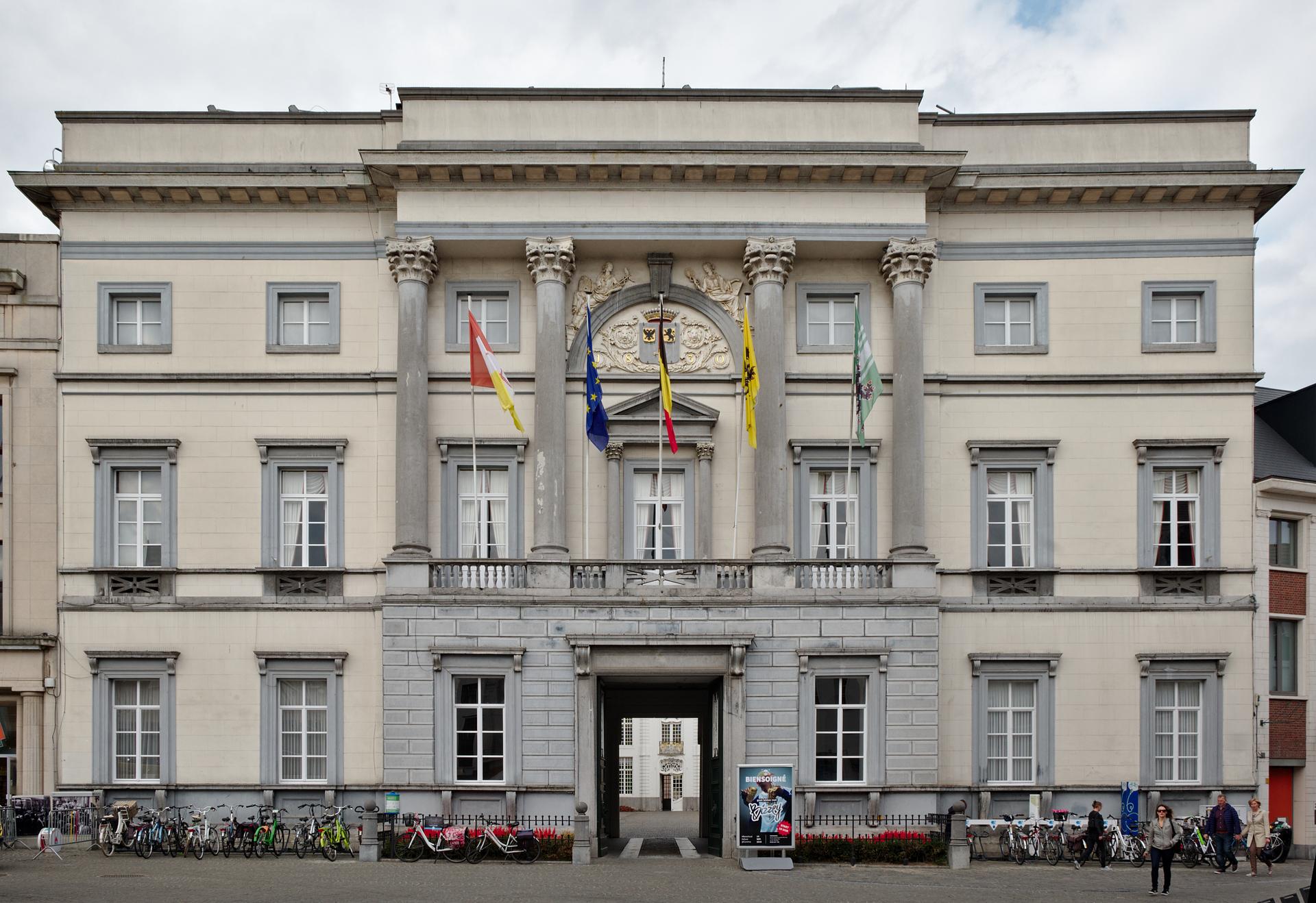
Looking beyond St Martin's Church? Discover Aalst for broader travel guides, local hot-spots, and regional highlights.
Explore Aalst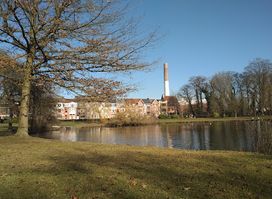
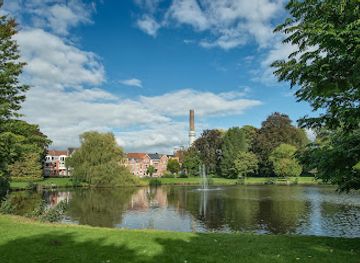
Discover Aalst's green oasis: Park Schepen De Wolf offers a tranquil escape with walking trails, serene ponds, and seasonal events, perfect for nature lovers and families.
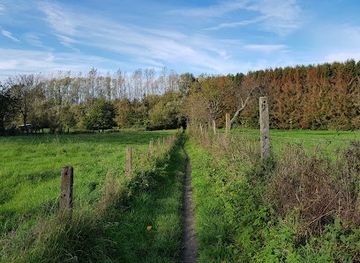
Discover the serene beauty of Katjen Achterien in Aalst, a perfect spot for relaxation, photography, and a peaceful connection with nature.
