
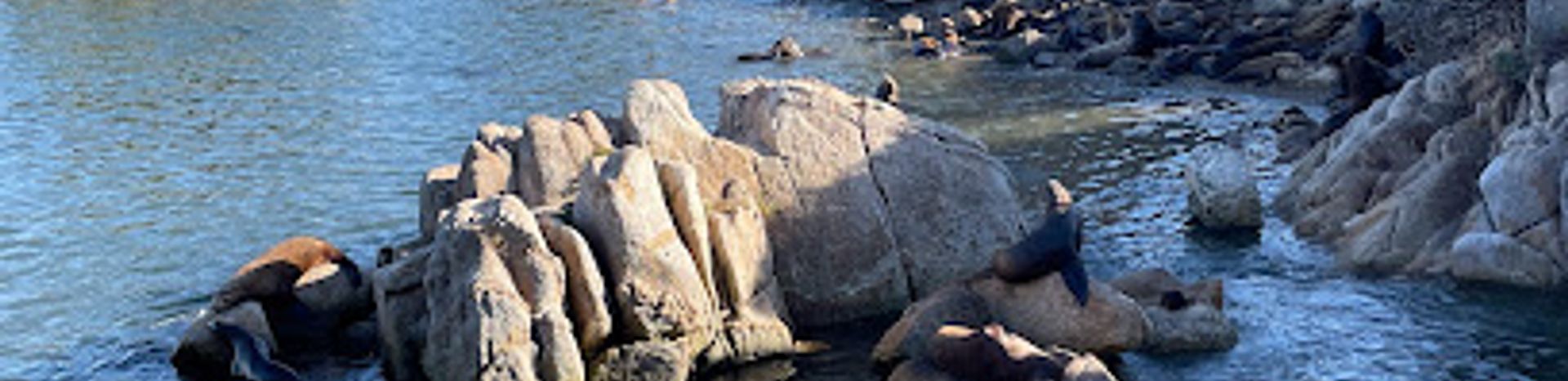
Monterey's Playful Sea Lions
Experience the lively spectacle of Monterey's playful sea lions at Fisherman's Wharf, where nature's charisma meets historic charm, creating unforgettable coastal memories.
Monterey's waterfront is a stage, and the California sea lions are the stars. These charismatic pinnipeds have made the area around Fisherman's Wharf their favored haunt, transforming the historic pier into a lively hub of natural entertainment. Their boisterous barks, energetic interactions, and sheer numbers create an unforgettable sensory experience for anyone visiting Monterey. The sea lions, members of the 'eared seal' family, are adept at leaping out of the water and are often found balancing on floating buoys. They are highly social animals, forming groups of hundreds to thousands in colonies onshore, and sticking together in the water. It's not unusual to see dozens of sea lions rafted up on the surface of the bay, sticking their flippers up out of the water in a jug handle shape; scientists suspect this behavior may help them maintain a warm internal body temperature. Old Fisherman's Wharf, established in 1845, provides an ideal vantage point to observe these marine mammals in their natural habitat. The sea lions can be seen lounging on the rocks and docks, playfully jostling for space, and engaging in mock battles for dominance. Their sleek, muscular bodies glisten in the sun as they bark, grunt, and bellow, creating a symphony of sounds that echoes across the harbor. The air is filled with the salty scent of the sea and the distinctive aroma of these marine creatures, adding to the immersive experience. While the sea lions are most abundant around Fisherman's Wharf, they can also be spotted at other locations along the Monterey coastline. The Coast Guard Pier, near Cannery Row, is another prime viewing spot, offering close-up encounters with these captivating animals. Breakwater Cove, near the Coast Guard Pier, provides easy access and parking, making it a convenient option for visitors with mobility concerns. Point Lobos State Natural Reserve, south of Carmel, also offers opportunities to observe sea lions from accessible trails with stunning ocean views. The California sea lion population in Monterey Bay fluctuates throughout the year. Mature animals migrate to southern California breeding grounds in late spring, returning to Monterey Bay in the summer, often accompanied by younger sea lions. Historically, the Monterey Bay area attracted mostly juvenile and male sea lions, while mature females stayed closer to the breeding colonies. However, as the California sea lion population expands, a growing number of adult females and juveniles are seen more frequently in Monterey Bay. These sea lions are more than just a tourist attraction; they are an integral part of the Monterey Bay ecosystem. As opportunistic feeders, they play a crucial role in regulating fish populations and maintaining the balance of the marine environment. Their diet consists primarily of squid, anchovies, mackerel, rockfish, and sardines, which they hunt in the coastal waters of Monterey Bay. However, the sea lions also face several threats, including entanglement in fishing gear, habitat degradation, and the effects of climate change. Marine debris, such as plastic bags and discarded fishing lines, can pose a serious hazard to these animals, leading to injury or death. Domoic acid, a neurotoxin produced by certain types of algae blooms, can also accumulate in their bodies, causing seizures or even death. Despite these challenges, the California sea lion population has rebounded significantly since the passage of the Marine Mammal Protection Act in 1972. This landmark legislation prohibits the hunting, harassment, or killing of marine mammals in U.S. waters, providing crucial protection for these iconic creatures. Today, the California sea lion is the only one of six remaining sea lion species worldwide whose population is expanding, a testament to the effectiveness of conservation efforts. Visiting the Monterey Sea Lions is an experience that combines entertainment, education, and appreciation for the natural world. It's a chance to witness the raw beauty and untamed spirit of these marine mammals in their element, while also learning about the challenges they face and the importance of protecting their habitat. Whether you're a seasoned wildlife enthusiast or a first-time visitor, the Monterey Sea Lions are sure to leave a lasting impression.
Local tips
- Bring binoculars for a closer look at the sea lions' behavior and interactions, especially if viewing from a distance.
- Visit during different times of the day to observe varying levels of sea lion activity; midday sun often brings out the largest crowds.
- Be mindful of the noise level; the sea lions are vocal, and large crowds can add to the cacophony. Bring earplugs if you're sensitive to loud sounds.

A brief summary to Monterey Sea Lions
- 1 Custom House Plaza, Monterey, California, 93940, US
Getting There
-
Walking
From most hotels in downtown Monterey, Fisherman's Wharf is easily accessible by foot. Follow the Monterey Recreation Trail along the waterfront, enjoying scenic views of the bay. The walk is generally flat and takes approximately 15-20 minutes from the main downtown area. As you approach the wharf, you'll likely hear the sea lions before you see them! No costs are associated with walking.
-
Public Transport
The Monterey-Salinas Transit (MST) Trolley provides a free service to Fisherman's Wharf from various points in downtown Monterey, Cannery Row, and the Monterey Bay Aquarium. The trolley operates daily from 10:00 am to 6:00 pm, Memorial Day weekend through Labor Day. Look for the green MST Trolley signs to board. This is a convenient and cost-effective way to reach the sea lions, especially during peak season. The trolley runs every 10-15 minutes. There is no cost to ride the trolley.
-
Driving
If driving, navigate to 201 Washington Street, Monterey, CA 93940, to reach the Waterfront Parking Lot adjacent to Fisherman's Wharf. This is a pre-pay lot. Parking costs $1.75 per hour, with a daily maximum of $12.00, enforced from 9 am to 8 pm. You can use the ParkMobile app (zone #21031) or pay stations within the lot. Be aware that parking can be limited, especially during weekends and holidays. Disabled parking spaces are available. An alternative is parking in the Downtown Monterey Garage (340 Tyler Street) for $12.00 per day and taking the free MST Trolley to the Wharf.
-
Taxi/Ride-Share
Taxis and ride-sharing services (Uber/Lyft) are readily available in Monterey. A short ride from downtown Monterey to Fisherman's Wharf typically costs between $8 and $15, depending on traffic and demand. This is a convenient option for those who prefer not to walk or drive, especially if parking is scarce. Be sure to confirm the fare before starting your trip.


