Background

MacFarland House: A Stanford Landmark

Discover the MacFarland House in Stanford, a historic Tudor Revival home of marine biologist Frank MacFarland, showcasing early 20th-century architecture and scientific legacy.

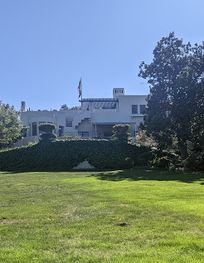
The MacFarland House, a charming Tudor Revival home in Stanford, California, holds historical significance as the residence of Dr. Frank Mace MacFarland, a pioneering marine biologist. Built in 1914, this house, with its distinctive faux thatch roof and craftsman elements, served as both a home and a laboratory for MacFarland's groundbreaking research on sea slugs. Listed on the National Register of Historic Places, the house exemplifies early 20th-century architecture on the Stanford campus and stands as a testament to MacFarland's contributions to science. While not open for public tours, its exterior offers a glimpse into the life and work of a remarkable scientist and the architectural styles of the era. The house is a reminder of Stanford's rich history and its commitment to fostering scientific innovation. Its location within the San Juan Hill subdivision, a historic faculty housing area, adds to its charm and contextual significance.

A brief summary to MacFarland House

  • 775 Santa Ynez St, Stanford, California, 94305, US

Local tips

  • While the house is a private residence, admire its unique architecture from the street and learn about Dr. MacFarland's contributions online.
  • Combine your visit with a walk through the historic San Juan Hill neighborhood to appreciate the variety of architectural styles.
  • Explore the nearby Stanford campus, including the Cantor Arts Center and Stanford Memorial Church, for a broader cultural experience.
widget icon

Getting There

  • Walking

    From the central part of the Stanford campus, such as near the Main Quad or the Cantor Arts Center, the MacFarland House is accessible by foot. Head southwest along Museum Way, then turn left onto Lomita Drive. Continue onto Santa Ynez Street. The MacFarland House will be on your left. The walk is approximately 15-20 minutes, offering a pleasant stroll through the campus's residential area.

  • Public Transport

    The Stanford Marguerite Shuttle provides free transportation around the campus and surrounding areas. Several lines stop near Santa Ynez Street. Check the Marguerite Shuttle schedule for the most up-to-date routes and times. From the shuttle stop, it's a short walk to 775 Santa Ynez Street.

  • Driving

    If driving, approach via Campus Drive and turn onto Santa Ynez Street. Limited street parking is available. Be aware that parking on the Stanford campus is restricted and requires payment. Use the ParkMobile app to pay for parking in designated areas. Parking costs $1.50 per hour.

  • Taxi/Ride-Share

    Taxi or ride-sharing services (Uber/Lyft) can drop you off directly at 775 Santa Ynez Street. A ride from the Palo Alto Caltrain station typically costs between $10-$15, depending on demand.

Unlock the Best of MacFarland House

Buy tickets

    No tickets available

Book tours with entry

    No tours available

Book tours without entry

    No tours available

Discover more about MacFarland House

Nestled within the serene San Juan Hill neighborhood of Stanford, California, the MacFarland House stands as a captivating reminder of the university's rich history and its dedication to scientific advancement. This historic house, located at 775 Santa Ynez Street, was built in 1914 for Dr. Frank Mace MacFarland, a distinguished professor of histology and a pioneering figure in marine biology. Dr. MacFarland's contributions to the field of marine biology, particularly his extensive research on sea slugs (opisthobranchiata mollusks), earned him international acclaim. He served as a faculty member at Stanford for nearly six decades and played a crucial role in the development of the Hopkins Marine Station. His home was more than just a residence; it was a laboratory and study where he conducted much of his groundbreaking work. The MacFarland House itself is an architectural gem, exemplifying the Eclectic Revival styles popular in the 1910s and 1920s. Designed by Arthur Bridgman Clark, the house showcases a blend of Tudor Revival, Craftsman, and Classical Revival elements. Its most distinctive feature is the faux thatched roof, a whimsical touch that sets it apart from other homes in the area. The exterior is further characterized by heavily textured stucco walls, overhanging eaves, exposed roof beams, and simple, stuccoed columns. Olive Knowles Hornbrook MacFarland, Frank's wife, was also a Stanford graduate and collaborated with him for many years. She produced delicate watercolor paintings of mollusks for Frank's scientific publications. The final work -- Memoirs of the California Academy of Sciences, Volume VI, Studies of Opisthobranchiate Mollusks of the Pacific Coast of North America -- weighed more than seven pounds. The couple lived in the house from 1914 until Dr. MacFarland's death in 1951, a period marked by significant scientific achievements and contributions to the Stanford community. The house is located within the San Juan Hill subdivision, a housing tract established by Stanford in the 1890s to encourage faculty to live near the campus. This neighborhood retains much of its historic charm, with tree-lined streets and a variety of architectural styles reflecting the evolution of Stanford's faculty housing over the decades. In 2006, the MacFarland House was added to the National Register of Historic Places, recognizing its significance in the areas of science and architecture. While the house remains a private residence and is not open for public tours, its exterior can be admired from the street. The current owners have taken great care to preserve the historic character of the house, ensuring that it remains a tangible link to Stanford's past. Visiting the MacFarland House offers a unique opportunity to step back in time and imagine the life and work of a pioneering scientist. As you stand before this charming Tudor Revival home, consider the countless hours Dr. MacFarland spent in his laboratory, meticulously studying and documenting the fascinating world of sea slugs. Think of Olive MacFarland and her beautiful illustrations. Envision the vibrant intellectual community that thrived in Stanford during the early 20th century. The MacFarland House is more than just a building; it is a symbol of Stanford's commitment to academic excellence, scientific discovery, and the preservation of its rich heritage. It serves as a reminder that even the most groundbreaking research often takes place in unassuming settings, and that the pursuit of knowledge can transform ordinary spaces into places of extraordinary significance. While in the area, take a stroll through the San Juan Hill neighborhood and admire the diverse architectural styles of the surrounding homes. Explore the Stanford campus, visit the Hopkins Marine Station (a testament to MacFarland's legacy), and immerse yourself in the intellectual atmosphere that continues to inspire generations of scholars and scientists. The MacFarland House may not be a traditional tourist attraction, but its historical and architectural significance make it a worthwhile destination for those seeking a deeper understanding of Stanford's past and its enduring contributions to the world of science. It is a place where history, architecture, and scientific innovation converge, offering a unique and enriching experience for visitors of all backgrounds. Consider visiting nearby attractions such as the Cantor Arts Center, the Stanford Memorial Church, and the Arizona Cactus Garden. These sites offer further insights into the cultural and historical landscape of Stanford University. The MacFarland House stands as a testament to the power of individual curiosity, the importance of preserving our architectural heritage, and the enduring legacy of scientific discovery. It is a place where the past comes alive, inspiring us to embrace the pursuit of knowledge and to appreciate the beauty and significance of the world around us. Take a moment to reflect on the words of Dr. Frank Mace MacFarland, a man who dedicated his life to unraveling the mysteries of the natural world. His work continues to inspire scientists and researchers around the globe, and his home remains a cherished landmark on the Stanford campus. The MacFarland House is a reminder that history is not just something that happened long ago; it is a living, breathing presence that shapes our present and informs our future. By visiting this historic site, we can gain a deeper appreciation for the individuals who came before us and the contributions they made to our world. So, the next time you find yourself in Stanford, California, be sure to seek out the MacFarland House. Take a moment to admire its unique architecture, to reflect on its rich history, and to celebrate the legacy of Dr. Frank Mace MacFarland, a true pioneer in the field of marine biology.

Popular Experiences near MacFarland House

Popular Hotels near MacFarland House

Select Currency