

RiNo (River North Art District) (Denver) Travel Guide - Free
Explore RiNo (River North Art District) in Denver with Evendo's free guide. Find the best shops, historic streets, restaurants, and gems on web or mobile.


RiNo in Denver blends warehouse art spaces, vivid murals, craft breweries, inventive dining and River North’s creative energy near downtown Colorado for visitors.
Industrial Roots and Creative Reinvention
RiNo, short for the River North Art District, occupies a former industrial quarter north of central Denver, where freight lines, warehouses and modest commercial buildings have been reshaped into studios, galleries, restaurants, breweries and design-led public spaces. Its identity is less about a fixed architectural style than an evolving dialogue between old brick structures and new construction, with Brighton Boulevard, Larimer Street and nearby blocks providing the district’s main orientation points. The boundaries are informal and overlap with Five Points, Cole and Globeville, so the character changes noticeably from one street to the next.Read more about RiNo (River North Art District)
Murals, Galleries and the Public Realm
Food, Beer and Evening Energy
Best attractions in RiNo (River North Art District)
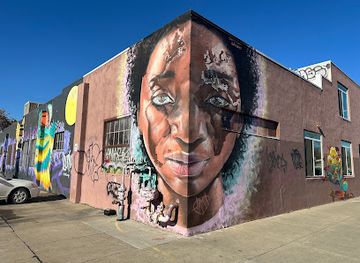
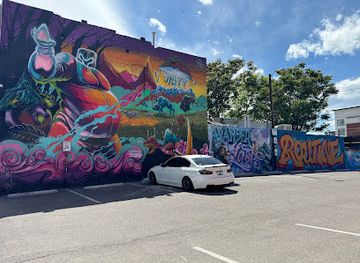
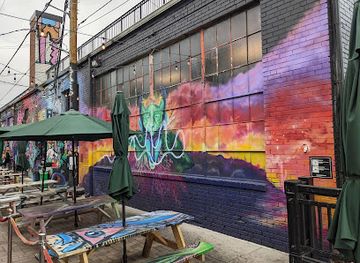
RiNo’s main attraction is the relationship between public art and its industrial setting. Walking along Larimer Street, Brighton Boulevard and adjoining blocks reveals large murals, painted façades, sculpture and smaller works tucked around converted warehouses, with the precise collection changing as commissions and development alter the streetscape. RiNo ArtPark provides an outdoor setting for installations, performances and community events, while The Source and Denver Central Market combine food, design and social activity in former industrial buildings. Galleries and studios associated with the River North Art District offer a more focused look at Denver’s contemporary creative scene, particularly during organised art walks and openings. Near the district’s western side, the South Platte River corridor introduces a different landscape of trails and infrastructure. Several attractions overlap the edges of Five Points, Cole and Globeville, so visitors should check addresses rather than treating all nearby creative venues as being within RiNo.
-
History museum
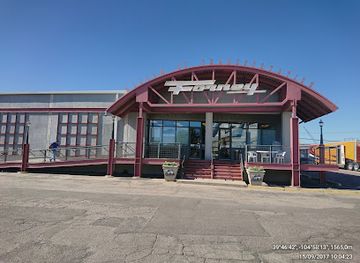
Forney Museum of Transportation
Explore the rich history of transportation at the Forney Museum in Denver, featuring vintage cars, trains, and aircraft that shaped America.
7 min drive · 2.4 km from neighbourhood centre
-
Arts organization
RiNo Art District
Explore Denver's RiNo Art District: A vibrant hub where industrial history meets cutting-edge art, craft breweries, and culinary innovation.
2 min walk · 0.1 km from neighbourhood centre
-
Park
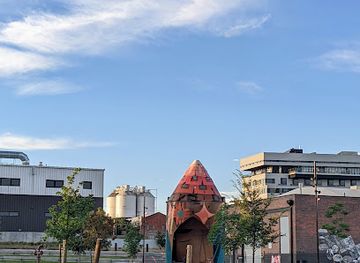
RiNo Art Park
Explore Denver's RiNo Art Park: Where creativity thrives in a revitalized industrial space. Art, events, and community await!
16 min walk · 1.3 km from neighbourhood centre
-
Art gallery
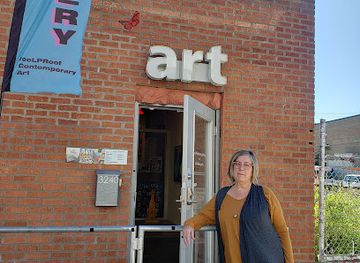
RiNo Art Gallery Map - at fooLPRoof art gallery 3240 Larimer
Explore contemporary art in Denver's RiNo Art District at fooLPRoof gallery, a vibrant space reflecting the neighborhood's creative energy.
10 min walk · 0.8 km from neighbourhood centre
Best landmarks in RiNo (River North Art District)
RiNo’s landmarks are often ensembles rather than solitary monuments. The district’s surviving brick warehouses, freight-related structures and broad industrial blocks record its earlier role north of Denver’s centre, while Larimer Street and Brighton Boulevard remain important orienting corridors. The Source, a repurposed industrial building, represents the conversion of working premises into food, retail and cultural space; The Source Hotel extends that development pattern into contemporary accommodation. RiNo ArtPark is a newer public landmark, reflecting the district’s emphasis on sculpture, outdoor gathering and temporary creative work. The large-scale murals that cover warehouse walls function as visual markers as well as artworks, although they are not all permanent. The 38th & Blake rail station is an important nearby transport landmark at the district’s northern edge, linking RiNo’s redevelopment to Denver’s wider regional rail network without being a historic RiNo monument itself.
-
Market
The Denver Central Market
Explore Denver's culinary gem at The Denver Central Market, where diverse flavors and local artisans come together in a vibrant food experience.
1 min walk · 0.1 km from neighbourhood centre
-
Brewpub
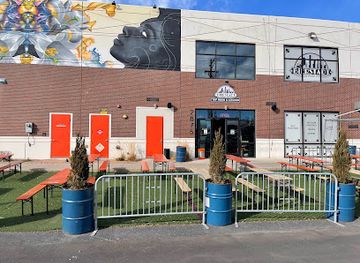
Bierstadt Lagerhaus
Discover the heart of German brewing at Bierstadt Lagerhaus, where handcrafted beers and traditional cuisine unite in Denver’s art district.
5 min walk · 0.4 km from neighbourhood centre
-
Restaurant
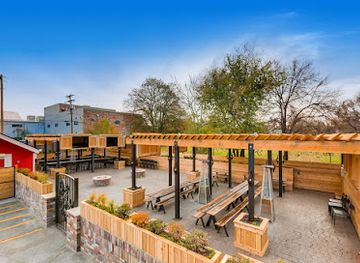
RiNo Beer Garden
Discover the vibrant RiNo Beer Garden in Denver, where craft beer meets local flavors in a lively outdoor setting.
5 min drive · 1.6 km from neighbourhood centre
-
Restaurant
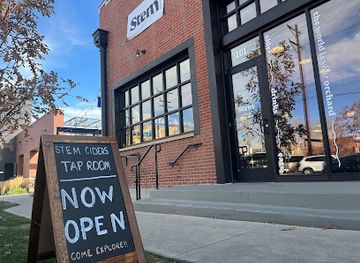
Stem Ciders RiNo - Taproom & Eatery
Explore craft ciders and local flavors at Stem Ciders RiNo, a vibrant taproom and eatery in Denver's River North Art District.
7 min walk · 0.6 km from neighbourhood centre
Explore RiNo (River North Art District) on the map
A handpicked selection of must-see spots in RiNo (River North Art District), mapped for you.
Best hotels in RiNo (River North Art District)
Best restaurants in RiNo (River North Art District)
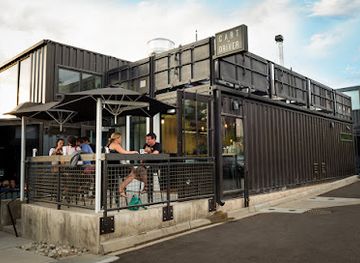
RiNo’s dining scene has grown from the district’s warehouse conversions and creative-business culture, with former industrial interiors now accommodating restaurants, bakeries, coffee shops, food halls and casual counter-service venues. The Source and Denver Central Market provide concentrated choices for visitors who want to compare different kitchens under one roof, while streets around Larimer and Brighton offer independent restaurants ranging from contemporary cooking to pizza, noodles and informal shared plates. Safta, at The Source Hotel, is associated with modern Israeli cooking, and Cart-Driver is known for its small-footprint pizza and seafood format. The area’s breweries and bars often overlap with its food culture, but dining is not limited to taproom fare: reservations, walk-ins and service styles vary considerably by venue. Because RiNo changes quickly, checking current menus, locations and opening arrangements is more reliable than relying on an old district-wide list.
-
Spanish
Barcelona Wine Bar
Discover authentic Spanish tapas and an extensive wine selection at Barcelona Wine Bar in Denver's vibrant RiNo district.
4 min walk · 0.3 km from neighbourhood centre
-
Mexican
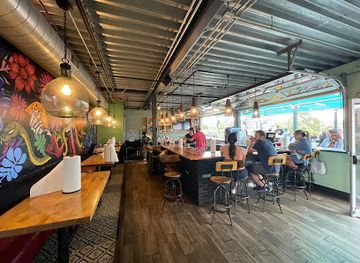
Los Chingones RiNo
Experience vibrant Mexican flavors at Los Chingones RiNo in Denver's River North Art District - where culinary delights meet an energetic atmosphere.
4 min walk · 0.3 km from neighbourhood centre
-
Pizza
Cart-Driver RiNo
Experience artisanal pizzas and fresh seafood at Cart-Driver RiNo in Denver’s vibrant River North Art District.
4 min walk · 0.3 km from neighbourhood centre
-
Restaurant
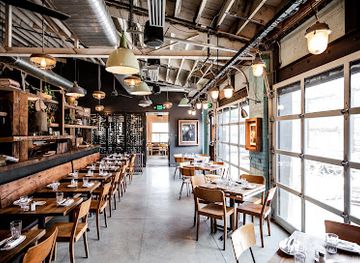
Work & Class
Discover Work & Class in Denver: A perfect blend of seasonal flavors, craft drinks, and vibrant atmosphere awaits you.
4 min walk · 0.3 km from neighbourhood centre
Best bars in RiNo (River North Art District)
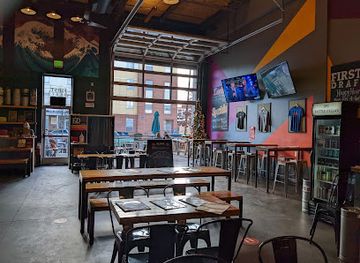
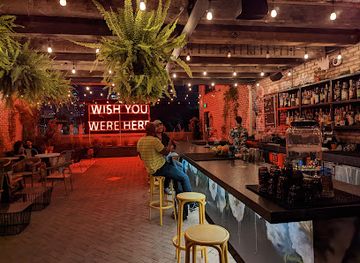
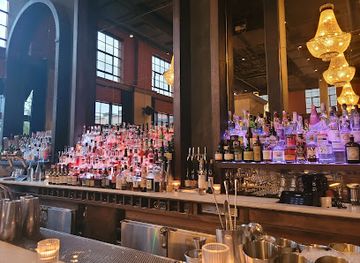
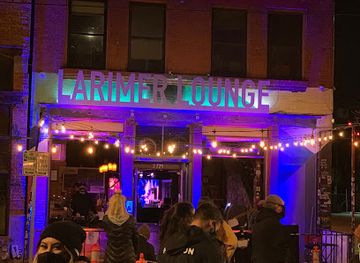
RiNo is one of Denver’s more established evening districts, though its nightlife is spread across breweries, cocktail bars, music venues and restaurant bars rather than concentrated in a single club strip. Beer remains central, with venues such as Ratio Beerworks and Our Mutual Friend Brewing contributing taproom culture, while Finn’s Manor offers a bar setting with a broad drinks focus and Larimer Lounge is associated with live music. The area’s converted warehouses give many venues an informal industrial backdrop, but the mood ranges from daytime beer tasting to late-night concerts and busy weekend gatherings. First Friday openings and other art events can extend the evening beyond conventional nightlife. RiNo also contains homes and active businesses, so noise, queues and outdoor conversations matter, particularly on streets close to residential buildings. Current event details and entry arrangements vary by venue.
-
Bar
First Draft Taproom & Kitchen
Experience Denver's best craft beers and New American cuisine at First Draft Taproom & Kitchen, a vibrant gem in the River North Art District.
2 min walk · 0.2 km from neighbourhood centre
-
Cocktail bar
Death & Co Denver
Experience the art of mixology at Death & Co Denver, where expertly crafted cocktails meet a stylish ambiance in the heart of RiNo.
4 min walk · 0.3 km from neighbourhood centre
-
Bar
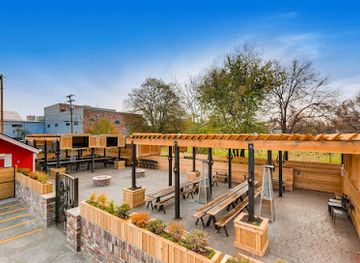
RiNo Beer Garden
Experience the lively atmosphere and delicious craft beers at RiNo Beer Garden, a gem in Denver's vibrant River North Art District.
5 min drive · 1.6 km from neighbourhood centre
-
Bar
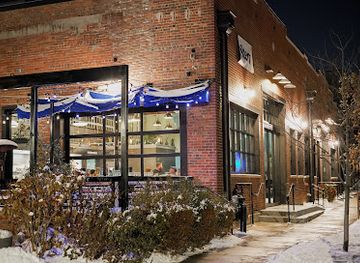
Stem Ciders RiNo - Taproom & Eatery
Discover the heart of Denver's craft cider scene at Stem Ciders RiNo - Taproom & Eatery, where local flavors and vibrant atmosphere meet.
7 min walk · 0.6 km from neighbourhood centre
Best nightclubs in RiNo (River North Art District)
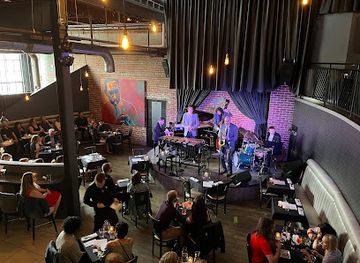
RiNo is one of Denver’s more established evening districts, though its nightlife is spread across breweries, cocktail bars, music venues and restaurant bars rather than concentrated in a single club strip. Beer remains central, with venues such as Ratio Beerworks and Our Mutual Friend Brewing contributing taproom culture, while Finn’s Manor offers a bar setting with a broad drinks focus and Larimer Lounge is associated with live music. The area’s converted warehouses give many venues an informal industrial backdrop, but the mood ranges from daytime beer tasting to late-night concerts and busy weekend gatherings. First Friday openings and other art events can extend the evening beyond conventional nightlife. RiNo also contains homes and active businesses, so noise, queues and outdoor conversations matter, particularly on streets close to residential buildings. Current event details and entry arrangements vary by venue.
-
Cocktail bar
Death & Co Denver
Discover the charm of Death & Co Denver, where innovative cocktails meet a vibrant, 1920's-inspired atmosphere for a night of unforgettable experiences.
4 min walk · 0.3 km from neighbourhood centre
-
Jazz
Nocturne
Discover Nocturne, Denver's exquisite jazz club blending live music and culinary artistry in a vibrant setting.
1 min walk · 0.1 km from neighbourhood centre
-
Live Music
Larimer Lounge
Discover the heart of Denver's music scene at Larimer Lounge, where live performances and craft cocktails create an unforgettable nightlife experience.
1 min walk · 0.1 km from neighbourhood centre
-
Bar
Meadowlark Bar
Discover the lively Meadowlark Bar in Denver's River North Art District, where art, live music, and great drinks come together for an unforgettable night.
1 min walk · 0.1 km from neighbourhood centre
Best shops in RiNo (River North Art District)
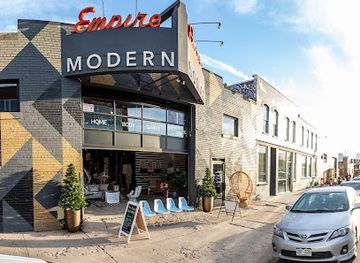
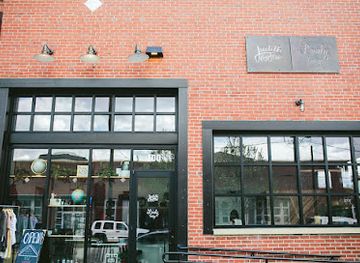
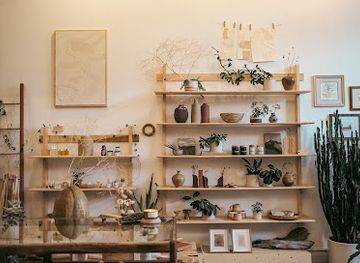
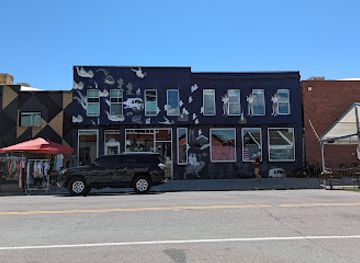
Shopping in RiNo is closely tied to its creative and hospitality economy rather than to a conventional enclosed retail centre. The Source and nearby converted warehouse spaces combine food with design-led shops, makers and specialist businesses, while independent galleries offer prints, objects and contemporary artwork when exhibitions are open for sales. Around Larimer Street and Brighton Boulevard, visitors may encounter boutiques, homewares, books, local design and small creative enterprises alongside restaurants and breweries. The district’s retail character changes as leases and redevelopment reshape individual blocks, so it is better understood as a collection of dispersed businesses than as one continuous shopping street. First Friday events can be useful for browsing galleries and meeting artists, but they are primarily cultural occasions rather than a guaranteed retail market. Visitors should distinguish RiNo’s independent, design-conscious offer from the larger chain stores and department shopping found elsewhere in central Denver.
-
Boutique
RiNo Empire Collective
Explore the RiNo Empire Collective, where local artistry meets unique shopping experiences in Denver's vibrant River North Art District.
4 min walk · 0.4 km from neighbourhood centre
-
Women's clothing store
Judith & Joe
Explore Judith & Joe, a chic women's clothing store in Denver's vibrant River North Art District, where style meets creativity.
7 min walk · 0.6 km from neighbourhood centre
-
Home goods store
Conifer
Explore Conifer, a charming home goods store in Denver’s vibrant River North Art District, offering unique decor and furnishings that capture local artistry.
13 min walk · 1.0 km from neighbourhood centre
-
Clothing store
OETLCO at Modern Nomad. RiNo Art District
Explore OETLCO at Modern Nomad in RiNo Art District for unique clothing and a vibrant shopping experience in Denver.
5 min walk · 0.4 km from neighbourhood centre
RiNo (River North Art District) essentials
Getting There
Getting Around
Safety
Emergency Situations
Do's and Don'ts
Local Tips

From Eve
Local phrases worth knowing
You don't need to get them perfect. A few words go a long way, and locals appreciate the effort.
Basics
| English | Local | Say it |
|---|---|---|
| Hello | Howdy | [haw-dee] |
| Goodbye | Catch ya later | [ketch yuh lay-tur] |
| Yes | Yup | [yuhp] |
| No | Nah | [nah] |
| Please/You're welcome | Please 'n thank ya | [pleez n thank yuh] |
| Thank you | Much obliged | [muhch uh-blahy-jed] |
| Excuse me/Sorry | Pardon me | [pahr-dn mee] |
| How are you? | How ya doin'? | [how yuh doo-in] |
| Fine. And you? | Jus' fine. How 'bout you? | [juhs fine. how 'bout yuh] |
| Do you speak English? | Ya speak English? | [yuh speak ing-glish] |
| I don't understand | I dunno what yer sayin' | [I dunno what yer say-in] |
Eating & Drinking
| English | Local | Say it |
|---|---|---|
| I'd like to see the menu, please | Lemme see the menu, please | [lem-ee see the menu, please] |
| I don't eat meat | I ain't no carnivore | [I aint no car-niv-or] |
| Cheers! | Cheers! | [cheers] |
| I would like to pay, please | I'm ready to cash out, please | [I'm ready to cash out, please] |
Emergencies
| English | Local | Say it |
|---|---|---|
| Help! | Help! | [help] |
| Go away! | Git outta here! | [git out-ta here] |
| Call the Police! | Get the fuzz! | [get the fuzz] |
| Call a doctor! | Get a doc! | [get a doc] |
| I'm lost | I'm turned around | [I'm turned around] |
| I'm ill | I'm feelin' poorly | [I'm feelin' poorly] |
Shopping
| English | Local | Say it |
|---|---|---|
| I'd like to buy... | I'm lookin' to buy... | [I'm lookin' to buy] |
| I'm just looking | Jus' browsin' | [juhs brow-zin] |
| How much is it? | Whatcha chargin'? | [whatcha char-jin] |
| That's too expensive | That's steep | [that's steep] |
| Can you lower the price? | Can ya do any better on the price? | [can yuh do any bet-ter on the price] |
Time & Numbers
| English | Local | Say it |
|---|---|---|
| What time is it? | What's the time? | [whats the time] |
| It's one o'clock | It's one | [It's one] |
| Half past (10) | Half past ten | [half past ten] |
| Morning | Mornin' | [mornin] |
| Afternoon | Afternoon | [afternoon] |
| Evening | Evenin' | [evenin] |
| Yesterday | Yersterday | [yer-ster-day] |
| Today | Today | [today] |
| Tomorrow | Tomorra | [tom-or-ra] |
| 1 | One | [one] |
| 2 | Two | [two] |
| 3 | Three | [three] |
| 4 | Four | [four] |
| 5 | Five | [five] |
| 6 | Six | [six] |
| 7 | Seven | [seven] |
| 8 | Eight | [eight] |
| 9 | Nine | [nine] |
| 10 | Ten | [ten] |
Transport & Directions
| English | Local | Say it |
|---|---|---|
| Where's a/the...? | Where's the...? | [wheres the] |
| What's the address? | What's the address? | [whats the address] |
| Can you show me (on the map)? | Can ya show me (on the map)? | [can ya show me (on the map)] |
| When's the next (bus)? | When's the next (bus)? | [whens the next bus] |
| A ticket (to ....) | A ticket (to ....) | [A ticket (to ....)] |
History of RiNo (River North Art District)
Railways, Industry and River North
The area now known as RiNo developed north of Denver’s historic centre in a landscape shaped by railways, freight yards, warehouses and industrial businesses. Its position near the South Platte River and major transport corridors encouraged uses that required space and practical access rather than elaborate civic architecture. Nearby Five Points became an important residential and commercial district, while the industrial blocks farther north retained a more utilitarian character. The surviving brick warehouses, loading yards and broad service streets reflect this earlier working landscape, even though many original businesses have since disappeared or changed use.
A District Without Fixed Boundaries
For much of the twentieth century, River North was understood principally as an industrial and lower-density area rather than as a major visitor destination. The district’s boundaries remained informal, overlapping with neighbouring communities including Five Points, Cole and Globeville. This ambiguity is still visible in the built environment: renovated creative spaces stand beside active industrial premises, older homes and vacant or redeveloped lots. Changes to Denver’s central neighbourhoods, rising land values and improved connections to downtown gradually increased pressure for new housing, offices, hospitality businesses and cultural uses.
The River North Art District Emerges
The River North Art District was established in 2005 by local artists and property owners, including artist Tracy Weil, who helped give the area a shared name and cultural framework. The initiative promoted studios, galleries, creative businesses and public art in a part of Denver where affordable industrial space had attracted artists. Rather than replacing the district’s physical past, the early art movement used warehouses, alleys and blank exterior walls as exhibition settings. The name RiNo subsequently became associated with a broader cultural and development zone than the original cluster of studios.
Murals, Hospitality and Rapid Change
During the 2010s and after, RiNo gained a larger public profile as murals, breweries, food halls, restaurants, music venues, offices and apartment buildings filled or replaced former industrial spaces. Brighton Boulevard and Larimer Street became prominent corridors for this transformation, while events such as First Friday art walks connected galleries and public art with a wider audience. Redevelopment brought new investment and amenities but also changed rents, land uses and the social texture of the area. Contemporary RiNo therefore remains a layered district: part art initiative, part entertainment quarter and part rapidly evolving inner-city neighbourhood.
RiNo (River North Art District) in Photos
Browse through our photo collection highlighting the charm and character of the destination.
Neighbourhoods near RiNo (River North Art District)
The closest neighbourhoods to RiNo (River North Art District), if you have time for more than one stop.
-

-

-

-

-


Swipe for more neighbourhoods
Explore more

Explore more of Denver
Denver pairs Rocky Mountain views with a walkable downtown, celebrated museums, historic districts, craft breweries and easy access to Colorado's outdoors.
Explore Denver