
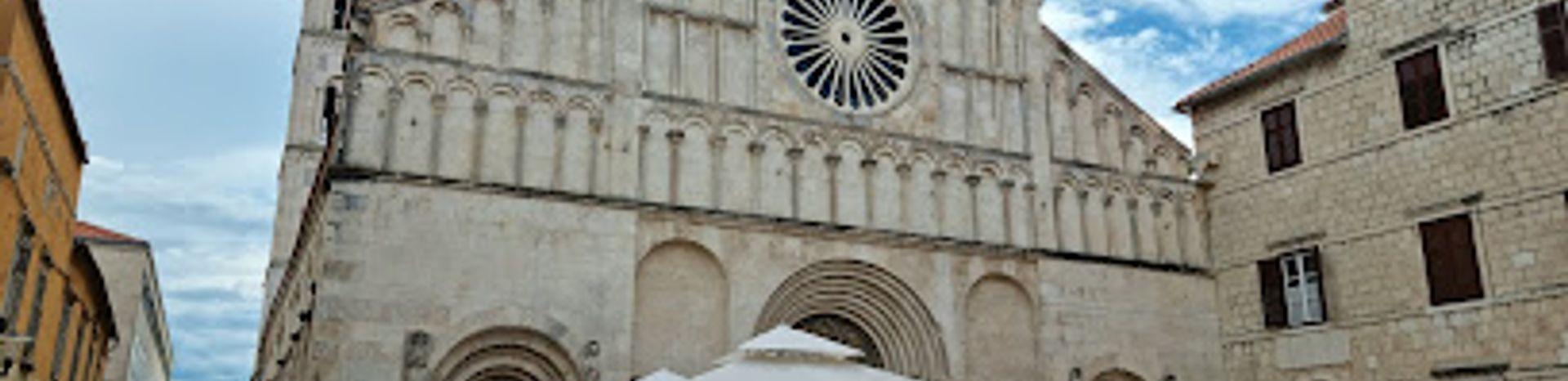
Cathedral of St. Anastasia: A Dalmatian Masterpiece
Explore Zadar's magnificent Cathedral of St. Anastasia, a Romanesque masterpiece with a rich history and stunning panoramic views.
The Cathedral of St. Anastasia, or Zadar Cathedral, is the largest church in Dalmatia and the seat of the Archdiocese of Zadar. With origins tracing back to the 4th and 5th centuries, the present Romanesque structure was largely built in the 12th and 13th centuries, showcasing a blend of architectural styles due to centuries of rebuilding and restoration.
A brief summary to Cathedral of St. Anastasia
- Trg Svete Stošije 2, Zadar, 23000, HR
- +38523251708
- Visit website
Local tips
- Dress respectfully when visiting the cathedral; shoulders and knees should be covered.
- Climb the bell tower for panoramic views of Zadar, but be aware there is a small fee of 2€.
- Visit the cathedral outside of mass times to fully appreciate the architecture and artwork.

Getting There
-
Walking
The Cathedral of St. Anastasia is located in the heart of Zadar's Old Town, making it easily accessible on foot from most points within the historic center. From the Sea Organ or the Roman Forum, it's a short, pleasant walk through the pedestrian streets. No special costs are involved.
-
Public Transport
Zadar's public transport is operated by Liburnija doo, with buses running frequently throughout the city. Several bus lines serve the Old Town area. From the main bus station, lines 2 and 4 will take you close to the city center. A single ticket costs approximately €1.50 and can be purchased from the driver.
-
Taxi
Taxis are readily available in Zadar, with taxi stands located near the bus station and the main bridge. A short taxi ride from the bus station to the Cathedral of St. Anastasia will cost approximately €5-€10, depending on traffic and the taxi company. Always ensure the driver resets the taximeter before starting your journey.


