

Stenpartiet, Aarhus Travel Guide
Free Guide: A compact rock garden in Aarhus’ Botanical Garden, where stone, slope and hardy plants create a miniature mountain landscape rich in texture and quiet detail.


A brief summary of Stenpartiet
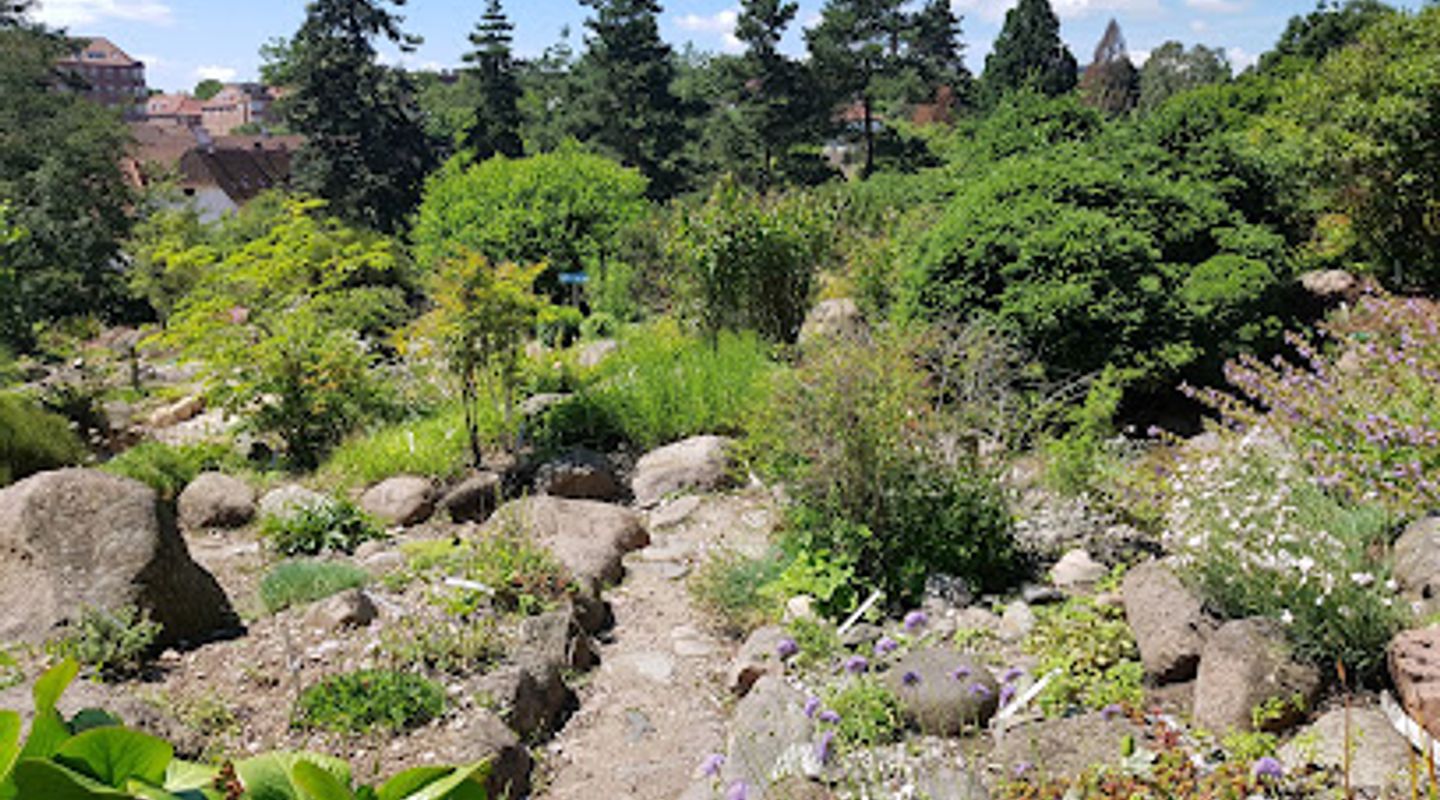
A compact rock garden in Aarhus’ Botanical Garden, where stone, slope and hardy plants create a miniature mountain landscape rich in texture and quiet detail.
Tucked into Aarhus’ Botanical Garden, Stenpartiet is a sculpted rock garden where alpine plants, evergreens and carefully placed boulders create a miniature mountain landscape in the heart of the city. Here, hardy shrubs, cushions of perennials and conifers spill over stone terraces, offering close-up views of specialized rock-dwelling species and seasonal colour. It is a quiet, outdoor corner ideal for slow strolls, plant spotting, photography and a peaceful pause between the garden’s larger lawns, ponds and glasshouses.
On-site amenities
 Restrooms
 Drink options
 Drinking water
 Food options
 Seating areas
 Sheltered areas
 Picnic areas
 Trash bins
 Information boards
 Visitor centre
Opening hours
- Every dayOpen 24 hours
Opening hours as listed on the venue’s Google Business Profile. Hours can change for services and special events, so check with the venue before you go.
- Address
- Møllevejen 10A, 8000 Aarhus
- Phone
Getting there
City bus from central Aarhus
Walking from Aarhus city centre
Cycling within Aarhus
Discover more about Stenpartiet
A miniature mountain world in the city
Stenpartiet is the Botanical Garden in Aarhus’ dedicated rock garden, a deliberately sculpted hillside of stones, gravel and terraces that imitates the conditions of a natural mountain slope. Nestled on a gentle incline, it feels like a contained landscape within the larger park, drawing you away from lawns and broad paths into a more intricate scene of ledges, cracks and pockets of soil where plants cling close to the rock.Winding paths lead you past low stone walls and boulders that look casually scattered but are in fact carefully arranged to create different exposures and microclimates. South-facing faces warm quickly in the sun, while shaded crevices hold more moisture, allowing a surprising variety of species to grow in a compact area. The overall impression is of a small, accessible wilderness built at human scale.
Plants that thrive on stone and steep slopes
The focus here is on species adapted to thin, well-drained soils and exposed conditions: alpine cushions, mats of sedums, silver-leaved perennials and compact shrubs that hug the contours of the rock. Throughout the year, evergreen conifers and other hardy, needle-leaved plants lend structure, so even in midwinter the rock garden retains a textured, green backbone.In spring and early summer, the stones are edged with low, colourful blooms that spill over steps and ledges, while later in the season seed heads and foliage take over as the main attraction. Many of the plants are chosen for their ability to survive in demanding habitats – high altitudes, rocky outcrops, scree slopes – and Stenpartiet quietly showcases these adaptations through leaf shape, growth form and rooting patterns, all visible at arm’s length.
Shaping microclimates with stone and slope
Beyond its visual appeal, Stenpartiet functions as a textbook example of how geology, exposure and drainage shape plant life. The gradient helps water run off quickly, preventing the waterlogging that most rock-garden plants dislike, while pockets of gravel and coarse substrate mimic the loose, shifting soils found on natural scree.Stone steps and small paths encourage you to move slowly and notice how sun and shade change across the slope over the course of a day. On bright, breezy days the rock faces warm up and release stored heat in the evening, extending the period when temperature-sensitive species can remain active. Even on cooler, overcast days, the structure of the rock work gives the area a distinct character compared with the softer lawns below.
A quiet corner for observation and reflection
Although it sits within a popular urban garden, Stenpartiet often feels like one of its more contemplative corners. Benches and sitting spots nearby allow you to pause and watch bees and other insects trace their way from flower to flower, or simply study the textures of lichen-encrusted stone, needles and tiny leaves. Because many plants grow at low height, this is an easy place to introduce children to close-up plant observation without needing long walks.The surrounding botanical grounds add to the sense of calm: distant tree canopies frame the rock garden, while the hum of the city fades into background noise. For those interested in gardening at home, the layout provides ideas for small-scale rock features, raised beds and using stones to improve drainage, all demonstrated in a real, established setting.
Part of a broader botanical landscape
Stenpartiet is only one facet of the Botanical Garden in Aarhus, which spans large lawns, themed beds and pond areas, together with notable glasshouses that explore different climate zones under soaring domes. Within this bigger ensemble, the rock garden serves as a transition zone between open parkland and more formally curated plant collections.Its location on a slope means that views change as you move: from below, the stonework rises like a low ridge; from above, you can look down across cushions of planting towards the rest of the garden and, beyond that, the city. This layered perspective makes Stenpartiet both a destination in itself and a scenic pause along a longer walk through one of Aarhus’ key green spaces.
Seasonal rhythms in a hardy landscape
Because many of the plants are evergreen or early-flowering, Stenpartiet rewards visits outside high summer. Late winter and early spring bring subtle shifts as buds swell and the first small blooms appear against bare stone. Summer offers the fullest colour, while autumn often enhances the contrasts between rock, conifer needles and turning leaves nearby.Even in the colder months, the skeletal lines of boulders, steps and shrubs make the space visually engaging. The rock garden demonstrates that beauty in a northern climate does not depend solely on lush growth, but can be built from structure, resilience and fine detail – a lesson that reflects the broader ethos of the botanical garden that shelters it.
Evendo Review Centre
 Google
Guest reviews
Best time to go
Quietest: Jan, Feb & Nov · before 8am or at 9pm
Busy times are Evendo estimates for a typical year, to help you plan. Actual crowds vary with events, school holidays and the weather.
Explore Stenpartiet on the map
A handpicked selection of must-see spots near Stenpartiet, mapped for you.
Get your free copy of our complete guide to Stenpartiet, delivered straight to you.
Everything on this page, from opening hours and how to get there to Eve’s tips and the best time to go, in one PDF you can read offline, print or share.
Already have an account? Sign in
Your Stenpartiet guide is ready.
We'll send it to · Not you? Sign out

Getting your guide ready…
We are putting together a fresh copy of the Stenpartiet guide. This can take up to a minute.
This can take a few moments. If your browser asks, choose Allow so the download can start. You'll find the guide in your Downloads folder.
Nothing happened? Download it again
Sorry, the guide is taking longer than usual. Please try again in a minute, or get it by email instead.
Other nearby places you may find interesting
The closest places of the same kind, if this one is not quite what you had in mind.
-
-
-
-
-


Swipe for more places
More to explore near Stenpartiet

 Best experiences near Stenpartiet
 Best hotels near Stenpartiet
 Best landmarks near Stenpartiet
 Best attractions near Stenpartiet
 Best shops near Stenpartiet
 Best restaurants near Stenpartiet
 Best bars near Stenpartiet
Do you manage this location?
Take control to get all the benefits, like improved information, better appearance, and stronger visibility across AI-powered discovery.
Explore more

Explore more of Aarhus
Discover Aarhus, Denmark's second-largest city, where ancient history meets modern culture. Explore historical sites, vibrant arts, and a thriving food scene in the City of Smiles.
Explore Aarhus
Explore more of Denmark
Discover Denmark: A perfect blend of history, modern design, and the cozy concept of hygge. Explore vibrant cities, serene landscapes, and world-class cuisine.
Explore Denmark
