The Old Town, Aarhus Travel Guide
Free Guide: Walk through four centuries of Danish town life in a full‑scale open‑air museum where real streets, shops and homes bring Aarhus’ “Old Town” vividly to life.


A brief summary of The Old Town
Walk through four centuries of Danish town life in a full‑scale open‑air museum where real streets, shops and homes bring Aarhus’ “Old Town” vividly to life.
Den Gamle By in Aarhus is a meticulously reconstructed open‑air town museum where entire streets and houses from across Denmark have been reassembled to show urban life from the 1600s to the present. Wander cobbled lanes lined with half‑timbered houses, step into old shops, workshops and homes, and move through distinct quarters from Hans Christian Andersen’s era to the bustle of the 1920s, the welfare‑state 1970s and even a street from 2014. Costumed interpreters, working bakeries and themed museums make this one of Denmark’s most immersive history experiences.
On-site amenities
 Restrooms
 Drink options
 Drinking water
 Food options
 Seating areas
 Sheltered areas
 Trash bins
 Information boards
 Visitor centre
Opening hours
- Every day10 am–5 pm
Opening hours as listed on the venue’s Google Business Profile. Hours can change for services and special events, so check with the venue before you go.
- Address
- Viborgvej 2, 8000 Aarhus C
- Phone
- Website
Getting there
City bus from central Aarhus
Walking from Aarhus city centre
Taxi within Aarhus
Bicycle in the city
Discover more about The Old Town
A Danish town frozen in many moments
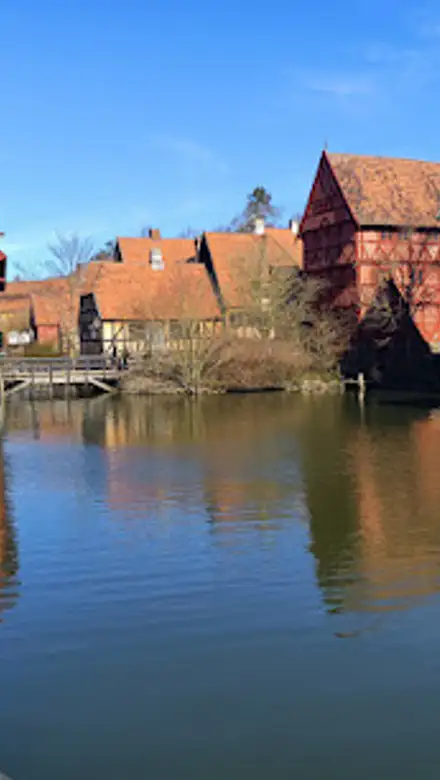
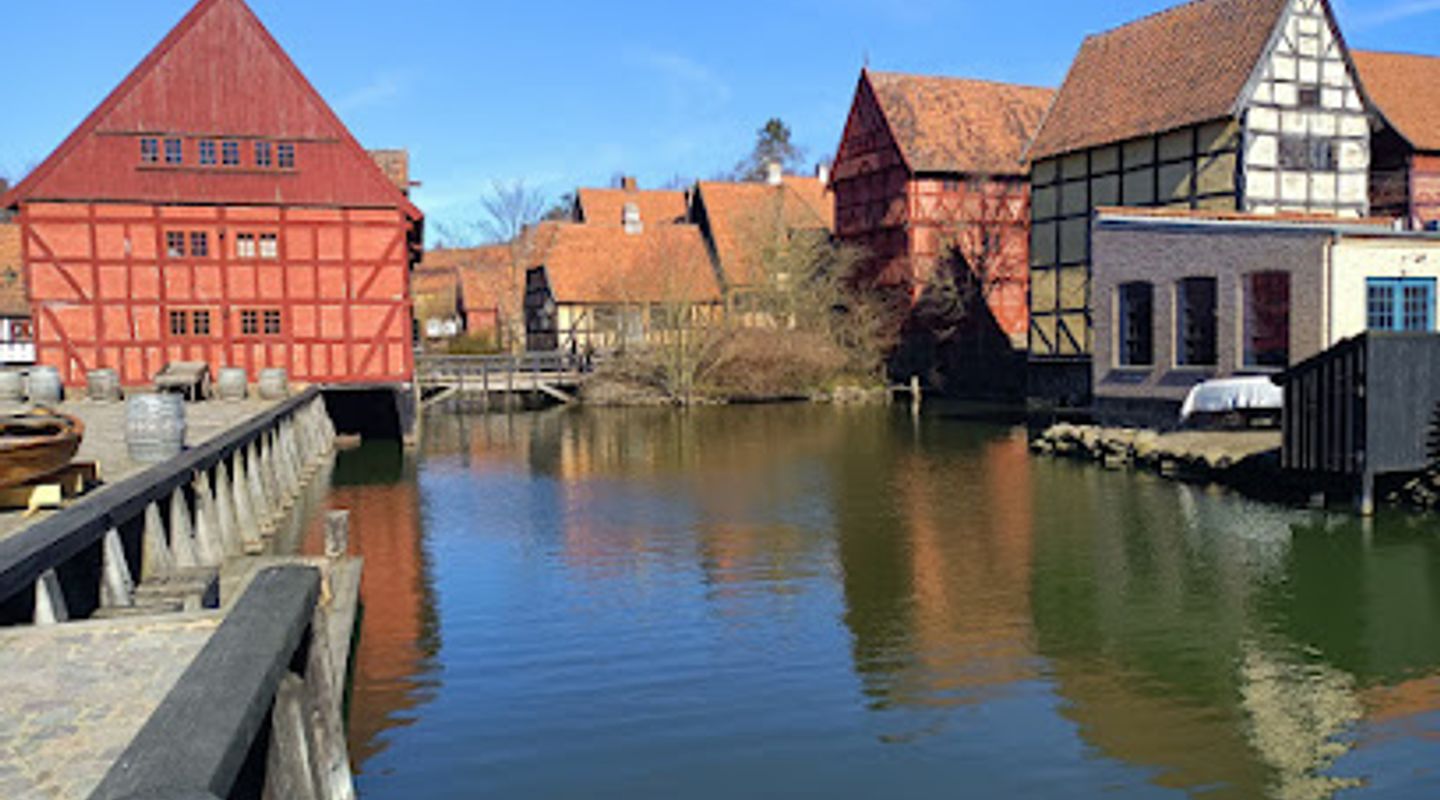
Den Gamle By, set on the edge of Aarhus’ Botanical Garden, is not an old quarter that simply survived modernisation. It is an entire town carefully reassembled from original buildings brought here from all over Denmark, each one taken down, transported and rebuilt to preserve authentic details. Narrow cobbled streets, creaking timber frames and sagging red roofs create the atmosphere of a small market town, but every doorway opens onto a different chapter of Danish urban life.From the moment you pass the first merchant’s house and the old town square, you are surrounded by shops, workshops, backyards and gardens that once stood in cities such as Aalborg, Copenhagen and Aarhus itself. Interiors are furnished with period objects, from painted chests and tiled stoves to tools, crockery and clothing, giving the sense that their former residents have only just stepped outside.
From Hans Christian Andersen’s days back to the 1600s
The oldest quarter reaches back to the 1600s and 1700s, an era often associated with Hans Christian Andersen’s stories. Here, half‑timbered houses lean toward one another over uneven lanes, while small squares and courtyards open suddenly between façades. You can peek into a working bakery, an apothecary, stables and craftsmen’s workshops, each arranged exactly as they might have been when the buildings were new.This part of the museum captures the rhythms of a market town where tradespeople lived above their shops, grain was stored in lofty attics and goods arrived by cart and boat. Seasonal decorations and changing displays of tools or household items reflect how closely life followed the calendar, from winter hardship to summer abundance.
Modern streets of 1864 and the roaring 1920s
Moving forward in time, the streets of 1864 and 1927 show how Danish towns adapted to industry and new technology. Paved sidewalks, street lighting and early advertising appear alongside horse‑drawn carts and the first motorcars. Hardware stores, bookshops, post offices and a telephone exchange illustrate the growing web of communication and commerce.Shop interiors in these quarters are especially rich: counters stocked with enamelware, soap, tobacco, fabrics and stationery evoke a world where everything was bought over the counter and carefully wrapped. A recreated car dealership and workshops hint at the thrill of early motoring, while private apartments above the shops reveal the contrast between bourgeois comfort and more modest rooms.
Everyday life in the welfare‑state 1970s
Further on, the atmosphere changes again as you step into a neighbourhood from the 1970s. Here the architecture is more familiar: brick apartment blocks, convenience stores, a radio and TV shop, hairdresser and butcher. Inside the homes, you find patterned wallpaper, low sofas, vinyl records, children’s toys and well‑used kitchens that speak of nuclear families, collectives, single parents and young couples.Cars parked in courtyards, mopeds in a small workshop and backyard toilets scribbled with period graffiti all contribute to a vivid portrait of late‑20th‑century life. This section highlights the social changes of the era, from expanding consumer goods and youth culture to new family structures and political awareness.
A living museum with people, sounds and smells
Den Gamle By is designed as a living museum rather than a static collection. At many times of year, staff in historical costume bake bread, chop wood, tend gardens, demonstrate crafts and serve customers in old‑fashioned shops. The clip‑clop of horse‑drawn carriages, the smell of fresh pastries and the ring of a blacksmith’s hammer make the town feel inhabited.Several museums are woven into the streets, including exhibitions on everyday Danish life, seasonal traditions and design. Temporary displays and themed rooms explore topics such as Christmas customs, domestic interiors or the history of posters, all housed within the historic buildings that once witnessed similar scenes.
Exploring at your own pace
The site is large enough to fill most of a day, yet compact enough to wander without a fixed route. You can lose yourself in back alleys and gardens, pause by ponds and hedged plots, or rest on benches beneath fruit trees and gables. Small cafés and a traditional inn serve food and drinks inspired by Danish recipes, from simple coffee and pastries to hearty meals.Because the streets span several centuries, there is always another layer to discover: a Renaissance merchant’s mansion, a cosy 19th‑century sitting room, a 1920s office or a 1970s kindergarten. Together, these pieces form a three‑dimensional story of how Danish towns grew and changed, inviting you to step in and become, for a while, part of the scene.
Evendo Review Centre
 Google
Guest reviews
Best time to go
Quietest: Jan, Feb & Mar · before 7am or from 9pm
Busy times are Evendo estimates for a typical year, to help you plan. Actual crowds vary with events, school holidays and the weather.
Explore The Old Town on the map
A handpicked selection of must-see spots near The Old Town, mapped for you.
Get your free copy of our complete guide to The Old Town, delivered straight to you.
Everything on this page, from opening hours and how to get there to Eve’s tips and the best time to go, in one PDF you can read offline, print or share.
Already have an account? Sign in
Your The Old Town guide is ready.
We'll send it to · Not you? Sign out

Getting your guide ready…
We are putting together a fresh copy of the The Old Town guide. This can take up to a minute.
This can take a few moments. If your browser asks, choose Allow so the download can start. You'll find the guide in your Downloads folder.
Nothing happened? Download it again
Sorry, the guide is taking longer than usual. Please try again in a minute, or get it by email instead.
Unlock the best of The Old Town
Skip-the-line tickets, guided tours with entry, and walking tours of the area, booked in a few clicks.
 Tour with entry
Unique Christmas Market in the Old Town Museum
from $266.48 Tour with entry
Private Shore Excursion: Highlights of Aarhus
from $646.00 Tour with entry
Aarhus Private Tour in Den Gamle By from Cruise Port
from $766.83 Tour with entry
Aarhus Highlights Private Shore Tour: A Walking Journey|
from $984.92


Other nearby places you may find interesting
The closest places of the same kind, if this one is not quite what you had in mind.
-
-
-
-
-


Swipe for more places
More to explore near The Old Town

 Best experiences near The Old Town
 Best hotels near The Old Town
 Best landmarks near The Old Town
 Best attractions near The Old Town
 Best shops near The Old Town
 Best restaurants near The Old Town
 Best bars near The Old Town
Do you manage this location?
Take control to get all the benefits, like improved information, better appearance, and stronger visibility across AI-powered discovery.
Explore more

Explore more of Aarhus
Discover Aarhus, Denmark's second-largest city, where ancient history meets modern culture. Explore historical sites, vibrant arts, and a thriving food scene in the City of Smiles.
Explore Aarhus
Explore more of Denmark
Discover Denmark: A perfect blend of history, modern design, and the cozy concept of hygge. Explore vibrant cities, serene landscapes, and world-class cuisine.
Explore Denmark