
Silkeborg Bunkermuseum
Step into a preserved German WWII command bunker and explore Denmark's occupation through authentic artifacts and wartime documents.
A Fortress from Occupied Denmark
Silkeborg Bunkermuseum occupies one of approximately 12 large concrete bunkers that formed the German military headquarters complex in Denmark from November 1943 to June 1945. The museum is housed in a Type R622 bunker—a standardized German defensive structure designed to withstand aerial bombardment and artillery fire. This particular bunker commanded strategic importance as the nerve center for German operations across the region, making it a crucial installation during the final years of World War II in Northern Europe. The bunker's thick concrete walls and fortified design remain largely intact, allowing visitors to experience the authentic atmosphere of a wartime command post. The structure's preservation provides tangible evidence of the military infrastructure that dominated the Danish landscape during the occupation.Command and Control During the Occupation
The exhibition within the bunker's two rooms tells the story of German military leadership in Denmark, focusing on the commanders who directed operations from this headquarters. General of the Infantry Herman von Hanneken and later Colonel-General Georg Lindemann oversaw military affairs from this command center, making decisions that affected the entire occupied territory. The museum documents the hierarchical structure, strategic objectives, and day-to-day operations of this military administration through original maps, documents, and photographic records. Visitors encounter posters with detailed maps showing the disposition of German forces, military correspondence, and photographs capturing the occupation period. These materials provide insight into how the German military organized and maintained control over Denmark during the war's final years.Artifacts and Personal Testimony
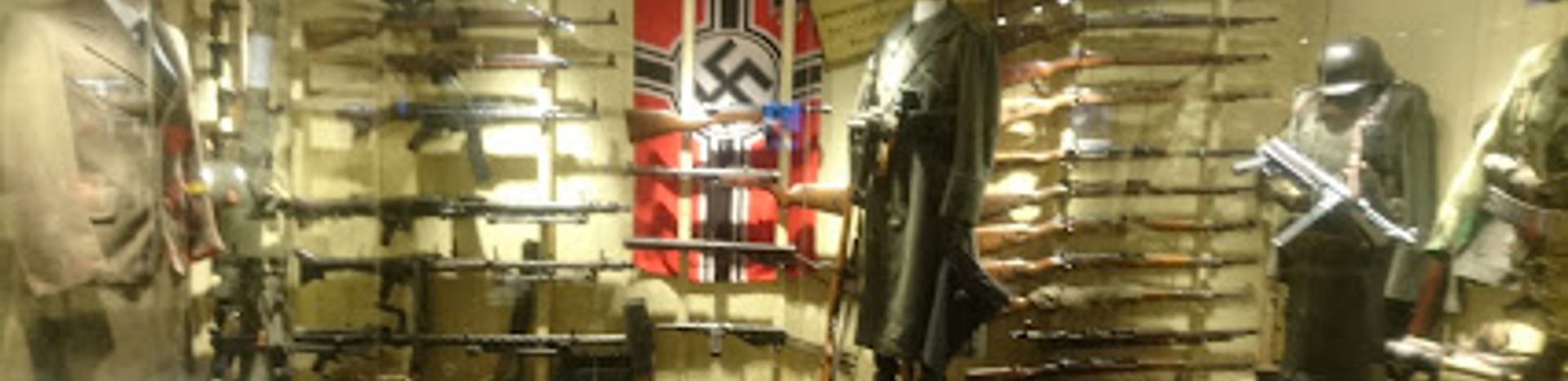
The museum houses an extensive collection of original military equipment and personal effects from the occupation era. Uniforms, weapons, tools, and other objects tell the stories of individual soldiers and officers who served in Denmark. These tangible artifacts create a direct connection between visitors and the people who lived through this period, transforming abstract historical events into human experiences. The exhibition extends beyond military hardware to include the broader human dimension of occupation. Personal items and equipment reveal the daily realities of military life, the conditions soldiers endured, and the material culture of the era.Refugees and Aftermath
Following the German surrender in May 1945, the bunker complex and surrounding area became a refuge for German civilians fleeing the advancing Soviet forces and the chaos of post-war Europe. The museum's exhibition acknowledges this lesser-known chapter, presenting the stories of German refugees who found temporary shelter in the Silkeborg area. This section of the museum provides context for understanding the complex aftermath of occupation and the humanitarian dimensions of the war's conclusion. The inclusion of refugee narratives demonstrates how the bunker complex served multiple purposes across different phases of the conflict and its resolution, making it a site of layered historical significance.Preservation and Voluntary Stewardship
The museum operates on a volunteer basis, maintained by dedicated local historians and enthusiasts who possess deep knowledge of the site and its history. This grassroots approach to preservation ensures that the bunker remains accessible to the public while maintaining historical accuracy and authenticity. The volunteers' expertise enriches the visitor experience, offering insights that extend beyond the exhibition materials themselves. The voluntary operation reflects a community commitment to remembering and interpreting this significant period in Danish history, ensuring that the bunker serves as an educational resource rather than merely a relic.Local tips
- The museum is open Sundays only from 13:00–16:00 (March through December). Winter closures apply, so confirm opening dates before visiting. Group visits and special arrangements can be requested by contacting the museum directly.
- Plan for 45 minutes to 1 hour inside the bunker. The exhibition is compact but information-rich; the volunteer staff are exceptionally knowledgeable and happy to answer detailed questions about the occupation and military operations.
- Nearby WW2 bunkers in the surrounding area are also open to the public. Bring a flashlight if you plan to explore additional bunkers beyond the main museum, as interior lighting is limited.
- The bunker's concrete interior can be cool and damp year-round. Wear comfortable walking shoes with good grip, as floors may be uneven or slippery. The space is not wheelchair accessible due to the bunker's original design.
- Combine your visit with Museum Silkeborg (home to the famous Tollund Man bog body) or other local attractions in the Silkeborg area to create a full day of cultural exploration.

A brief summary to Silkeborg Bunkermuseum
- Gjessøvej 42, C, Silkeborg, 8600, DK
- +4540180739
- Visit website
- Sunday 1 pm-4 pm
Getting There
-
Bus from Silkeborg Town Centre
Local buses serve the Silkeborg area with connections to Gjessøvej. Journey time from the town centre is approximately 10–15 minutes depending on the route. Service frequency varies seasonally; check local transit schedules for current timetables. No entrance fee required for bus travel; standard regional fare applies (approximately 25–50 DKK for a single journey).
-
Bicycle from Silkeborg Town Centre
Silkeborg is a bicycle-friendly town with dedicated cycling routes. The bunker museum is approximately 3–4 km from the town centre via established cycle paths. Journey time is 15–20 minutes depending on route and fitness level. Bicycle rental is available throughout Silkeborg (typically 60–100 DKK per day). Terrain is relatively flat with good surface conditions.
-
Private Vehicle or Taxi
The museum is located at Gjessøvej 42C, Silkeborg. By car from the town centre, the journey takes approximately 8–12 minutes (3–4 km). Limited parking is available on-site and along the nearby road. Taxi services operate throughout Silkeborg; expect a fare of approximately 80–120 DKK from the town centre. Ride-sharing apps are available in the region.
-
Walking from Silkeborg Town Centre
The bunker museum is approximately 3–4 km from Silkeborg town centre. Walking takes 40–50 minutes on paved roads and established paths. The route is relatively flat with minimal elevation change. Terrain is suitable for most fitness levels, though the distance makes this option practical mainly for those with time and interest in exploring the surrounding landscape.


