
Statue of Michael Drewsen, Central Jutland Travel Guide
Bronze tribute to Silkeborg’s industrious founder, anchoring the lively town square where civic history, public art and everyday life intersect.
Rising over Silkeborg’s central square, the bronze Statue of Michael Drewsen honors the industrialist who effectively founded the modern town through his paper mill and tireless civic work. Set on Torvet in front of the Old Town Hall, the monument anchors a pedestrian plaza framed by historic facades, fountains and café terraces. It is both a symbolic meeting point and a compact introduction to Silkeborg’s 19th‑century transformation from rural estate to thriving market town.
A brief summary to Statue of Michael Drewsen
- Torvet, Silkeborg, 8600, DK
- Click to display
- Duration: 0.5 to 1 hours
- Free
-
 Outdoor
- Mobile reception: 5 out of 5

Know before you go
Hi, I'm Eve. Here are a few practical things to know before exploring Statue of Michael Drewsen.
- Combine a stop at the statue with a visit to the nearby Silkeborg Museum at Hovedgården to see how Drewsen’s paper mill era fits into the town’s wider history.
- Visit in the late afternoon or early evening for softer light on the bronze and fewer harsh shadows if you plan to take photos in the square.
- Look for the inscriptions on the plinth and take a slow loop around the monument to appreciate Pedersen‑Dan’s sculpted details from multiple angles.
Do you manage this location?
Take control to get all the benefits, like improved information, better appearance, and stronger visibility across AI-powered discovery. Learn more about listing your business on Evendo
Activate your presenceOther nearby places you may find interesting
The closest places of the same kind, if this one is not quite what you had in mind.
Explore Statue of Michael Drewsen on the Map
A handpicked selection of must-see spots near Statue of Michael Drewsen, mapped for you.
Getting There
-
Train and short walk within Silkeborg
From Silkeborg Station, the town square Torvet with the Statue of Michael Drewsen lies roughly 800–900 metres away, which usually takes 10–15 minutes on foot at a relaxed pace along mostly flat, paved streets. Regional trains connect Silkeborg with cities such as Aarhus and Herning several times per hour during the day, with standard second‑class tickets on these routes typically ranging from about 60 to 120 DKK depending on distance and time of booking. Pavements are generally smooth and suitable for wheelchairs and prams, though some cobblestones are present close to the square.
-
Local bus to central Silkeborg
Silkeborg’s city buses and regional buses stop at central stops near the pedestrian streets, within about a 5–10 minute walk of Torvet and the statue. Typical journey times from outer neighbourhoods or nearby villages range from 10 to 30 minutes, depending on route and traffic. Single bus tickets within the local zone usually cost in the region of 20 to 30 DKK, and services run more frequently on weekdays than late evenings or Sundays. The walk from the nearest bus stops to the square is flat and on paved surfaces, making it accessible in most weather.
-
Car access to Silkeborg centre
Reaching central Silkeborg by car from nearby Jutland towns such as Aarhus or Viborg typically takes 35 to 60 minutes via regional roads and motorways, depending on starting point and traffic conditions. Several public car parks and parking areas are located around the edge of the pedestrian zone encircling Torvet, usually offering a mix of free time‑limited spaces and paid parking at hourly rates often in the range of 10 to 20 DKK per hour. From many of these car parks it is a 5–10 minute walk on level, paved streets to reach the Statue of Michael Drewsen in the square; be aware that parking rules are enforced and that some central streets are car‑free.
For the on-the-go comforts that matter to you
-
 Restrooms
-
 Drink Options
-
 Drinking Water
-
 Food Options
-
 Seating Areas
-
 Sheltered Areas
-
 Trash Bins
-
 Information Boards
-
 Visitor Center
Discover more about Statue of Michael Drewsen
The founder watching over Silkeborg
Michael Drewsen arrived in Silkeborg in 1844 to lead the new paper mill by the Gudenå River, and over the next three decades he reshaped a rural estate into a purposeful industrial town. His efforts went far beyond the factory floor: he pushed for proper roads, a railway connection, gasworks and telegraph lines, all of which tied Silkeborg into the wider Jutland economy and helped it grow from a handful of residents into a market town with national significance. The statue on Torvet captures him as the driving force behind this transformation.Cast in bronze and set on a stone pedestal, the figure shows Drewsen standing upright in contemporary dress, gaze directed across the square he helped bring into being. The work is by sculptor Hans Peder Pedersen‑Dan, later known for the famous Holger Danske statue at Kronborg, giving this modest provincial monument a strong artistic pedigree. Here, though, the subject is not myth but modern industry and civic ambition.From controversy to enduring symbol
When Drewsen died in 1874, the idea of a memorial quickly surfaced but took years to realize. A committee proposed placing the statue on Torvet in the 1890s, sparking debate about whether the industrialist had primarily served the town or himself. Some critics argued he had not safeguarded his workers’ future well enough, and the project stalled amid arguments over public space and private legacy.Eventually the memorial went ahead, and the statue was unveiled on the square in 1892, eighteen years after Drewsen’s death. Its presence fixed him in the cityscape as “Silkeborg’s powerful man,” a shorthand for the entrepreneurial spirit that drove the town’s early growth. Over time the controversy faded, and the monument became less a point of argument than a convenient, almost taken‑for‑granted reference point in the daily life of the town.Life on Torvet around the bronze figure
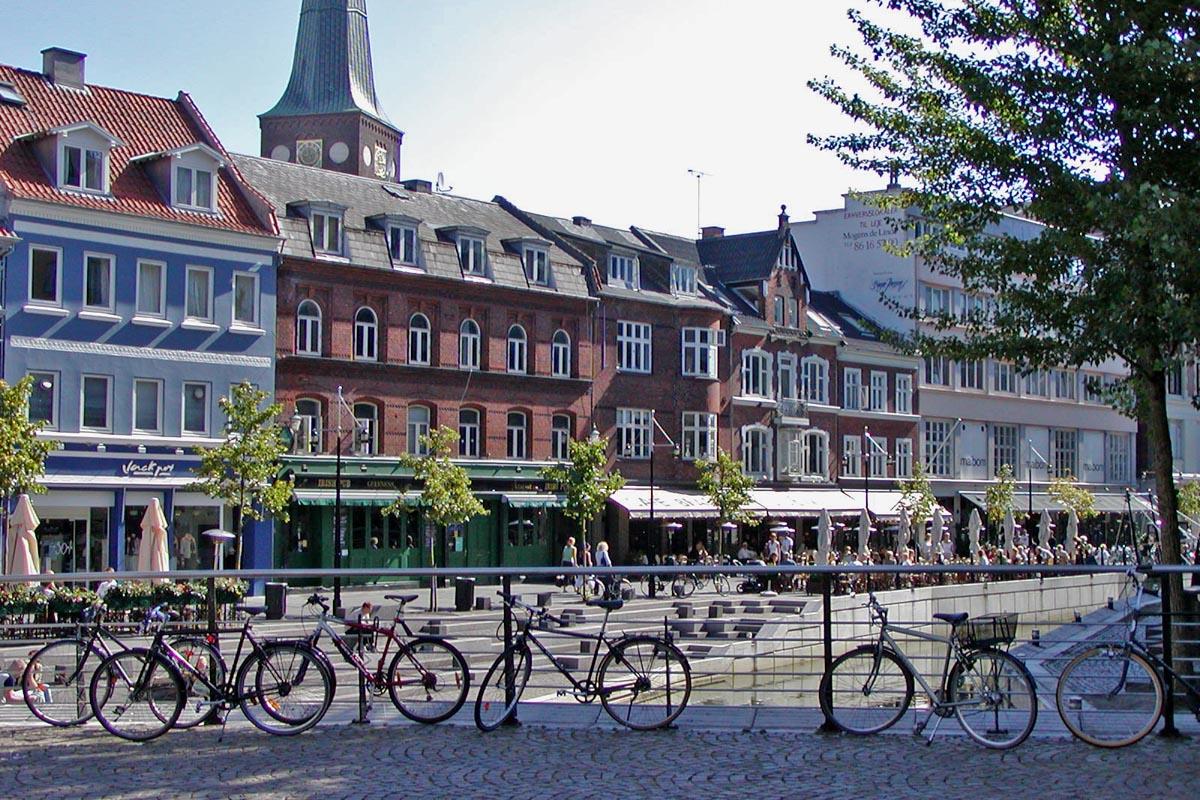
The Statue of Michael Drewsen stands in the heart of Torvet, Silkeborg’s old market square, now a broad pedestrian plaza paved in stone. Around it rise key civic buildings: the former town hall, which today houses the tourist office, the city church and the historic Hotel Dania. Two fountains add movement and sound, and in good weather pavement cafés spill into the open space, so the statue is rarely isolated or silent.At certain times of year, the square hosts markets and cultural events, and the monument becomes a natural backdrop to stalls, music and informal gatherings. A local tradition sees newly graduated students dancing around Drewsen in their white caps to celebrate the completion of their studies, weaving contemporary ritual around a 19th‑century figure. For a visitor, these small scenes underline how thoroughly the statue has been absorbed into the town’s rhythm.Details, materials and artistic choices
Stepping closer reveals the craftsmanship in Pedersen‑Dan’s bronze. The sculpture is life‑sized but elevated on its plinth, giving it presence without overwhelming the square. Clothing folds, facial features and the stance of the figure are handled with restrained naturalism rather than theatrical flourish, consistent with late‑19th‑century public monuments that aimed to present civic role models in sober, recognizable form.The patina of the bronze has deepened over time, giving the surface a weathered richness that contrasts with the lighter paving and façades nearby. Inscriptions on the base identify Drewsen and his role, tying the image back to the paper mill, river transport and infrastructure projects that underpinned Silkeborg’s early prosperity. The work sits at a comfortable distance from surrounding benches, making it easy to pause and study the details from several angles.A compact starting point for exploring Silkeborg
Because of its central position, the statue is an effective orientation point for exploring Silkeborg’s history. Just a short stroll away stands Silkeborg Hovedgård, the 18th‑century manor now housing the local museum, where exhibitions trace the region’s story from prehistoric bog bodies to the industrial age. The Old Town Hall beside the square offers visitor information, while the surrounding pedestrian streets lead to shops, galleries and the waterfront.Even if you only spend a few minutes here, the Statue of Michael Drewsen neatly encapsulates how a single industrial venture and a determined individual set modern Silkeborg in motion. In one compact scene – a bronze figure, a market square, historic buildings and the hum of everyday life – you get a tangible sense of how a 19th‑century paper mill town grew into the lakeside city you see today.More to explore near Statue of Michael Drewsen













Your all‑in‑one travel companion app
Explore expert travel guides, compare and book tours, experiences, hotels, and more—all from the palm of your hand. Download now for seamless trip planning wherever your wanderlust takes you.


Explore More of Central Jutland
Looking beyond Statue of Michael Drewsen? Discover Central Jutland for broader travel guides, local hot-spots, and regional highlights.
Explore Central Jutland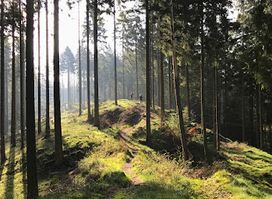
A creaking enclave of old forest in Silkeborg Vesterskov, where gnarled trunks, deadwood and birdsong create a quietly wild escape close to town.
Experience the tradition of Denmark’s lake steamers aboard Turbådene Himmelbjerget, a nostalgic boat journey bridging Ry, Silkeborg, and the legendary hill.
