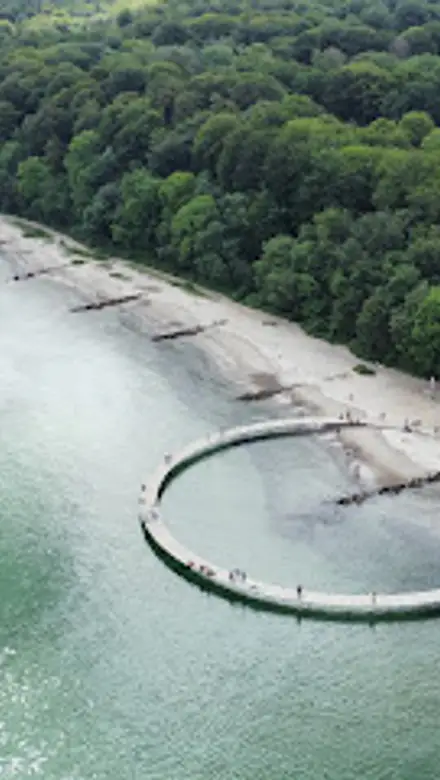
The Infinite Bridge Travel Guide
Free Guide: A perfect wooden circle skimming Aarhus Bay, The Infinite Bridge turns a short seaside stroll into an endless loop of sea, forest and pure Danish design.


A brief summary of The Infinite Bridge
A perfect wooden circle skimming Aarhus Bay, The Infinite Bridge turns a short seaside stroll into an endless loop of sea, forest and pure Danish design.
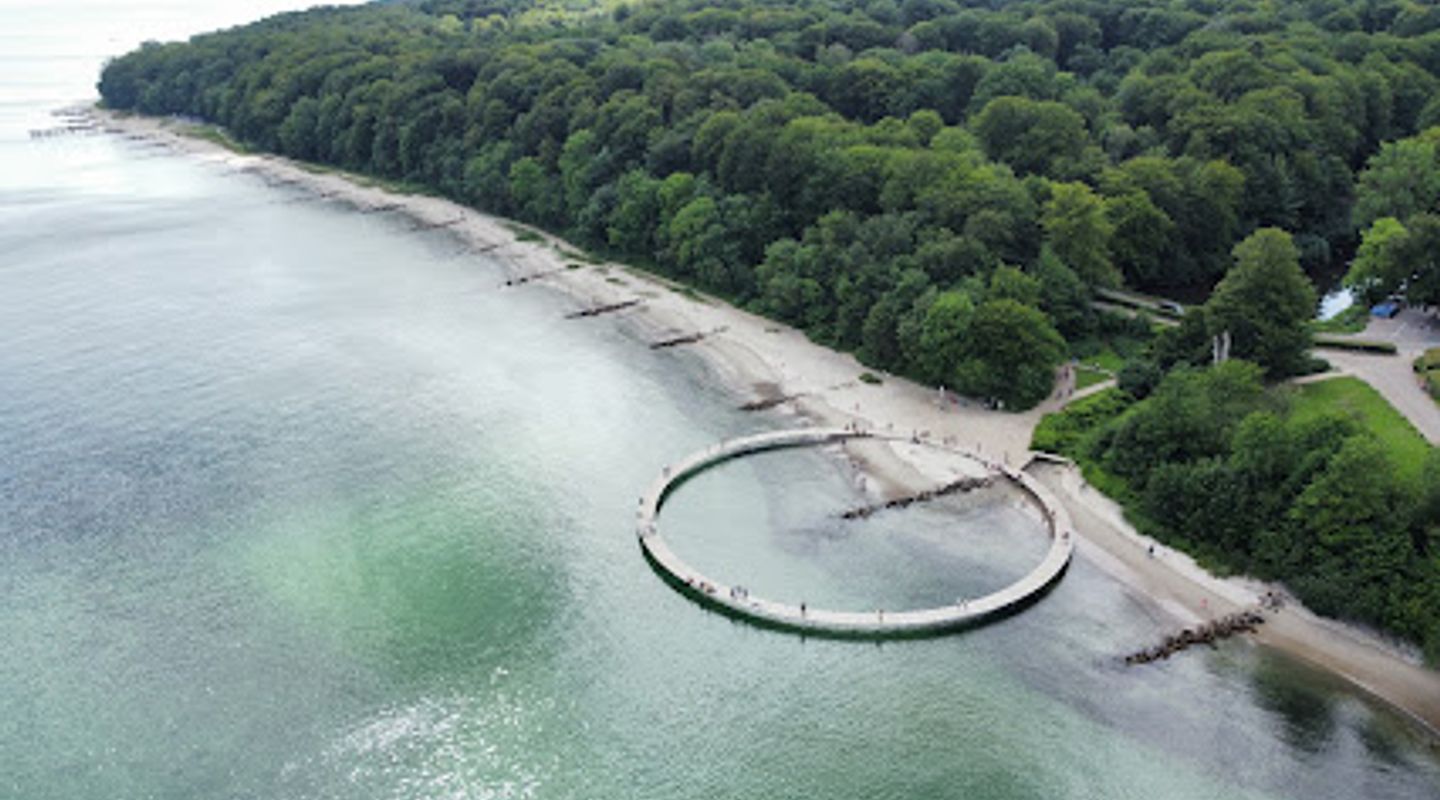
Skimming across the shallows of Aarhus Bay in a perfect wooden circle, The Infinite Bridge is part artwork, part seaside boardwalk. This seasonal installation, set up between spring and autumn near Varna and Ballehage Beach, invites you to walk in unbroken loops between sand, sea and forest. Designed by Danish architects Niels Povlsgaard and Johan Gjøde, it offers serene 360° views, a gentle place to pause, and a distinctive taste of Aarhus’ design-led coastal life.
On-site amenities
 Restrooms
 Drink options
 Drinking water
 Food options
 Seating areas
 Picnic areas
 Trash bins
 Information boards
Opening hours
- Every dayOpen 24 hours
Opening hours as listed on the venue’s Google Business Profile. Hours can change for services and special events, so check with the venue before you go.
- Address
- Ørneredevej 3, 8000 Aarhus
- Website
Getting there
City bus from central Aarhus
Bicycle along the coast
Taxi from central Aarhus
On foot from the Marselisborg area
Discover more about The Infinite Bridge
A circular walk between forest and bay
The Infinite Bridge arcs out from the sand at Varna and Ballehage Beach, forming a flawless 60‑metre‑wide circle that is half anchored on the beach and half floating above the shallow waters of Aarhus Bay. Built from warm-toned timber on slim steel legs, it feels both minimal and playful, like a giant ring laid lightly on the edge of the sea. As you step onto the planks, the beach curves behind you, while the city skyline and open water slowly slide into view.Looping the bridge takes only a few minutes, but the rhythm of wood underfoot and the close presence of the water invite you to slow down. On one side you look inland to the green slopes and trees of Marselisborg Forest; on the other, the bay stretches out with ships, sailboats and the distant outline of Aarhus. The structure sits low above the surface, so you hear the slap of small waves on the pillars and catch the smell of salt and seaweed drifting up through the gaps.
From temporary sculpture to coastal landmark
The bridge began life in 2015 as a site-specific sculpture for the Sculpture by the Sea exhibition, conceived by local architects Niels Povlsgaard and Johan Gjøde. Their idea was to reconnect the city with this historic stretch of coast, where a pier once received steamboats bringing day-trippers to the Varna pavilion. The circular form frames that relationship in every direction: wherever you stand, the panorama is subtly different, yet the loop never ends.Originally intended as a short-lived installation, the project quickly became part of Aarhus’ coastal identity. The municipality chose to reconstruct it each year as a semi-permanent feature, investing in more durable materials and a system that allows the bridge to be dismantled each autumn and rebuilt in spring. Today it functions as both a piece of public art and a practical pier, blurring the line between sculpture, architecture and promenade.
Seasonal rhythms on the water
The Infinite Bridge is a seasonal experience. The structure is usually installed from April and removed again in October, leaving the beach empty over winter while the wooden sections are stored and the steel supports rest below the waves. During its open months the bridge is accessible around the clock, so you can visit at sunrise, under full midday light, or as the last colour drains from the sky.In high summer, the circle becomes a casual gathering place. People wander in swimsuits and bare feet, towels draped over shoulders, pausing to sit with legs dangling above the water. Some use the bridge as a platform for a quick plunge, swimming back to shore through the cool bay. At quieter times, the same loop feels meditative: the same few steps repeated, light shifting across the surface, the forest behind you darkening as evening falls.
Design details and subtle perspectives
Look closely and the simplicity of the bridge reveals careful engineering. It is composed of 60 identical wooden segments, each following the gentle curve of the circle and supported on steel piles driven into the seabed. The deck sits roughly one to two metres above the water, varying slightly with tide and waves, low enough to keep you connected to the elements but high enough to stay dry in normal conditions.As you move, the horizon line bends and the coastline rearranges itself around you. One moment the Varna pavilion is centre stage; a few steps later it slips out of view and the bay opens like a wide amphitheatre. Because everyone walks the same narrow loop, strangers pass within arm’s reach, exchanging brief greetings before drifting apart again. The design creates a shared space that is social without feeling crowded.
Experiencing Aarhus’ coastline at your own pace
Part of the appeal of The Infinite Bridge is how easily it folds into a broader day by the sea. The surrounding beach is sandy and inviting, with room to spread a blanket or simply stand and watch the play of light on the water. Forest paths run close by, so you can combine a coastal stroll with a shaded walk among tall trees, emerging periodically to glimpse the ring of wood glowing against the waves.You might choose to circle the bridge repeatedly, using the constant movement as a kind of moving meditation, or step off after a single loop and simply sit on the shore to watch others trace the same path. In any case, the experience is quietly memorable: a simple form that makes you newly aware of sea, sky and shoreline, and of how seamlessly nature and design meet along this corner of the Aarhus coast.
Evendo Review Centre
 Google
Guest reviews
Best time to go
Quietest: Jan, Feb & Nov · before 6am
Busy times are Evendo estimates for a typical year, to help you plan. Actual crowds vary with events, school holidays and the weather.
Explore The Infinite Bridge on the map
A handpicked selection of must-see spots near The Infinite Bridge, mapped for you.
Get your free copy of our complete guide to The Infinite Bridge, delivered straight to you.
Everything on this page, from opening hours and how to get there to Eve’s tips and the best time to go, in one PDF you can read offline, print or share.
Already have an account? Sign in
Your The Infinite Bridge guide is ready.
We'll send it to · Not you? Sign out

Getting your guide ready…
We are putting together a fresh copy of the The Infinite Bridge guide. This can take up to a minute.
This can take a few moments. If your browser asks, choose Allow so the download can start. You'll find the guide in your Downloads folder.
Nothing happened? Download it again
Sorry, the guide is taking longer than usual. Please try again in a minute, or get it by email instead.
Other nearby places you may find interesting
The closest places of the same kind, if this one is not quite what you had in mind.
-
-
-
-
-


Swipe for more places
More to explore near The Infinite Bridge

 Best experiences near The Infinite Bridge
 Best hotels near The Infinite Bridge
 Best landmarks near The Infinite Bridge
 Best attractions near The Infinite Bridge
 Best shops near The Infinite Bridge
 Best restaurants near The Infinite Bridge
 Best bars near The Infinite Bridge
Do you manage this location?
Take control to get all the benefits, like improved information, better appearance, and stronger visibility across AI-powered discovery.
Explore more

Explore more of Central Jutland
Explore Central Jutland in Denmark: A perfect blend of natural beauty, cultural heritage, and family-friendly attractions.
Explore Central Jutland
Explore more of Denmark
Discover Denmark: A perfect blend of history, modern design, and the cozy concept of hygge. Explore vibrant cities, serene landscapes, and world-class cuisine.
Explore Denmark