Christiansborg Palace Travel Guide
Free Guide: Where medieval fortress, royal grandeur and modern democracy meet under one copper-clad tower in the very heart of Copenhagen.


A brief summary of Christiansborg Palace
Where medieval fortress, royal grandeur and modern democracy meet under one copper-clad tower in the very heart of Copenhagen.
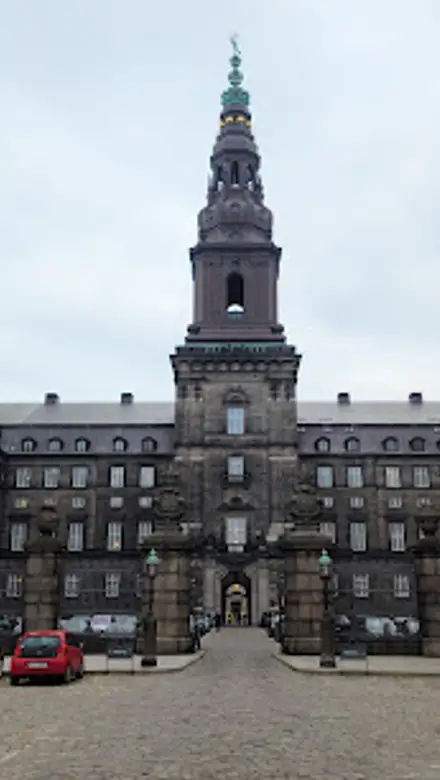
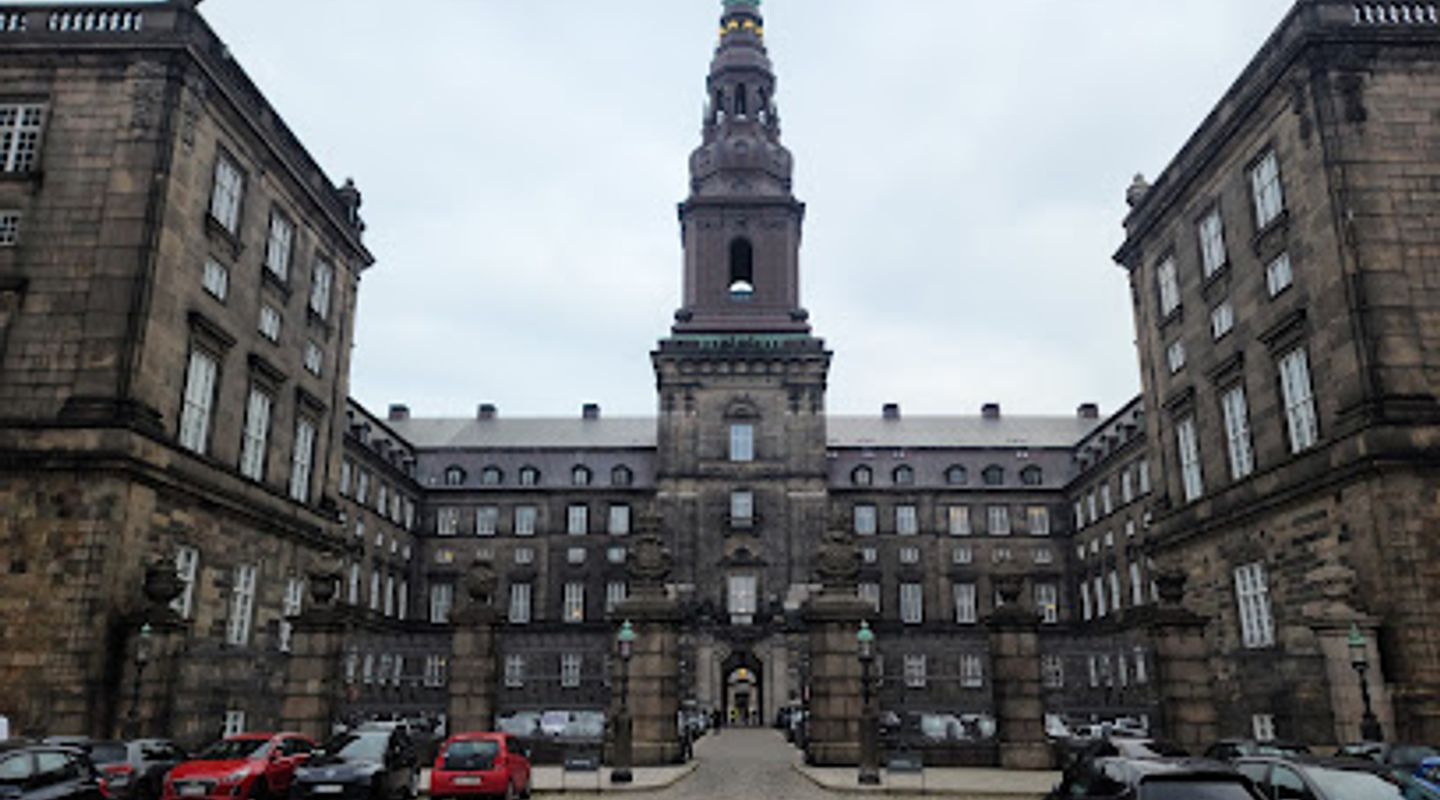
Christiansborg Palace rises from the islet of Slotsholmen as Denmark’s powerhouse in stone: home to the Danish Parliament, Supreme Court and Prime Minister’s Office, yet still crowned with royal pomp. Inside its granite bulk you can wander gilded Royal Reception Rooms, descend to medieval ruins, peek into historic kitchens and glimpse the Royal Stables, all layered over more than 800 years of political and royal history in the heart of Copenhagen.
On-site amenities
 Restrooms
 Drink options
 Drinking water
 Food options
 Seating areas
 Sheltered areas
 Trash bins
 Information boards
 Visitor centre
Opening hours
- Every day10 am–5 pm
Opening hours as listed on the venue’s Google Business Profile. Hours can change for services and special events, so check with the venue before you go.
- Address
- Prins Jørgens Gård 1, 1218 København
- Phone
- Website
Getting there
Metro
City bus
Walking from central Copenhagen
Bicycle
Discover more about Christiansborg Palace
A seat of power on tiny Slotsholmen
Christiansborg Palace dominates the small island of Slotsholmen in central Copenhagen, where Denmark has been governed in one form or another for more than eight centuries. Here, the country’s legislative, judicial and executive branches share the same monumental complex, an arrangement unique in the world. Today the Danish Parliament, the Supreme Court and the Prime Minister’s Office all occupy wings of the palace, while the monarch still uses select rooms for ceremonies and state occasions.The current building dates from the early 20th century, but it stands on top of successive fortresses and castles that reach back to the 1100s. That long continuity gives Christiansborg an atmosphere that feels both official and deeply historic, with cobbled courtyards, heavy gates and the constant sense that decisions taken within these walls ripple across the nation.
From Absalon’s castle to a neo‑Baroque giant
The story begins around 1167, when Bishop Absalon, founder of Copenhagen, built a fortified stronghold on this spot to control the harbour and surrounding waters. Later, as royal power grew, Copenhagen Castle replaced the bishop’s fortress and became the main residence of Danish kings and the centre of government for centuries. By the 1700s that medieval castle was outdated, and King Christian VI ordered it demolished to build a grand new residence.His first Christiansborg Palace, completed in the 1740s, was at the time the largest palace in Northern Europe, a lavish Baroque statement of absolute monarchy. A devastating fire in 1794 destroyed most of it, prompting the royal family to move permanently to Amalienborg. A second palace in a neoclassical style rose in the 1800s, only to burn again in 1884. The present Christiansborg, finished in 1928, is a historicist neo‑Baroque creation in dark granite that deliberately echoes its predecessors while asserting the authority of a modern constitutional state.
Royal rooms, glittering halls and modern tapestries
Although the monarch no longer lives here, Christiansborg still contains opulent Royal Reception Rooms used for banquets, state dinners, audiences and the proclamation of new monarchs. Visitors enter a sequence of richly decorated salons with crystal chandeliers, stucco ceilings and polished parquet floors, many furnished with pieces saved from earlier palaces. The Throne Room opens onto a balcony where Danish sovereigns are traditionally presented to the public.One of the most striking spaces is the Great Hall, lined with a cycle of colourful contemporary tapestries that narrate more than a thousand years of Danish and world history in vivid woven scenes. Elsewhere, the Oval Throne Room, Tower Room and Alexandra Hall each reveal a slightly different facet of royal protocol, from glittering banquets to formal receptions of foreign dignitaries.
Ruins, kitchens and the lives behind the scenes
Beneath the palace, an atmospheric archaeological area reveals the foundations of Absalon’s medieval castle and fragments of Copenhagen Castle, exposed during construction of the present building. Walking among the stone walls you trace the site’s evolution from fortress to royal seat to modern parliament and literally see history layered below your feet.In another wing, the former Royal Kitchen has been re‑imagined to show the scale of work needed to feed hundreds of guests at major state events. Long rows of copper pots, vast stoves and cleverly staged table settings give a sense of the logistics and hierarchy behind court life. On the other side of the complex, the Royal Stables still house ceremonial horses and historic carriages, continuing an equestrian tradition that once underpinned royal display and transport.
The tower, views and everyday palace life
Crowning the palace is a tall copper‑clad tower, the highest in central Copenhagen, which serves as a landmark visible from many parts of the city. On clear days, views stretch over the old town’s spires, across the harbour and out towards the Øresund. Inside the courtyards, the daily rhythm is less ceremonial and more governmental, with civil servants and politicians moving between offices under statues of former kings.Despite its strict façades, Christiansborg is very much part of daily Copenhagen: surrounded by canals, linked to the National Museum and Royal Library, and bordered by squares that often host public events and demonstrations. The palace embodies the country’s shift from absolute monarchy to parliamentary democracy, yet still stages the rituals and symbolism of the Danish crown, making a visit both an architectural experience and a crash course in national history.
Evendo Review Centre
 Google
Guest reviews
Best time to go
Quietest: Jan, Feb & Mar · before 7am or from 9pm
Busy times are Evendo estimates for a typical year, to help you plan. Actual crowds vary with events, school holidays and the weather.
Explore Christiansborg Palace on the map
A handpicked selection of must-see spots near Christiansborg Palace, mapped for you.
Get your free copy of our complete guide to Christiansborg Palace, delivered straight to you.
Everything on this page, from opening hours and how to get there to Eve’s tips and the best time to go, in one PDF you can read offline, print or share.
Already have an account? Sign in
Your Christiansborg Palace guide is ready.
We'll send it to · Not you? Sign out

Getting your guide ready…
We are putting together a fresh copy of the Christiansborg Palace guide. This can take up to a minute.
This can take a few moments. If your browser asks, choose Allow so the download can start. You'll find the guide in your Downloads folder.
Nothing happened? Download it again
Sorry, the guide is taking longer than usual. Please try again in a minute, or get it by email instead.
Unlock the best of Christiansborg Palace
Skip-the-line tickets, guided tours with entry, and walking tours of the area, booked in a few clicks.
 Tour with entry
Copenhagen Self-Guided Tour
from $7.48 Tour with entry
Half Day Self-Guided Audio Walking Private Tour in Copenhagen
from $14.10 Tour with entry
GhostWalk Copenhagen: Self-Guided Audio Experience from StoryHunt
from $14.10 Tour with entry
The Murder by Christiansborg Palace: Interactive Mystery Hunt
from $26.70


Other nearby places you may find interesting
The closest places of the same kind, if this one is not quite what you had in mind.
-
-
-
-
-


Swipe for more places
More to explore near Christiansborg Palace

 Best experiences near Christiansborg Palace
 Best hotels near Christiansborg Palace
 Best landmarks near Christiansborg Palace
 Best attractions near Christiansborg Palace
 Best shops near Christiansborg Palace
 Best restaurants near Christiansborg Palace
 Best bars near Christiansborg Palace
Do you manage this location?
Take control to get all the benefits, like improved information, better appearance, and stronger visibility across AI-powered discovery.
Explore more
Explore more of Copenhagen Region
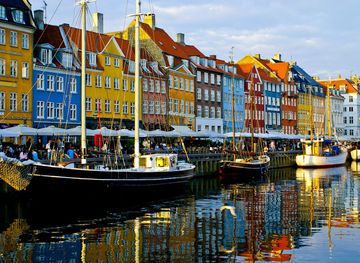
Discover the Copenhagen Region: A perfect mix of historic charm and modern vibrancy, offering scenic beauty, cultural landmarks, and a high quality of life.
Explore Copenhagen Region
Explore more of Denmark
Discover Denmark: A perfect blend of history, modern design, and the cozy concept of hygge. Explore vibrant cities, serene landscapes, and world-class cuisine.
Explore Denmark