

Danish Jewish Museum, Copenhagen Travel Guide
Architect Daniel Libeskind’s intimate "Mitzvah" interior turns a 17th‑century royal boathouse into a powerful, quietly absorbing journey through 400 years of Jewish life in Denmark.
Tucked into the vaulted 17th‑century Galley House by the Royal Library Garden, the Danish Jewish Museum offers a powerful journey through 400 years of Jewish life in Denmark. Inside this former royal boathouse, architect Daniel Libeskind has created an intimate, maze‑like interior based on the Hebrew word “Mitzvah”, echoing both the rescue of Danish Jews during the Second World War and everyday stories of faith, identity and belonging in Danish society.
A brief summary to Danish Jewish Museum
- Proviantpassagen 6, Copenhagen, Indre By, 1218, DK
- Click to display
- Click to display
- Duration: 1 to 2 hours
- Mid ranged
-
 Indoor
- Mobile reception: 5 out of 5
- Wednesday 11 am-5 pm
- Thursday 11 am-5 pm
- Friday 11 am-5 pm
- Saturday 11 am-5 pm
- Sunday 11 am-5 pm

Know before you go
Hi, I'm Eve. Here are a few practical things to know before exploring Danish Jewish Museum.
- Plan around the limited opening days and hours; the museum is usually open Wednesday to Sunday midday to late afternoon and closed on Mondays and Tuesdays.
- Set aside time simply to walk the corridors twice; on a second circuit the "Mitzvah" floor plan and subtle slopes become much easier to sense and appreciate.
- Combine your visit with a quiet break in the Royal Library Garden just outside, which offers benches, greenery and a striking contrast to the museum’s enclosed vaults.
- Photography without flash is generally fine in most areas, but avoid bright light on delicate objects and check for any marked restrictions in temporary exhibitions.
- If you read Danish, ask about the reading room and research resources; they provide deeper insight into local sources on Jewish history in Denmark.
Do you manage this location?
Take control to get all the benefits, like improved information, better appearance, and stronger visibility across AI-powered discovery. Learn more about listing your business on Evendo
Activate your presenceOther nearby places you may find interesting
The closest places of the same kind, if this one is not quite what you had in mind.

Explore Danish Jewish Museum on the Map
A handpicked selection of must-see spots near Danish Jewish Museum, mapped for you.
Unlock the Best of Danish Jewish Museum
Buy tickets
-
No tickets available
Book tours with entry


Getting There
-
Metro and short walk
From central Copenhagen, take the M1 or M2 metro line to Gammel Strand or Kongens Nytorv; trains run every few minutes and a single zone ticket costs roughly 20–25 DKK. From either station it is about a 10–15 minute level walk through the historic center to the Royal Library Garden. Pavements are generally smooth and suitable for wheelchairs and strollers, though cobblestones appear in some stretches.
-
City bus
Several city bus lines stop near Slotsholmen and the Parliament area, a 5–10 minute walk from the museum, with typical journey times of 10–25 minutes from inner districts depending on traffic. Standard bus tickets cost around 20–25 DKK within the central zones and buses usually run every 10–20 minutes during the day. Expect some cobbled sections and occasional crowds at peak commuting hours.
-
Bicycle
Copenhagen’s extensive cycle lanes make it straightforward to reach the museum by bike from most central neighbourhoods in 10–20 minutes. You can use a rental or bike‑share for roughly 20–60 DKK per hour depending on the provider. Bike racks are available around the Royal Library and nearby streets, but spaces can fill up in office hours, so allow a little extra time to park and walk into the garden.
-
Taxi from central areas
A taxi ride from popular central locations such as the main railway station or Nyhavn typically takes 10–15 minutes in normal traffic. Fares usually fall in the 120–200 DKK range including basic charges and may rise at night or in heavy congestion. Taxis can drop passengers close to the entrances of the Royal Library and Parliament area, from where a short, mostly flat walk leads into the Royal Library Garden.
For the on-the-go comforts that matter to you
-
 Restrooms
-
 Seating Areas
-
 Trash Bins
-
 Information Boards
-
 Visitor Center
Discover more about Danish Jewish Museum
A museum woven into Copenhagen’s royal waterfront
Housed in the historic Galley House on Slotsholmen, the Danish Jewish Museum occupies the vaulted basement of what was once King Christian IV’s royal boathouse. Here, warships once loaded ammunition and provisions, shielded from prying eyes; today those same brick vaults shelter delicate ritual objects, family heirlooms and everyday traces of Jewish life in Denmark. The setting is no coincidence: it was Christian IV who first invited Jews to settle in Denmark in the 17th century, linking the building’s maritime past with the beginnings of Danish Jewish history.Step inside and you exchange the open, leafy calm of the Royal Library Garden for a low, stone‑arched interior. The thick walls and discreet position beside the modern Black Diamond library capture the sense of a story that has long been present, yet often hidden in plain sight within the very heart of Copenhagen.Daniel Libeskind’s architecture of the word “Mitzvah”
The interior is a complete reimagining by architect Daniel Libeskind, known for his Jewish Museum in Berlin. Rather than imposing a neutral gallery, he has inscribed the Hebrew word “Mitzvah” – meaning commandment, obligation or good deed – into the floor plan itself. As you follow the skewed corridors and angled passageways, you are literally walking through the four letters of the word.Floor levels tilt almost imperceptibly, walls swerve and perspectives shift, creating a subtle sense of instability that recalls the vulnerability of minority life. Yet the spaces are finished in pale wood, warm light and carefully framed views of the old masonry, balancing unease with a distinctly Nordic calm. The result is a small "building within a building": a contemporary wooden volume nested inside centuries‑old stone, where past and present seem to speak to each other.Four centuries of Danish Jewish life under one roof
The permanent exhibition, often described as “Space and Spaciousness,” traces some 400 years of Jewish presence in Denmark. Rather than a single grand narrative, it unfolds through objects: silver Torah ornaments, prayer books, shop signs, wedding contracts, everyday utensils and portraits. Each piece opens a door onto themes of migration, trade, assimilation, religious practice and cultural exchange.One thread running through the displays is the 1943 rescue of Danish Jews, when thousands escaped across the Øresund to Sweden with the help of their neighbours. Maps, photographs and personal testimonies give that episode human scale, placing it within wider questions of solidarity, citizenship and the responsibilities of a majority society toward its minorities. Alongside wartime stories, you encounter quieter chapters: the establishment of congregations, debates over identity, and the place of Jewish culture in a modern welfare state.A minority museum at the crossroads of culture and research
The museum functions not only as an exhibition space but also as a state‑recognised cultural history institution. Behind the scenes, its collections, archives and research projects document the diverse experiences of Danish Jews: urban and provincial, religious and secular, long‑settled families and more recent arrivals. A reading room offers materials for those wishing to delve deeper, especially in Danish, while temporary exhibitions and cultural events explore topics from festivals and food traditions to contemporary art and memory culture.Because of its compact size, the visit feels concentrated and reflective. Rather than overwhelming with scale, the museum invites you to linger with individual stories and details. Its position within Copenhagen’s cultural district, close to parliament and major museums, underlines how Jewish history is interwoven with the national story rather than standing apart from it.Atmosphere, details and how to experience the space
Inside, the atmosphere is hushed and contemplative, with muffled sounds from the garden above and a soft play of light along the angled timber surfaces. Display texts are presented in both Danish and English, making the exhibitions accessible to international visitors. Occasional glimpses of the garden and surrounding buildings through deep window openings remind you that this intimate museum is embedded in the city’s political and cultural core.Allow time simply to walk the corridors and notice how the architecture changes your sense of balance and direction. Small seating niches encourage pauses for reflection, while multimedia elements and films add voices and movement to the otherwise quiet rooms. Whether you have a personal connection to Jewish heritage or are encountering this history for the first time, the museum offers a compact but layered experience that stays with you after you step back out into the daylight of the Royal Library Garden.












Your all‑in‑one travel companion app
Explore expert travel guides, compare and book tours, experiences, hotels, and more—all from the palm of your hand. Download now for seamless trip planning wherever your wanderlust takes you.


Explore More of Copenhagen
Looking beyond Danish Jewish Museum? Discover Copenhagen for broader travel guides, local hot-spots, and regional highlights.
Explore Copenhagen
A tiny teal bridge tower above Copenhagen’s harbour, where a 1930s control room was reinvented as an intimate cultural venue with sweeping urban and waterfront views.
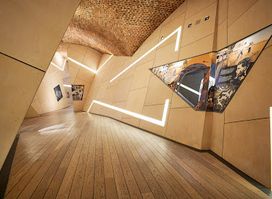
A quietly powerful museum where Libeskind’s angular design and intimate artifacts tell 400 years of Danish‑Jewish life and a remarkable story of rescue.
