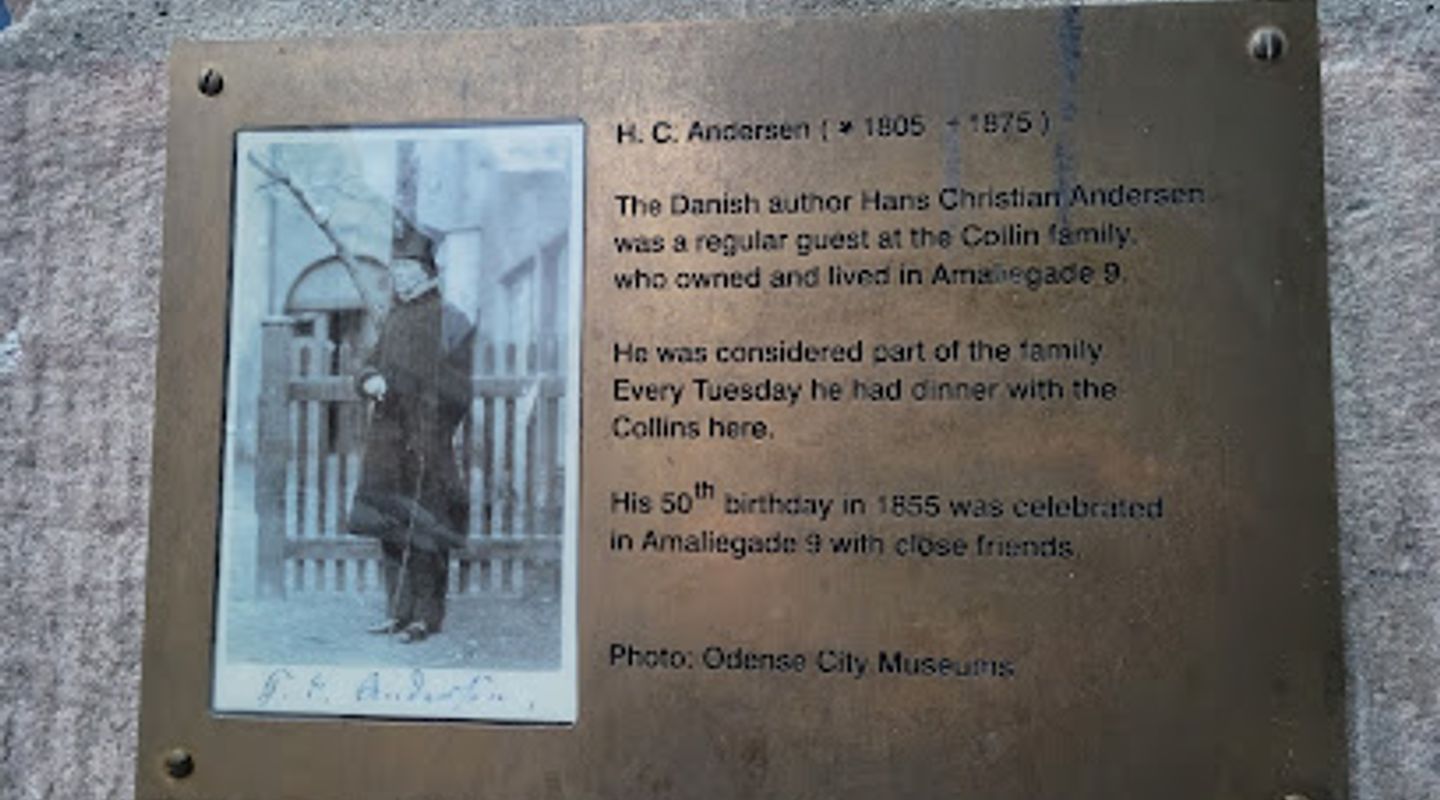
Hans Christian Andersen plaque, Copenhagen Travel Guide
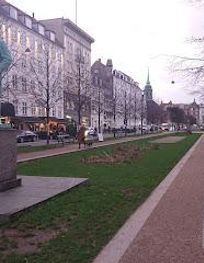
A modest plaque on elegant Amaliegade quietly marks Hans Christian Andersen’s presence amid the formal mansions and palace axis of Copenhagen’s Frederiksstaden.
Set into the elegant façade of a townhouse on Amaliegade in Copenhagen’s Frederiksstaden district, the modest Hans Christian Andersen plaque at no. 7 quietly commemorates Denmark’s beloved storyteller amid grand Rococo streetscapes. Here, in one of the city’s most distinguished quarters, a simple memorial anchors Andersen’s life and work in the everyday fabric of Copenhagen. Surrounded by stately mansions, nearby palaces and formal architecture, this unobtrusive marker invites a brief but evocative pause, connecting passing pedestrians to the author whose fairy tales travel far beyond this refined residential street.
A brief summary to Hans Christian Andersen plaque
- Amaliegade 7, Copenhagen, København K, 1256, DK
- Click to display
- Duration: 0.5 to 1 hours
- Free
-
 Outdoor
- Mobile reception: 5 out of 5

Know before you go
Hi, I'm Eve. Here are a few practical things to know before exploring Hans Christian Andersen plaque.
- Look up carefully along the façade at Amaliegade 7; the plaque is small and easy to overlook among the refined architectural details.
- Combine a stop at the plaque with a wider Hans Christian Andersen themed walk linking Nyhavn, King’s Garden and City Hall Square.
- Visit during daylight hours for the best chance to read the inscription and appreciate the surrounding Frederiksstaden architecture.
Do you manage this location?
Take control to get all the benefits, like improved information, better appearance, and stronger visibility across AI-powered discovery. Learn more about listing your business on Evendo
Activate your presenceOther nearby places you may find interesting
The closest places of the same kind, if this one is not quite what you had in mind.
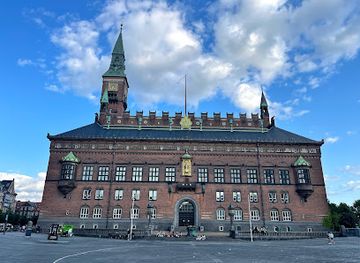


Explore Hans Christian Andersen plaque on the Map
A handpicked selection of must-see spots near Hans Christian Andersen plaque, mapped for you.
Getting There
-
Metro and short walk from central Copenhagen
From central Copenhagen, take the M3 or M4 metro to Marmorkirken station, which usually takes 3–5 minutes from hubs like Kongens Nytorv. Trains run every few minutes throughout the day and the ride is covered by standard zone 1 tickets, typically costing the same as any inner-city journey on the metro or bus. From Marmorkirken it is an easy 5–10 minute walk along level pavements through the Frederiksstaden district to Amaliegade, generally suitable for most mobility levels.
-
City bus to Frederiksstaden area
Several inner-city bus routes serve the streets around Amalienborg and Frederiksstaden, with typical journey times of 10–20 minutes from major central stops depending on traffic. Single tickets within the central zones are normally priced in line with the wider public transport system and can be bought via ticket machines or travel apps. Buses stop within a few hundred metres of Amaliegade, after which you continue on foot along broad, paved streets that are usually straightforward to navigate.
-
Bicycle from inner city districts
Cycling is one of the most practical ways to reach Amaliegade from neighbourhoods such as Vesterbro, Nørrebro or Christianshavn, with typical ride times of 10–20 minutes using Copenhagen’s extensive network of bike lanes. Visitors can use public bike-share schemes or rental shops, with daily rental prices commonly in the lower to mid three-figure range in Danish kroner depending on duration and bike type. The terrain is flat and the approach through Frederiksstaden follows clearly marked cycle tracks, though riders should be comfortable with busy urban cycling conditions at peak hours.
Discover more about Hans Christian Andersen plaque
A Quiet Tribute in a Grand Quarter
The Hans Christian Andersen plaque at Amaliegade 7 sits in the heart of Frederiksstaden, the 18th‑century Rococo district laid out as a showcase of royal ambition and orderly town planning. Amaliegade itself runs like a spine through the quarter, lined with dignified townhouses and mansions whose restrained façades speak of old wealth and courtly life. In the midst of this architectural formality, the plaque is deliberately modest: a small marker on a residential building, easy to miss unless you are looking for it.This quietness is part of its charm. Rather than a grand statue or a staged monument, the plaque acknowledges Hans Christian Andersen where he actually moved through the city – in front of front doors, along cobbled pavements, between palace squares and everyday dwellings. It offers a short, contemplative stop within an otherwise ceremonial streetscape, a point where literary history briefly interrupts the rhythm of city life.Hans Christian Andersen’s Copenhagen Footprints
Hans Christian Andersen spent much of his adult life in Copenhagen, shifting addresses as his fortunes and friendships evolved. In the Frederiksstaden area he moved within circles of patrons and acquaintances who helped further his career, and streets like Amaliegade formed the backdrop to that social world. While Nyhavn’s brightly painted canal houses are better known as his long‑term homes, plaques such as this one broaden the map of his urban life to include more formal districts and drawing‑room interiors.Seen in this light, the plaque is a small node in a wider network of Andersen sites scattered across the city: statues in gardens, memories in the Royal Theatre and traces in churches and cemeteries. Together they sketch a portrait of an author who walked these pavements, watched the streetlife and transformed impressions of everyday Copenhagen into fairy tales now read worldwide.Frederiksstaden’s Architectural Backdrop
What gives the plaque its distinctive atmosphere is less the object itself than the architectural stage around it. Amaliegade is known for its refined 18th‑century buildings: sober yet elegant fronts, tall sash windows and carved stone details that catch the northern light. Just along the street, colonnades connect palace wings, sculptural reliefs adorn pediments, and wrought‑iron balconies project above the sidewalk.Against this backdrop of measured symmetry and royal planning, the plaque introduces a human scale. It reminds you that beyond the façades were workrooms, salons and guest chambers where writers, patrons and politicians exchanged ideas. Standing here, you can easily imagine Andersen arriving on a damp Copenhagen evening, cloak pulled close, climbing the stairs of a house like this to read a manuscript or share a new story.A Brief Literary Pause on an Urban Stroll
For today’s visitor, the Amaliegade plaque works best as a small, reflective stop folded into a wider walk through central Copenhagen. It is not a destination that demands long exploration but rather a moment of recognition: a place to match a familiar name to a real doorway, take a photograph and read the inscription before moving on toward nearby squares and waterfront views.Because it sits on an ordinary residential façade, the experience feels personal and untheatrical. There are no ticket booths or barriers, only the everyday traffic of bicycles, residents coming and going, and the distant sound of church bells or marching guards from nearby royal courtyards. In that ordinariness lies much of the site’s appeal – a reminder that even the most fantastical tales begin in real streets and lived‑in houses.Linking Plaques, Statues and Stories
Many visitors build the plaque into a self‑made Hans Christian Andersen trail, linking it with statues, former homes and other commemorative sites across the city. As one of the quieter stops, it balances the more dramatic settings of canals, gardens and city squares. Seen together, these locations reveal how closely Andersen’s life was woven into Copenhagen’s fabric, from working‑class harboursides to aristocratic quarters like Frederiksstaden.Pausing here, between grand façades and the everyday bustle of a modern capital, you encounter Andersen not only as a figure of myth but as a city resident whose name now rests, discreetly, beside a door on Amaliegade.More to explore near Hans Christian Andersen plaque













Your all‑in‑one travel companion app
Explore expert travel guides, compare and book tours, experiences, hotels, and more—all from the palm of your hand. Download now for seamless trip planning wherever your wanderlust takes you.


Explore More of Copenhagen
Looking beyond Hans Christian Andersen plaque? Discover Copenhagen for broader travel guides, local hot-spots, and regional highlights.
Explore Copenhagen