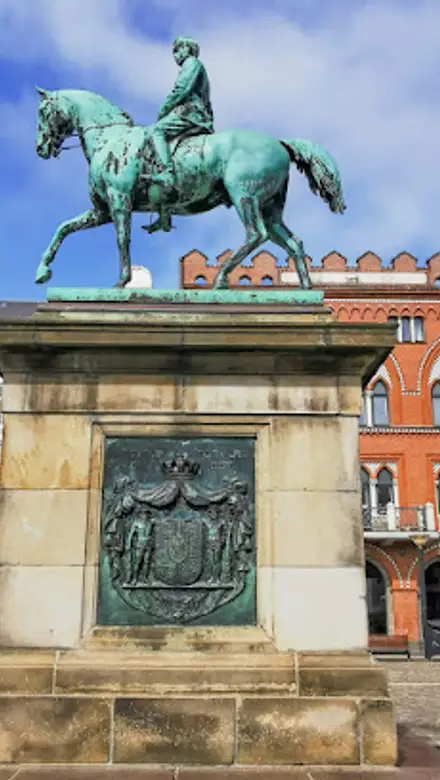
Christian IX statue, Esbjerg, Esbjerg Travel Guide
Free Guide: Historic equestrian monument and central meeting point on Esbjerg’s main square, celebrating the king who founded Denmark’s youngest major North Sea port.


A brief summary of Christian IX statue, Esbjerg
Historic equestrian monument and central meeting point on Esbjerg’s main square, celebrating the king who founded Denmark’s youngest major North Sea port.
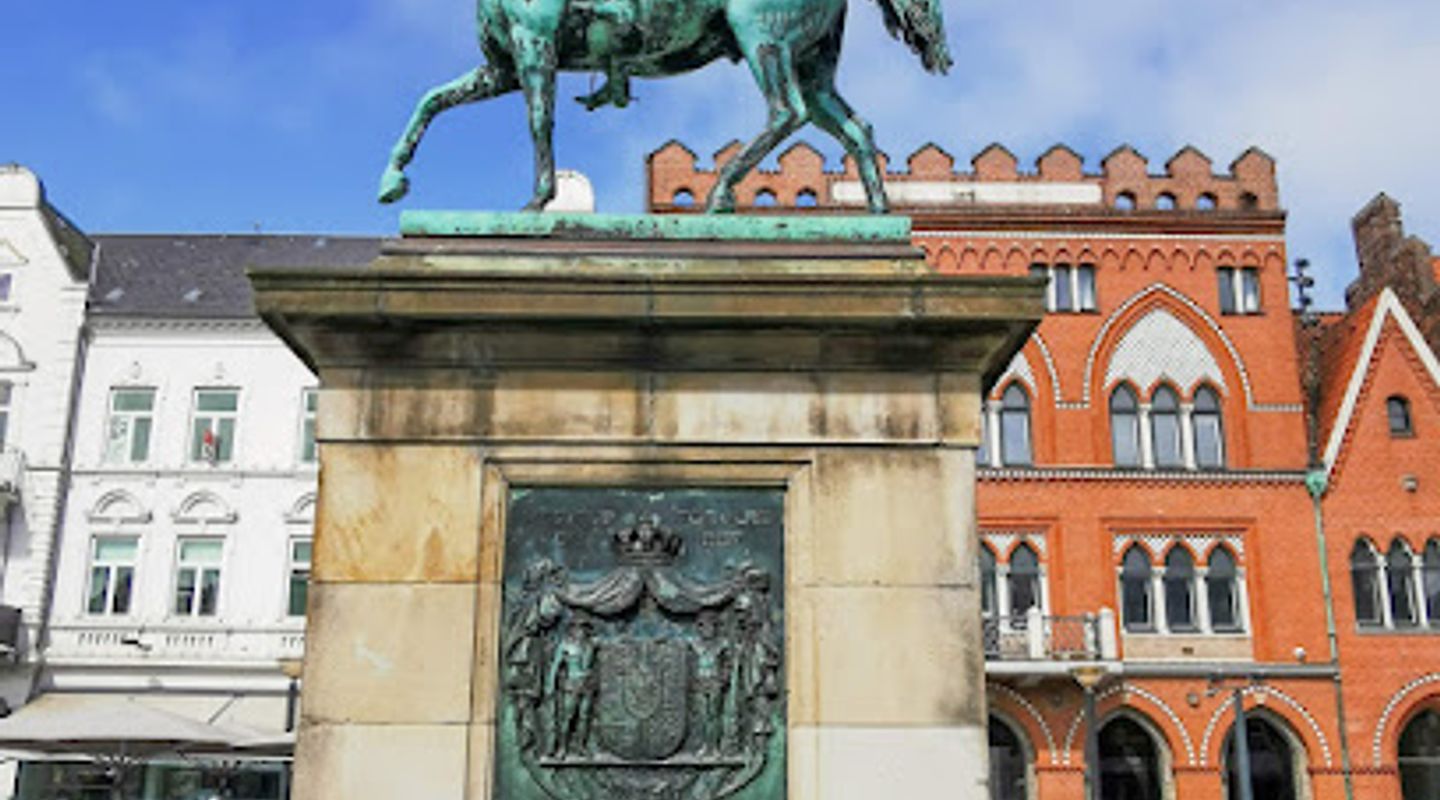
Presiding over Torvet, Esbjerg’s central square, the bronze equestrian statue of King Christian IX is both a historic monument and the city’s unofficial meeting point. Unveiled in 1899 to mark Esbjerg’s rise to municipal borough status, it honours the monarch regarded as the city’s founder. Framed by cafés, shops and seasonal market stalls, the weathered green figure of the king on horseback anchors the urban scene and offers a characterful backdrop for photos, people‑watching and a brief pause in the city centre.
On-site amenities
 Restrooms
 Seating areas
 Trash bins
 Information boards
Opening hours
- Every dayOpen 24 hours
Opening hours as listed on the venue’s Google Business Profile. Hours can change for services and special events, so check with the venue before you go.
- Address
- Torvet 12, 6700 Esbjerg
Getting there
Train and short walk from Esbjerg Station
Local bus to Esbjerg city centre
Car or taxi to central Esbjerg
Discover more about Christian IX statue, Esbjerg
A royal figure at the heart of a young port city
Esbjerg is a relatively young Danish city, and its story is closely tied to the bronze equestrian statue of King Christian IX on Torvet, the main square. The monarch played a decisive role in establishing Esbjerg as a harbour in the late 19th century, setting the stage for its rapid growth as a maritime and industrial hub. When the city gained municipal borough status, local citizens chose to celebrate that milestone by commissioning this monument, placing their royal benefactor quite literally at the centre of urban life.Today the statue is a fixed point amid the flow of buses, bicycles and pedestrians crossing the square. Its placement on a high plinth ensures the king surveys the grid of streets radiating out towards the docks and residential quarters, a reminder of how quickly Esbjerg expanded from windswept coastline to significant North Sea port.
Bronze craftsmanship and symbolic detailing
The statue depicts Christian IX mounted on a powerful horse, cloak swept back and gaze directed out over the square. Cast in bronze and now rich with a green patina, it shows fine attention to details in the king’s uniform, tack and the animal’s muscular stance. The sculptor achieved a sense of movement, with the horse poised mid‑stride, giving the composition an energy that contrasts with the solid granite base beneath.Around the plinth you can look for inscriptions honouring Christian IX as founder of the city and commemorating the date of Esbjerg’s municipal status. The combination of heavy stone and weathered metal creates a pleasing textural contrast, especially in low, slanting light when shadows emphasise the modelling of the king’s profile and the horse’s flanks.
Torvet’s everyday stage and seasonal events
Standing beside the monument, you are in the middle of Torvet, a broad, open square that functions as Esbjerg’s civic living room. On a normal weekday, office workers cross the space, shoppers pause on benches and cyclists weave past the statue’s base. Cafés and shops along the perimeter spill tables and displays into the open air when the weather allows, giving the square a relaxed, sociable feel.At certain times of year, temporary market stalls, food stands or small stages are set up within sight of the statue. The monument becomes a handy landmark and backdrop, anchoring everything from cultural events to informal gatherings with friends. Even during quieter moments, you will often see people using the plinth steps as a spot to sit briefly, check a map or simply watch city life unfold.
Reading the city’s layers from a single vantage point
Because the statue is so centrally located, it serves as a convenient orientation point for exploring Esbjerg. From this single spot you can observe several layers of the city’s development. Modern commercial buildings line part of the square, while older facades nod to the town’s late‑19th‑century origins. Looking down adjacent streets hints at the close relationship between the city centre and the harbour that originally justified Esbjerg’s creation.Take a moment to walk slowly around the statue rather than viewing it from only one angle. Each side frames a slightly different streetscape and reveals new sculptural details. Close up, the bronze surface is unexpectedly textured, marked by decades of wind, rain and seaside air, tying the monument to the coastal climate that shaped the city’s fortunes.
A compact stop with photographic character
For many travellers, the Christian IX statue is a short yet worthwhile stop folded into a wider wander through Esbjerg’s centre. The compact size of Torvet makes it easy to take photographs without stepping far back, and the statue offers a strong focal point whether you are capturing architectural shots, portraits of travelling companions or simple snapshots of daily life.Because it is freely accessible at all hours, you can experience different moods here: bright lunchtime bustle, soft evening light or the calm of an early morning square before the shops open. Even if you stay only a few minutes, the monument gives tangible form to Esbjerg’s brief but eventful history, linking royal decision‑making in Copenhagen to the working harbour and streets that now surround you.
Evendo Review Centre
 Google
Guest reviews
Best time to go
Quietest: Jan, Feb & Mar · before 6am or from 11pm
Busy times are Evendo estimates for a typical year, to help you plan. Actual crowds vary with events, school holidays and the weather.
Explore Christian IX statue, Esbjerg on the map
A handpicked selection of must-see spots near Christian IX statue, Esbjerg, mapped for you.
Get your free copy of our complete guide to Christian IX statue, Esbjerg, delivered straight to you.
Everything on this page, from opening hours and how to get there to Eve’s tips and the best time to go, in one PDF you can read offline, print or share.
Already have an account? Sign in
Your Christian IX statue, Esbjerg guide is ready.
We'll send it to · Not you? Sign out

Getting your guide ready…
We are putting together a fresh copy of the Christian IX statue, Esbjerg guide. This can take up to a minute.
This can take a few moments. If your browser asks, choose Allow so the download can start. You'll find the guide in your Downloads folder.
Nothing happened? Download it again
Sorry, the guide is taking longer than usual. Please try again in a minute, or get it by email instead.
Other nearby places you may find interesting
The closest places of the same kind, if this one is not quite what you had in mind.
-
-
-
-
-


Swipe for more places
More to explore near Christian IX statue, Esbjerg
-
 Best experiences near Christian IX statue, Esbjerg
-
 Best hotels near Christian IX statue, Esbjerg
-
 Best landmarks near Christian IX statue, Esbjerg
-
 Best attractions near Christian IX statue, Esbjerg
-
 Best shops near Christian IX statue, Esbjerg
-
 Best restaurants near Christian IX statue, Esbjerg
-
 Best bars near Christian IX statue, Esbjerg


Do you manage this location?
Take control to get all the benefits, like improved information, better appearance, and stronger visibility across AI-powered discovery.
Explore more

Explore more of Esbjerg
Discover Esbjerg: A coastal city in Denmark known for its maritime heritage, stunning sculptures, and vibrant downtown, offering something for every traveler.
Explore Esbjerg
Explore more of Denmark
Discover Denmark: A perfect blend of history, modern design, and the cozy concept of hygge. Explore vibrant cities, serene landscapes, and world-class cuisine.
Explore Denmark