

Strandgut - Strandfischerei Monument Travel Guide
Free Guide: A simple dune-side memorial where driftwood, sea wind and open sky recall Fanø’s hard-earned living from beach fishing and the gifts and losses of the North Sea.


A brief summary of Strandgut - Strandfischerei Monument
A simple dune-side memorial where driftwood, sea wind and open sky recall Fanø’s hard-earned living from beach fishing and the gifts and losses of the North Sea.
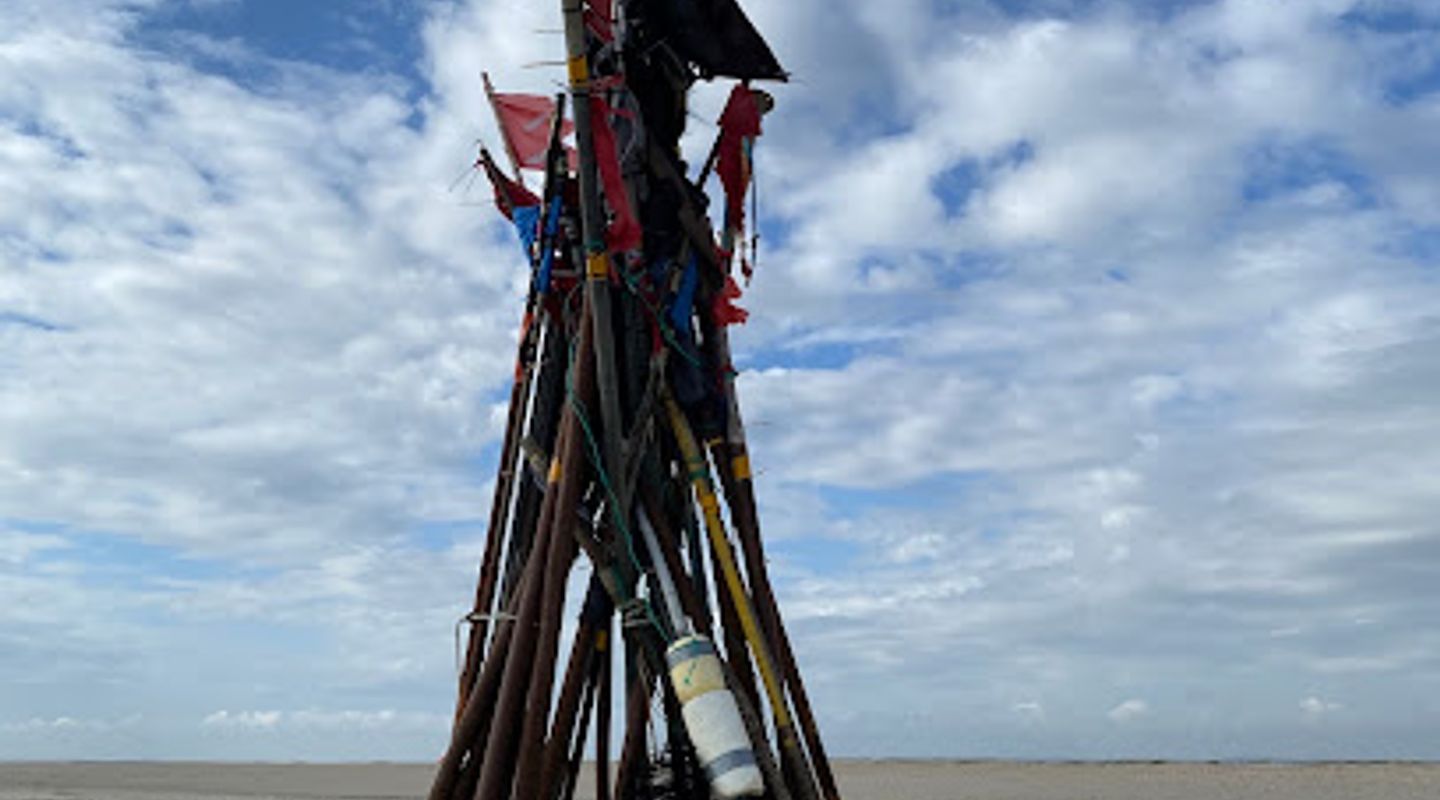
Tucked into the wide dune landscape of Fanø, the Strandgut – Strandfischerei Monument is a quiet coastal memorial to the island’s seafaring and beach-fishing past. Simple wooden elements, salvaged gear and weathered markers recall the era when local families lived from what the North Sea delivered to the shore, from stranded ships to daily fish catches. It is a small, contemplative stop that links Fanø’s sweeping beach scenery with its maritime heritage.
On-site amenities
 Trash bins
 Information boards
- Address
- C8QQ+VQ, 6720 Fanø
Getting there
Bus and short walk from Nordby
Bicycle from Nordby or Sønderho
Car access with beach-side parking
Walking from nearby holiday homes
Discover more about Strandgut - Strandfischerei Monument
Memory on the edge of the North Sea
Set amid the dunes near Fanø’s broad west coast, the Strandgut – Strandfischerei Monument is a modest but evocative reminder of how closely island life has always been tied to the sea. Here the flat horizon, shifting sands and constant wind create a powerful backdrop for a memorial dedicated to the men who fished from the beach and to the ships that never returned. It is less a formal monument and more a quiet place of remembrance woven into the landscape.From the sandy path you first notice weathered wood, simple posts and maritime details that could almost be more flotsam than sculpture. That ambiguity is intentional: the monument feels as if it has grown out of the driftwood, nets and buoys that the sea throws ashore, blurring the line between art installation and found objects.
Echoes of beach fishing and stranded ships
Before modern harbours reshaped the coastline, Fanø families relied heavily on beach-based fishing and on what storms delivered to the shore. Along this coast, boats were hauled across the sand, nets dried in the wind and wrecked ships sometimes meant both tragedy and unexpected resources. Nearby cemeteries in Sønderho and Nordby hold maritime memorials to sailors lost far from home, and the Strandfischerei Monument belongs to the same narrative of risk and resilience that shaped the island’s economy.Wooden elements at the site suggest the silhouettes of boats and frames for hanging nets, while low markers recall the anonymity of sailors buried at sea. Even without explanatory panels, the arrangement invites you to imagine the labour of hauling gear across soft sand, and the long hours when families scanned the horizon for sails that might never appear.
Simple forms, raw materials, strong atmosphere
The design embraces the rough textures and muted tones of the Wadden Sea coast. Sun-bleached timbers, rope, iron fittings and stone sit directly on the sand and grass, exposed to salt air and weather. Over time they grey and rust, becoming part of the dune environment. This simplicity gives the site a stark beauty, especially when low light catches the surfaces in early morning or late afternoon.Because the monument is compact and informal, there is no single viewpoint. You can walk around the elements, step closer to examine details and then look back out to the surf. The surrounding emptiness—wind, space, the sound of waves—does much of the interpretive work. It is a place where minimal design achieves a surprisingly strong emotional effect.
A reflective pause on a coastal walk
Most visitors encounter the monument as a stop on a longer beach or dune walk. It lends itself to a short, quiet pause rather than a lengthy visit: enough time to take a few photographs, read any nearby signage and sit on the sand to absorb the setting. The open terrain makes it easy to combine with birdwatching, shell collecting or simply watching the tide advance and retreat along Fanø’s enormous strand.Even in breezy or overcast weather the monument has appeal, as the changing sky and shifting light transform the mood from gentle to dramatic within minutes. On clear days, the sweeping views across the beach underline how exposed generations of sailors and fishermen were to this powerful sea.
Connecting with Fanø’s wider maritime story
Although the Strandgut – Strandfischerei Monument stands alone in the dunes, it links naturally to other maritime sites on the island, from the seafaring memorials on the Sønderho cemetery to the shipping and costume collections in Nordby. Together these places tell the story of a community that once launched ships to ports around the world and depended on the ocean for its livelihood.Here, however, the story is distilled into a handful of objects in the sand. Standing beside them, with the wind in your face and gulls overhead, it is easy to sense both the hardship and the quiet pride bound up in Fanø’s seafaring past. The monument may be small, but the landscape around it gives it an unexpectedly large emotional reach.
Evendo Review Centre
 Google
Guest reviews
Best time to go
Quietest: Jan, Feb & Mar · before 6am or from 10pm
Busy times are Evendo estimates for a typical year, to help you plan. Actual crowds vary with events, school holidays and the weather.
Explore Strandgut - Strandfischerei Monument on the map
A handpicked selection of must-see spots near Strandgut - Strandfischerei Monument, mapped for you.
Get your free copy of our complete guide to Strandgut - Strandfischerei Monument, delivered straight to you.
Everything on this page, from opening hours and how to get there to Eve’s tips and the best time to go, in one PDF you can read offline, print or share.
Already have an account? Sign in
Your Strandgut - Strandfischerei Monument guide is ready.
We'll send it to · Not you? Sign out

Getting your guide ready…
We are putting together a fresh copy of the Strandgut - Strandfischerei Monument guide. This can take up to a minute.
This can take a few moments. If your browser asks, choose Allow so the download can start. You'll find the guide in your Downloads folder.
Nothing happened? Download it again
Sorry, the guide is taking longer than usual. Please try again in a minute, or get it by email instead.
Other nearby places you may find interesting
The closest places of the same kind, if this one is not quite what you had in mind.
-
-
-

-
-


Swipe for more places
More to explore near Strandgut - Strandfischerei Monument
-
 Best experiences near Strandgut - Strandfischerei Monument
-
 Best hotels near Strandgut - Strandfischerei Monument
-
 Best landmarks near Strandgut - Strandfischerei Monument
-
 Best attractions near Strandgut - Strandfischerei Monument
-
 Best shops near Strandgut - Strandfischerei Monument
-
 Best restaurants near Strandgut - Strandfischerei Monument
-
 Best bars near Strandgut - Strandfischerei Monument


Do you manage this location?
Take control to get all the benefits, like improved information, better appearance, and stronger visibility across AI-powered discovery.
Explore more

Explore more of Fanø
Discover Fanø, Denmark's hidden coastal gem, offering stunning beaches, charming villages, and rich wildlife, perfect for a tranquil getaway and nature adventures.
Explore Fanø
Explore more of Denmark
Discover Denmark: A perfect blend of history, modern design, and the cozy concept of hygge. Explore vibrant cities, serene landscapes, and world-class cuisine.
Explore Denmark
