St. Mary's Church, Helsingor Travel Guide
Free Guide: Medieval monastery gem with baroque organ, ancient courtyard tree, and six centuries of Danish heritage.


A brief summary of St. Mary's Church
Medieval monastery gem with baroque organ, ancient courtyard tree, and six centuries of Danish heritage.
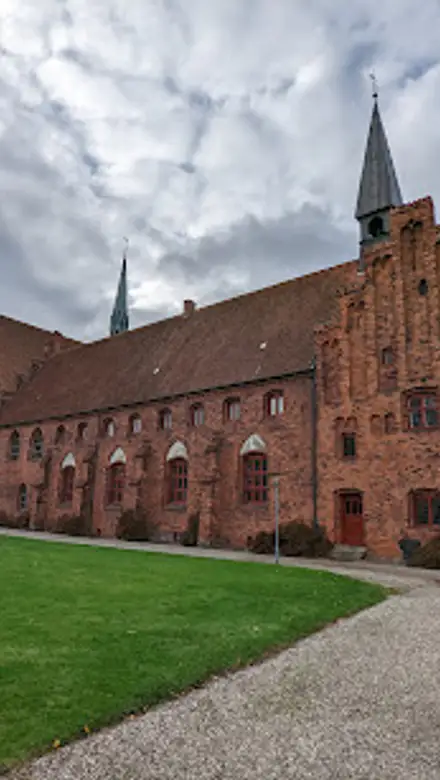
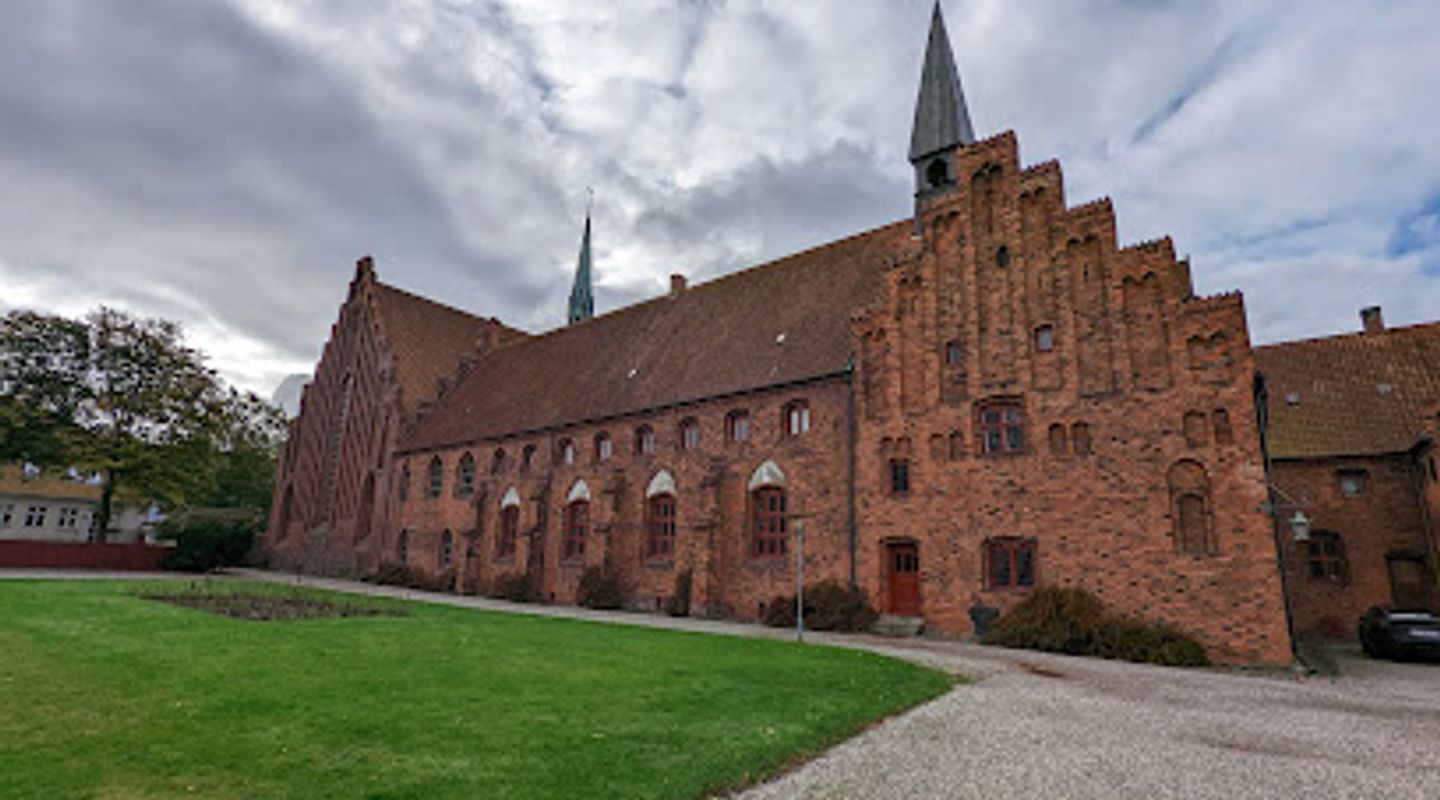
St. Mary's Church stands as Helsingør's finest preserved medieval religious complex, a 15th-century Carmelite monastery housing a striking late Gothic church. Celebrated for its serene cloister courtyard anchored by a 300-year-old tree, intricate stonework, and a magnificent baroque organ once played by the legendary Buxtehude, this architectural gem represents one of Scandinavia's most complete monastic ensembles. Originally founded in 1430 and rebuilt after a devastating fire in 1450, the complex served diverse roles through centuries—from monastery to hospital to Latin school—before becoming a cherished cultural landmark.
On-site amenities
 Restrooms
 Seating areas
 Information boards
 Drink options
Opening hours
- MonClosed
- Tue10 am–3 pm
- Wed10 am–3 pm
- Thu10 am–3 pm
- Fri10 am–3 pm
- Sat10 am–3 pm
- Sun10 am–3 pm
Opening hours as listed on the venue’s Google Business Profile. Hours can change for services and special events, so check with the venue before you go.
- Address
- Sct Anna Gade 38, 3000 Helsingør
- Phone
- Website
Getting there
Train from Copenhagen
Car via E47 motorway
Bus from Copenhagen
Walking from Kronborg Castle
Discover more about St. Mary's Church
A Monastic Foundation Spanning Six Centuries
St. Mary's Church and its adjoining Carmelite Monastery represent one of the finest surviving medieval monastic complexes in Northern Europe. The monastery was established in 1430 when Eric of Pomerania invited Carmelite monks—known as the white brothers—to settle in Helsingør. Construction began shortly thereafter, but a catastrophic fire in 1450 destroyed much of the original structure. The church and monastery were rebuilt and completed in their present form around 1500, creating the harmonious late Gothic ensemble visitors encounter today.
Architectural Splendor and Sacred Spaces
The church itself showcases remarkable late Gothic design, with striking red brick arches and soaring proportions that create an imposing yet intimate interior atmosphere. The most celebrated feature is the magnificent baroque organ, a masterwork of craftsmanship that once resonated beneath the hands of the legendary organist Dietrich Buxtehude. Beyond the organ, the church floor displays intricate and detailed stonework—a testament to centuries of skilled craftsmanship and devotion. Wall paintings throughout the interior add layers of historical richness, their pigments and imagery preserving glimpses of medieval religious life and artistic expression.
The Tranquil Monastery Courtyard
The monastery's medieval courtyard offers a serene sanctuary within the bustling town. A remarkable 300-year-old tree stands at the heart of this peaceful enclosure, its gnarled trunk and spreading branches creating a living monument to the passage of centuries. The courtyard's red brick arcades and cloistered walkways evoke the contemplative life once lived here by the Carmelite sisters. This quiet space provides visitors with an authentic glimpse into monastic existence and remains one of the complex's most atmospheric features.
Centuries of Transformation and Community Service
Following the Reformation in the 16th century, the monastery's religious function evolved dramatically. In 1541, the complex was converted into a hospital and retirement home, serving the community's most vulnerable members. During the 1800s, it housed a Latin school and continued as a retirement facility for the needy. This adaptive reuse demonstrates how sacred spaces can serve multiple generations and purposes. Since 1991, the monastery buildings have functioned as administrative offices for Helsingør municipality and meeting rooms for the Sct. Mariae parish, ensuring the complex remains an active part of civic and spiritual life.
International Heritage and Cultural Significance
The church was historically made available to foreign communities living in Helsingør, particularly German merchants from Hanseatic cities who conducted trade in the port town. This cosmopolitan dimension enriched the church's cultural role and reflected Helsingør's importance as a medieval trading hub. Today, the complex stands as a testament to the intersection of religious devotion, architectural ambition, and community resilience across six centuries of Danish history.
Evendo Review Centre
 Google
Guest reviews
Best time to go
Quietest: Jan, Feb & Dec · before 7am or at 7pm
Busy times are Evendo estimates for a typical year, to help you plan. Actual crowds vary with events, school holidays and the weather.
Explore St. Mary's Church on the map
A handpicked selection of must-see spots near St. Mary's Church, mapped for you.
Get your free copy of our complete guide to St. Mary's Church, delivered straight to you.
Everything on this page, from opening hours and how to get there to Eve’s tips and the best time to go, in one PDF you can read offline, print or share.
Already have an account? Sign in
Your St. Mary's Church guide is ready.
We'll send it to · Not you? Sign out

Getting your guide ready…
We are putting together a fresh copy of the St. Mary's Church guide. This can take up to a minute.
This can take a few moments. If your browser asks, choose Allow so the download can start. You'll find the guide in your Downloads folder.
Nothing happened? Download it again
Sorry, the guide is taking longer than usual. Please try again in a minute, or get it by email instead.
Unlock the best of St. Mary's Church
Skip-the-line tickets, guided tours with entry, and walking tours of the area, booked in a few clicks.
 Tour with entry
Private Custom Tour with a Local Guide in Helsingør
from $212.34 Tour with entry
Private Cultural Walk in Historic Helsingør
from $1,424.05 Tour with entry
Private Christmas Cultural Walk in Historic Helsingør
from $1,538.05 Tour with entry
Private Customizable Walking Tour in Helsingør
from $1,581.75

Other nearby places you may find interesting
The closest places of the same kind, if this one is not quite what you had in mind.
-
SOUL OF THE WALLS Vibrant street art celebrating Helsingør's medieval heritage at a historic crossroads
-
'The Middle Ages and the Sound Dues' mural A vivid gable mural that turns Helsingør’s medieval tolls and ship traffic into a richly detailed open-air history lesson in the heart of the old town.
-
Udsigtsplateau Sweeping panoramic views across Helsingør from an elevated public observation plateau.
-
Heracles and the Hydra Mythological bronze warrior frozen in eternal combat on Helsingør's historic waterfront.
-
Kronborg Lighthouse Renaissance fortress lighthouse where Shakespeare's Hamlet meets maritime history at the gateway to the Baltic Sea.
Swipe for more places
More to explore near St. Mary's Church

 Best experiences near St. Mary's Church
 Best hotels near St. Mary's Church
 Best landmarks near St. Mary's Church
 Best attractions near St. Mary's Church
 Best shops near St. Mary's Church
 Best restaurants near St. Mary's Church
 Best bars near St. Mary's Church
Do you manage this location?
Take control to get all the benefits, like improved information, better appearance, and stronger visibility across AI-powered discovery.
Explore more

Explore more of Helsingor
Discover Helsingør, Denmark's historic coastal city, home to Kronborg Castle and a vibrant cultural scene, offering a blend of history, scenic beauty, and local charm.
Explore Helsingor
Explore more of Denmark
Discover Denmark: A perfect blend of history, modern design, and the cozy concept of hygge. Explore vibrant cities, serene landscapes, and world-class cuisine.
Explore Denmark