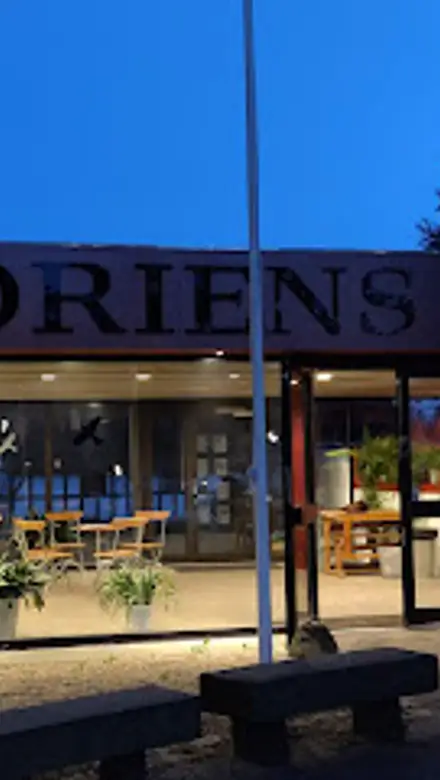
Lokalhistorisk Arkiv I Herning, Herning Travel Guide
Free Guide: A quiet local history archive where Herning’s evolution from heathland settlement to modern town is preserved in photographs, papers, and personal stories.


A brief summary of Lokalhistorisk Arkiv I Herning
A quiet local history archive where Herning’s evolution from heathland settlement to modern town is preserved in photographs, papers, and personal stories.
Tucked into Museumsgade in central Herning, Lokalhistorisk Arkiv is the city’s memory bank: a quiet research space where photographs, maps, newspapers, and personal archives trace Herning’s journey from heathland settlement to modern town. This local history archive appeals to family researchers, students, and anyone curious about how everyday life, businesses, and streets have evolved over the past century. The atmosphere is studious yet welcoming, with staff ready to help you navigate catalogues and uncover stories hidden in boxes, binders, and card indexes.
On-site amenities
 Restrooms
 Seating areas
 Trash bins
 Information boards
Opening hours
- MonClosed
- TueClosed
- WedClosed
- Thu10 am–5 pm
- FriClosed
- SatClosed
- SunClosed
Opening hours as listed on the venue’s Google Business Profile. Hours can change for services and special events, so check with the venue before you go.
- Address
- Museumsgade 32, 7400 Herning
- Phone
Getting there
Walking from central Herning
City bus within Herning
Train and short walk from regional towns
Car from the surrounding region
Discover more about Lokalhistorisk Arkiv I Herning
Herning’s Memory in a Modest House
Lokalhistorisk Arkiv i Herning sits discreetly on Museumsgade, close to the town’s cultural core, but inside it opens onto a surprisingly rich world of paper, photographs, and personal testimony. This is where the city’s collective memory is stored: not in grand showcases, but in shelves of files and carefully labelled boxes. The setting is simple and functional rather than dramatic, yet there is a certain charm in the creak of old folders and the soft rustle of onionskin letters.The archive focuses on Herning and its surroundings, particularly the transition from heathland farming to a thriving textile and service town. Street names, school buildings, factories, and family homes are all documented here, forming a jigsaw of local identity that rewards patient exploration.
Collections That Tell Everyday Stories
Much of the archive’s strength lies in its breadth of material. Here you find historical photographs showing wind-blown farmsteads, early factories, and the gradual infill of modern housing estates. There are old town maps, parish records, association minutes, and local newspapers stitched together into hefty volumes that smell faintly of dust and printer’s ink.Alongside official documents, personal collections add colour: wedding portraits, confirmation photos, business advertisements, and handwritten memoirs that capture dialect turns of phrase and long-vanished customs. Taken together, these items show how ordinary lives intersect with wider events, from economic booms to wartime mobilisation and post-war rebuilding.
A Working Room for Curious Minds
Unlike a traditional museum with fixed exhibitions, the archive functions more like a reading room. Tables, lamps, and catalogues invite you to sit down and stay a while. On opening days, staff can retrieve boxes from the stacks, guide you through digital databases, or help decipher old handwriting that defeats online translation tools.The pace here is deliberately slow. You might spend half an hour confirming a single date in a church book, or lose an afternoon leafing through years of local newspapers. Genealogy enthusiasts trace family branches through addresses and occupations, while students and writers mine the holdings for details that anchor their projects in real streets and real people.
From Heath to Textile Hub
Herning’s rapid development is one of the archive’s underlying themes. Documents and images track the town’s growth from scattered farms on the heath to a centre of textile production, and later to a regional hub for trade, fairs, and education. Old photographs of looms, warehouses, and modest workshops allow you to picture the noise, dust, and ambition that characterised the boom years.At the same time, there is space for quieter narratives: school class photos taken in wooden classrooms, sports clubs posing on muddy pitches, and social housing blocks just after completion. These sources make it possible to follow how infrastructure, leisure, and everyday routines changed across generations.
Planning a Focused Visit
Because Lokalhistorisk Arkiv has limited fixed opening hours, visits tend to be purposeful rather than spontaneous. It rewards a little preparation: arriving with names, addresses, or themes in mind allows staff to suggest relevant material quickly. The environment is calm, with room to spread out papers and make notes by hand or laptop.There is no elaborate café or museum shop; instead, the emphasis is on concentration and discovery. It is an especially useful stop for travellers with roots in the area, or anyone combining a broader tour of Herning’s museums with a deeper dive into specific streets, properties, or families mentioned elsewhere. Time here can lend real depth to an otherwise surface-level impression of the town.
Quiet Moments Among Old Papers
Part of the appeal is simply the atmosphere of contemplation. You listen to pages turning, the occasional low conversation about a birth date or a house number, and maybe the muted sounds of the city outside. The contrast between the busy modern streets and this still room full of fragile records highlights how recent much of Herning’s development really is.Even if you stay only an hour or two, you leave with a sharper sense of place: an understanding that beneath today’s glass and concrete lies a layered story of heather, factories, associations, and families, patiently documented and preserved within these unassuming walls.
Evendo Review Centre
 Google
Guest reviews
Best time to go
Quietest: Jan, Jul & Aug · before 10am or from 6pm
Busy times are Evendo estimates for a typical year, to help you plan. Actual crowds vary with events, school holidays and the weather.
Explore Lokalhistorisk Arkiv I Herning on the map
A handpicked selection of must-see spots near Lokalhistorisk Arkiv I Herning, mapped for you.
Get your free copy of our complete guide to Lokalhistorisk Arkiv I Herning, delivered straight to you.
Everything on this page, from opening hours and how to get there to Eve’s tips and the best time to go, in one PDF you can read offline, print or share.
Already have an account? Sign in
Your Lokalhistorisk Arkiv I Herning guide is ready.
We'll send it to · Not you? Sign out

Getting your guide ready…
We are putting together a fresh copy of the Lokalhistorisk Arkiv I Herning guide. This can take up to a minute.
This can take a few moments. If your browser asks, choose Allow so the download can start. You'll find the guide in your Downloads folder.
Nothing happened? Download it again
Sorry, the guide is taking longer than usual. Please try again in a minute, or get it by email instead.
Other nearby places you may find interesting
The closest places of the same kind, if this one is not quite what you had in mind.
-
Herningsholm Museum Sixteenth‑century manor, heathland tales and textile roots meet under one timbered roof in Herning’s oldest building.
-
P-plads, Knudmosebjerget Unassuming car park, big horizons: your easy starting point for Knudmosebjerget’s hilltop views, protected wetlands and everyday escapes on Herning’s edge.
-
Herning skulpturpark A free, open-air gallery in Herning’s Birk district, where contemporary sculptures are scattered through tranquil green parkland beside the monumental Elia.
-
Locked - Escape Room Cinematic escape rooms with clever puzzles, mood-lifting tension and team-driven challenges in a central Herning warehouse-style setting.
-
Løvbakke Naturcenter Family-friendly nature hub north of Herning, where fallow deer, forest trails, playgrounds and fire pits turn a simple woodland into an easy all-day escape.
Swipe for more places
More to explore near Lokalhistorisk Arkiv I Herning
-
 Best experiences near Lokalhistorisk Arkiv I Herning
-
 Best hotels near Lokalhistorisk Arkiv I Herning
-
 Best landmarks near Lokalhistorisk Arkiv I Herning
-
 Best attractions near Lokalhistorisk Arkiv I Herning
-
 Best shops near Lokalhistorisk Arkiv I Herning
-
 Best restaurants near Lokalhistorisk Arkiv I Herning
-
 Best bars near Lokalhistorisk Arkiv I Herning







Do you manage this location?
Take control to get all the benefits, like improved information, better appearance, and stronger visibility across AI-powered discovery.
Explore more
Explore more of Herning
Discover Herning, Denmark's cultural epicenter, known for its art, architecture, and natural beauty, offering a unique blend of tradition and modernity.
Explore Herning
Explore more of Denmark
Discover Denmark: A perfect blend of history, modern design, and the cozy concept of hygge. Explore vibrant cities, serene landscapes, and world-class cuisine.
Explore Denmark