

Workers Museum, Koge Travel Guide
Step inside Europe’s oldest workers’ assembly hall to explore 150 years of Danish working-class life, labour struggles and democracy, all in the heart of Copenhagen.
Housed in Europe’s oldest workers’ assembly hall from 1879, Copenhagen’s Workers Museum (Arbejdermuseet) immerses you in 150 years of Danish working-class life and the rise of the labour movement. Wander restored meeting halls, step into recreated apartments from 1915, 1930s and 1950s Copenhagen, and explore how trade unions and social democracy helped shape the modern welfare state. With hands-on displays, a children’s area, archives and a classic basement beer hall serving traditional fare, it is both social history museum and living civic space.
A brief summary to Workers Museum
- Rømersgade 22, Copenhagen, Indre By, 1362, DK
- Click to display
- Click to display
- Duration: 1.5 to 4 hours
- Mid ranged
-
 Indoor
- Mobile reception: 5 out of 5
- Monday 10 am-5 pm
- Tuesday 10 am-5 pm
- Wednesday 10 am-5 pm
- Thursday 10 am-8 pm
- Friday 10 am-5 pm
- Saturday 10 am-5 pm
- Sunday 10 am-5 pm

Know before you go
Hi, I'm Eve. Here are a few practical things to know before exploring Workers Museum.
- Allow at least 2–3 hours to explore the historic apartments, main halls and temporary exhibitions, plus extra time if you plan to eat in the basement beer hall.
- Visit on a weekday morning or late afternoon for a quieter experience in the period apartments and archives, especially during school terms.
- Combine your visit with a traditional Danish lunch in the listed basement restaurant to experience the building as a social gathering place, not just a museum.
- Check in advance for current temporary exhibitions or special events focused on themes like democracy, migration or labour rights if you have particular interests.
Do you manage this location?
Take control to get all the benefits, like improved information, better appearance, and stronger visibility across AI-powered discovery. Learn more about listing your business on Evendo
Activate your presenceOther nearby places you may find interesting
The closest places of the same kind, if this one is not quite what you had in mind.


Explore Workers Museum on the Map
A handpicked selection of must-see spots near Workers Museum, mapped for you.
Getting There
-
Metro from central Copenhagen
From Nørreport Station, one of the main transport hubs in central Copenhagen, take metro lines M1, M2, M3 or M4 depending on where you are coming from. The ride into Nørreport typically takes 5–15 minutes from most central districts, with frequent departures throughout the day. From Nørreport it is about a 5–10 minute walk on level city streets to the museum. A single metro ticket within the city zones usually costs around 20–30 DKK, and all stations and trains are accessible by lift.
-
City bus from inner neighbourhoods
Several city bus lines run along the streets surrounding Rømersgade in the central zone, with journeys from nearby districts such as Vesterbro, Østerbro or Nørrebro typically taking 10–20 minutes depending on traffic. Buses operate at regular intervals during the day and early evening, with reduced frequency late at night. Standard city bus tickets within the core zones are usually 20–30 DKK and can be bought via travel apps or ticket machines. Most modern buses have low-floor access, but they can be crowded at rush hour.
-
Cycling through central Copenhagen
For those already in central Copenhagen, reaching the Workers Museum by bicycle generally takes around 5–15 minutes from areas such as City Hall Square, Christianshavn or Frederiksberg’s edge. The route uses Copenhagen’s extensive network of segregated cycle lanes on mostly flat terrain. Public bike-share schemes and rental shops offer bicycles for roughly 75–150 DKK per day. Be aware of busy commuter traffic on weekdays and always park only in marked bike stands near the museum entrance.
-
Taxi from central hotels
From most central Copenhagen hotels, a taxi ride to Rømersgade 22 usually takes 5–15 minutes, depending on traffic and starting point. Fares within the inner city commonly fall in the 80–160 DKK range, with surcharges possible in the evening or on weekends. Taxis can drop passengers close to the entrance on relatively smooth pavements, making this a convenient option for travellers with limited mobility, though it is more expensive than public transport.
For the on-the-go comforts that matter to you
-
 Restrooms
-
 Drink Options
-
 Food Options
-
 Seating Areas
-
 Trash Bins
-
 Information Boards
Discover more about Workers Museum
A historic home of the Danish labour movement
The Workers Museum sits inside the original Workers’ Assembly Hall, a red-brick complex opened in 1879 when Copenhagen’s trade unions decided to build their own venue for meetings, education and cultural life. The building is among the earliest purpose-built workers’ halls in Europe and later inspired similar projects across Denmark. Its architecture, with high windows and generous staircases, was designed to give a sense of dignity and collective strength to people whose daily lives were often marked by overcrowding and hard physical work.From 1879 to the early 1980s, these rooms served as a nerve centre for Danish socialism and union activity. Delegates gathered here to discuss wages, working hours and the emerging idea of social rights. In 1982–83 the site was transformed into a museum, preserving not only objects and documents but the very spaces where speeches were delivered and organisations formed. Today many of the interiors have been carefully restored to their early 20th‑century appearance, including murals and banners that once framed mass meetings.Everyday life in working-class Copenhagen
One of the most striking aspects of the museum is its series of period apartments that trace the evolution of working-class housing. In one flat you encounter the cramped conditions of a labourer’s family around 1915, where multiple children shared beds and every corner had to serve several purposes. Another apartment illustrates the insecurity of the 1930s, when unemployment could push families to pawn treasured possessions simply to pay rent and buy food.Further along, a 1950s home captures a moment of growing prosperity, with radios, early televisions and American-influenced furnishings hinting at a new consumer culture. Kitchens, table settings and children’s toys all highlight how changes in work, wages and social policy filtered into private life. Together, these rooms reveal the material realities behind abstract ideas such as class, welfare and modernity, making big historical shifts feel tangible and close.Exhibitions on struggle, solidarity and democracy
Beyond domestic life, the museum devotes substantial space to the story of the Danish labour movement and its role in creating today’s welfare state. Displays trace how unions organised workers in factories, shipyards and service trades, and how campaigns for shorter working days, safer workplaces and universal rights unfolded over generations. Political posters, banners and photographs show how public space was used to argue for everything from unemployment insurance to paid holidays.The building’s grand meeting hall, with its decorative details painstakingly brought back to life, serves as a powerful backdrop for this narrative. Panels and multimedia stations explore concepts such as solidarity, collective bargaining and democratic participation. Exhibitions also tackle more difficult subjects, from the legacy of slavery and colonialism linked to Danish overseas possessions to contemporary issues such as trafficking and precarious labour. The emphasis is on connecting past struggles with ongoing debates about justice at work and in society.A living cultural venue for all ages
Although rooted in history, the Workers Museum functions as an active cultural hub. A dedicated children’s section uses play and hands-on activities to introduce younger visitors to themes like cooperation and fairness. Educational programmes for schools and adult learners make use of the archives and the building itself as a classroom for understanding democracy.On the ground floor and in the listed basement you find social spaces that echo the hall’s original role as a gathering place. A 1950s-style coffee bar recreates the atmosphere of mid‑century Copenhagen cafés, while the traditional beer hall serves classic Danish open sandwiches and drinks associated with everyday workers’ cuisine. These venues blur the line between museum visit and local outing, inviting you to linger over lunch beneath vaulted ceilings that have witnessed more than a century of meetings and celebrations.Architecture, heritage and international recognition
The building’s preservation is central to its appeal. Restored cornices, painted decorations and old signboards reveal how architecture was used to express ideals of equality and community. The layout, with a monumental main hall surrounded by smaller meeting rooms and former union offices, reflects the federated structure of the labour movement and the belief that education and association were key to improving life.This combination of intact architecture and socially focused storytelling has drawn attention beyond Denmark. The site forms part of a wider recognition of workers’ assembly halls as distinctive heritage, and the museum’s recent renewal has been highlighted for foregrounding democratic participation and inclusion. For visitors, this means that a stroll through its corridors is not only a lesson in Danish history but also a window onto how ordinary people have organised, argued and imagined fairer futures across generations.Planning your visit inside the museum
The museum occupies several floors connected by staircases and lifts, with clear wayfinding leading from the historic entrance into themed galleries. Expect a mix of atmospheric reconstructions, text-based displays and interactive stations where you can listen to voices, handle replica objects or explore digital archives. The on-site shop stocks books and design items related to labour history, social democracy and Danish culture, making it a useful stop for thoughtful souvenirs.Most visitors spend a few hours here, especially if they pause for coffee or lunch in the basement. Seating is available throughout the galleries, and the combination of intimate rooms and soaring halls offers natural pauses in the route. Whether you drop in for a focused look at specific exhibitions or set aside half a day to explore every corner, the Workers Museum rewards unhurried attention to the details of lives and movements that helped shape modern Copenhagen.












Your all‑in‑one travel companion app
Explore expert travel guides, compare and book tours, experiences, hotels, and more—all from the palm of your hand. Download now for seamless trip planning wherever your wanderlust takes you.


Explore More of Koge
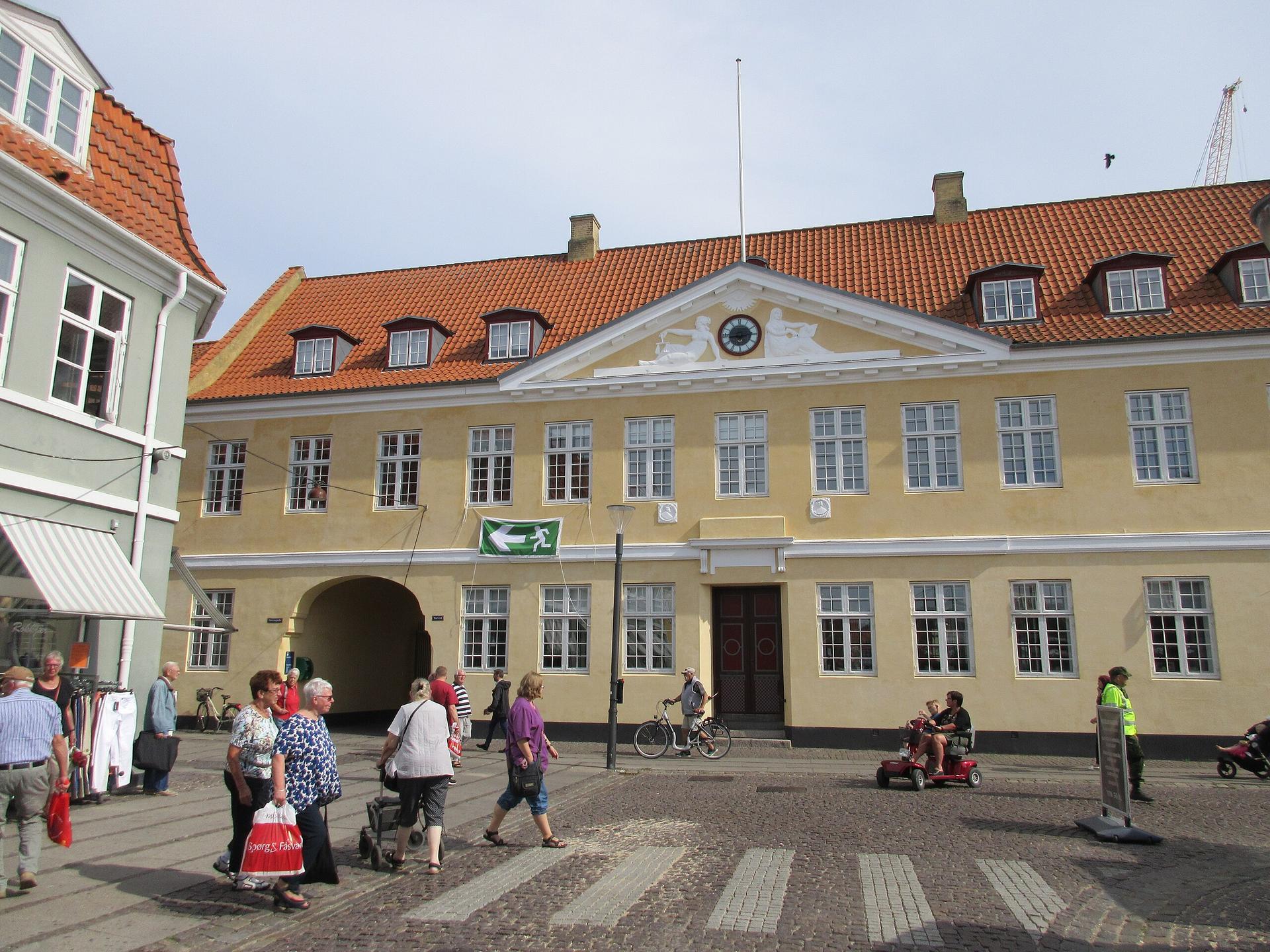
Looking beyond Workers Museum? Discover Koge for broader travel guides, local hot-spots, and regional highlights.
Explore Koge
Award-winning modernist concert hall in Copenhagen’s Ørestad, famed for acoustic excellence, innovative design, and unforgettable live music experiences.
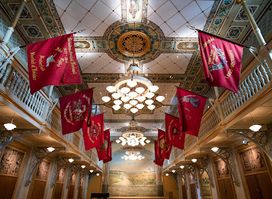
Step into 150 years of Danish working-class history inside a 19th-century assembly hall, where cramped flats, activism and classic smørrebrød bring the welfare story to life.
