

Aggersborg Travel Guide
Free Guide: Denmark’s largest Viking ring fortress, a vast earth circle above the Limfjord, where Harald Bluetooth’s geometric stronghold still shapes a windswept landscape of power.


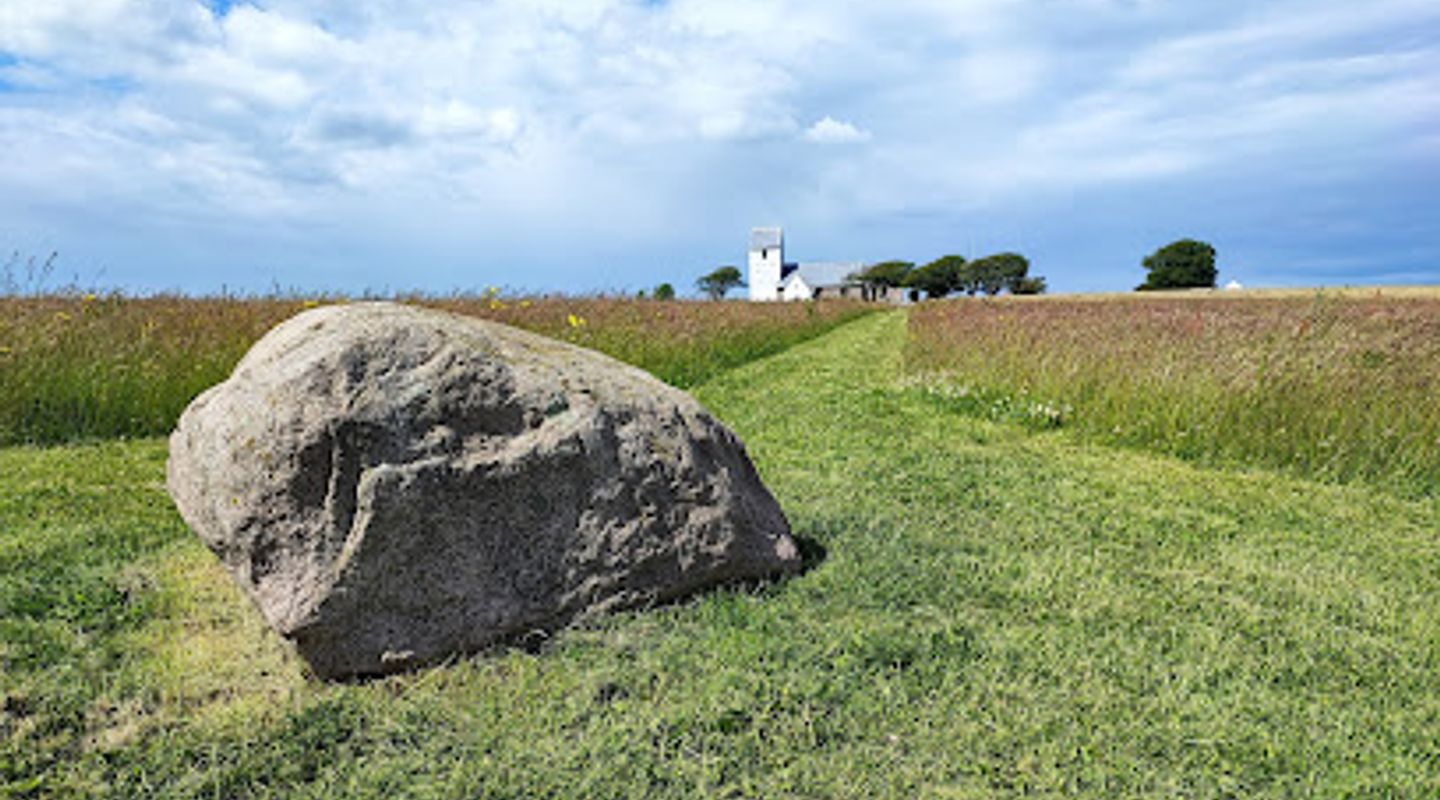
A brief summary of Aggersborg
Denmark’s largest Viking ring fortress, a vast earth circle above the Limfjord, where Harald Bluetooth’s geometric stronghold still shapes a windswept landscape of power.
Aggersborg, on the northern shore of the Limfjord near Løgstør, is Denmark’s largest Viking Age ring fortress and a UNESCO World Heritage site. Laid out as a perfect 240 m circle of earth ramparts with four gates and an inner grid of 48 longhouses, it once held thousands of warriors at a key maritime bottleneck. Today the grassy ring, information boards, church and manor nearby create a powerful, windswept landscape where you can walk the ramparts, imagine Harald Bluetooth’s armies and look out over the narrow fjord crossing that made this such a strategic stronghold.
On-site amenities
 Restrooms
 Seating areas
 Trash bins
 Information boards
Opening hours
- Every dayOpen 24 hours
Opening hours as listed on the venue’s Google Business Profile. Hours can change for services and special events, so check with the venue before you go.
- Address
- Aggersborgvej, 9670 Løgstør
- Phone
- Website
Getting there
Car from Løgstør
Regional bus within Vesthimmerland
Car from Aalborg
Cycling from nearby villages
Discover more about Aggersborg
The largest Viking stronghold on the Limfjord
Aggersborg sprawls across a low rise above the Limfjord, its great circular outline still legible in the grass. With an internal diameter of about 240 metres, it is the biggest of all the Viking Age ring fortresses built in Denmark in the late 10th century. Though the towering timber palisades are long gone, the raised rampart and shallow ditch still trace a near-perfect circle, giving a striking sense of scale as you walk its perimeter.The fortress commands a narrow strait, where ships once slipped between the North Sea and the Kattegat via the Limfjord. From here, whoever controlled Aggersborg could oversee trade, movement and potential enemies along one of Scandinavia’s most important waterways.
Harald Bluetooth’s geometric masterpiece
Built around 970–980 CE, Aggersborg is closely associated with King Harald Bluetooth and the centralisation of royal power in Denmark. The design is astonishingly regular: four gates aligned to the cardinal directions, two wooden streets crossing at right angles, and four quadrants of identical courtyards. In total, archaeologists have identified the footprints of 48 longhouses, each over 30 metres long.The precision was no accident. The ring fortresses share a common plan based on standardised measurements, reflecting sophisticated surveying skills and a strong central authority able to mobilise manpower and timber. At Aggersborg, the construction probably took just a few years, yet would have consumed thousands of oak trees.
Layers of settlement before and after the fortress
Long before the fortress rose here, this was a busy rural and trading settlement. Excavations have uncovered sunken huts, farmsteads and artefacts showing extensive contacts along the fjord. In the late 10th century the existing village was cleared away to make room for the new military complex, signalling a dramatic reordering of the landscape under royal control.After a relatively short active life, perhaps just a few decades into the early 11th century, the ring fortress was abandoned. The site did not fall silent, however. It evolved into a royal estate and later a manor, Aggersborggård, while Aggersborg Church was built nearby. Together they form a rare sequence of power centres in the same place, from Viking kings to medieval lords.
UNESCO recognition and archaeological insight
In 2023 Aggersborg and four sister fortresses were inscribed collectively as the Viking-Age Ring Fortresses on the UNESCO World Heritage List. The designation highlights their outstanding universal value as masterpieces of military engineering and as symbols of state formation in northern Europe. At Aggersborg, key features remain preserved underground, while the earthworks are still clearly visible in the open landscape.Archaeological finds from the site include pottery, tools and jewellery, pointing to a sizeable garrisoned community. Reconstructions and models, displayed through the managing museum and digital media, help visualise how the longhouses once ringed the interior and how the ramparts would have loomed above approaching boats.
Experiencing the windswept ring today
Visiting Aggersborg is about space, wind and imagination. You move along a wooden path and mown tracks, with interpretive boards explaining the layout, construction and history. Standing where the streets would have met in the centre, it is easy to picture the grid of longhouses, training warriors and the bustle of craftspeople and servants.To one side, Aggersborg Church and the manor house punctuate the skyline, while the Limfjord glints between low banks and modern bridge structures. The openness of the site invites slow circuits along the rampart, pausing to look out over the water, feel the often-brisk breeze and sense how the fortress once dominated this crucial crossing point in the Viking world.
Digital storytelling in a landscape of power
Beyond the physical traces, Aggersborg is brought to life through digital storytelling and guided experiences curated by the local museum. Apps and on-site QR codes allow you to see augmented reconstructions of the fortress rising again in the landscape and to hear narratives about Harald Bluetooth, trade, warfare and the shift from paganism to Christianity.The wider surroundings are part of the experience: fields stretching inland, the modern village of Aggersborg, the line of the Limfjord and distant farmsteads. It is a landscape shaped by centuries of authority and belief, yet still remarkably quiet. For many visitors, the combination of vast earth circle, rich stories and sea light over the fjord makes Aggersborg one of Denmark’s most atmospheric windows into the Viking Age.
Evendo Review Centre
 Google
Guest reviews
Best time to go
Quietest: Jan, Feb & Mar · before 7am or from 8pm
Busy times are Evendo estimates for a typical year, to help you plan. Actual crowds vary with events, school holidays and the weather.
Explore Aggersborg on the map
A handpicked selection of must-see spots near Aggersborg, mapped for you.
Get your free copy of our complete guide to Aggersborg, delivered straight to you.
Everything on this page, from opening hours and how to get there to Eve’s tips and the best time to go, in one PDF you can read offline, print or share.
Already have an account? Sign in
Your Aggersborg guide is ready.
We'll send it to · Not you? Sign out

Getting your guide ready…
We are putting together a fresh copy of the Aggersborg guide. This can take up to a minute.
This can take a few moments. If your browser asks, choose Allow so the download can start. You'll find the guide in your Downloads folder.
Nothing happened? Download it again
Sorry, the guide is taking longer than usual. Please try again in a minute, or get it by email instead.
Other nearby places you may find interesting
The closest places of the same kind, if this one is not quite what you had in mind.
-
Limfjordsmuseet Løgstør Hands-on maritime history on the banks of Frederik VII’s Canal, where boats, aquariums and fjord stories bring the Limfjord’s working past vividly to life.
-
Limfjordsmuseets bådebyggeri Step into a working red boat shed on Frederik VII’s Canal, where traditional wooden Limfjord vessels are restored and maritime craftsmanship is kept alive in Løgstør.
-
Ejerslev Lagune A former moler quarry turned blue lagoon, framed by steep clay cliffs and a small working harbour on Mors, perfect for slow walks, geology and sky-wide views.
-
Bispehuen A solitary “Bishop’s Hat” of folded diatomite rising from Fur’s largest quarry, where volcanic ash layers, fossils and sculpture meet in an open-air lesson in deep time.
-
Udsigtstårn - Vest Simple wooden lookout on Livø’s wild west coast, offering wide Limfjord views, dramatic eroding cliffs, seabirds and seals in a quiet, wind-swept setting.
Swipe for more places
More to explore near Aggersborg

 Best experiences near Aggersborg
 Best hotels near Aggersborg
 Best landmarks near Aggersborg
 Best attractions near Aggersborg
 Best shops near Aggersborg
 Best restaurants near Aggersborg
 Best bars near Aggersborg
Do you manage this location?
Take control to get all the benefits, like improved information, better appearance, and stronger visibility across AI-powered discovery.
Explore more
Explore more of Limfjord
Discover Limfjord in Denmark: A serene waterway offering a blend of nature, culture, and history with charming villages, Viking sites, and vibrant arts scenes.
Explore Limfjord
Explore more of Denmark
Discover Denmark: A perfect blend of history, modern design, and the cozy concept of hygge. Explore vibrant cities, serene landscapes, and world-class cuisine.
Explore Denmark
