

Vikingemuseet Lindholm Høje Travel Guide
Free Guide: Walk among ship‑shaped stone graves on a windswept hill, then step inside a modern museum that brings Viking‑age life and Limfjord prehistory vividly to life.


A brief summary of Vikingemuseet Lindholm Høje
Walk among ship‑shaped stone graves on a windswept hill, then step inside a modern museum that brings Viking‑age life and Limfjord prehistory vividly to life.
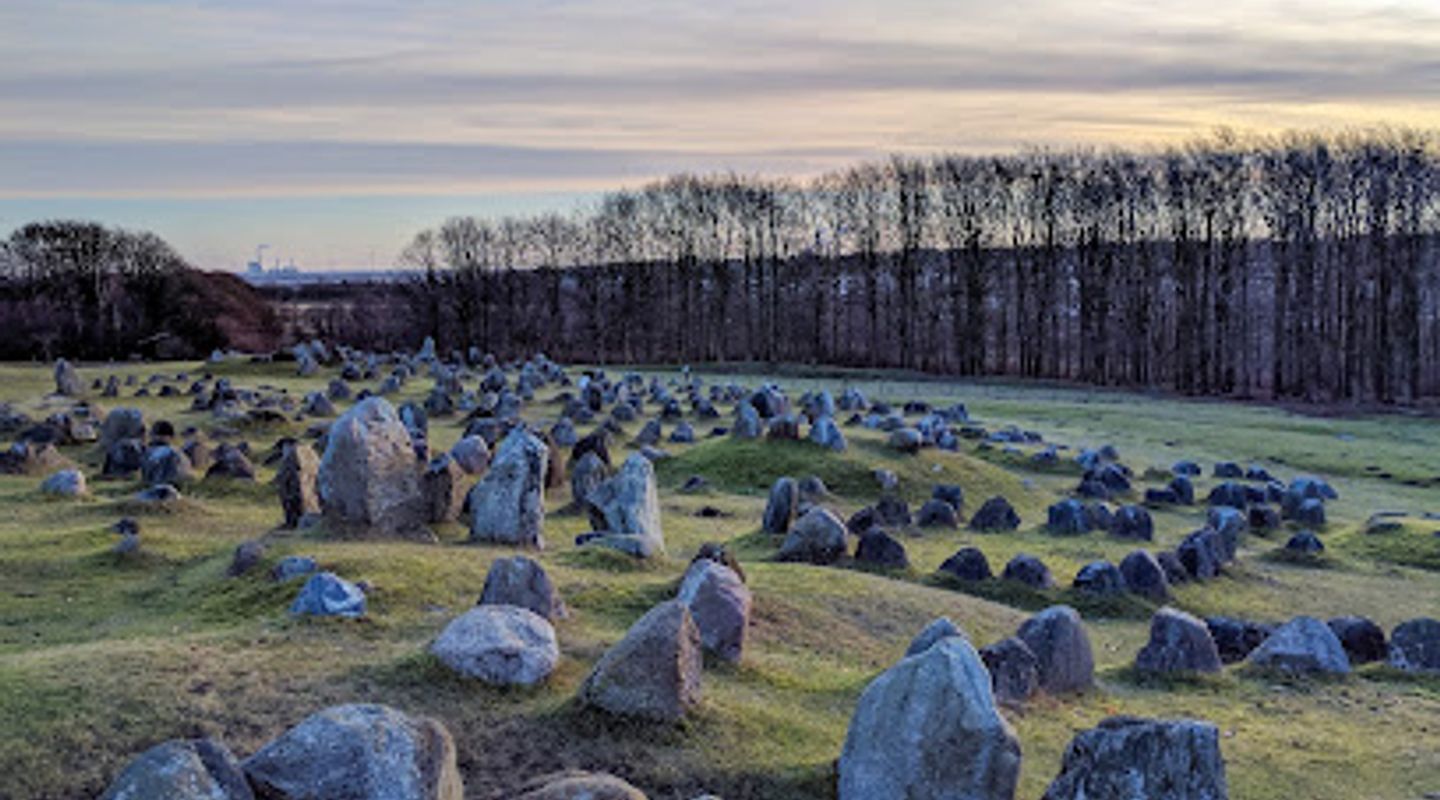
Vikingemuseet Lindholm Høje, set on a wind‑brushed hill above Nørresundby, combines one of Northern Europe’s most significant Viking‑age burial grounds with a modern archaeological museum. Outside, nearly 700 stone settings outline cremation graves and ship shapes from the late Iron Age and Viking era, preserved for centuries under drifting sand. Inside, immersive exhibitions explore Viking life at Limfjorden, from farming and trade to rituals around death, alongside a wider story of prehistory in the Limfjord region, brought to life with finds, models, media installations and a well‑stocked museum shop.
On-site amenities
 Restrooms
 Drink options
 Food options
 Seating areas
 Trash bins
 Information boards
 Visitor centre
Opening hours
- MonClosed
- Tue10 am–5 pm
- Wed10 am–5 pm
- Thu10 am–5 pm
- Fri10 am–5 pm
- Sat10 am–5 pm
- Sun10 am–5 pm
Opening hours as listed on the venue’s Google Business Profile. Hours can change for services and special events, so check with the venue before you go.
- Address
- Vendilavej 11, 9400 Nørresundby
- Phone
- Website
Getting there
City bus from central Aalborg
Car or taxi from Aalborg centre
Bicycle from Aalborg and Nørresundby
Discover more about Vikingemuseet Lindholm Høje
A windswept hill of stones and stories
Perched on a sandy ridge north of the Limfjord, Lindholm Høje is one of Denmark’s most evocative archaeological landscapes. The burial ground stretches across the hillside in a pattern of low stone settings, some arranged as simple ovals, others as elegant ship forms pointing towards the horizon. Used from around 400 CE to about the year 1000, this cemetery bridges the late Iron Age and the Viking period, capturing centuries of continuity and change in one exposed field of stones.What makes Lindholm Høje remarkable is how well it survived. Centuries of sand drift gradually buried the graves and the neighbouring settlement, sealing them away until excavations in the mid‑20th century revealed more than 680 cremation burials and over 150 ship settings. The resulting pattern is both stark and strangely beautiful: rough granite boulders set in short turf, overlooking modern Aalborg across the water, a powerful reminder of how close the Viking world still feels.
Traces of everyday Viking life
Below the hill, the museum delves into daily life on Lindholm during its heyday. Based directly on finds from the site, the main exhibition reconstructs a small farming community that kept cattle, cultivated fields and worked iron, yet was also plugged into wider networks of trade and travel. Tools, beads, weapon fragments and household objects show a society that was both pragmatic and highly skilled.Through models, reconstructed interiors and hands‑on elements, you see how longhouses were structured, where animals were kept and how firepits, weaving looms and storage spaces defined family routines. The exhibition explores food and farming, crafts such as textile production, and the vital role of the fjord as the community’s gateway to markets and voyages further afield. Although long vanished above ground, the associated settlement north of the graves is effectively re‑imagined here, based on postholes, fences and cooking pits uncovered by archaeologists.
Rituals, burning pyres and the journey beyond
Death rituals form another central thread. At Lindholm Høje, the dead were cremated, and the bones and charcoal carefully placed on the hillside, then outlined with stones. The ship settings in particular hint at a belief in journeys after death, the stone hull symbolically carrying the deceased towards another realm. Differences in stone shapes and accompanying objects suggest distinctions of gender, age and status.Inside the museum, these practices are unpacked with explanatory models and displays of urn fragments, pyre remains and personal items altered by fire. The curators also tackle the impact of the environment itself: by the end of the Viking age, sand drift had become so severe that fields and graves were abandoned, nature unwittingly preserving what would later become a textbook site for understanding Viking‑age funerary customs.
From local fjordlands to wider prehistory
A second major exhibition broadens the lens to the wider Limfjord region over several millennia. Here, finds from other sites along the fjord are grouped thematically to explore how people hunted, farmed, worshipped and traded long before the Viking ships appeared. Large illustrations and media installations recreate scenes from bogs, prehistoric villages and ritual landscapes, helping you link Lindholm Høje’s stones to a deeper timeline of human activity in northern Jutland.Rather than listing periods, the displays focus on human needs and choices: securing food, creating social bonds, marking territory and dealing with the unpredictable forces of nature. In this way, the museum connects the specific story of Lindholm Høje to a broader narrative of how communities in the region adapted to changing climates, technologies and belief systems.
Atmosphere, facilities and seasonal moods
The experience of Lindholm Høje changes with the weather and time of year. On bright days, the view over the Limfjord and Aalborg skyline gives the hill an expansive, scenic feel; in mist or drizzle, the stone outlines seem to close in, emphasising the intimacy of the graves and the hush of the site. The open hill is accessible even outside museum hours, while the museum itself adds warmth, context and shelter, with café areas, seating and a shop selling replicas of Viking jewellery, woollen goods, books and mead.Paths across the burial ground are relatively gentle but can feel uneven underfoot, especially in wet or icy conditions. Information boards help you interpret the stone patterns outdoors, while inside, bilingual texts and visual aids make the exhibitions approachable for a wide audience. Whether you linger for an hour or an afternoon, the combination of raw archaeological landscape and carefully curated storytelling offers one of the most complete introductions to Viking‑age life and death in Denmark.
Evendo Review Centre
 Google
Guest reviews
Best time to go
Quietest: Jan, Feb & Mar · before 8am or at 7pm
Busy times are Evendo estimates for a typical year, to help you plan. Actual crowds vary with events, school holidays and the weather.
Explore Vikingemuseet Lindholm Høje on the map
A handpicked selection of must-see spots near Vikingemuseet Lindholm Høje, mapped for you.
Get your free copy of our complete guide to Vikingemuseet Lindholm Høje, delivered straight to you.
Everything on this page, from opening hours and how to get there to Eve’s tips and the best time to go, in one PDF you can read offline, print or share.
Already have an account? Sign in
Your Vikingemuseet Lindholm Høje guide is ready.
We'll send it to · Not you? Sign out

Getting your guide ready…
We are putting together a fresh copy of the Vikingemuseet Lindholm Høje guide. This can take up to a minute.
This can take a few moments. If your browser asks, choose Allow so the download can start. You'll find the guide in your Downloads folder.
Nothing happened? Download it again
Sorry, the guide is taking longer than usual. Please try again in a minute, or get it by email instead.
Unlock the best of Vikingemuseet Lindholm Høje
Skip-the-line tickets, guided tours with entry, and walking tours of the area, booked in a few clicks.

Other nearby places you may find interesting
The closest places of the same kind, if this one is not quite what you had in mind.
-
-
-
-
-


Swipe for more places
More to explore near Vikingemuseet Lindholm Høje
-
 Best experiences near Vikingemuseet Lindholm Høje
-
 Best hotels near Vikingemuseet Lindholm Høje
-
 Best landmarks near Vikingemuseet Lindholm Høje
-
 Best attractions near Vikingemuseet Lindholm Høje
-
 Best shops near Vikingemuseet Lindholm Høje
-
 Best restaurants near Vikingemuseet Lindholm Høje
-
 Best bars near Vikingemuseet Lindholm Høje


Do you manage this location?
Take control to get all the benefits, like improved information, better appearance, and stronger visibility across AI-powered discovery.
Explore more
Explore more of Limfjord
Discover Limfjord in Denmark: A serene waterway offering a blend of nature, culture, and history with charming villages, Viking sites, and vibrant arts scenes.
Explore Limfjord
Explore more of Denmark
Discover Denmark: A perfect blend of history, modern design, and the cozy concept of hygge. Explore vibrant cities, serene landscapes, and world-class cuisine.
Explore Denmark
