Bispehuen Travel Guide
Free Guide: A dramatic folded column of volcanic ash and clay, shaped like a bishop's hat, rising from Fur's largest quarry.


A brief summary of Bispehuen
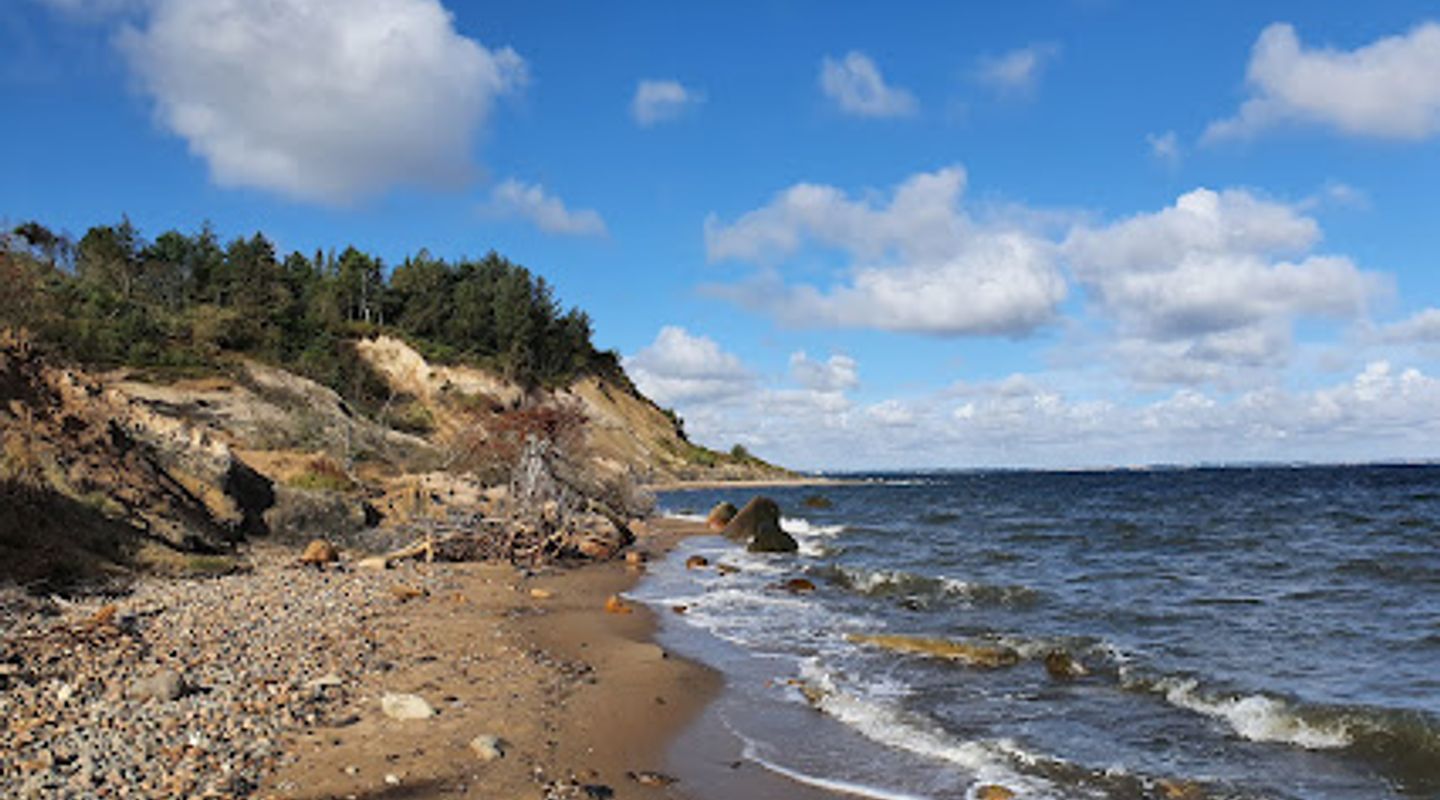
A dramatic folded column of volcanic ash and clay, shaped like a bishop's hat, rising from Fur's largest quarry.
Bispehuen is a striking geological landmark on the Danish island of Fur, featuring a spectacular column of folded diatomite (moler) preserved within the Stendal Quarry. Named for its distinctive bishop's hat shape, this natural formation rises dramatically from the exposed cliff face, revealing layers of volcanic ash and clay that tell the story of the landscape's original height. Nearby stands the bronze sculpture Molermanden, which gazes across the quarry, fjord, and distant island of Livø, creating a unique blend of geological significance and artistic interpretation.
On-site amenities
 Picnic areas
 Information boards
 Seating areas
Opening hours
- Every dayOpen 24 hours
Opening hours as listed on the venue’s Google Business Profile. Hours can change for services and special events, so check with the venue before you go.
- Address
- 7884 Fur
- Website
Getting there
Car Ferry from Branden
Bicycle from Branden
Public Transport and Walking from Skive
Walking from Fur Havn
Discover more about Bispehuen
A Geological Marvel Born from Mining
Bispehuen stands as one of Fur's most distinctive natural features, located within the Stendal Quarry—the island's largest and most accessible diatomite extraction site. When commercial mining operations began on Fur, this remarkable column of folded moler was deliberately preserved due to its unique geological structure. The formation consists of intricately knotted layers of volcanic ash and diatomite, materials that accumulated over millions of years and now serve as a tangible record of the landscape's original elevation before quarrying reshaped the terrain.The name Bispehuen, meaning "The Bishop's Hat," derives directly from the column's distinctive silhouette. This whimsical nomenclature reflects how the folded geological layers create a shape that resembles the ceremonial headwear of a bishop, making it instantly recognizable and memorable to visitors exploring the quarry.
Layers of Time and Volcanic History
Fur's geology is exceptional within Denmark, consisting primarily of alternating strata of volcanic ash and a specialized clay called moler. These materials were deposited during ancient periods when volcanic activity and marine sedimentation shaped the region. At Bispehuen, the exposed cliff face reveals these layers with striking clarity, allowing visitors to read the island's geological narrative directly from the rock face. The volcanic ash layers, in particular, represent periods of intense geological activity, while the moler deposits reflect quieter phases of marine clay accumulation.The preservation of Bispehuen within an active quarry creates an unusual and valuable educational opportunity. Rather than being hidden beneath soil or inaccessible, the formation remains visible and interpretable, offering both casual visitors and geology enthusiasts direct access to understanding the processes that shaped this distinctive landscape.
Molermanden: Art Meets Geology
Standing sentinel above Bispehuen is Molermanden, a bronze sculpture that adds an artistic dimension to this geological site. The figure gazes outward across the man-made quarry landscape, the natural terrain beyond, the waters of Limfjorden, and the distant silhouette of Livø island. This sculptural presence transforms Bispehuen from a purely scientific curiosity into a place where human creativity and natural history intersect. The sculpture invites contemplation of how humans have reshaped the landscape through resource extraction while simultaneously preserving and celebrating the geological wonders that mining has exposed.
Landscape Restoration and Preservation
Bispehuen exemplifies thoughtful landscape management in the context of industrial resource extraction. Rather than removing the column as an obstacle to mining operations, the decision to preserve it demonstrates recognition of its scientific and aesthetic value. This approach transformed what could have been merely an extractive site into a destination that educates visitors about both geology and sustainable land use. Information boards and picnic tables positioned near Molermanden and on the hillside opposite the quarry provide facilities for visitors to pause, reflect, and absorb the significance of their surroundings.
A Window into Fur's Unique Geology
Fur itself is renowned throughout Denmark for its distinctive geological composition and fossil-rich deposits. Bispehuen serves as the island's most prominent geological landmark, embodying the characteristics that make Fur special: the visible stratification of volcanic ash and moler, the dramatic exposed cliff faces, and the ongoing dialogue between human activity and natural preservation. The site connects visitors to broader themes of the island's identity, from its use as a source of diatomite and other industrial materials to its recognition as a place of scientific and natural significance.
Evendo Review Centre
 Google
Guest reviews
Best time to go
Quietest: Jan, Feb & Dec · before 6am or at 9pm
Busy times are Evendo estimates for a typical year, to help you plan. Actual crowds vary with events, school holidays and the weather.
Explore Bispehuen on the map
A handpicked selection of must-see spots near Bispehuen, mapped for you.
Get your free copy of our complete guide to Bispehuen, delivered straight to you.
Everything on this page, from opening hours and how to get there to Eve’s tips and the best time to go, in one PDF you can read offline, print or share.
Already have an account? Sign in
Your Bispehuen guide is ready.
We'll send it to · Not you? Sign out

Getting your guide ready…
We are putting together a fresh copy of the Bispehuen guide. This can take up to a minute.
This can take a few moments. If your browser asks, choose Allow so the download can start. You'll find the guide in your Downloads folder.
Nothing happened? Download it again
Sorry, the guide is taking longer than usual. Please try again in a minute, or get it by email instead.
Other nearby places you may find interesting
The closest places of the same kind, if this one is not quite what you had in mind.
-
-
-
-
-


Swipe for more places
More to explore near Bispehuen

 Best experiences near Bispehuen
 Best hotels near Bispehuen
 Best landmarks near Bispehuen
 Best attractions near Bispehuen
 Best shops near Bispehuen
 Best restaurants near Bispehuen
 Best bars near Bispehuen
Do you manage this location?
Take control to get all the benefits, like improved information, better appearance, and stronger visibility across AI-powered discovery.
Explore more
Explore more of Limfjord
Discover Limfjord in Denmark: A serene waterway offering a blend of nature, culture, and history with charming villages, Viking sites, and vibrant arts scenes.
Explore Limfjord
Explore more of Denmark
Discover Denmark: A perfect blend of history, modern design, and the cozy concept of hygge. Explore vibrant cities, serene landscapes, and world-class cuisine.
Explore Denmark