

Corselitze Travel Guide
Free Guide: Elegant 18th‑century manor, landscaped gardens and deep forests with an ancient oak, offering a tranquil slice of Falster’s cultural and natural heritage.


A brief summary of Corselitze
Elegant 18th‑century manor, landscaped gardens and deep forests with an ancient oak, offering a tranquil slice of Falster’s cultural and natural heritage.
Corselitze is a stately Neoclassical manor and landscaped estate on the island of Falster near Nykøbing Falster. Built in the late 18th century for industrialist Johan Frederik Classen, it is surrounded by sweeping lawns, English‑style gardens, forests and one of Denmark’s most remarkable old oak trees. Today visitors wander formal avenues and woodland paths, admire the white manor’s elegant façade, and enjoy a tranquil green escape close to the Baltic coast.
On-site amenities
 Restrooms
 Seating areas
 Trash bins
 Information boards
Opening hours
- Every day9 am–6 pm
Opening hours as listed on the venue’s Google Business Profile. Hours can change for services and special events, so check with the venue before you go.
- Address
- corzelitze
- Website
Getting there
Car from Nykøbing Falster
Bicycle from Nykøbing Falster
Taxi from Nykøbing Falster
Public transport plus walk or bike
Discover more about Corselitze
A Neoclassical Manor in the Falster Countryside
Corselitze is a grand manor estate set in gentle farmland and forest on Falster, a short distance from Nykøbing Falster. The main house is a two‑storey Neoclassical building completed in 1777, with a white nine‑bay façade, black tiled roof and tall pilasters framing its windows. From the front lawn you get a textbook view of late‑18th‑century Danish country architecture: symmetrical, dignified and restrained rather than ostentatious.The estate was created for Major General and industrialist Johan Frederik Classen, a leading figure in Denmark’s early industrial era. He commissioned architect Andreas Kirkerup to design the house as a modern residence that also signalled status and taste. The result still feels imposing without ever overshadowing the surrounding landscape, which remains very much part of the experience.
Gardens Shaped by Enlightenment Ideas
Behind the manor, the grounds unfold into Corselitze Garden, laid out in the style of an English landscape park. Instead of rigid baroque patterns, you find sweeping lawns, carefully placed groups of trees and curving paths that seem natural but are subtly designed. Bridges painted white cross small streams, and pockets of roses and ornamental plantings add colour through the warmer months.The garden reflects the Enlightenment enthusiasm for nature as something to be shaped yet respected. Long sightlines draw your eye from the manicured space near the house towards more untamed woodland and, in the distance, the flat Falster landscape. It is a place made for unhurried strolling, quiet conversation and the simple pleasure of being outdoors in soft northern light.
Forests, Old Oaks and Hidden Retreats
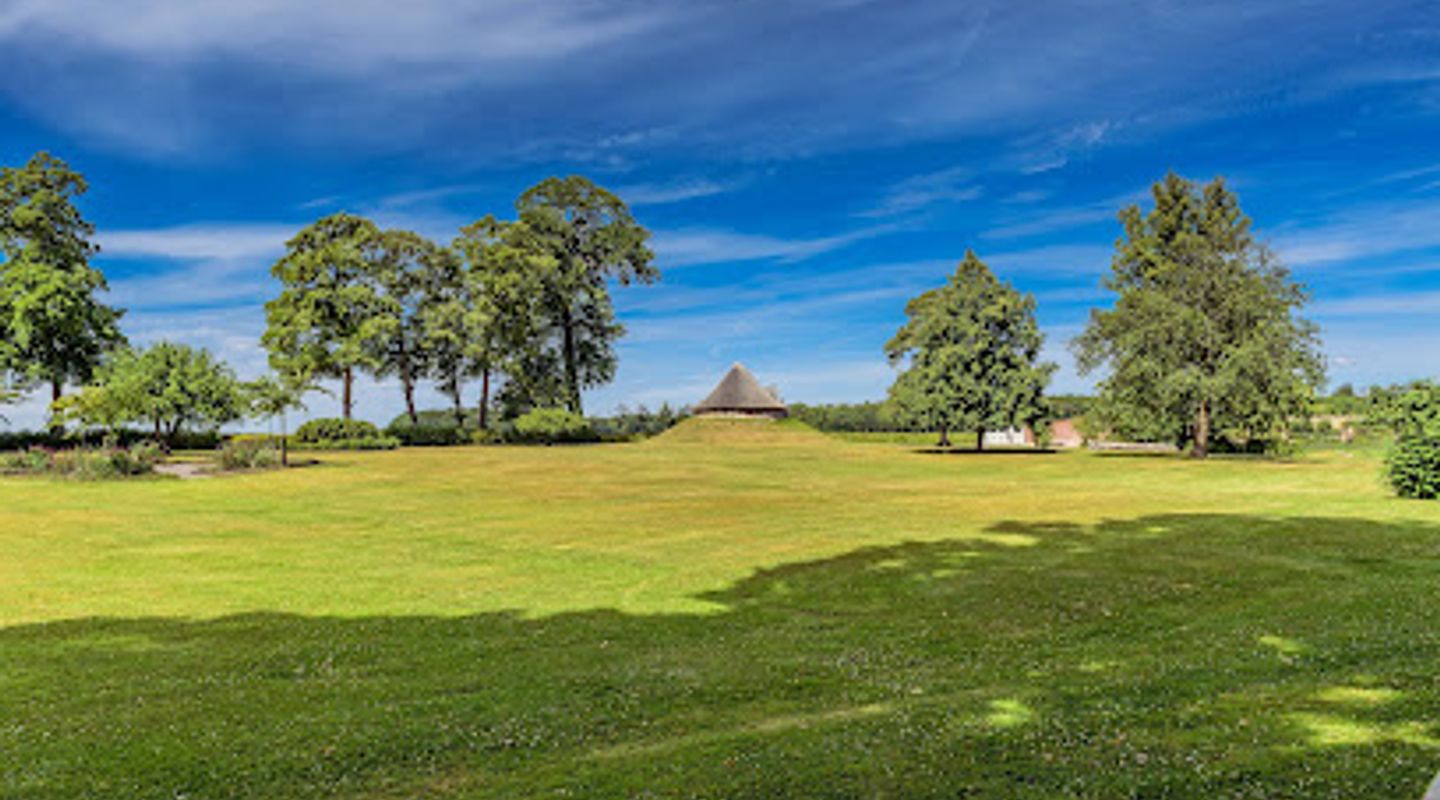
Beyond the formal garden, the estate extends into extensive forest, open to visitors on marked paths. These woods hide one of Denmark’s most celebrated trees: the Valdemar Oak, a huge, ancient oak regarded as among the largest in the country. Its gnarled trunk and sprawling branches speak of centuries of storms and seasons, and it has become a natural landmark in its own right.Scattered through the surrounding Tromnæs Forest are small surprises such as Generalens Lysthus, a thatched 18th‑century forest pavilion built as a retreat for Classen. Walking here combines gentle exercise with an almost storybook atmosphere: shafts of light through beech and oak, birdsong, and sudden clearings that reveal fields or distant glimpses of the sea.
Traces of Patronage and Cultural Heritage
Inside the manor, which is not always accessible, the interiors were historically decorated by sculptor Johannes Wiedewelt, linking Corselitze to the wider cultural scene of its time. The estate later passed into a foundation established by Classen, and it remains managed as a cultural and natural heritage property. That stewardship is visible in the careful upkeep of avenues, ditches, bridges and woodland rides.Corselitze sits within a region dotted with churches, burial mounds and other manor houses, but its combination of architecture, designed landscape and large forest areas gives it a distinctive character. It tells a story not only of one man’s fortune but of how land, industry and culture intertwined in 18th‑century Denmark.
A Calm Escape for Walks and Quiet Moments
Visiting today is largely about atmosphere rather than formal attractions. There is no theme‑park infrastructure, and facilities are modest, so the focus stays on walking, picnicking and simply enjoying the scenery. On a clear day you can spend hours moving from sunlit lawns to shaded forest paths, perhaps pausing with a book on a bench or at the edge of a meadow.Seasonal changes are part of the appeal: spring brings fresh green canopies and flowering shrubs, summer offers long light evenings and deep shade, autumn paints the woods gold and copper, while crisp winter days can make the landscape feel almost architectural in its bare lines. Whenever you come, Corselitze offers a gentle, reflective counterpoint to busier coastal resorts and town centres nearby.
Evendo Review Centre
 Google
Guest reviews
Best time to go
Quietest: Jan, Feb & Nov · before 8am or at 9pm
Busy times are Evendo estimates for a typical year, to help you plan. Actual crowds vary with events, school holidays and the weather.
Explore Corselitze on the map
A handpicked selection of must-see spots near Corselitze, mapped for you.
Get your free copy of our complete guide to Corselitze, delivered straight to you.
Everything on this page, from opening hours and how to get there to Eve’s tips and the best time to go, in one PDF you can read offline, print or share.
Already have an account? Sign in
Your Corselitze guide is ready.
We'll send it to · Not you? Sign out

Getting your guide ready…
We are putting together a fresh copy of the Corselitze guide. This can take up to a minute.
This can take a few moments. If your browser asks, choose Allow so the download can start. You'll find the guide in your Downloads folder.
Nothing happened? Download it again
Sorry, the guide is taking longer than usual. Please try again in a minute, or get it by email instead.
Other nearby places you may find interesting
The closest places of the same kind, if this one is not quite what you had in mind.
-
-
-
-
-


Swipe for more places
More to explore near Corselitze

 Best experiences near Corselitze
 Best hotels near Corselitze
 Best landmarks near Corselitze
 Best attractions near Corselitze
 Best shops near Corselitze
 Best restaurants near Corselitze
 Best bars near Corselitze
Do you manage this location?
Take control to get all the benefits, like improved information, better appearance, and stronger visibility across AI-powered discovery.
Explore more

Explore more of Lolland-Falster
Discover Lolland-Falster: Denmark's serene southern islands with stunning beaches, historic castles, and charming coastal towns offering a perfect blend of nature and culture.
Explore Lolland-Falster
Explore more of Denmark
Discover Denmark: A perfect blend of history, modern design, and the cozy concept of hygge. Explore vibrant cities, serene landscapes, and world-class cuisine.
Explore Denmark
