

Frilandsmuseet - De gamle Huse Travel Guide
Free Guide: Step 200 years back in time among thatched farmsteads and Denmark’s oldest post mill, set beside the tranquil lakes and birdlife of Maribo Lakes Nature Park.


A brief summary of Frilandsmuseet - De gamle Huse
Step 200 years back in time among thatched farmsteads and Denmark’s oldest post mill, set beside the tranquil lakes and birdlife of Maribo Lakes Nature Park.
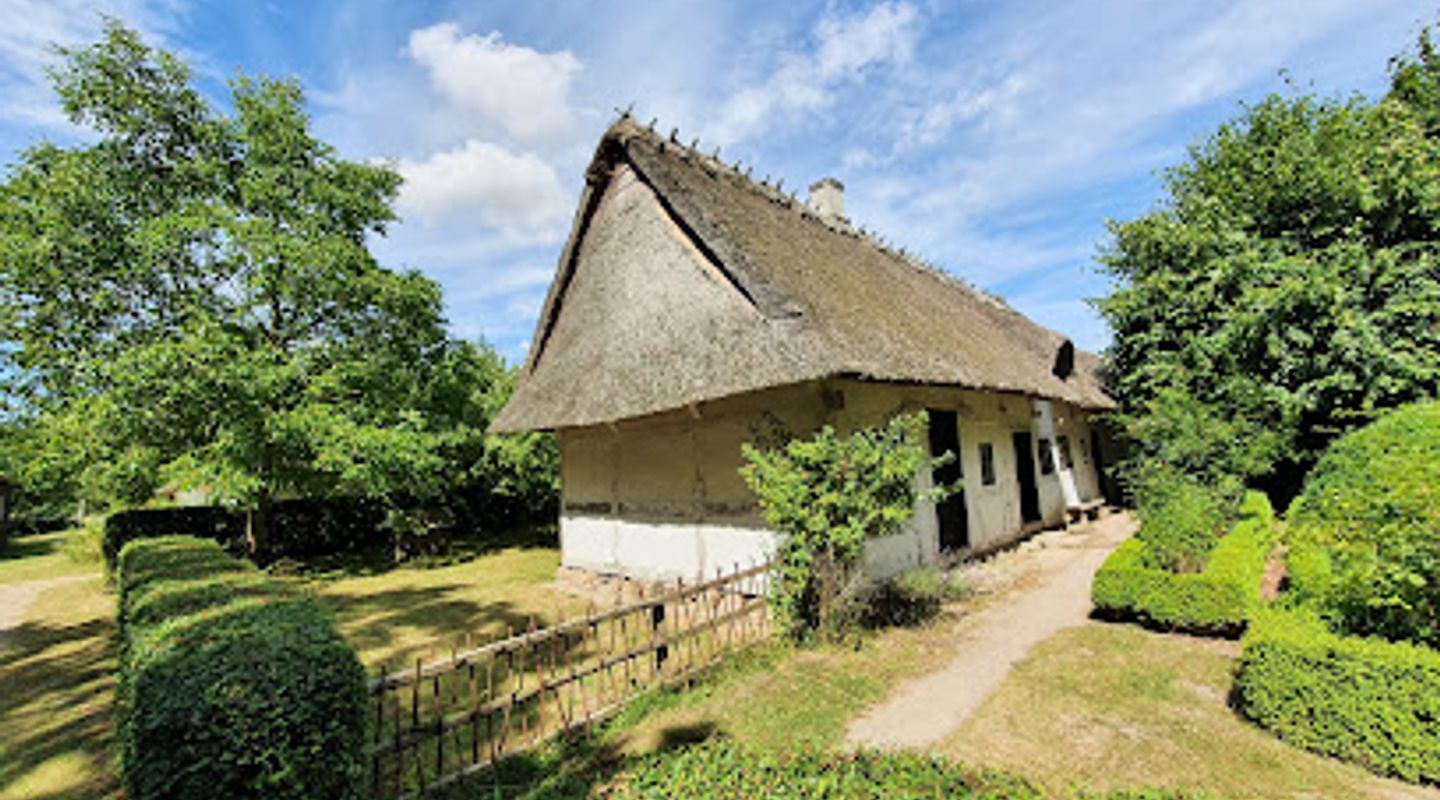
Set on the shores of Maribo Lakes in southern Lolland, **De Gamle Huse** is an atmospheric open‑air museum where historic thatched, timber‑framed farmhouses, cottages, a school and a mill recreate rural life around 1800. Part of Museum Lolland‑Falster, it combines evocative period interiors, original artefacts and garden plots with hands‑on activities, old village games and traditional crafts. Surrounded by the Maribo Lakes Nature Park, it is as much a gentle nature escape as it is a deep dive into Denmark’s agrarian past.
On-site amenities
 Restrooms
 Drink options
 Drinking water
 Food options
 Seating areas
 Sheltered areas
 Trash bins
 Information boards
 Visitor centre
Opening hours
- Every day10 am–5 pm
Opening hours as listed on the venue’s Google Business Profile. Hours can change for services and special events, so check with the venue before you go.
- Address
- Meinckes Vej 5, 4930 Maribo
- Phone
- Website
Getting there
Regional train and local bus from Nykøbing Falster
Drive from Rødbyhavn ferry terminal
Cycling from central Maribo
Discover more about Frilandsmuseet - De gamle Huse
Rural Denmark Frozen in Time by Maribo Lake
De Gamle Huse, also known as the Maribo Open‑Air Museum, spreads across a leafy site sloping gently towards the water in Nature Park Maribosøerne. Here, historic buildings from across Lolland-Falster have been dismantled and painstakingly reassembled, creating a small rural community as it might have looked two centuries ago. The lake glinting beyond the hedgerows and the sheltering trees gives the whole place a quietly cinematic quality, especially on still days when the thatched roofs are reflected in the water.The museum is part of Museum Lolland-Falster and was one of the earliest open‑air museums in Denmark. Today, it serves as a gateway into the region’s agricultural heritage, set on a compact, walkable site that feels more like a hamlet than a museum. Gravel paths, fruit trees and cottage gardens stitch together the buildings, while the sounds of birds from the lakeside reinforce that you are standing in the middle of a protected nature park as well as a cultural institution.
Thatched Farmsteads, Humble Cottages and a Village School
The heart of the museum is its collection of timber‑framed, whitewashed farmhouses and smaller dwellings, many with heavy thatched roofs and crooked beams. Inside, low‑ceilinged rooms are furnished with painted chests, iron stoves, woven textiles and everyday tools, all arranged to suggest a family has only just stepped outside. Each house tells a different social story: the comparatively substantial farmer’s house, the modest smallholder’s cottage, the simple labourer’s quarters.A reconstructed village school reveals how children learned their letters on hard benches under the gaze of a strict teacher, while other buildings explore the world of the priest, the blacksmith and other figures central to village life. One of the museum’s engineering treasures is an old ploughing engine from the earliest days of sugar beet cultivation on Lolland, hinting at the technological changes that reshaped the landscape and local economy in the 19th century.
Craftsmanship, Technology and Denmark’s Oldest Post Mill
Among the most striking structures on site is an impressive windmill, whose post is said to be more than four centuries old. This makes it one of the oldest mill structures of its kind in Denmark and a powerful symbol of pre‑industrial ingenuity, standing high above the surrounding roofs. Its weathered timbers and creaking sails evoke an era when wind power was essential to grinding grain and securing a farm’s livelihood.Across the grounds, details of traditional construction are on display: wattle‑and‑daub walls, hand‑hewn beams, hand‑split shingles and carefully layered thatch. Information boards explain old techniques and regional variations in building style, demonstrating how architecture responded to climate, soil and available materials. For visitors keen on vernacular architecture, it is a concise, open‑air textbook on how rural houses in southern Denmark were crafted and maintained.
Hands-On Activities and Living History Moments
De Gamle Huse distinguishes itself through its focus on activity as much as observation. On selected days, staff and interpreters demonstrate crafts such as whitewashing, fence weaving or traditional plastering, allowing you to see – and sometimes try – techniques that once defined everyday work in the countryside. Seasonal events can introduce music, storytelling, or themed days tied to the farming year.Simple village games are laid out in the grass or gravel for all ages to try, turning the open spaces between buildings into impromptu playgrounds. Families can follow small trails or quizzes designed for children, encouraging them to hunt for details inside the houses and in the farmyards. Combined with domestic animals occasionally present on site, these touches lend warmth and immediacy to what might otherwise be static historic settings.
Lakeside Calm in the Maribo Lakes Nature Park
Beyond the buildings, the museum is deeply connected to its environment. The Maribo Lakes Nature Park is known for its many islands, birdlife and rolling manor landscapes, and you sense this as soon as you step close to the shoreline at the edge of the grounds. Reed beds rustle, waterfowl call across the lake and the wind carries the scent of wet wood and earth.Benches and quiet corners invite you to pause and watch the light shift across the water or to enjoy a packed picnic between visits to the houses. The combination of cultural history and soft, lakeside nature makes De Gamle Huse a gentle place to slow down. Whether you are an architecture enthusiast, a family with children, or simply passing through Lolland, the museum offers a compact yet layered encounter with both the human and natural history of this part of Denmark.
Evendo Review Centre
 Google
Guest reviews
Best time to go
Quietest: Jan, Feb & Nov · before 8am or from 8pm
Busy times are Evendo estimates for a typical year, to help you plan. Actual crowds vary with events, school holidays and the weather.
Explore Frilandsmuseet - De gamle Huse on the map
A handpicked selection of must-see spots near Frilandsmuseet - De gamle Huse, mapped for you.
Get your free copy of our complete guide to Frilandsmuseet - De gamle Huse, delivered straight to you.
Everything on this page, from opening hours and how to get there to Eve’s tips and the best time to go, in one PDF you can read offline, print or share.
Already have an account? Sign in
Your Frilandsmuseet - De gamle Huse guide is ready.
We'll send it to · Not you? Sign out

Getting your guide ready…
We are putting together a fresh copy of the Frilandsmuseet - De gamle Huse guide. This can take up to a minute.
This can take a few moments. If your browser asks, choose Allow so the download can start. You'll find the guide in your Downloads folder.
Nothing happened? Download it again
Sorry, the guide is taking longer than usual. Please try again in a minute, or get it by email instead.
Other nearby places you may find interesting
The closest places of the same kind, if this one is not quite what you had in mind.
-
Labyrint Lolland-Falster Navigate winding paths through Denmark's enchanting countryside maze—a family adventure combining nature, challenge, and outdoor exploration.
-
Guldborgsund Zoo & Botanisk Have A compact blend of zoo and botanical garden that long served Nykøbing Falster as a green, family-friendly escape of animals, flowers and playgrounds close to town.
-
Horreby Lyng Falster’s last raised bog: a quiet mosaic of peat, heather and history, where boardwalks, rare habitats and ancient finds meet under wide Danish skies.
-
Ejegod Windmill A beautifully restored 1816 smock mill on Falster, Ejegod Windmill pairs classic Danish milling heritage with a cosy toy-filled mill house in northern Nykøbing.
-
Gedser Lighthouse Historic brick lighthouse at Denmark’s southern tip, where raw Baltic coastline, seabird migration and two centuries of maritime history meet in wide-open skies.
Swipe for more places
More to explore near Frilandsmuseet - De gamle Huse
-
 Best experiences near Frilandsmuseet - De gamle Huse
-
 Best hotels near Frilandsmuseet - De gamle Huse
-
 Best landmarks near Frilandsmuseet - De gamle Huse
-
 Best attractions near Frilandsmuseet - De gamle Huse
-
 Best shops near Frilandsmuseet - De gamle Huse
-
 Best restaurants near Frilandsmuseet - De gamle Huse
-
 Best bars near Frilandsmuseet - De gamle Huse







Do you manage this location?
Take control to get all the benefits, like improved information, better appearance, and stronger visibility across AI-powered discovery.
Explore more

Explore more of Lolland-Falster
Discover Lolland-Falster: Denmark's serene southern islands with stunning beaches, historic castles, and charming coastal towns offering a perfect blend of nature and culture.
Explore Lolland-Falster
Explore more of Denmark
Discover Denmark: A perfect blend of history, modern design, and the cozy concept of hygge. Explore vibrant cities, serene landscapes, and world-class cuisine.
Explore Denmark
