

Dancer's fountain Travel Guide
Free Guide: Three bronze ballerinas pirouette above a tranquil basin in a tiny Helsingør garden, blending Danish ballet heritage with everyday urban calm.


A brief summary of Dancer's fountain
Three bronze ballerinas pirouette above a tranquil basin in a tiny Helsingør garden, blending Danish ballet heritage with everyday urban calm.
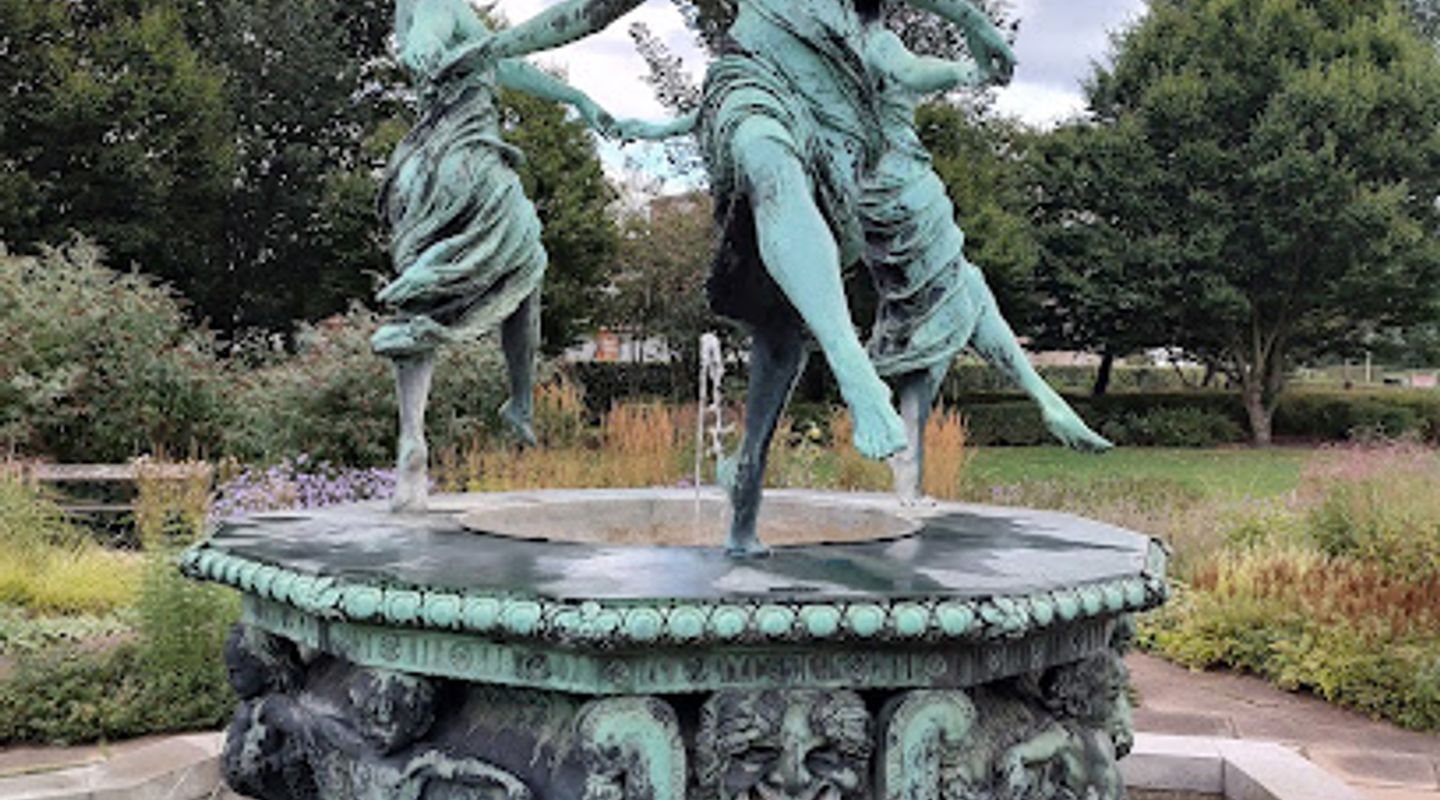
Tucked into a small garden at the corner of Allegade and Kronborgvej in Helsingør, the Dancer’s Fountain (Danserindebrønden) is a lyrical bronze fountain by sculptor Rudolph Tegner. Three life-sized ballerinas poised above a circular basin celebrate the artistry of the Royal Danish Ballet and early 20th‑century Danish sculpture. A quiet pause point between Kronborg Castle and the harbor, it offers a graceful contrast to the town’s maritime and fortress heritage.
On-site amenities
 Restrooms
 Drink options
 Drinking water
 Food options
 Seating areas
 Trash bins
 Information boards
Opening hours
- Every dayOpen 24 hours
Opening hours as listed on the venue’s Google Business Profile. Hours can change for services and special events, so check with the venue before you go.
- Address
- Allegade, 3000 Helsingør
- Website
Getting there
Train + walk from Copenhagen
Local bus within Helsingør
Car from North Zealand
Discover more about Dancer's fountain
Bronze ballerinas in a quiet Helsingør corner
Set where Allegade meets Kronborgvej, the Dancer’s Fountain feels almost like a secret performance caught in mid‑movement. In a pocket‑sized garden framed by trees and low greenery, three bronze ballerinas rise from a circular basin, their limbs outstretched as if they have just leapt from the stage. The sound of splashing water, when the fountain is running, softens the city noise and turns this small space into a contemplative pause between the busy harbor and Kronborg Castle.Unlike grand monumental statues, this work sits at eye level. You can stand close enough to trace the curve of an ankle or the twist of a waist, and the dancers seem less like distant icons and more like real performers held in a single captured moment.
A tribute to Danish ballet and its stars
The fountain is a sculpted homage to the Royal Danish Ballet and to three of its celebrated dancers from the early 1900s. Each figure represents a real ballerina: Elna Lauesgaard, Emilie Smith and Grethe Detlevsen, whose names are inscribed near the base. Their distinct poses hint at different personalities—one extended and reaching, another spiralling inwards, the third balanced in a poised, open stance.Created in 1913 by Rudolph Tegner, a sculptor known for his dynamic forms, the work captures both the discipline and the freedom of classical dance. Rather than depicting a single famous scene, Tegner distilled the essence of ballet into three interlocking silhouettes, so that from every angle the composition shifts, like choreography frozen in bronze.
From royal garden to coastal town
The Dancer’s Fountain was originally commissioned for Copenhagen’s King’s Garden near Rosenborg Castle, lending an air of performance to the lawns frequented by the capital’s strollers. In the 1930s it was moved to Helsingør, where it found a new home in this modest urban park close to the Øresund strait.Placed within sight of Kronborg Castle and the historic harborfront, the fountain adds a different layer to the town’s story. Helsingør is often associated with seafaring and Shakespearean drama; this work introduces a parallel narrative of national culture, linking the coastal town to the artistic life of Copenhagen and the tradition of Danish ballet.
Details worth lingering over
Spend a few minutes circling the basin and the sculpture reveals its subtleties. The dancers’ tutus ripple with fine texturing, while the musculature of calves and backs suggests the strength behind the elegance. Where water flows, droplets catch on outstretched toes and fingers, adding a shimmer that changes with the light.Look down and you will notice how the plinth and basin create a stage of their own. Reflections in the shallow water can double the dancers, especially on still days, so the figures appear to hover between earth and sky. Benches nearby invite you to sit and watch this interplay, framed by the foliage of the small garden and the passing life of Helsingør beyond.
A gentle stop on a cultural stroll
The fountain’s central location makes it an easy addition to a wider exploration of Helsingør’s historic core. It offers a restful counterpoint to the monumental walls of Kronborg and the angular lines of the nearby maritime museum. Children tend to be drawn to the sculpted figures and the basin, while adults often treat the garden as a brief retreat between museums and waterfront walks.Whether you stay for a couple of photographs or settle on a bench with a coffee, the Dancer’s Fountain works best as a small, quiet moment of culture in the open air—a reminder that even in a town famed for castles and ships, the art of movement and music has also left its mark in bronze.
Evendo Review Centre
 Google
Guest reviews
Best time to go
Quietest: Jan, Feb & Mar · before 7am or from 9pm
Busy times are Evendo estimates for a typical year, to help you plan. Actual crowds vary with events, school holidays and the weather.
Explore Dancer's fountain on the map
A handpicked selection of must-see spots near Dancer's fountain, mapped for you.
Get your free copy of our complete guide to Dancer's fountain, delivered straight to you.
Everything on this page, from opening hours and how to get there to Eve’s tips and the best time to go, in one PDF you can read offline, print or share.
Already have an account? Sign in
Your Dancer's fountain guide is ready.
We'll send it to · Not you? Sign out

Getting your guide ready…
We are putting together a fresh copy of the Dancer's fountain guide. This can take up to a minute.
This can take a few moments. If your browser asks, choose Allow so the download can start. You'll find the guide in your Downloads folder.
Nothing happened? Download it again
Sorry, the guide is taking longer than usual. Please try again in a minute, or get it by email instead.
Other nearby places you may find interesting
The closest places of the same kind, if this one is not quite what you had in mind.
-
-
-
-
-


Swipe for more places
More to explore near Dancer's fountain

 Best experiences near Dancer's fountain
 Best hotels near Dancer's fountain
 Best landmarks near Dancer's fountain
 Best attractions near Dancer's fountain
 Best shops near Dancer's fountain
 Best restaurants near Dancer's fountain
 Best bars near Dancer's fountain
Do you manage this location?
Take control to get all the benefits, like improved information, better appearance, and stronger visibility across AI-powered discovery.
Explore more

Explore more of North Zealand
Explore North Zealand, Denmark's enchanting region of castles, beaches, and royal estates, perfect for history buffs, nature enthusiasts, and seaside lovers.
Explore North Zealand
Explore more of Denmark
Discover Denmark: A perfect blend of history, modern design, and the cozy concept of hygge. Explore vibrant cities, serene landscapes, and world-class cuisine.
Explore Denmark
