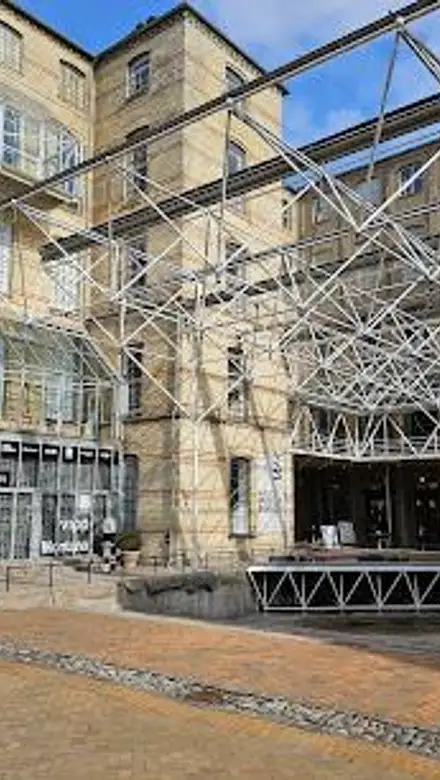
Brandts Klædefabrik - byen i byen, Funen Travel Guide
A historic woollen mill turned vibrant cultural quarter, where art, film, shopping and café life fill atmospheric brick courtyards in the heart of Odense.
Once Odense’s largest woollen mill, Brandts Klædefabrik has been reborn as a lively cultural quarter in the heart of the city. The historic brick factory complex now houses art museums, cinemas, shops, design stores, cafés, restaurants and creative workspaces arranged around atmospheric courtyards and passages. It is a place to browse contemporary Danish culture, catch an exhibition or film, and linger over coffee under open sky among red-brick walls and industrial details.
A brief summary to Brandts Klædefabrik - byen i byen
- Brandts Passage 8, 2, Odense, Odense C, 5000, DK
- Click to display
- Click to display
- Duration: 1.5 to 5 hours
- Mid ranged
-
 Mixed
Mixed
- Mobile reception: 5 out of 5
- Monday 10 am-5:30 pm
- Tuesday 10 am-5:30 pm
- Wednesday 10 am-5:30 pm
- Thursday 10 am-8 pm
- Friday 10 am-5:30 pm
- Saturday 10 am-5:30 pm

Know before you go
Hi, I'm Eve. Here are a few practical things to know before exploring Brandts Klædefabrik - byen i byen.
- Plan extra time to wander the courtyards and side passages; Brandts Klædefabrik is a whole quarter, not a single building, and its smaller galleries and shops are easy to miss.
- Combine an exhibition visit with a café stop in the central courtyard to experience the shift from daytime museum mood to evening social atmosphere.
- Check current exhibition and cinema programmes in advance if you want to align your visit with specific shows, talks or screenings.
- Bring a light layer even in summer; shaded passages between the tall brick buildings can feel noticeably cooler than the surrounding streets.
Do you manage this location?
Take control to get all the benefits, like improved information, better appearance, and stronger visibility across AI-powered discovery. Learn more about listing your business on Evendo
Activate your presenceOther nearby places you may find interesting
The closest places of the same kind, if this one is not quite what you had in mind.

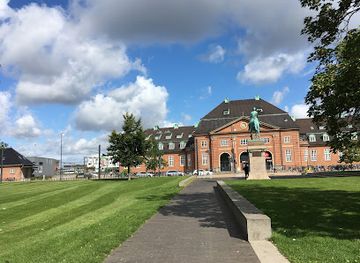
Explore Brandts Klædefabrik - byen i byen on the Map
A handpicked selection of must-see spots near Brandts Klædefabrik - byen i byen, mapped for you.
Unlock the Best of Brandts Klædefabrik - byen i byen
Buy tickets
-
No tickets available
Book tours with entry

Book tours without entry
-
No tours available
Getting There
-
Local bus from central Odense
From Odense Banegård Center, several city bus lines run towards the city centre and the Latin Quarter, with journeys typically taking 5–10 minutes depending on traffic. Buses usually operate every 10–20 minutes during the day. A single adult ticket within Odense’s central zones generally costs around DKK 20–30 when bought from a ticket machine or via a local travel app. Services are frequent on weekdays, slightly reduced in the evenings and at weekends.
-
Walking from the central station area
Odense’s historic centre is compact, and Brandts Klædefabrik lies within comfortable walking distance of the main train and bus hubs. Most routes pass through pedestrian‑friendly streets with shops and cafés, and the terrain is flat and paved. Allow around 10–20 minutes on foot depending on your pace and starting point. The walk is suitable for most visitors, including those with strollers, though very uneven cobbles are found within the complex itself.
-
Taxi within Odense
Taxis are readily available around the central station and main squares, providing a quick way to reach Brandts Klædefabrik, especially in bad weather or with luggage. The ride to the Latin Quarter usually takes 5–10 minutes depending on traffic. Typical weekday fares for such a short city journey fall roughly in the DKK 80–140 range, varying with time of day and any waiting time. Most taxis accept credit cards, and advance booking is recommended late at night.
For the on-the-go comforts that matter to you
-
 Restrooms
-
 Drink Options
-
 Drinking Water
-
 Food Options
-
 Seating Areas
-
 Sheltered Areas
-
 Trash Bins
-
 Information Boards
-
 Visitor Center
Discover more about Brandts Klædefabrik - byen i byen
From woollen mill to creative powerhouse
Brandts Klædefabrik began life in the 19th century as a family-owned textiles factory on the edge of Odense, producing cloth and uniforms and growing into one of the city’s biggest workplaces for more than a century. After production ceased in the late 1970s, the sprawling industrial complex stood at a crossroads: demolition or reinvention. Local initiatives and the municipality chose transformation, gradually reshaping the old mill into an international centre for art and culture with galleries, museums and performance spaces.Today the former factory reads like a physical timeline. Tall brick façades, sturdy iron columns and the rhythm of old warehouse windows recall the era of steam power and manual labour, while new glass elements, lighting and signage signal a contemporary, creative district. The result is not a single attraction but a compact neighbourhood with its own identity in the middle of Odense.Courtyards, passages and everyday city life
Walking into Brandts Klædefabrik you step into a sheltered world of cobbled lanes, narrow passages and intimate squares. The buildings wrap around a series of courtyards where people sit at café tables, browse shop windows and move between exhibitions, cinema screenings and concerts. Overhead, strings of lights and seasonal decorations soften the industrial lines and give the space a cosy, urban village feel.The quarter is richly mixed: design boutiques and clothing stores share walls with studios, bookshops and cultural venues. On upper floors, offices and creative workspaces keep the area busy beyond typical shopping hours. The combination of public courtyards and semi-hidden entrances invites unhurried exploration, rewarding those who follow staircases, internal corridors and side passages with unexpected niches, small galleries or quiet corners to sit.Art, film and museums under one roof
Art is central to Brandts Klædefabrik’s identity. Within the complex you find major exhibition venues such as Kunstmuseum Brandts and institutions dedicated to photography and media, continuing a tradition that began here in the 1980s when the former factory was first turned into an arts centre. Rotating exhibitions cover everything from contemporary painting and sculpture to international photographic art and visual culture.Alongside the galleries, a cinema brings new releases, art films and special events to the quarter, extending activity into the evening. Smaller cultural organisations in adjacent buildings focus on themes like graphic design, printing and media history, underlining the site’s evolution from industrial production to cultural production. Together they make Brandts Klædefabrik a natural base for anyone interested in Danish art, design and visual storytelling.Food, shopping and slow urban moments
Brandts Klædefabrik is also one of Odense’s most appealing places to eat and shop. Ground floors are lined with cafés, bakeries and restaurants ranging from quick bites to sit-down meals, many with outdoor tables spilling into the courtyards when the weather allows. The atmosphere is relaxed rather than formal, making it an easy meeting point for friends, families and solo travellers alike.Shops lean towards fashion, interior design, crafts and speciality goods, with a clear focus on style and creativity. Even if you are not planning to buy, the setting makes window-shopping enjoyable: old loading bays have become entrances, and former factory interiors now frame curated displays of Danish and international brands. Between errands you can pause on benches or low steps and simply absorb the rhythm of the quarter as deliveries, students, office workers and museum visitors all cross paths.Odense’s Latin Quarter heart
Set within Odense’s so‑called Latin Quarter, Brandts Klædefabrik feels both distinct and seamlessly integrated into the surrounding streets. The old industrial perimeter has opened up, with multiple gateways giving the sense of drifting in and out of a small inner city nested inside the larger one. Over the decades this has helped shift the complex from former outskirts to a central, cherished part of Odense’s urban fabric.For visitors, the appeal lies in this blend of history and contemporary life. You can spend an hour here between other sights or devote most of a day moving from museum to café, cinema to shop, returning to the courtyards as a constant reference point. As evening falls and lights reflect off brick and cobblestones, the old factory’s outlines soften, and it is easy to appreciate how completely this place has reinvented itself while preserving the bones of its industrious past.More to explore near Brandts Klædefabrik - byen i byen
-

Best experiences near Brandts Klædefabrik - byen i byen
-

Best hotels near Brandts Klædefabrik - byen i byen
-

Best landmarks near Brandts Klædefabrik - byen i byen
-

Best shops near Brandts Klædefabrik - byen i byen
-

Best restaurants near Brandts Klædefabrik - byen i byen
-

Best bars near Brandts Klædefabrik - byen i byen







Your all‑in‑one travel companion app
Explore expert travel guides, compare and book tours, experiences, hotels, and more—all from the palm of your hand. Download now for seamless trip planning wherever your wanderlust takes you.


Explore More of Funen
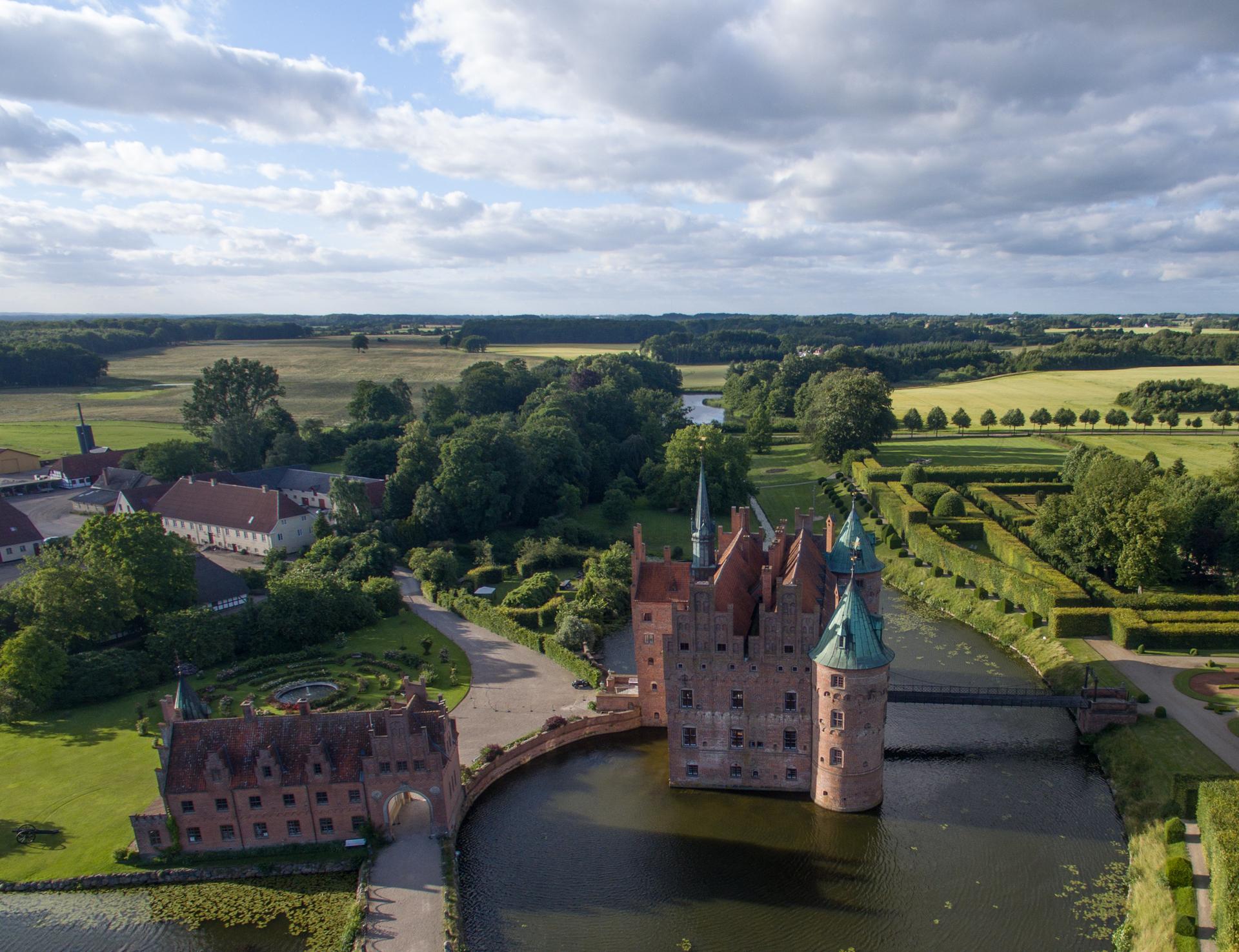
Looking beyond Brandts Klædefabrik - byen i byen? Discover Funen for broader travel guides, local hot-spots, and regional highlights.
Explore Funen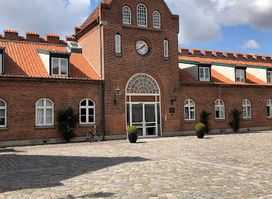
A former cattle market turned national broadcast hub, Kvægtorvet quietly links Odense’s industrial past with Denmark’s modern media present.
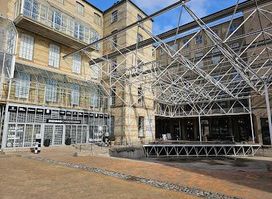
A former woolen mill reborn as Odense’s creative heart, where art, film, food and boutiques fill atmospheric brick passages in a true “city within the city.”