Brandts Klædefabrik - byen i byen, Odense Travel Guide
Free Guide: A former woolen mill reborn as Odense’s creative heart, where art, film, food and boutiques fill atmospheric brick passages in a true “city within the city.”


A brief summary of Brandts Klædefabrik - byen i byen
A former woolen mill reborn as Odense’s creative heart, where art, film, food and boutiques fill atmospheric brick passages in a true “city within the city.”
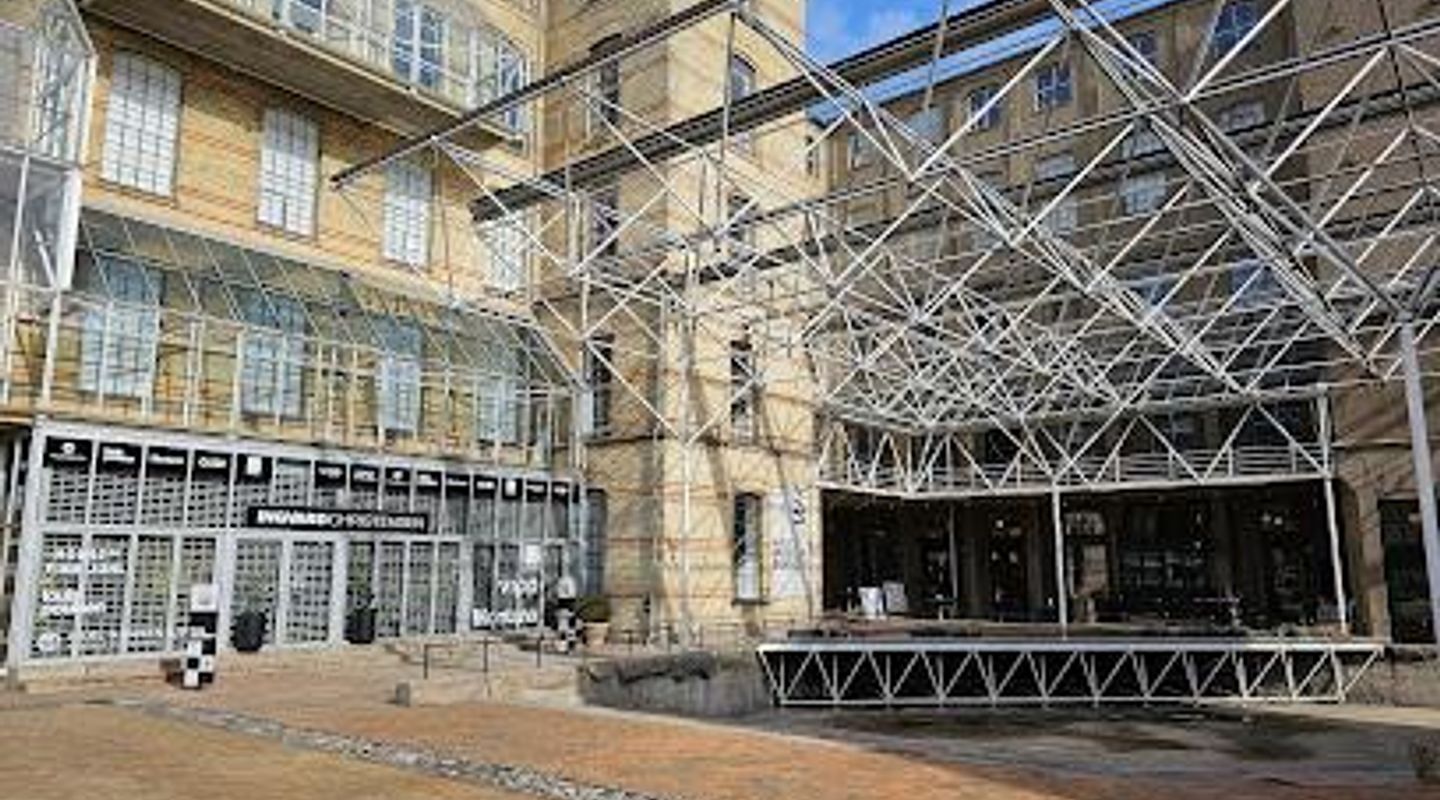
Once the thundering heart of Odense’s textile industry, Brandts Klædefabrik has been reinvented as a lively cultural quarter where cobbled passages, old brick warehouses and tall factory windows now frame galleries, cinemas, cafés, boutiques and creative workspaces. Tucked into the city’s Latin Quarter, this open‑air complex blends industrial heritage with contemporary art, design and everyday city life. Come for a museum visit, a film, a concert or shopping, and stay to soak up the relaxed, bohemian atmosphere in its intimate courtyards and passages.
On-site amenities
 Restrooms
 Drink options
 Drinking water
 Food options
 Seating areas
 Sheltered areas
 Trash bins
 Information boards
 Visitor centre
Opening hours
- Mon10 am–5:30 pm
- Tue10 am–5:30 pm
- Wed10 am–5:30 pm
- Thu10 am–8 pm
- Fri10 am–5:30 pm
- Sat10 am–5:30 pm
- SunClosed
Opening hours as listed on the venue’s Google Business Profile. Hours can change for services and special events, so check with the venue before you go.
- Address
- Brandts Passage 8, 2, 5000 Odense
- Phone
- Website
Getting there
Local bus from central Odense
Walking from Odense city centre
Cycling within Odense
Taxi from Odense Banegård Center
Discover more about Brandts Klædefabrik - byen i byen
From woolen mill to cultural powerhouse
Brandts Klædefabrik began life in the 19th century as one of Odense’s major cloth factories, producing fabrics and uniforms in a dense cluster of brick buildings, chimneys and warehouses. For generations, this was a workplace rather than a leisure address, a symbol of industrial growth at the edge of the historic centre. When production finally stopped in the late 20th century, a visionary transformation turned the disused plant into a cultural nucleus instead of letting it decay.Today the old mill’s red brick shells, wooden beams and lofty windows still read clearly as factory architecture, but everything inside and between them hums with a different kind of energy. The complex has been carefully reused rather than erased, preserving loading bays, courtyards and façades while inserting new functions, creating an unusual fusion of factory grit and urban charm.
A maze of passages, courtyards and hidden corners
Walking into Brandts Klædefabrik feels like stepping off Odense’s main streets into a miniature city. Narrow, partly covered passages link small squares, stairways and arcades. Overhead, skybridges and gallery windows break up the skyline; at ground level, cobbles and paving stones connect cafés, studios, shops and entrances to museums and a cinema.The spatial experience is deliberately intimate: one turn offers a quiet courtyard framed by ivy‑covered brick, the next opens onto a small amphitheatre where events and performances can unfold under the open sky. Despite its central location, the quarter feels slightly tucked away, a place to wander slowly, discovering murals, sculptural details and quirky shopfronts that reveal the area’s creative profile.
Art museums, film and creative life
Brandts Klædefabrik is home to several major cultural players. Art Museum Brandts occupies former factory halls with a broad collection spanning about 250 years of Danish art alongside frequently changing contemporary exhibitions, children’s art experiences and a creative family workshop. Nearby, photography and media art have their own dedicated spaces, continuing the site’s role as a platform for visual culture.A cinema brings arthouse and mainstream films into the mix, while concert venues, event spaces and studios add live music, design and performance. This dense layering of art forms means that on any given day you might combine a gallery visit with a matinee screening, stumble upon an opening or sit in on a talk or small concert, all within the same brick‑walled enclave.
Cafés, boutiques and everyday pleasures
Beyond culture in the formal sense, Brandts Klædefabrik also functions as a daily urban living room for Odense. Independent boutiques, design shops and concept stores sit beside more practical services, turning the quarter into a go‑to place for both browsing and errands. Many shops highlight Danish and Scandinavian design, crafts and fashion, echoing the site’s textile roots in a contemporary way.Cafés and restaurants spill out into the courtyards in good weather, filling the air with the smell of coffee, baked goods and seasonal dishes. Whether you are here for a quick lunch between museum floors, an evening drink after a film or a slow weekend brunch, the mix of indoor spaces and outdoor seating makes it easy to linger and people‑watch under strings of lights and between weathered brick walls.
Atmosphere, seasons and who will enjoy it
Brandts Klædefabrik’s mood shifts with the seasons and time of day. On bright days the passages glow with reflected light from red brick and glass; in winter the quarter feels cosy and cinematic, with illuminated windows and warm interiors drawing you in from the cold. Cultural events, festivals and temporary installations periodically add an extra layer of colour and sound.Couples, friends and solo travellers find it an inviting place to wander without a fixed plan, while families benefit from child‑focused exhibitions and informal dining options. The largely level passages and indoor museums make it accessible in most weather, and sheltered corners offer refuge on windy or wet days. Whether you come for art, shopping, food or simply atmosphere, this “city within the city” rewards unhurried exploration.
Industrial details that tell their own story
Look closely and the factory’s past never quite disappears. Old iron columns support ceilings in some interiors; brick patterns reveal where buildings were extended; and occasional remnants of machinery or loading infrastructure hint at the site’s working history. Even the proportions of the courtyards, once practical yards for moving goods, now shape how people gather, sit and watch performances.This layering of time is a big part of Brandts Klædefabrik’s appeal. It is not a preserved museum piece, but a living district where work, leisure and culture overlap. The quarter demonstrates how industrial heritage can be repurposed without losing its soul, offering a rich, textured backdrop to contemporary city life in Odense.
Evendo Review Centre
 Google
Guest reviews
Best time to go
Quietest: Jan, Feb & Mar · before 8am or from 11pm
Busy times are Evendo estimates for a typical year, to help you plan. Actual crowds vary with events, school holidays and the weather.
Explore Brandts Klædefabrik - byen i byen on the map
A handpicked selection of must-see spots near Brandts Klædefabrik - byen i byen, mapped for you.
Get your free copy of our complete guide to Brandts Klædefabrik - byen i byen, delivered straight to you.
Everything on this page, from opening hours and how to get there to Eve’s tips and the best time to go, in one PDF you can read offline, print or share.
Already have an account? Sign in
Your Brandts Klædefabrik - byen i byen guide is ready.
We'll send it to · Not you? Sign out

Getting your guide ready…
We are putting together a fresh copy of the Brandts Klædefabrik - byen i byen guide. This can take up to a minute.
This can take a few moments. If your browser asks, choose Allow so the download can start. You'll find the guide in your Downloads folder.
Nothing happened? Download it again
Sorry, the guide is taking longer than usual. Please try again in a minute, or get it by email instead.
Unlock the best of Brandts Klædefabrik - byen i byen
Skip-the-line tickets, guided tours with entry, and walking tours of the area, booked in a few clicks.

Other nearby places you may find interesting
The closest places of the same kind, if this one is not quite what you had in mind.
-
Bunkermuseum Of Odense Step into a fully preserved Cold War command bunker beneath Odense and explore an atmospheric maze of control rooms, exhibits and civil defence history.
-
The Funen Village Step into a living Funen countryside village of thatched farms, mills, orchards and heritage animals, where 18th- and 19th-century rural Denmark comes vividly to life.
-
Tidens Samling Hands-on time travel through 20th‑century Danish homes, fashion and design inside Odense’s historic Brandts Klædefabrik complex.
-
Munke Mose Central Odense’s riverside wetland park where fairy-tale sculptures, grand old trees and easygoing outdoor life meet along the gentle Odense River.
-
Bøgetoppen i Odense Zoo A gentle treetop adventure above Odense Zoo, Bøgetoppen lets you wander through the beech canopy, combining forest views, local nature stories and family-friendly fun.
Swipe for more places
More to explore near Brandts Klædefabrik - byen i byen
-
 Best experiences near Brandts Klædefabrik - byen i byen
-
 Best hotels near Brandts Klædefabrik - byen i byen
-
 Best landmarks near Brandts Klædefabrik - byen i byen
-
 Best attractions near Brandts Klædefabrik - byen i byen
-
 Best shops near Brandts Klædefabrik - byen i byen
-
 Best restaurants near Brandts Klædefabrik - byen i byen
-
 Best bars near Brandts Klædefabrik - byen i byen







Do you manage this location?
Take control to get all the benefits, like improved information, better appearance, and stronger visibility across AI-powered discovery.
Explore more

Explore more of Odense
Discover Odense, Denmark's enchanting city where fairy tales come to life amidst historic streets, vibrant culture, and scenic beauty.
Explore Odense
Explore more of Denmark
Discover Denmark: A perfect blend of history, modern design, and the cozy concept of hygge. Explore vibrant cities, serene landscapes, and world-class cuisine.
Explore Denmark