

H. C. Andersen skulptur i havnen, Odense Travel Guide
Free Guide: A half-submerged Hans Christian Andersen rises from Odense Harbour, blending literary legend, protest art and waterfront atmosphere in one striking sculpture.


A brief summary of H. C. Andersen skulptur i havnen
A half-submerged Hans Christian Andersen rises from Odense Harbour, blending literary legend, protest art and waterfront atmosphere in one striking sculpture.
Half-submerged in the waters below Odense’s harbour bath, this striking bronze of Hans Christian Andersen by artist Jens Galschiøt turns a simple quayside into a miniature open‑air gallery. The three‑metre figure appears to be sinking into Odense Fjord, a wry nod to the city’s long and sometimes tangled relationship with its most famous son. A quirky, contemplative stop on any walk through the regenerated harbourfront, it combines industrial surroundings, lapping water and literary history in one unusual artwork.
On-site amenities
 Restrooms
 Drink options
 Drinking water
 Food options
 Seating areas
 Sheltered areas
 Trash bins
 Information boards
Opening hours
- Every dayOpen 24 hours
Opening hours as listed on the venue’s Google Business Profile. Hours can change for services and special events, so check with the venue before you go.
- Address
- Odense Fjord
- Website
Getting there
Train and walking from Odense Station
City bus within Odense
Car or taxi from elsewhere on Funen
Discover more about H. C. Andersen skulptur i havnen
A fairy-tale figure in an unexpected setting
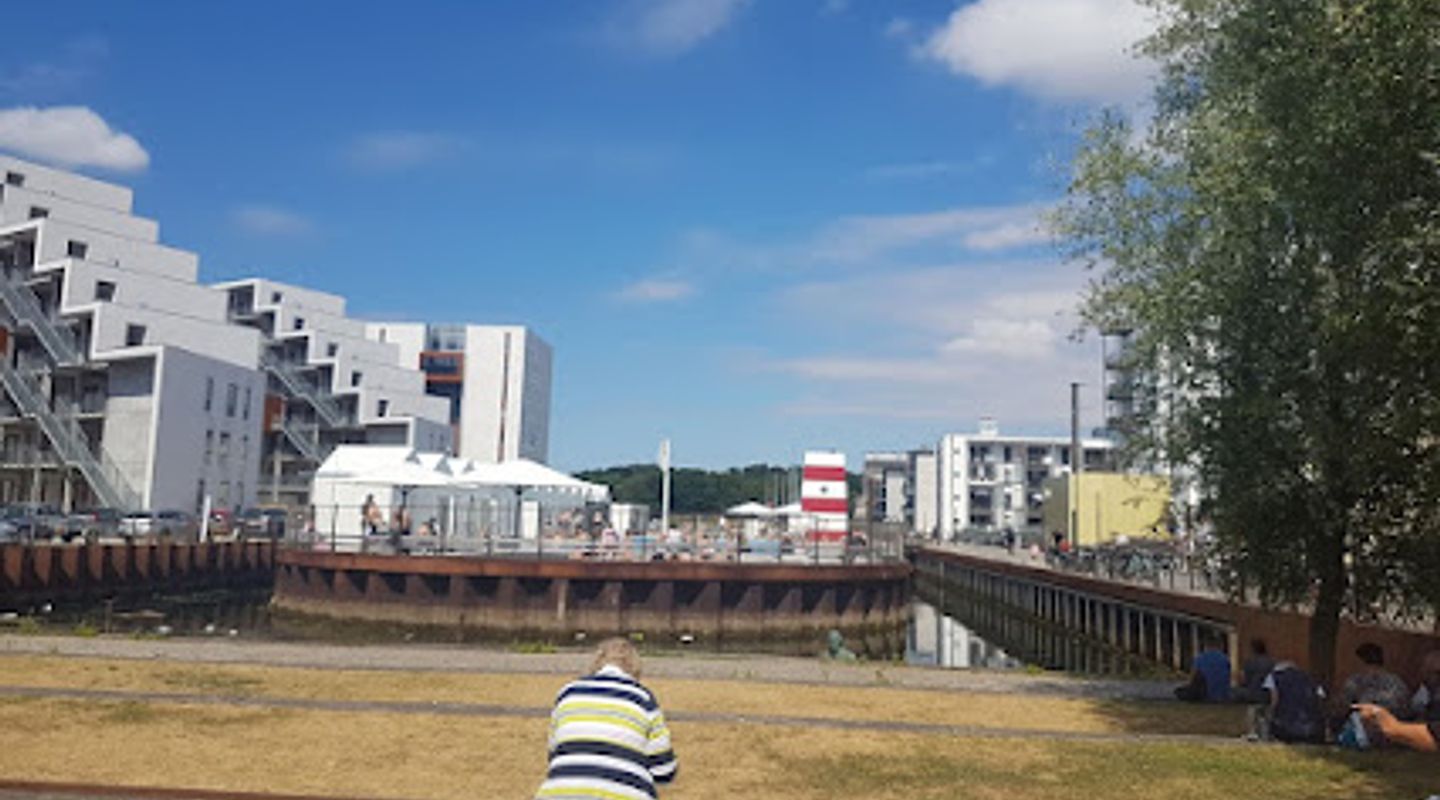
The H.C. Andersen sculpture in Odense Harbour takes Denmark’s most famous storyteller out of parks and plazas and places him directly in the water of Odense Fjord. Below the modern harbour bath, the large bronze figure rises from the basin, its lower part submerged so that Andersen seems to hover between land and sea. The work immediately feels both familiar and unsettling: you recognise the iconic profile, but the context is closer to a scene from one of his darker tales than to a traditional monument.Around you, the setting is distinctly maritime. Steel, concrete and brick frame the calm surface of the fjord, where reflections of the sculpture ripple with each passing breeze or kayak. The contrast between Andersen’s serious expression and the casual atmosphere of swimmers, joggers and people lingering on the quayside gives the piece an almost theatrical quality, as if you had walked into the middle of a story already in progress.
A controversial journey from city square to harbour basin
The sculpture’s current position is the latest chapter in a long, debated journey. Created by local artist Jens Galschiøt as the central figure for an ambitious fountain project called “The Storyteller’s Well”, the three‑metre Andersen originally stood on dry land outside Odense City Hall. Funding setbacks and disagreement over a permanent downtown location left the larger project unrealised, and the solitary statue became a symbol of stalled cultural plans.In 2011 Galschiøt staged a dramatic “burial” of the work, transporting it by horse‑drawn carriage to the harbour and lowering it into the water in a tongue‑in‑cheek funeral performance. The event folded protest, humour and affection for Andersen into a single happening, underlining how strongly the writer’s legacy is woven into Odense’s identity. Although the original statue later moved on, a reproduction now occupies the harbour basin, quietly continuing the narrative the artist began.
Reading symbols in bronze and water
Seen up close from the quay or the harbour bath deck, the sculpture invites you to read symbolism into every detail. Andersen’s upright torso and thoughtful gaze hint at the determined outsider who transformed childhood hardship into timeless stories. The submerged lower body suggests vulnerability and uncertainty, echoing themes of transformation, sacrifice and longing that run through tales like “The Little Mermaid” or “The Steadfast Tin Soldier”.The waterline itself becomes a literal threshold between worlds: above, the realm of the city that celebrates its famous author; below, an unseen depth that might hold all the characters and dreams he conjured. Depending on light and tide, the figure can appear to be slowly sinking or patiently emerging, and that ambiguity is part of its power.
Harbourfront atmosphere and changing perspectives
The regenerated harbour area around the sculpture is a place where urban life meets open sky. On bright days, the bronze catches glints of sunlight, and the water around it turns a sharp northern blue. Cloudy weather deepens the mood; in winter, mist and low light make the half‑submerged figure feel almost ghostly. From the nearby swimming platforms you can see the sculpture at eye level, while from the upper decks and neighbouring buildings it becomes a small accent in a larger industrial panorama.This is not an artwork that dominates its surroundings; instead, it rewards unhurried looking. Sit on the edge of the quay and you notice how passing boats send gentle waves washing against the plinth. Watch a little longer and you see how locals fold the statue into their routines, barely glancing at the familiar silhouette as they head for a swim or a sauna session.
Adding the harbour to Odense’s Andersen map
Odense is dotted with references to Hans Christian Andersen, from traditional statues in parks to imaginative fairy‑tale figures along streets and in green spaces. The harbour sculpture adds a different tone to this constellation. Rather than presenting the writer as a neatly framed national icon, it anchors him in a working waterfront, close to the fjord that connects the city to the wider world.For visitors tracing Andersen’s story through his birthplace, this spot offers a modern, slightly subversive counterpoint to more formal monuments. It suggests that his legacy is still being questioned, played with and reinterpreted, not just preserved. A short pause here, watching water swirl around the bronze, rounds out a picture of Andersen that is as much about uncertainty and change as it is about nostalgia and fairy‑tale comfort.
Evendo Review Centre
 Google
Guest reviews
Best time to go
Quietest: Jan, Feb & Mar · before 6am
Busy times are Evendo estimates for a typical year, to help you plan. Actual crowds vary with events, school holidays and the weather.
Explore H. C. Andersen skulptur i havnen on the map
A handpicked selection of must-see spots near H. C. Andersen skulptur i havnen, mapped for you.
Get your free copy of our complete guide to H. C. Andersen skulptur i havnen, delivered straight to you.
Everything on this page, from opening hours and how to get there to Eve’s tips and the best time to go, in one PDF you can read offline, print or share.
Already have an account? Sign in
Your H. C. Andersen skulptur i havnen guide is ready.
We'll send it to · Not you? Sign out

Getting your guide ready…
We are putting together a fresh copy of the H. C. Andersen skulptur i havnen guide. This can take up to a minute.
This can take a few moments. If your browser asks, choose Allow so the download can start. You'll find the guide in your Downloads folder.
Nothing happened? Download it again
Sorry, the guide is taking longer than usual. Please try again in a minute, or get it by email instead.
Other nearby places you may find interesting
The closest places of the same kind, if this one is not quite what you had in mind.
-
-
-
-
-


Swipe for more places
More to explore near H. C. Andersen skulptur i havnen
-
 Best experiences near H. C. Andersen skulptur i havnen
-
 Best hotels near H. C. Andersen skulptur i havnen
-
 Best landmarks near H. C. Andersen skulptur i havnen
-
 Best attractions near H. C. Andersen skulptur i havnen
-
 Best shops near H. C. Andersen skulptur i havnen
-
 Best restaurants near H. C. Andersen skulptur i havnen
-
 Best bars near H. C. Andersen skulptur i havnen


Do you manage this location?
Take control to get all the benefits, like improved information, better appearance, and stronger visibility across AI-powered discovery.
Explore more

Explore more of Odense
Discover Odense, Denmark's enchanting city where fairy tales come to life amidst historic streets, vibrant culture, and scenic beauty.
Explore Odense
Explore more of Denmark
Discover Denmark: A perfect blend of history, modern design, and the cozy concept of hygge. Explore vibrant cities, serene landscapes, and world-class cuisine.
Explore Denmark
