

H. C. Andersen skulptur i havnen, Odense Travel Guide
Free Guide: A submerged bronze protest against bureaucracy, honouring Denmark's greatest storyteller beneath the harbour.


A brief summary of H. C. Andersen skulptur i havnen
A submerged bronze protest against bureaucracy, honouring Denmark's greatest storyteller beneath the harbour.
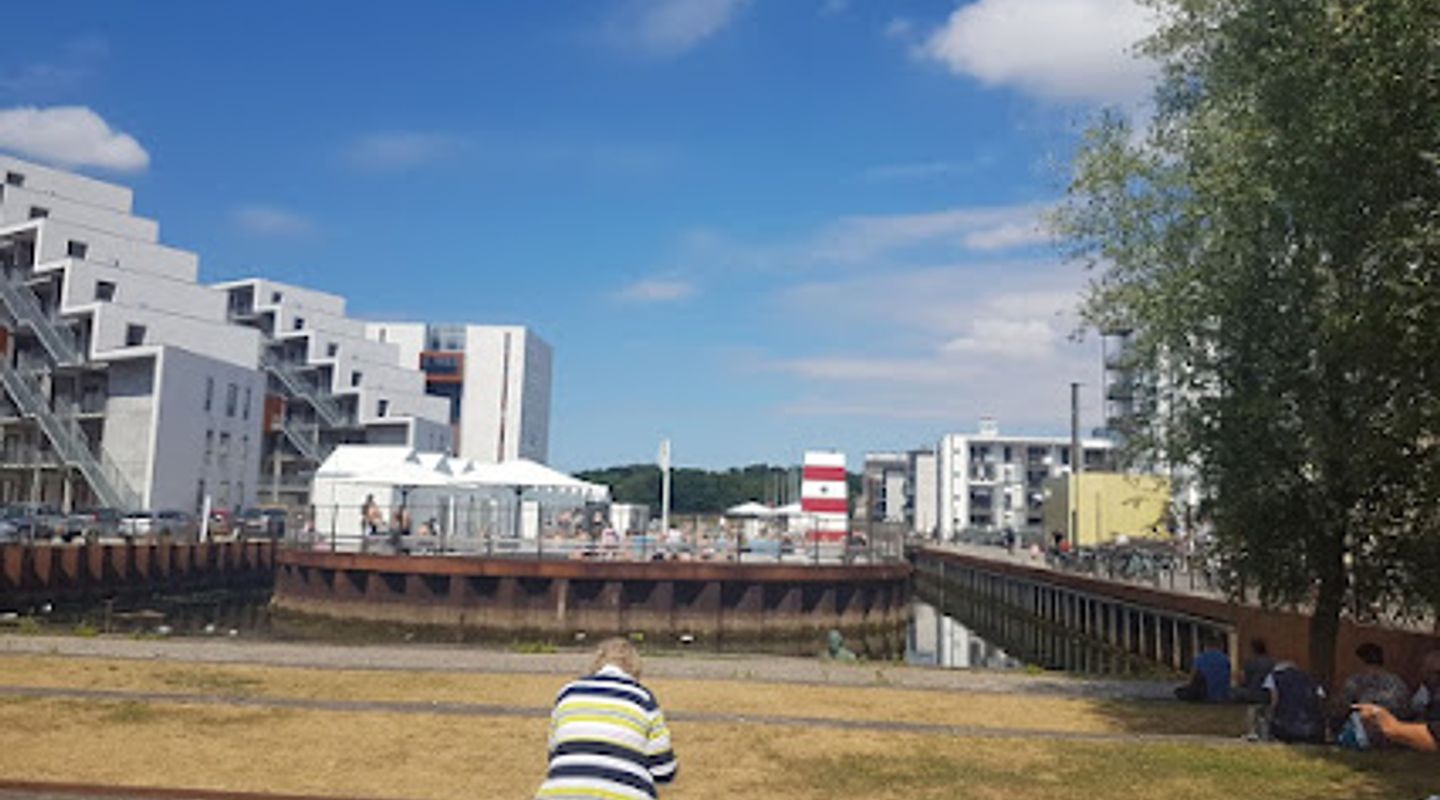
A submerged bronze sculpture of Hans Christian Andersen by artist Jens Galschiøt sits in Odense Fjord, visible just below the surface near the public swimming pool. Created for an unrealized fountain project, the 3-meter figure became famous after a symbolic 2011 'burial' protest against bureaucratic delays. A reproduction now permanently occupies the harbour, embodying the whimsical defiance of one of Denmark's most unconventional public artworks.
On-site amenities
 Restrooms
 Drink options
 Food options
 Seating areas
 Information boards
Opening hours
- Every dayOpen 24 hours
Opening hours as listed on the venue’s Google Business Profile. Hours can change for services and special events, so check with the venue before you go.
- Address
- Odense Fjord
- Website
Getting there
Walking from Odense Central Station
Bicycle from City Centre
Local Bus Service
Car with Parking
Discover more about H. C. Andersen skulptur i havnen
The Sculpture and Its Controversial Creation
This 3-meter bronze figure of Hans Christian Andersen was created by renowned Danish artist Jens Galschiøt as the centerpiece of an ambitious project called The Storyteller's Well. Originally conceived as a monumental fountain featuring Andersen seated on a bench with his feet in the water, surrounded by 500 characters from his fairy tales, the sculpture was unveiled outside Odense City Hall in 2005 to commemorate the author's 200th birthday. The project received substantial funding and widespread support, positioning it as a major cultural landmark for Denmark's fairy tale capital.However, the vision never materialized. The Odense city council struggled to find a suitable downtown location for the artwork and, following the financial crisis, withdrew funding entirely. For five years, the bronze figure stood abandoned outside City Hall—a monument to unfulfilled promises and bureaucratic indecision. Galschiøt, deeply disappointed by the project's collapse, decided to transform his frustration into a statement.
The Symbolic Burial and Public Protest
On October 8, 2011, Galschiøt orchestrated an extraordinary public performance. A brass band played funeral music as a horse-drawn carriage transported the €250,000 sculpture through Odense's streets to the harbour. Before hundreds of spectators dressed in black mourning clothes, a crane slowly lowered the bronze figure into the waters of Odense Fjord in a deliberate act of artistic protest. The event included free hot dogs and 'funeral beer,' transforming a moment of cultural defeat into a darkly humorous spectacle. Some locals found the happening disrespectful to Andersen's memory, while others appreciated the poetic irony: the author of *The Little Mermaid* and *The Ugly Duckling* now rested closer to his own fictional underwater worlds.
Resurrection and the Replica's Permanent Home
Just six months later, on April 2, 2012, Galschiøt 'resurrected' the sculpture for a combined celebration of Easter and Andersen's birthday. The original figure was recovered, repaired from water damage, and embarked on a tour throughout Denmark. It was eventually sold to a golf club in Bogense, where it found a new home overlooking the harbour—a fitting location given that the real Hans Christian Andersen himself had arrived at Bogense harbour by steamship in 1853.Yet the story took one final twist. A reproduction of the sculpture mysteriously reappeared in Odense Harbour one morning, installed without permission by Galschiøt himself. This replica has remained submerged in the dock basin for over a decade, becoming an unofficial but beloved fixture of Odense's waterfront. The sculpture sits just below the surface near Odense Havnebad, the public outdoor swimming pool, visible to anyone who knows where to look.
A Monument to Artistic Defiance
The H.C. Andersen sculpture in the harbour represents far more than a failed public art project. It embodies the tension between artistic vision and institutional bureaucracy, between grand ambitions and pragmatic limitations. Galschiøt's decision to submerge his work—rather than destroy it or accept defeat—transformed a disappointment into a statement about creative resilience. The sculpture's current status as an unauthorized but tolerated presence in the harbour reflects a distinctly Danish approach to public space: pragmatic, slightly irreverent, and ultimately forgiving.Visitors to Odense can contemplate this work as a meditation on impermanence, artistic integrity, and the power of symbolic protest. The sculpture's underwater position creates an almost dreamlike quality, fitting for a work dedicated to one of history's greatest storytellers. Whether viewed as a cautionary tale about city planning or a triumph of artistic persistence, the sculpture remains one of Denmark's most distinctive and thought-provoking public artworks.
Evendo Review Centre
 Google
Guest reviews
Best time to go
Quietest: Jan, Feb & Dec · before 6am or at 10pm
Busy times are Evendo estimates for a typical year, to help you plan. Actual crowds vary with events, school holidays and the weather.
Explore H. C. Andersen skulptur i havnen on the map
A handpicked selection of must-see spots near H. C. Andersen skulptur i havnen, mapped for you.
Get your free copy of our complete guide to H. C. Andersen skulptur i havnen, delivered straight to you.
Everything on this page, from opening hours and how to get there to Eve’s tips and the best time to go, in one PDF you can read offline, print or share.
Already have an account? Sign in
Your H. C. Andersen skulptur i havnen guide is ready.
We'll send it to · Not you? Sign out

Getting your guide ready…
We are putting together a fresh copy of the H. C. Andersen skulptur i havnen guide. This can take up to a minute.
This can take a few moments. If your browser asks, choose Allow so the download can start. You'll find the guide in your Downloads folder.
Nothing happened? Download it again
Sorry, the guide is taking longer than usual. Please try again in a minute, or get it by email instead.
Other nearby places you may find interesting
The closest places of the same kind, if this one is not quite what you had in mind.
-
Odense Castle A quietly elegant former royal residence anchoring Odense’s King’s Garden, offering calm park views, restrained classical architecture and a glimpse of civic history.
-
Odense Noble Virgin Convent Five centuries of Danish power, privilege and everyday life layered into one remarkable brick convent in the very heart of historic Odense.
-
Andersen on the bench A life-sized bronze Hans Christian Andersen sharing a city bench in Odense, inviting you to sit, linger and step briefly into the storyteller’s world.
-
The maiden jump A single worn paving stone in Odense’s old town preserves a stark local legend of shame, faith and a fatal leap from the cathedral tower.
-
Odense Cathedral - St. Canute's Church A luminous Brick Gothic cathedral in central Odense, where Denmark’s last Viking king, royal tombs and a masterpiece altarpiece share a serene, living sacred space.
Swipe for more places
More to explore near H. C. Andersen skulptur i havnen
-
 Best experiences near H. C. Andersen skulptur i havnen
-
 Best hotels near H. C. Andersen skulptur i havnen
-
 Best landmarks near H. C. Andersen skulptur i havnen
-
 Best attractions near H. C. Andersen skulptur i havnen
-
 Best shops near H. C. Andersen skulptur i havnen
-
 Best restaurants near H. C. Andersen skulptur i havnen
-
 Best bars near H. C. Andersen skulptur i havnen







Do you manage this location?
Take control to get all the benefits, like improved information, better appearance, and stronger visibility across AI-powered discovery.
Explore more

Explore more of Odense
Discover Odense, Denmark's enchanting city where fairy tales come to life amidst historic streets, vibrant culture, and scenic beauty.
Explore Odense
Explore more of Denmark
Discover Denmark: A perfect blend of history, modern design, and the cozy concept of hygge. Explore vibrant cities, serene landscapes, and world-class cuisine.
Explore Denmark
