
Rebildcentret & Thingbæk Kalkminer
Underground chalk mines, evocative sculpture and modern exhibitions meet scenic valley views at this compact cultural and landscape hub near Rebild Bakker.
Set in the wooded hills near Skørping, Rebildcentret combines evocative underground chalk mines with contemporary exhibitions on sculpture, geology, springs, and the Cold War. You wander from light-filled modern galleries into the cool, echoing caverns of Thingbæk Kalkminer, where sculptures emerge from the rock walls. Above ground, nature trails and viewpoints open over the Gravlev Valley and towards Rebild Bakker, making this a rich stop for culture, history, and landscape in one compact site.
A brief summary to rebildsmykket.dk
- Røde Møllevej 4, Skørping, 9520, DK
- Click to display
- Click to display
- Duration: 1.5 to 4 hours
- Mid ranged
-
 Mixed
Mixed
- Mobile reception: 4 out of 5

Know before you go
Hi, I'm Eve. Here are a few practical things to know before exploring rebildsmykket.dk.
- Bring a warm layer for Thingbæk Kalkminer; the temperature stays around cool single digits year-round, with high humidity that can feel chilly even in summer.
- Allow time to walk the outdoor paths after the exhibitions; the viewpoints over Gravlev Valley help tie together the geology and spring-themed displays inside.
- If you are interested in REGAN Vest and the Cold War, start with the centre’s exhibition; it gives useful background that deepens any later bunker visit.
- Wear sturdy, closed footwear for the mines; the chalk floor can be uneven and slightly damp in places, especially after rainy periods.
- Consider visiting outside school holiday peak hours if you prefer a quieter underground experience with more space around the sculptures.
Do you manage this location?
Take control to get all the benefits, like improved information, better appearance, and stronger visibility across AI-powered discovery. Learn more
Activate your presenceOther nearby places you may find interesting


Getting There
-
Regional train and local walk
From Aalborg, take the regional train towards Aarhus and get off at Skørping Station; the journey usually takes around 30–35 minutes. From the station, plan for roughly an hour’s walk on mixed surfaces, including gentle hills, which may be challenging for some visitors in poor weather. Standard second-class tickets on this route typically cost around 60–90 DKK one way depending on time of day and discounts. This option suits travellers comfortable with a longer walk through semi-rural surroundings.
-
Car from Aalborg
Driving from central Aalborg to Rebildcentret generally takes about 30–40 minutes, following main roads most of the way and then smaller country roads near Thingbæk. There is on-site parking, but spaces can feel busy on fine-weather weekends and during school holidays, so arriving earlier in the day is wise. Fuel costs for the return trip are modest given the relatively short distance, and there is no separate road toll specific to this journey.
-
Car from Aarhus region
If you are coming from the Aarhus area, expect a driving time of about 1–1.5 hours depending on traffic and your exact starting point. The route mainly uses major highways before branching onto local roads for the last stretch through the countryside around Skørping. Parking is available near the centre, but larger vehicles such as campervans should be prepared to manoeuvre in a relatively compact parking area at busier times. Fuel for the return journey will be the main transport expense.
-
Cycling from Skørping
Confident cyclists can ride from Skørping to Rebildcentret in roughly 20–30 minutes, using local roads with occasional hills. Surfaces are mostly paved, though short sections near the centre may feel narrow, and you should be comfortable sharing the road with cars. There is no charge for bringing your own bike, but check regional train rules and any cycle supplements if combining cycling with rail travel. This is a pleasant option in mild, dry weather, less suitable in strong wind or heavy rain.
For the on-the-go comforts that matter to you
-
 Restrooms
-
 Food Options
-
 Seating Areas
-
 Picnic Areas
-
 Trash Bins
-
 Information Boards
-
 Visitor Center
Discover more about rebildsmykket.dk
Chalk, caverns and an unexpected art gallery underground
Hidden in the countryside at Thingbæk just outside Skørping, Rebildcentret is built around a series of old chalk mines that once supplied lime to the region. Today, instead of miners, you find a sculptural world carved into the cool, pale rock. As you step inside Thingbæk Kalkminer, the temperature drops and the light softens, revealing figures by Danish sculptors such as Anders Bundgaard and Carl Johan Bonnesen placed directly in side chambers and along the mine walls.The combination of raw geology and carefully lit artworks gives the caverns a quiet, almost devotional feeling. Dripping water, rough tool marks and the smell of damp stone remind you that this was a working mine, but the calm poses of the sculptures draw you into stories of national heroes, myths and everyday people. It feels both intimate and monumental at the same time.Modern exhibitions linking geology, springs and the Cold War
Above ground, a set of striking modern buildings house Rebildcentret’s exhibitions. Large windows pull in the surrounding green hills, while inside you move between galleries devoted to the region’s chalk, its many springs and the way water shapes the landscape. Displays explain how the soft white rock was formed and why this part of Himmerland is laced with clear, cold sources that feed streams and wetlands.Another key exhibition focuses on the Cold War, with a substantial area devoted to Denmark’s civil defence and the nearby nuclear bunker REGAN Vest. Models, archival photographs and objects sketch out what preparedness meant in a small country on the edge of the Iron Curtain. Even without visiting the bunker itself, you gain context for its construction and the atmosphere of watchfulness that shaped local life in the latter half of the 20th century.Landscapes of Rebild Bakker and Gravlev Valley outside the door
Step out from the galleries and you are quickly back in nature. Paths lead through Rebildcentret’s outdoor areas, laid out to make the most of views across the Gravlev Valley and towards Rebild Bakker’s heather-clad slopes. On a clear day the light can be spectacular, with shifting clouds casting shadows across the rolling terrain.Benches and quiet corners invite you to pause with a packed lunch, often accompanied by birdsong and the rustle of trees from nearby Rold Skov. Interpretive signs in the grounds help connect what you learned inside about springs and geology to the curves of the valley and the streams below, making the whole site feel like an open-air classroom as well as a scenic lookout.Atmosphere, seasons and the life of the mines
Thingbæk Kalkminer holds to a steady cool temperature throughout the year, with high humidity that adds a faint mistiness to the air. This makes the underground visit refreshing on hot summer days, but you will be glad of a jumper even in July. In winter and early spring, the mines also function as a refuge for bats, which use the stable climate to hibernate undisturbed.Above ground, the experience shifts with the seasons: spring brings fresh green to the valley, summer highlights the contrast between bright sunshine and the dim mines, while autumn colours the hillsides in gold and rust. Foggy days can lend Rebildcentret an almost cinematic mood, with the buildings emerging from low cloud and the valley below fading into white.Practical visit: space, facilities and accessibility
The centre is compact but varied enough to fill several hours, especially if you take your time in the exhibitions and explore the outdoor areas. There are indoor spaces where you can warm up after the cool mines, as well as spots outside convenient for picnics. Information panels are generally clear and family-friendly, with a mix of text, objects and models to keep different ages engaged.Access paths between the welcome building, exhibition spaces and the mine entrance are designed to be as level as possible, and lifts in the main buildings support step-free movement between floors. The mine floor remains somewhat uneven by nature, but many visitors with reduced mobility still find it manageable with care. Taken together, Rebildcentret offers a thoughtfully developed blend of culture, history and landscape at the edge of one of Denmark’s most distinctive natural areas.Explore the best of what rebildsmykket.dk has to offer













More about North Jutland
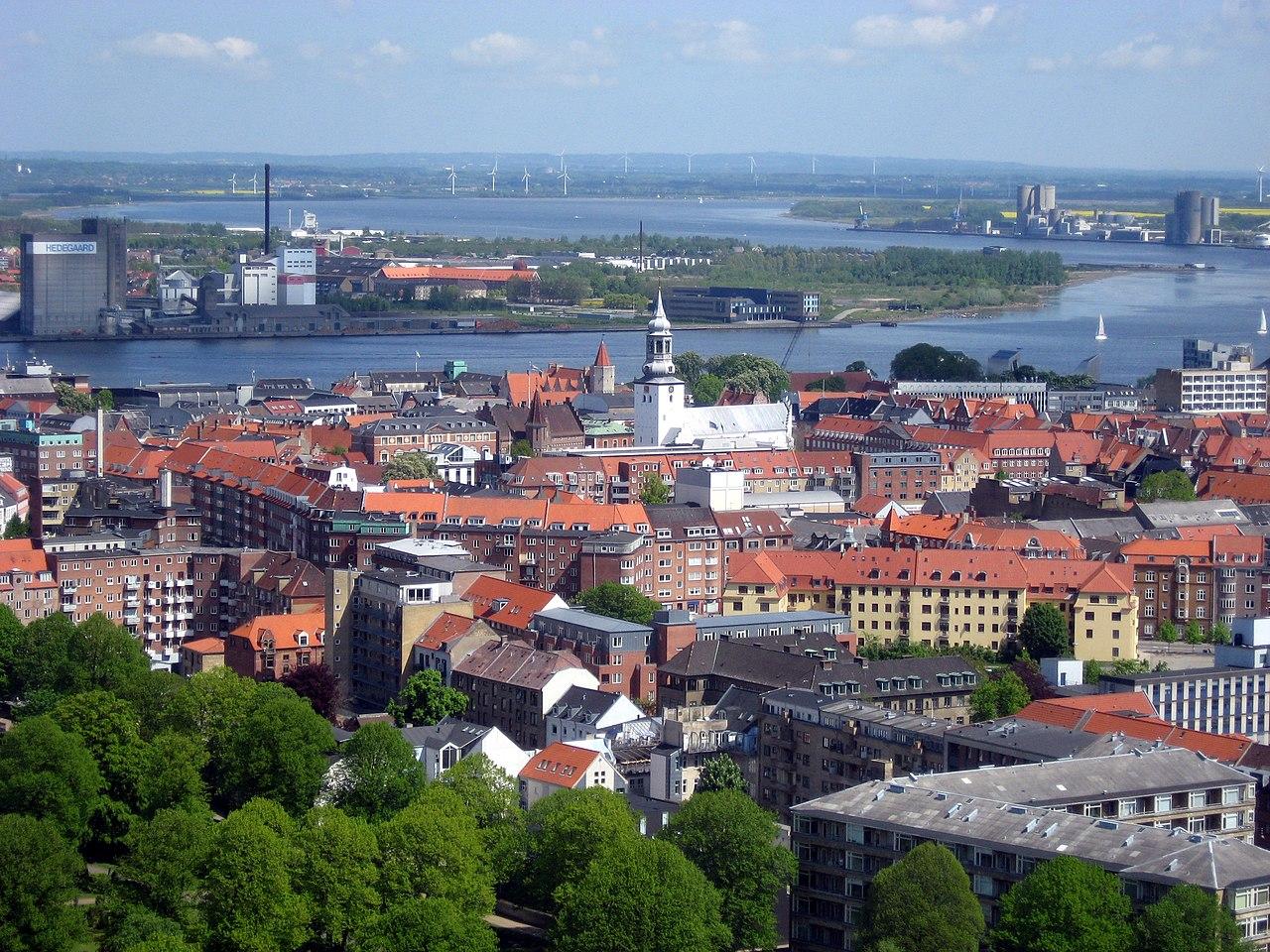
Discover North Jutland: Denmark's northernmost region, renowned for its stunning coastlines, rich Viking history, vibrant culture, and outdoor adventures.
Tell me more about North Jutland
Sporty countryside hotel and conference hub set between Rebild Bakker’s heather hills and Rold Forest, with pool, spa, trails and fresh North Jutland air.
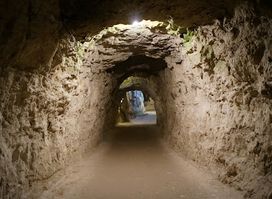
An evocative limestone mine turned sculpture museum, paired with Rebildcentret’s geology and Cold War exhibits in the protected hills near Skørping.
