
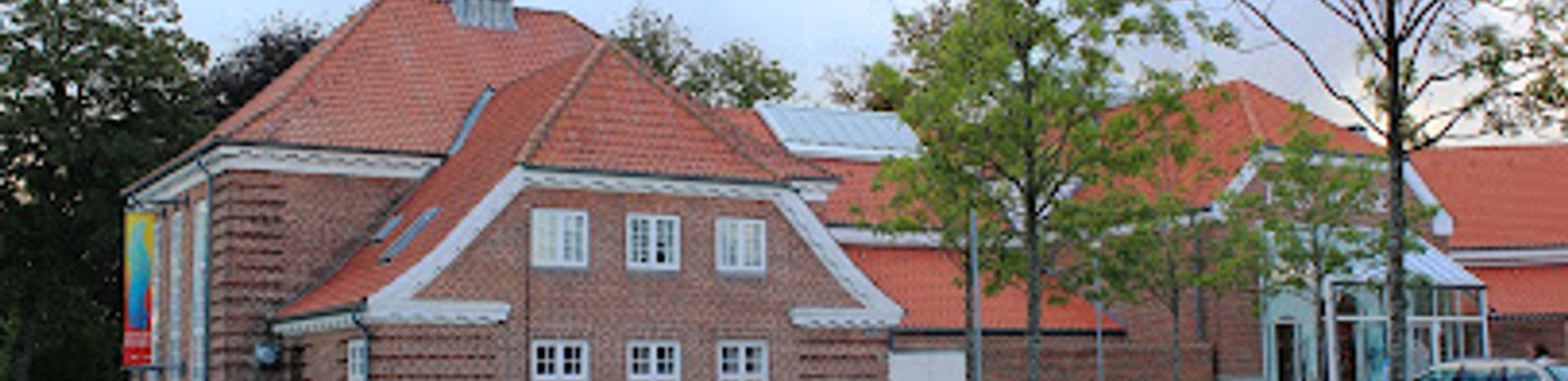
Museet Ribes Vikinger
Dive into 1,000 years of Ribe’s past, from bustling Viking marketplace to medieval port city, in an intimate museum packed with original finds and stories.
Where Ribe’s Story Begins
Ribe is often called the oldest town in Scandinavia, and Museet Ribes Vikinger stands almost exactly where this trading settlement first took shape in the early 700s. Inside, the museum traces how a modest riverside market grew into one of northern Europe’s most important hubs for commerce and craftsmanship. You move chronologically, following Ribe from its pagan roots through the rise of Christianity and into the early modern age. Rather than focusing only on kings and battles, the museum is dedicated to the people who lived here: merchants and metalworkers, sailors and bead-makers, monks and townsfolk. The result is an unusually coherent picture of how a Viking-age town functioned, and how it kept evolving for a millennium.Viking Marketplace and Nordic Beliefs
The first galleries immerse you in the years 710–850, when Ribe flourished as a Viking trading post. Display cases glow with glass beads, finely cast bronze fittings and combs carved from antler, all excavated from the workshops that once lined the riverbank. Tools, weights and imported goods hint at far-reaching trade connections, stretching along coasts and rivers deep into Europe. Alongside the objects, models and reconstructions show how longhouses clustered by the river and how ships tied up at simple landing places. Panels and films introduce Norse cosmology, rituals and burial practices, setting everyday trade against the backdrop of gods, sagas and a world understood through myth.Medieval Streets, Churches and Daily Life
Further on, the focus shifts to the medieval town, when Ribe became a leading port and a centre of the Catholic church. Exhibits explore topics such as childhood games, illness and medicine, monasteries and churches, and the growing power of guilds and traders. Everyday utensils, religious images, fragments of architecture and ship models help you imagine the narrow streets and busy quays. One of the museum’s strengths is the way it moves between big themes and small personal details. A merchant’s seal, a child’s toy or a pilgrim badge suddenly makes the distant past feel very close. The story carries on into the Renaissance, showing how war, shifting trade routes and religion gradually reshaped the town.Archaeology Brought to Life
Throughout the building, carefully lit displays sit beside reconstructions and interactive elements that explain how archaeologists work. Finds from large recent excavations in Ribe are presented together, shedding light on house plans, waste pits and layers of activity built up over centuries. Short films and diagrams make it easier to understand how tiny fragments become a full narrative of urban life. The museum also stages temporary exhibitions that zoom in on particular themes, from craftsmanship and burial customs to broader cultural or artistic topics linked to the region. Together with the main Viking and medieval displays, they keep the story of Ribe’s past feeling dynamic and open-ended.Families, Films and Hands-On Moments
Museet Ribes Vikinger is designed to be approachable for children without losing depth for adults. Dedicated spaces invite younger visitors to learn through play and sensory experiences, engaging with crafts, stories and games rooted in medieval and Viking culture. A short introductory film about the rise of Ribe helps orient first-time visitors and is available in multiple languages. A compact café area offers a simple pause between sections, while the museum shop specialises in books, replicas, jewellery and other Viking-themed souvenirs. Combined with a walk through today’s historic streets and nearby sights, a visit here becomes a key step in understanding why this small riverside town once loomed so large in Scandinavia’s history.Linking Past and Present Ribe
The museum does not end its story at the gallery doors. Exhibits highlight how the layers beneath modern streets still yield new discoveries with every construction project. An affiliated collection in the former town hall continues the narrative from 1700 into the industrial era, tying medieval trade and governance to later civic life. Stepping back outside, you recognise details in Ribe’s skyline and street plan that were just explained indoors. The cathedral, market squares and river crossings all feel different once you have seen their earlier incarnations inside the museum. In this way, Museet Ribes Vikinger functions both as a classic history museum and as a key to reading the living town around it.Local tips
- Plan at least 1.5–3 hours to move through both the Viking and medieval sections without rushing, especially if you want to watch the introductory film.
- Most key texts are available in multiple languages, but some detailed labels are only in Danish; bring a translation app if you like to read every panel.
- Combine your visit with a stroll through Ribe’s historic centre and cathedral; understanding the museum’s story makes the town’s streetscape far more meaningful.
- Families should look out for children’s activity areas and hands-on elements that make crafts, myths and daily life in the past easier to grasp.
- Stop by the shop at the end for well-made Viking-inspired jewellery, books and souvenirs that go beyond the usual postcards and magnets.

A brief summary to Museet Ribes Vikinger
- Odins Pl. 1, Ribe, 6760, DK
- +4576163960
- Visit website
- Monday 10 am-5 pm
- Tuesday 10 am-5 pm
- Wednesday 10 am-5 pm
- Thursday 10 am-5 pm
- Friday 10 am-5 pm
- Saturday 10 am-5 pm
- Sunday 10 am-5 pm
Getting There
-
Train and short walk from Esbjerg
From Esbjerg, take a regional train to Ribe Station; the journey typically takes 30–40 minutes with departures around twice per hour during the day. A standard adult single ticket usually costs about 60–90 DKK, with discounts for children and youth. From Ribe Station you walk through the historic centre to the museum in roughly 10–15 minutes on mostly flat, paved streets suitable for pushchairs and most mobility aids.
-
Regional bus within South Jutland
Several regional buses connect smaller South Jutland towns to Ribe, often routing via Esbjerg or Kolding, with typical travel times of 45–90 minutes depending on distance and transfers. Expect fares in the range of 40–110 DKK for adults, with lower prices for children and multi-zone cards. Services run more frequently on weekdays than on late evenings or weekends, so check the latest timetable and allow extra time if you need to connect to onward buses or trains after your museum visit.
-
Car from the wider region
Arriving by car from nearby coastal or inland areas of Jutland usually takes 30–90 minutes, depending on your starting point, using well-maintained main roads through largely flat countryside. Public parking is available in and around Ribe’s centre, though spaces closest to the historic core can fill up in peak holiday periods and may be time-limited or pay-and-display during the day. Fuel is the main cost; short stays in central parking zones often add another 10–25 DKK per hour, so factor this into your budget if you plan an extended visit and a walk around town afterwards.
-
Cycling from local accommodations
If you are staying in or near Ribe, cycling to the museum is a pleasant option, typically taking 5–20 minutes from most local holiday homes, campsites or guesthouses around the town. The terrain is almost entirely flat, and Denmark’s focus on cycling means you can often use bike lanes or quiet streets, though you should be prepared for strong winds and rain at certain times of year. There is no extra cost beyond any bike rental fee, which for casual city bikes in the area commonly ranges around 80–150 DKK per day, and simple bicycle parking is usually available near the museum.


