Ribe Cathedral, Ribe Travel Guide
Free Guide: Ancient towers above Viking marshes: Denmark’s oldest cathedral blending Romanesque stone, Gothic height and bold modern mosaics in the heart of Ribe.


A brief summary of Ribe Cathedral
Ancient towers above Viking marshes: Denmark’s oldest cathedral blending Romanesque stone, Gothic height and bold modern mosaics in the heart of Ribe.
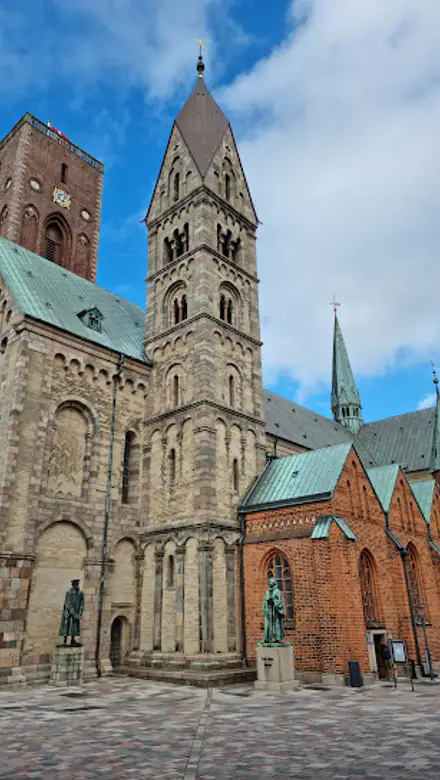
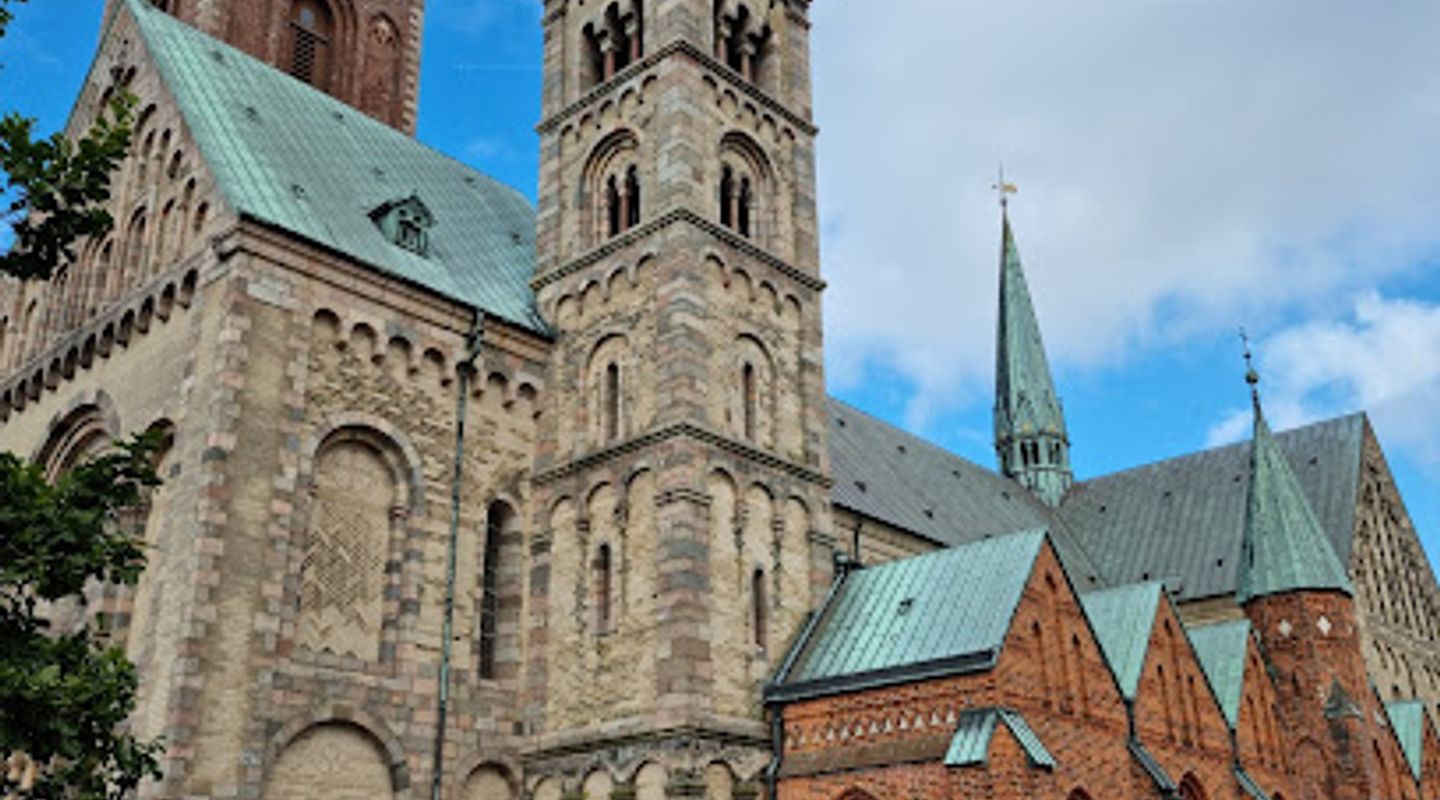
Rising above the red roofs of Denmark’s oldest town, Ribe Cathedral is a striking fusion of Romanesque mass, Gothic height and Nordic restraint. Built mainly from pale Rhenish tuff in the 12th and 13th centuries, this five‑aisled church is the country’s oldest cathedral and still its beating spiritual heart. Climb the 52m Commoners’ Tower for sweeping Wadden Sea marsh views, then step inside to discover medieval tombs, historic furnishings and vivid modern mosaics by artist Carl-Henning Pedersen.
On-site amenities
 Restrooms
 Seating areas
 Sheltered areas
 Trash bins
 Information boards
 Visitor centre
Opening hours
- Mon10 am–5 pm
- Tue10 am–5 pm
- Wed10 am–5 pm
- Thu10 am–3 pm
- Fri10 am–11:45 am, 2:15 pm–5 pm
- Sat1:15 pm–5 pm
- Sun12 pm–1:30 pm
Opening hours as listed on the venue’s Google Business Profile. Hours can change for services and special events, so check with the venue before you go.
- Address
- Ribe Domkirke, Torvet 19, 6760 Ribe
- Phone
- Website
Getting there
Train and short walk from Esbjerg
Train from Copenhagen via Esbjerg
Car from Esbjerg and surrounding Jutland
Regional bus within South Jutland
Discover more about Ribe Cathedral
Denmark’s Oldest Cathedral at the Heart of Ribe
Ribe Cathedral dominates the main square of Denmark’s oldest town, its towers rising above crooked streets and half‑timbered houses. The present stone church took shape between about 1150 and 1225, when Ribe was a wealthy trading hub connected to the Rhineland by sea routes. Built on the site of much earlier churches dating back to the missionary age of Ansgar, it has served as the seat of the bishop of Ribe for more than a thousand years.From a distance you notice how the cathedral pulls the low marsh landscape together: its pale stone walls and contrasting towers are visible for kilometres across the flat Wadden Sea plain. That visibility was no accident. In the Middle Ages this was both a statement of faith and a literal landmark for traders and sailors approaching Ribe.
Romanesque Bones with Gothic and Nordic Layers
Architecturally, Ribe Cathedral is a textbook in stone. The core of the building is Romanesque: thick walls of imported Rhenish tuff, round‑arched windows and sturdy arcades that create a powerful, grounded interior. Later Gothic alterations added height, pointed arches and brick elements, especially in the upper parts and chapels, giving the church an intriguing, slightly asymmetrical outline.Over the centuries, alterations turned the original three‑aisled plan into Denmark’s only five‑aisled cathedral. Walking the nave, you move through a patchwork of styles: medieval masonry, Renaissance details and 19th‑century restorations all sit side by side, yet the building retains a calm, cohesive character that reflects its long, layered history.
Tombs, Flood Marks and Stories in Stone
Inside, the cathedral functions as a stone archive of Ribe’s past. Sepulchral monuments line the walls, commemorating powerful bishops, noble families and prominent townspeople. Among them is the oldest known sepulchral monument in Scandinavia, raised by King Valdemar the Conqueror in memory of his son in the 13th century, linking this provincial town to the great dramas of medieval Danish politics.The furnishings tell further stories. A richly carved pulpit from 1597 stands above a pillar marked with the high‑water line of the devastating storm flood of 1634. The baptismal font in the nave dates to the 14th century, worn smooth by generations of hands. Faint remains of 16th‑century wall paintings cling to some pillars, glimpses of pre‑Reformation colour that survived later whitewash.
Modern Mosaics and the Spirit of the Reformation
At the eastern end, the chancel feels strikingly different. Here, vibrant frescoes, stained‑glass windows and seven mosaics created in the 1980s by artist Carl‑Henning Pedersen splash the apse with intense colour and abstract forms. These modern works sit deliberately against the subdued stone around them, suggesting both continuity and renewal in the cathedral’s artistic life.Outside, statues around the building honour figures who shaped Denmark’s religious history. Hans Tausen, a key Lutheran reformer and bishop of Ribe, stands near the tower, while hymn writer Hans Adolf Brorson is commemorated nearby. On the south side you can find a contemporary sculpture of Ansgar, the missionary credited with establishing one of the earliest churches here in the 9th century.
Climbing the Commoners’ Tower
One of the cathedral’s most memorable experiences lies up a narrow staircase. The 52‑metre‑high Commoners’ Tower, dating from the 14th century, once served as a watchtower and storm lookout over the vulnerable marshlands. Today, after 248 steps, you reach an open viewing platform with a wide panorama of Ribe’s red roofs, the winding river and the distant Wadden Sea.Along the way, a small museum in the tower outlines the cathedral’s building phases and the religious changes that swept Denmark during the Reformation. Old models, drawings and artefacts help you understand how this complex structure grew over time, and why it still matters to the town’s identity.
Soundscape, Daily Rhythm and Town Connections
The cathedral shapes Ribe not only visually but acoustically. Its carillon plays melodies several times a day, including a hymn by Brorson in the morning and evening and a traditional song about Queen Dagmar at midday and mid‑afternoon. These chiming sequences mark the passing hours, weaving church music into the everyday life of the market square.Around the cathedral stretch cobbled lanes, small museums and historic guild houses, making it a natural anchor point for exploring Ribe’s old town. Whether you step inside for quiet reflection, climb the tower for a windswept view or simply listen to the bells from the square, Ribe Cathedral offers a dense concentration of architecture, history and atmosphere in a relatively compact space.
Evendo Review Centre
 Google
Guest reviews
Best time to go
Quietest: Jan, Feb & Mar · before 8am or at 9pm
Busy times are Evendo estimates for a typical year, to help you plan. Actual crowds vary with events, school holidays and the weather.
Explore Ribe Cathedral on the map
A handpicked selection of must-see spots near Ribe Cathedral, mapped for you.
Get your free copy of our complete guide to Ribe Cathedral, delivered straight to you.
Everything on this page, from opening hours and how to get there to Eve’s tips and the best time to go, in one PDF you can read offline, print or share.
Already have an account? Sign in
Your Ribe Cathedral guide is ready.
We'll send it to · Not you? Sign out

Getting your guide ready…
We are putting together a fresh copy of the Ribe Cathedral guide. This can take up to a minute.
This can take a few moments. If your browser asks, choose Allow so the download can start. You'll find the guide in your Downloads folder.
Nothing happened? Download it again
Sorry, the guide is taking longer than usual. Please try again in a minute, or get it by email instead.
Other nearby places you may find interesting
The closest places of the same kind, if this one is not quite what you had in mind.
-
-
-
-
-


Swipe for more places
More to explore near Ribe Cathedral

 Best experiences near Ribe Cathedral
 Best hotels near Ribe Cathedral
 Best landmarks near Ribe Cathedral
 Best attractions near Ribe Cathedral
 Best shops near Ribe Cathedral
 Best restaurants near Ribe Cathedral
 Best bars near Ribe Cathedral
Do you manage this location?
Take control to get all the benefits, like improved information, better appearance, and stronger visibility across AI-powered discovery.
Explore more
Explore more of Ribe
Discover Ribe, Denmark's oldest town, where medieval charm meets modern allure. Experience Viking history, stunning architecture, and breathtaking natural wonders.
Explore Ribe
Explore more of Denmark
Discover Denmark: A perfect blend of history, modern design, and the cozy concept of hygge. Explore vibrant cities, serene landscapes, and world-class cuisine.
Explore Denmark