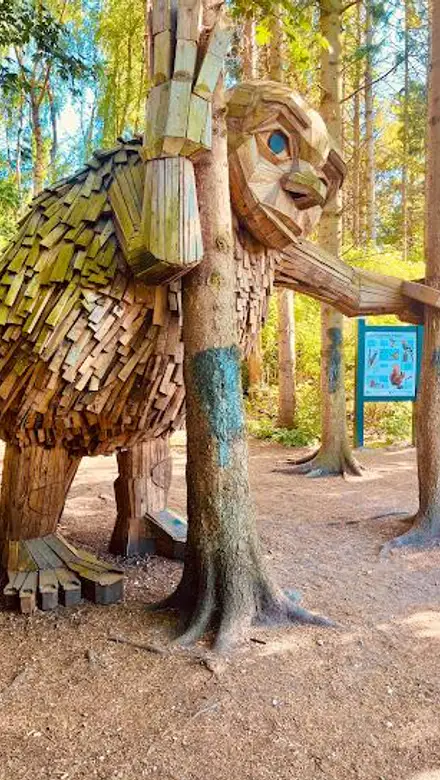
Thomas on the Mountain, The 6 Forgotten Giants, North Zealand Travel Guide
A relaxed wooden giant lounging on a grassy hill above Kongsholmparken, blending recycled art, suburban nature and playful treasure‑hunt adventure west of Copenhagen.
Thomas on the Mountain is one of artist Thomas Dambo’s celebrated Six Forgotten Giants, perched on a grassy hill on the outskirts of Albertslund, west of Copenhagen. Built from recycled scrap wood with the help of local volunteers, this relaxed troll-like figure gazes over Kongsholmparken, inviting visitors to clamber onto his long legs, pause for a picnic, and experience suburban nature as part open‑air gallery, part playful treasure hunt.
A brief summary to Thomas on the Mountain, The 6 Forgotten Giants
- Albertslund, 2620, DK
- Click to display
- Duration: 1 to 2 hours
- Free
-
 Outdoor
- Mobile reception: 4 out of 5

Know before you go
Hi, I'm Eve. Here are a few practical things to know before exploring Thomas on the Mountain, The 6 Forgotten Giants.
- Wear sturdy shoes; the climb to Thomas on the Mountain follows grassy, occasionally muddy slopes and unpaved park paths, especially after rain.
- Bring snacks or a simple picnic to enjoy while sitting on Thomas’s long wooden legs and taking in the view over Kongsholmparken.
- Download or screenshot a map of the Six Forgotten Giants before you set out so you can combine Thomas with one or two other sculptures in the same day.
- Visit in daylight and fair weather; there is no lighting at the sculpture and strong winds on the hill can make the spot feel exposed.
- Respect the artwork by avoiding climbing on fragile parts such as fingers and face, and check children’s play so the sculpture remains intact for future visitors.
Do you manage this location?
Take control to get all the benefits, like improved information, better appearance, and stronger visibility across AI-powered discovery. Learn more about listing your business on Evendo
Activate your presenceOther nearby places you may find interesting
The closest places of the same kind, if this one is not quite what you had in mind.
Explore Thomas on the Mountain, The 6 Forgotten Giants on the Map
A handpicked selection of must-see spots near Thomas on the Mountain, The 6 Forgotten Giants, mapped for you.
Unlock the Best of Thomas on the Mountain, The 6 Forgotten Giants
Buy tickets
-
No tickets available
Book tours with entry
-
No tours available


Getting There
-
S-train and walking from central Copenhagen
From central Copenhagen, take an S-train on line B toward Taastrup and get off at Albertslund Station; the ride usually takes 20–25 minutes and is covered by standard zone tickets, with a one-way adult fare typically around DKK 36–40. From the station, allow 25–35 minutes on foot along local paths and through Kongsholmparken to reach the hill where Thomas sits. Paths are mostly gravel and grass, with some gentle inclines, so they are manageable for most visitors but less ideal for wheelchairs or prams after heavy rain.
-
Regional bus and short walk within Albertslund
Local buses connect Albertslund Station and surrounding residential areas with stops near Kongsholmparken in roughly 5–10 minutes, depending on the route and time of day. Expect city bus fares in the range of DKK 24–30 for shorter trips within the outer zones, using the same ticketing system as the S-trains. From the nearest park-side stop, plan for a 10–20 minute walk on mixed paved and unpaved paths to find the sculpture. Services run reasonably frequently during the day but are reduced in evenings and on weekends, so check departure times in advance.
-
Car or taxi from Copenhagen
Driving from central Copenhagen to the Albertslund park area usually takes 20–30 minutes in light traffic, using the ring roads or motorway toward the western suburbs. Parking is generally free in designated park lots around Kongsholmparken, but spaces can fill on sunny weekends and during local events. From typical parking areas it is a 10–20 minute walk along park paths and up the hill to Thomas. A metered taxi for the same distance often costs in the region of DKK 300–450 one-way, depending on traffic and time of day.
-
Cycling from Copenhagen or nearby suburbs
Confident cyclists can follow Copenhagen’s extensive bike lanes west toward Albertslund, turning onto local cycle paths that link directly with Kongsholmparken. The ride from the city centre usually takes 45–70 minutes each way at a moderate pace, while starting from closer suburbs shortens the journey considerably. Bike rentals in Copenhagen commonly cost around DKK 100–150 per day for a standard city bike. The final approach includes some gentle hills and occasional gravel, so a basic multi-gear bicycle and comfortable clothing are recommended.
For the on-the-go comforts that matter to you
-
 Trash Bins
-
 Information Boards
-
 Picnic Areas
-
 Seating Areas
Discover more about Thomas on the Mountain, The 6 Forgotten Giants
A wooden giant on an Albertslund hilltop
Thomas on the Mountain sits high on a man‑made hill just outside Albertslund, looking out across the greenery of Kongsholmparken. Crafted from rough wooden planks, with long outstretched legs running down the slope, he feels both monumental and friendly. You approach through open parkland and suddenly this outsized figure comes into view, lounging as if he has always been part of the landscape.The sculpture is named after one of Thomas Dambo’s interns, also called Thomas, who helped shape the project from its early days. That personal link gives the giant a quietly intimate backstory, even at this large scale. Seen up close, the patchwork of boards, bolts and visible joints adds to the sense that he was assembled by many hands rather than manufactured in a workshop.Part of the Six Forgotten Giants treasure hunt
Thomas on the Mountain is one of the Six Forgotten Giants scattered around the western suburbs of Copenhagen in municipalities such as Albertslund, Vallensbæk, Ishøj, Hvidovre, Rødovre and Høje Taastrup. Together they form a kind of outdoor treasure hunt, with each giant hidden in a different meadow, forest, hilltop or lakeside clearing. Finding Thomas is often part of a longer day of tracking down the whole family of trolls.This network of sculptures was originally created in connection with a local culture week, designed to draw people beyond familiar city sights and into overlooked green spaces. Thomas’s hilltop perch fits that mission perfectly, highlighting an area of suburban parkland many visitors would otherwise bypass.Recycled materials and community craftsmanship
All Six Forgotten Giants, including Thomas on the Mountain, are built almost entirely from recycled wood. Planks and beams from demolition projects, discarded pallets and off‑cuts were repurposed into the giant’s limbs, torso and expressive face. Metal fixings hold everything firmly in place, but from a distance the sculpture reads as a single, unified character.Local volunteers were central to the construction, sawing, drilling and assembling pieces under the artist’s direction. The result is a collaborative artwork where the imperfections and visible repairs become part of the charm. The sustainability message is subtle but clear: even so‑called waste materials can become something magical when given time and creativity.A playful pause above Kongsholmparken
The experience of visiting Thomas is as much about the setting as the sculpture. From his vantage point on the hill, there are broad views over Kongsholmparken’s lakes, paths and grassy fields. Many people sit on his long wooden legs, lean against his knees or rest beside his feet to enjoy a snack or simply watch the landscape below.The grassy slope can be breezy, and the ground occasionally muddy after rain, but the open surroundings make it easy to linger. Children often weave in and out beneath his limbs, while adults tend to circle slowly, noticing new angles and details in the layered woodwork. There is no fencing or ticket booth; the artwork blends seamlessly into the everyday life of the park.Planning your time with the giant
Thomas on the Mountain is accessible at all hours, and there is no entrance fee. The lack of artificial lighting means the sculpture is best appreciated in daylight, when the textures of the timber and the contours of the hill stand out clearly. On clear days, the sky over the Vestegnen suburbs provides a dramatic backdrop for photographs.Allow at least an hour if you want to walk up the hill, explore the surrounding paths and relax by the sculpture. Combined with other nearby giants, it can form part of a longer loop by bike or public transport. Even as a stand‑alone stop, though, Thomas offers a distinctive blend of art, sustainability and suburban nature that feels far removed from Copenhagen’s more traditional attractions.More to explore near Thomas on the Mountain, The 6 Forgotten Giants
-

Best experiences near Thomas on the Mountain, The 6 Forgotten Giants
-

Best hotels near Thomas on the Mountain, The 6 Forgotten Giants
-

Best landmarks near Thomas on the Mountain, The 6 Forgotten Giants
-

Best shops near Thomas on the Mountain, The 6 Forgotten Giants
-

Best restaurants near Thomas on the Mountain, The 6 Forgotten Giants
-

Best bars near Thomas on the Mountain, The 6 Forgotten Giants







Your all‑in‑one travel companion app
Explore expert travel guides, compare and book tours, experiences, hotels, and more—all from the palm of your hand. Download now for seamless trip planning wherever your wanderlust takes you.


Explore More of North Zealand
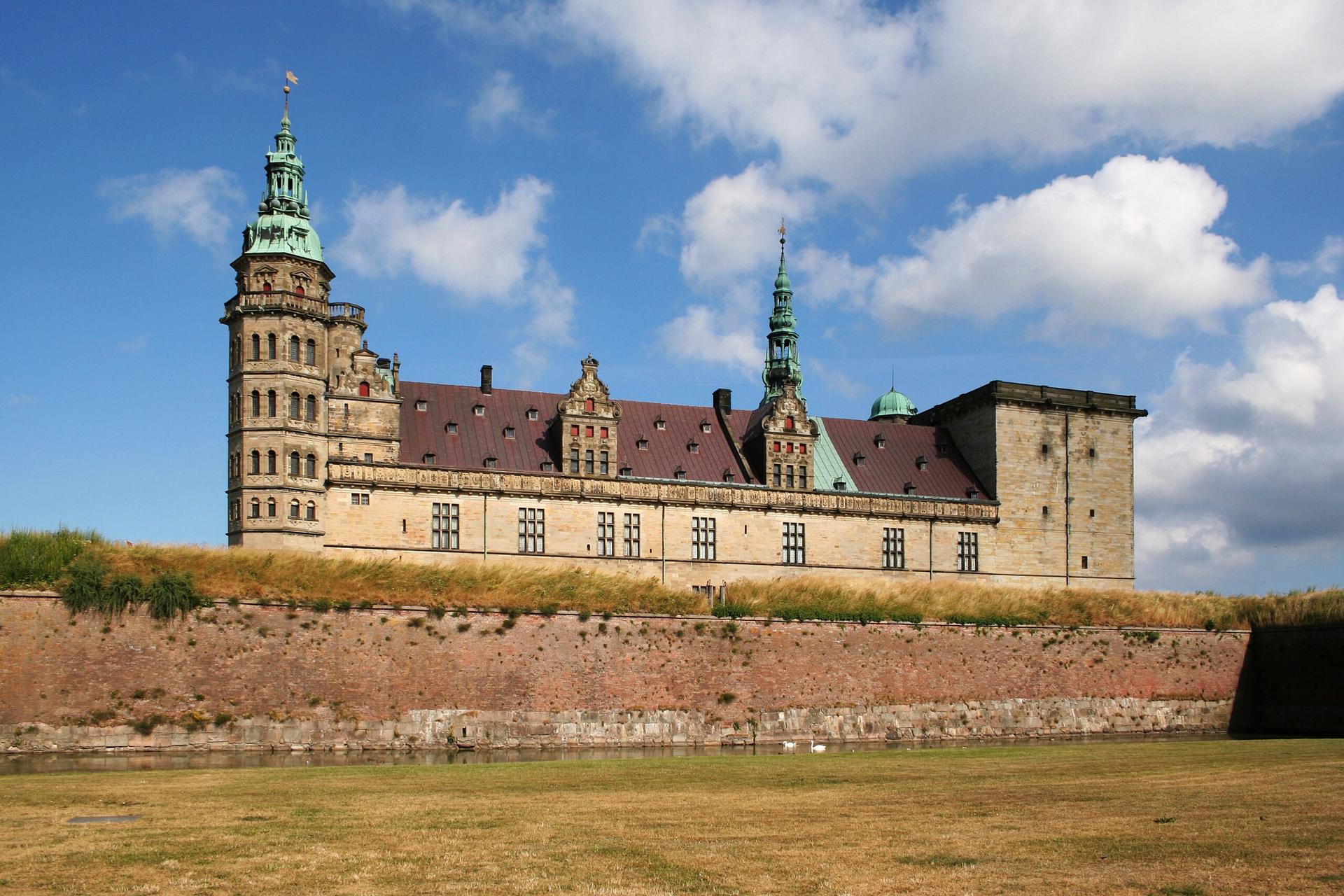
Looking beyond Thomas on the Mountain, The 6 Forgotten Giants? Discover North Zealand for broader travel guides, local hot-spots, and regional highlights.
Explore North Zealand
Explore the Frederiksberg Walk of Fame, where Denmark's cultural legends are celebrated along a historic, tree-lined avenue.

A recycled-wood troll with a heart for birds, Little Tilde watches over Vallensbæk Mose and invites you into a gentle treasure hunt through Copenhagen’s wild marshland.