Mårhøj/Snavehøjen Travel Guide
Free Guide: Atmospheric Neolithic passage grave in the fields of Hindsholm, where a vast stone chamber, dark passage and sweeping rural views bring Stone Age Funen to life.


A brief summary of Mårhøj/Snavehøjen
Atmospheric Neolithic passage grave in the fields of Hindsholm, where a vast stone chamber, dark passage and sweeping rural views bring Stone Age Funen to life.
Hidden in gently rolling fields near Martofte on the Hindsholm peninsula, Mårhøj/Snavehøjen is one of Denmark’s most impressive Neolithic passage graves. Dating back around 5,000 years, this striking grass‑covered mound conceals a 10‑metre stone chamber reached via a low, narrow passage. Visitors can stoop or crawl inside to experience the cool darkness, massive boulders and sandy floor, then climb the hill for sweeping views towards the nearby fjord and the patchwork countryside of northern Funen.
On-site amenities
 Information boards
Opening hours
- Every dayOpen 24 hours
Opening hours as listed on the venue’s Google Business Profile. Hours can change for services and special events, so check with the venue before you go.
- Address
- 5390 Martofte
Getting there
Car from Odense
Bus and taxi from Odense
Cycling on Hindsholm
Discover more about Mårhøj/Snavehøjen
An ancient tomb in the fields of Hindsholm
Mårhøj, also known as Snavehøjen, rises gently from the farmland north of Martofte, its rounded grassy profile belying the scale of the monument hidden within. At first glance it looks like a simple hill on the Hindsholm peninsula, but this mound is a sophisticated Neolithic passage grave, constructed around 3000 BC as a communal burial place for early farming communities on Funen.The setting is part of its appeal. Standing on the mound you are surrounded by wide skies, open fields and distant water, a landscape that has changed surprisingly little since the first stones were raised. The location near the fjord was likely chosen with care, balancing visibility, spiritual meaning and a commanding view over the surrounding land.
Inside Denmark’s largest single‑chamber mound
What makes Mårhøj truly remarkable is its interior. A low, roughly seven‑metre entrance passage leads into a stone chamber about ten metres long and high enough for an adult to stand upright. The room is built from 18 upright stones carrying seven enormous capstones, an engineering achievement when you consider that all of this was created with only simple tools and human muscle.The chamber is usually unlit, so you step into near darkness, your eyes adjusting slowly to the outlines of boulders and the curve of the ceiling. The sandy floor, cool air and echoing stillness create an intimate atmosphere that encourages quiet voices and careful footsteps. This is Denmark’s largest single‑chamber burial mound of its kind, and its scale is easiest to grasp when you are standing right in the middle of it.
From Stone Age burial to protected monument
Mårhøj/Snavehøjen belongs to a network of Neolithic monuments across Denmark that mark the shift from hunter‑gatherer life to settled agriculture. People were buried here over generations, often accompanied by pottery, tools or offerings that reflected their world and beliefs. Although most grave goods are long gone, the architecture still tells the story of a community able to organize large building projects and work together over many seasons.The mound was formally protected in the late 19th century, helping to preserve both the exterior profile and the inner chamber. From outside you can trace the slope of the earthwork, see how the mound has been carefully shaped, and sense how it would have stood as a powerful symbol in the Stone Age landscape. Protection means the site remains largely free of modern intrusions, so its sense of age and authenticity is striking.
A quiet landscape with wide horizons
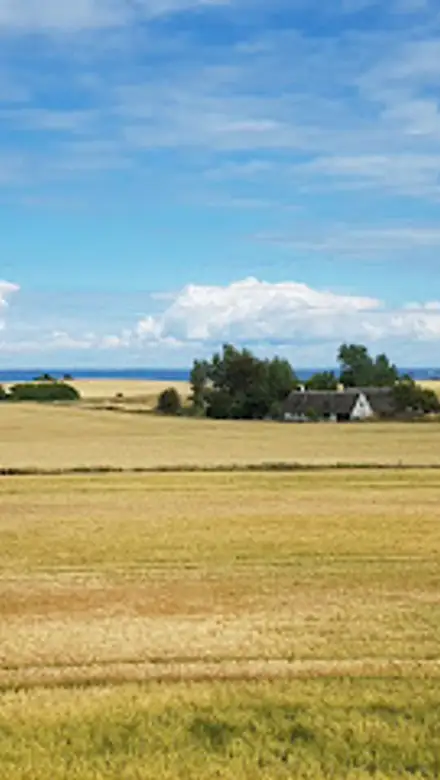
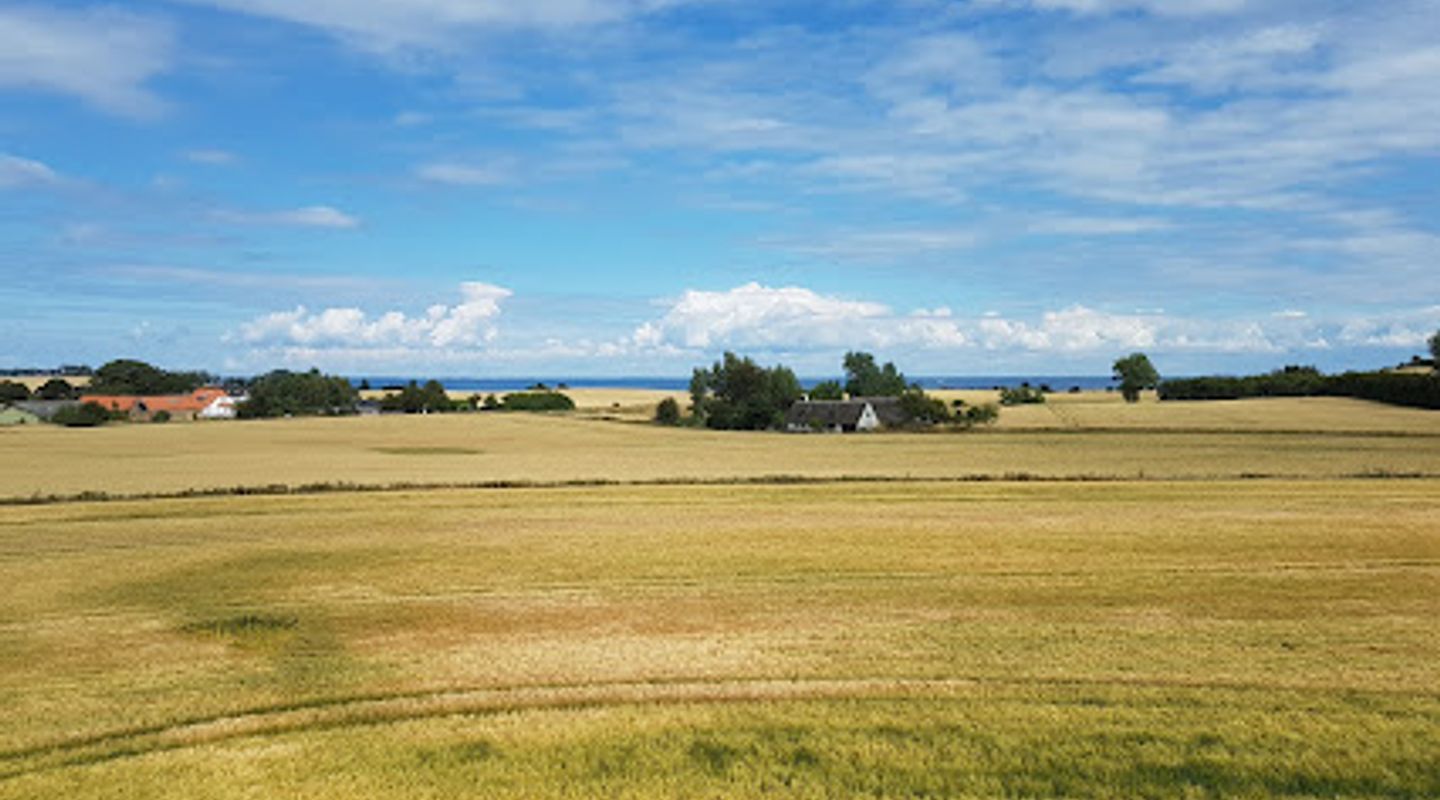
The area around Mårhøj is rural and tranquil, with fields stretching in every direction and only the occasional farmhouse in view. A short climb to the top of the mound rewards you with far‑reaching views across Hindsholm towards the water, especially atmospheric in clear weather or low evening light. The open position means you feel every breeze coming in from the coast, and the play of wind through the grass adds to the mood.Because the monument sits in farmland, access paths may follow tractor tracks or narrow trails at the edge of fields, depending on the season. In summer, crops can rise high around the mound, emphasizing its rounded form; in winter, the bare fields make the shape of the landscape even more pronounced. Wildlife is never far away, from birds circling overhead to insects buzzing in the verge.
Experiencing Mårhøj today
Visiting Mårhøj/Snavehøjen is a simple yet memorable experience. There are no elaborate facilities, just basic information nearby and a short walk through the countryside to reach the mound itself. Entry to the chamber is free, and you can take your time exploring, provided you are comfortable stooping or briefly crawling through the passage.Bring a small flashlight or a candle in a safe holder if you want to study the stonework in detail, and wear shoes suitable for uneven, sometimes muddy ground. Many travellers combine time inside the chamber with a few quiet minutes on top of the hill, using the spot as a place to pause, reflect and imagine the lives of the people who built it. In good weather, it is easy to expand a short stop into a leisurely hour surrounded by Stone Age history and open Funen scenery.
Evendo Review Centre
 Google
Guest reviews
Best time to go
Quietest: Jan, Feb & Dec · before 7am or from 8pm
Busy times are Evendo estimates for a typical year, to help you plan. Actual crowds vary with events, school holidays and the weather.
Explore Mårhøj/Snavehøjen on the map
A handpicked selection of must-see spots near Mårhøj/Snavehøjen, mapped for you.
Get your free copy of our complete guide to Mårhøj/Snavehøjen, delivered straight to you.
Everything on this page, from opening hours and how to get there to Eve’s tips and the best time to go, in one PDF you can read offline, print or share.
Already have an account? Sign in
Your Mårhøj/Snavehøjen guide is ready.
We'll send it to · Not you? Sign out

Getting your guide ready…
We are putting together a fresh copy of the Mårhøj/Snavehøjen guide. This can take up to a minute.
This can take a few moments. If your browser asks, choose Allow so the download can start. You'll find the guide in your Downloads folder.
Nothing happened? Download it again
Sorry, the guide is taking longer than usual. Please try again in a minute, or get it by email instead.
Other nearby places you may find interesting
The closest places of the same kind, if this one is not quite what you had in mind.
-
Vesborg Fyr Medieval fortress ruins crowned by a 19th-century lighthouse with sweeping views across the Samsø Belt.
-
Brundby Stubmølle Denmark's rare hilltop post mill with sweeping island views and centuries of agricultural heritage.
-
Issehoved Denmark's northern gem where land meets sea in raw, ever-changing coastal beauty.
-
Ilsemade Helligkilde A Bronze Age sacred spring where fresh water flows from an ancient hollow oak, connecting modern visitors to 3,000 years of spiritual tradition.
-
The Kanhave Canal A 1,300-year-old Viking shortcut carved across an island to control Denmark's seas.
Swipe for more places
More to explore near Mårhøj/Snavehøjen

 Best experiences near Mårhøj/Snavehøjen
 Best hotels near Mårhøj/Snavehøjen
 Best landmarks near Mårhøj/Snavehøjen
 Best attractions near Mårhøj/Snavehøjen
 Best shops near Mårhøj/Snavehøjen
 Best restaurants near Mårhøj/Snavehøjen
 Best bars near Mårhøj/Snavehøjen
Do you manage this location?
Take control to get all the benefits, like improved information, better appearance, and stronger visibility across AI-powered discovery.
Explore more
Explore more of Samsø
Samsø: Explore Denmark's eco-friendly island, rich in natural beauty, culinary delights, and cultural heritage.
Explore Samsø
Explore more of Denmark
Discover Denmark: A perfect blend of history, modern design, and the cozy concept of hygge. Explore vibrant cities, serene landscapes, and world-class cuisine.
Explore Denmark