Råbjerg Mile, North Jutland Travel Guide
Northern Europe's largest migrating dune—a living desert where sand reshapes the landscape 15 meters each year.
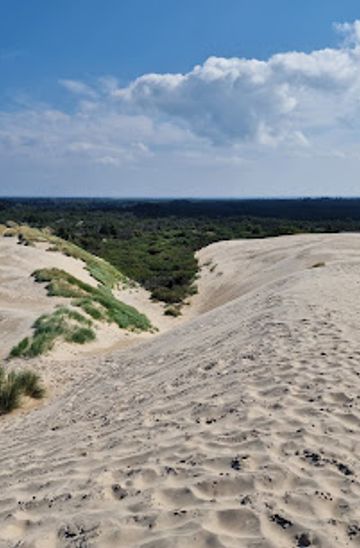
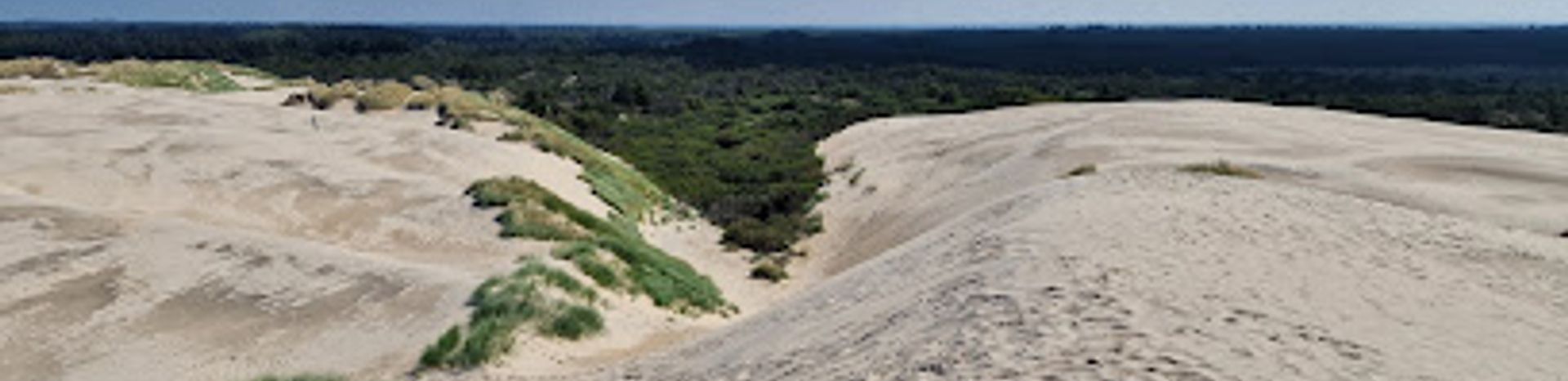
Denmark's largest migrating sand dune, Råbjerg Mile is a striking natural phenomenon covering 2 square kilometers with 3.5 million cubic meters of sand. Rising 40 meters high, this living desert moves northeast at approximately 15 meters annually, creating an otherworldly landscape where visitors can walk barefoot across undulating dunes. Located 16 kilometers southwest of Skagen between Frederikshavn and the northern tip of Jutland, it stands as Northern Europe's most significant moving dune and a testament to the region's dramatic sand-drift history.
A brief summary to Råbjerg Mile
- Råbjerg Mile Vej, Skagen, 9990, DK
- Duration: 1.5 to 3.5 hours
- Free
-
 Outdoor
- Mobile reception: 4 out of 5

Know before you go
Hi, I'm Eve. Here are a few practical things to know before exploring Råbjerg Mile.
- Visit during summer months for warm sand and comfortable barefoot exploration, but arrive early or late in the day to avoid the hottest midday temperatures that can make the sand uncomfortably hot underfoot.
- Watch for quicksand pockets in low-lying areas and depressions; stay alert and avoid venturing into areas where the sand appears unusually wet or soft.
- Bring water and sun protection, as the exposed dune offers no shade; the reflective sand intensifies sun exposure and dehydration occurs quickly in the desert-like environment.
- Combine your visit with the Sand-Covered Church tower and nearby Kandestederne beach for a fuller understanding of the region's sand-drift history and coastal landscape.
- Time your visit for sunset to experience the dune's dramatic color shifts and reduced crowds; the low-angle light creates striking photographic opportunities across the undulating sand.
Do you manage this location?
Take control to get all the benefits, like improved information, better appearance, and stronger visibility across AI-powered discovery. Learn more
Activate your presenceOther nearby places you may find interesting
The closest places of the same kind, if this one is not quite what you had in mind.
Explore Råbjerg Mile on the Map
A handpicked selection of must-see spots near Råbjerg Mile, mapped for you.
Getting There
-
Train + Bicycle
Take the Frederikshavn–Skagen train line to Hulsig station (approximately 45 minutes from Frederikshavn). From the station, rent a bicycle and follow the scenic cycle paths through grassland and heath toward Råbjerg Mile, approximately 4 kilometers away. The route is well-signposted and passes through natural areas with views of the surrounding landscape. Total travel time from Hulsig station: 20–30 minutes by bicycle. Bicycle rental available in Skagen and at nearby accommodations.
-
Bus
During summer months (typically June–August), bus route 99 operates from Skagen town center directly to Råbjerg Mile. Journey time from Skagen: approximately 30–40 minutes depending on stops. Service frequency varies seasonally; confirm current schedules via rejseplanen.dk. Outside summer season, bus services are limited; check local transport websites for alternative routes or seasonal adjustments.
-
Car
Drive from Skagen or Frederikshavn toward Kandestederne on Route 40. Råbjerg Mile is signposted off Route 40 approximately 16 kilometers southwest of Skagen. Follow signs to Råbjerg Mile Vej and the designated car park. Journey time from Skagen: approximately 20–25 minutes. Parking is available at the site; note that the car park can reach capacity during peak summer weekends, particularly in July and August.
-
Bicycle from Skagen
Rent a bicycle in Skagen and follow established cycle paths (Route 208 – West Coast cycle path no. 1) southward through Hulsig heath toward Råbjerg Mile. The route is scenic and well-maintained with clear signposting. Distance: approximately 12 kilometers from Skagen town center. Journey time: 45–60 minutes depending on fitness level and terrain. This option allows flexibility and provides access to nearby attractions such as Bunken Dune Plantation and Kandestederne beach.
For the on-the-go comforts that matter to you
-
 Restrooms
-
 Drinking Water
-
 Food Options
-
 Seating Areas
-
 Picnic Areas
-
 Trash Bins
-
 Information Boards
Discover more about Råbjerg Mile
A Desert Born from Centuries of Sand Drift
Råbjerg Mile emerged during the great sand migrations of the 16th and 17th centuries, when vast dunes swept across northern Jutland, burying farmland, roads, and entire settlements. The dune you see today represents the culmination of these catastrophic shifts—a single massive formation containing approximately 3.5 million cubic meters of sand spread across nearly 2 square kilometers. Unlike the surrounding areas where authorities eventually stabilized the dunes through reforestation, Råbjerg Mile was deliberately preserved in its migratory state, making it a living laboratory of geological processes and a poignant reminder of nature's raw power.The dune's formation traces back more than 300 years to the landscape called Råbjerg Stene, where sand blown westward from the coast gradually accumulated into the towering formation visible today. Behind the advancing dune lies a low, moist layer of sand stretching westward toward Skagerrak, marking the path of its relentless progression. This trail of transformation reveals the dune's destructive legacy: trees and structures engulfed by sand eventually re-emerge on the opposite side approximately 40 years later, while small depressions called mile lakes—formed by fluctuating groundwater levels—gradually transform from barren basins into vegetated wetlands.The Haunting Symbol of Sand's Dominion
The Sand-Covered Church stands as the most evocative testimony to Råbjerg Mile's power. Built in the late 14th century and dedicated to Saint Lawrence of Rome, this structure was progressively consumed by advancing sand throughout the 18th century until its abandonment by 1795. Today, only the church tower pierces the dune's surface, a solitary sentinel marking where an entire community once worshipped. This haunting monument embodies the desperation of medieval and early modern inhabitants who fought—and ultimately lost—their battle against the encroaching sands. The tower's persistence above the dunes serves as both memorial and warning, illustrating the inexorable force that displaced countless families from their ancestral lands.A Dune in Perpetual Motion
What distinguishes Råbjerg Mile from other European dune systems is its active migration. Moving approximately 15 meters annually toward the northeast, the dune has advanced roughly 1.5 kilometers eastward over the past 110 years. At this rate, projections suggest the main road to Skagen will be buried within 100 to 200 years, transforming the peninsula's geography once again. The dune's height reaches 40 meters above sea level, creating an undulating landscape of steep faces and gentle slopes that shift subtly with each passing season. Wind patterns continuously reshape the surface, erasing footprints and redistributing sand in an endless cycle of geological transformation.Conservation and Scientific Significance
The Danish state purchased the central area of Råbjerg Mile in 1900, recognizing its exceptional value as a natural phenomenon. Following the Conservation of Nature Act of 1917, additional surrounding lands were acquired to protect the dune's integrity. This designation reflects Denmark's commitment to preserving evidence of historical environmental challenges and allowing future generations to witness the consequences of unchecked sand drift. The area holds international importance as a staging ground for migrating raptors and serves as a breeding habitat for the Eurasian golden plover and wood sandpiper, adding ecological significance to its geological importance.A Landscape of Cinematic Drama
Råbjerg Mile's otherworldly appearance has attracted filmmakers seeking desert authenticity without traveling to Africa or the Middle East. In 1915, the silent film "The Secret of the Sphinx" was shot here, with palm trees and Bedouin tents strategically placed to transform the Danish dunes into the Sahara. Decades later, in 1971, the dune doubled as the American frontier for the Danish western film "Gold for the Tough Boys of the Prairie." More recently, in 2018, a Star Wars fan campaign attempted to convince Disney to use Råbjerg Mile as a filming location, garnering support from the local municipality. These cinematic moments underscore the dune's remarkable visual power and its ability to evoke distant, exotic landscapes.Experiencing the Desert in Denmark
Visitors are encouraged to remove their shoes and socks to fully experience the sensation of walking barefoot across warm sand—a sensory immersion that transforms the dune into something far more intimate than photographs suggest. Summer visits offer the most comfortable conditions, though the sand can become uncomfortably hot during peak afternoon hours. The dune's scale invites exploration, though caution is warranted: quicksand pockets occasionally form in low-lying areas, presenting a genuine hazard. A designated accessible route accommodates wheelchair users and those with mobility challenges, allowing approximately 400 meters of exploration into the dune landscape. The experience is so distinctive that Råbjerg Mile was inscribed in Denmark's Natural Canon, recognizing its status as an irreplaceable natural and cultural treasure.












Your all‑in‑one travel companion app
Explore expert travel guides, compare and book tours, experiences, hotels, and more—all from the palm of your hand. Download now for seamless trip planning wherever your wanderlust takes you.


Explore More of North Jutland
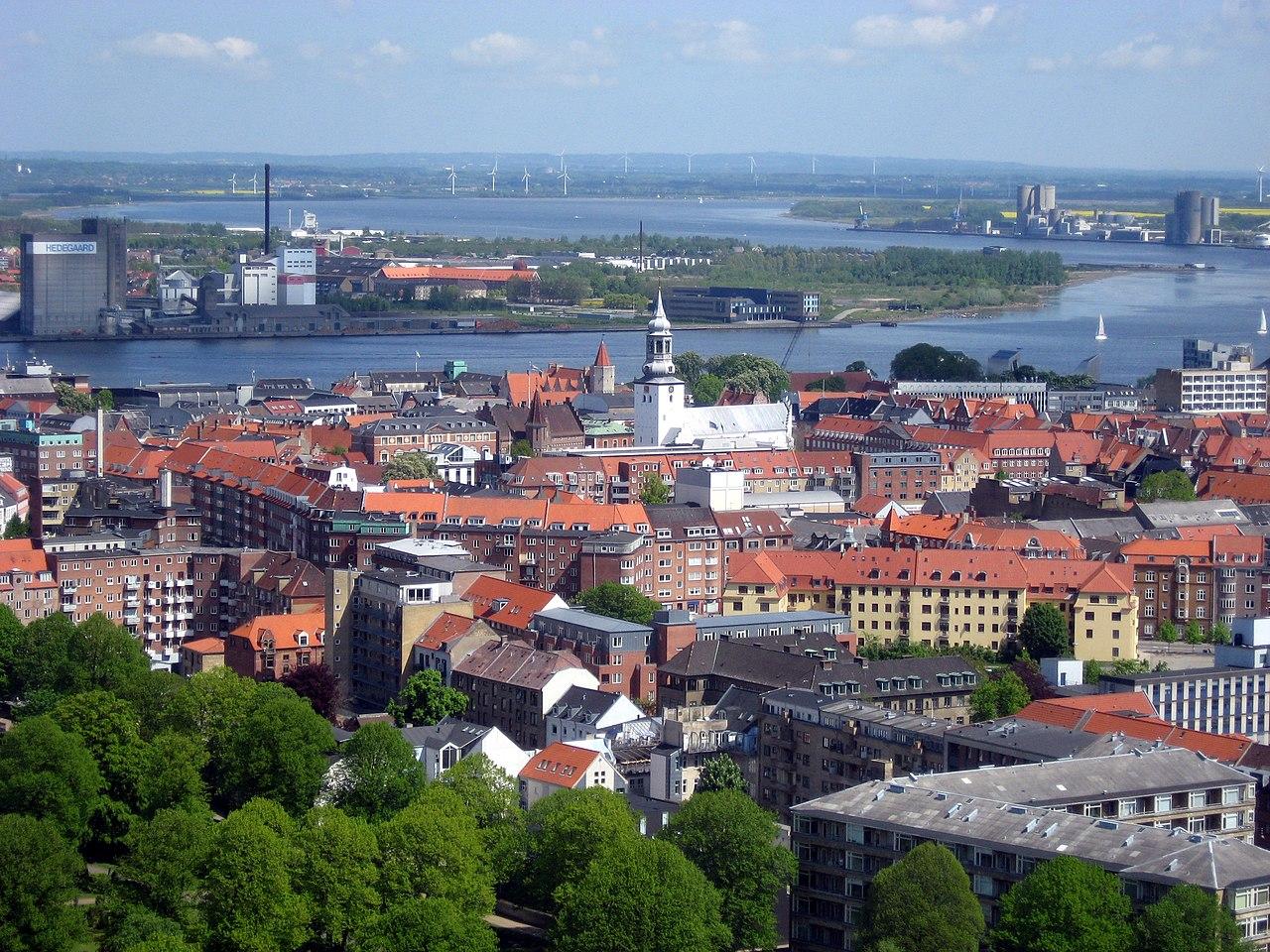
Looking beyond Råbjerg Mile? Discover North Jutland for broader travel guides, local hot-spots, and regional highlights.
Explore North Jutland