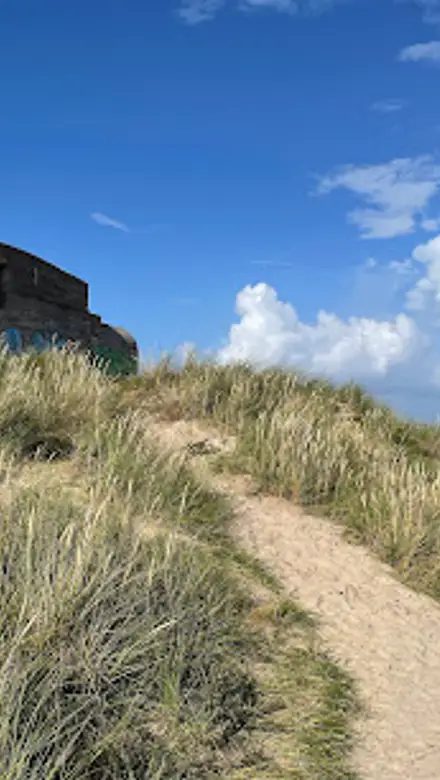
Skagen infanteristøttepunkt, Skagen Travel Guide
Free Guide: Weathered Atlantic Wall bunkers scattered through Skagen’s dunes, where North Sea winds, wartime history and far-reaching coastal views meet on the path to Grenen.


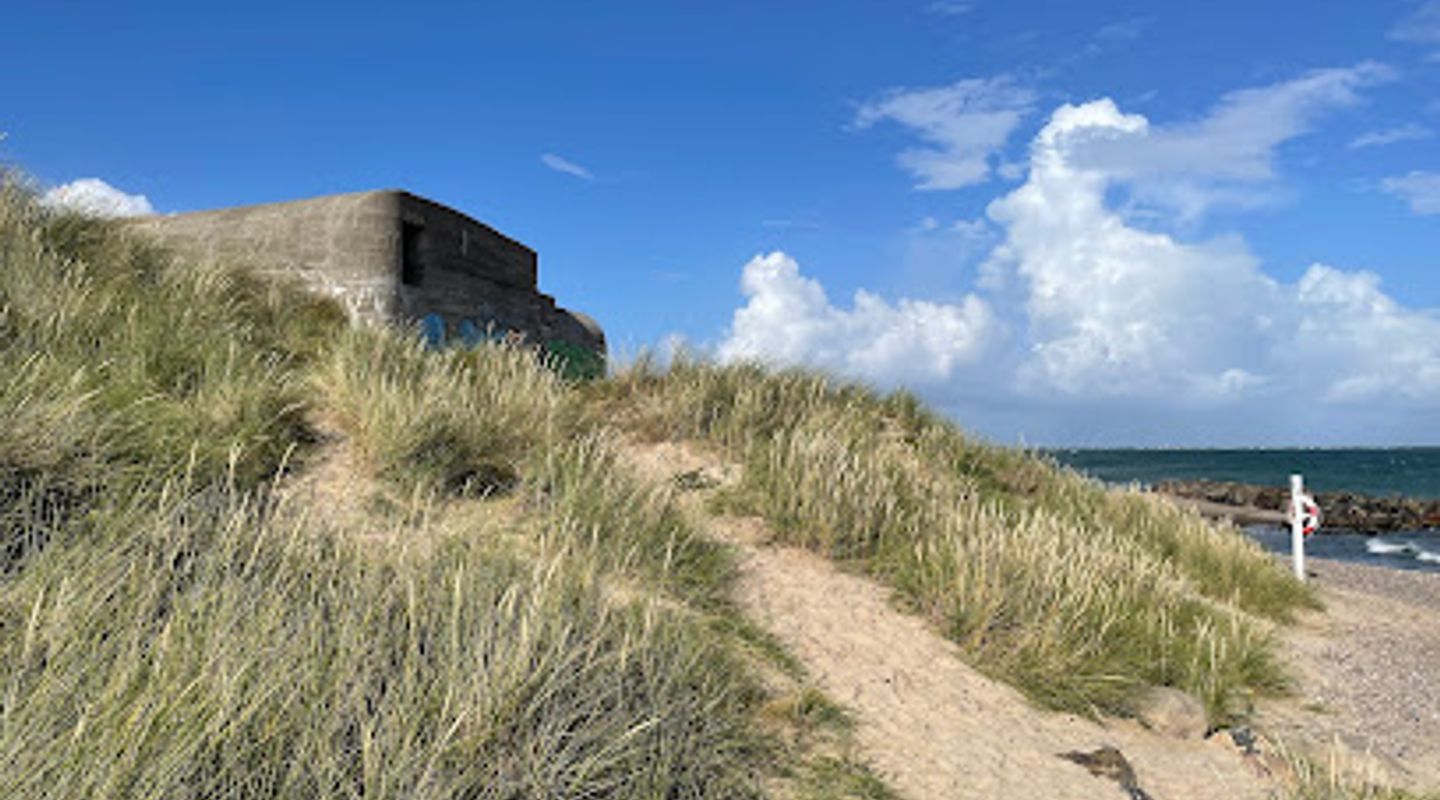
A brief summary of Skagen infanteristøttepunkt
Weathered Atlantic Wall bunkers scattered through Skagen’s dunes, where North Sea winds, wartime history and far-reaching coastal views meet on the path to Grenen.
Set among the windswept dunes just south of Grenen, the Skagen Infantry Strongpoint is a striking remnant of the Atlantic Wall, where concrete bunkers and sand meet at Denmark’s northern tip. Built by occupying German forces from 1942 to defend a key radar station, the site once bristled with guns, barracks and fortifications. Today, you can wander freely among weathered bunkers, explore the nearby Skagen Bunker Museum and combine coastal scenery with a vivid sense of Second World War history in one compact, evocative landscape.
On-site amenities
 Restrooms
 Drink options
 Drinking water
 Food options
 Seating areas
 Sheltered areas
 Trash bins
 Information boards
 Visitor centre
Opening hours
- Every dayOpen 24 hours
Opening hours as listed on the venue’s Google Business Profile. Hours can change for services and special events, so check with the venue before you go.
- Address
- Unnamed Road, 9990 Skagen
- Website
Getting there
Local bus from Skagen town
Bicycle from Skagen
Car or camper from wider North Jutland
On foot from Skagen town
Discover more about Skagen infanteristøttepunkt
Dune Landscape Shaped by War
The Skagen Infantry Strongpoint lies in the soft, shifting dunes between Skagen town and the Grenen promontory, where the North Sea and the Kattegat collide. Here, pale sand, hardy beach grass and low, wind-pruned shrubs form a wide coastal belt threaded by sandy paths. Scattered through this seemingly natural scene are hulking concrete forms: bunkers half-buried in dunes, low observation posts and remnants of gun positions peering toward the sea.The contrast is part of the site’s fascination. From some angles you see only shorebirds, marram grass and changing light; from others, the stark geometry of reinforced concrete cuts through the landscape. Walking here, you move constantly between open views toward Grenen and more enclosed hollows, where the dunes shelter you from the ever-present wind.
Atlantic Wall at Denmark’s Northern Tip
During the Second World War, German forces turned the northernmost point of Jutland into a fortified group of strongpoints guarding crucial sea lanes and air approaches. This position, sometimes referred to by the codename "Hamburg", was designed to protect a nearby radar station that monitored Allied movements along the coasts and across the Skagerrak and Kattegat.Construction of permanent bunkers began in 1942. Over time, the strongpoint grew into a dense complex of concrete positions, including more than twenty heavy bunkers with thick walls and roofs, as well as a similar number of lighter shelters and support structures. At its height, hundreds of soldiers were stationed here, forming a key link in the wider Atlantic Wall network that stretched along much of Europe’s western coastline.
Bunkers Hidden and Exposed
Today, many of the bunkers in the eastern part of the area are clearly visible around the main access points and parking area. Their entrances, firing slits and ventilation shafts stand exposed, allowing you to sense their former function as shelters, command posts and firing positions. On the western side, however, the terrain becomes lower and wetter, and several installations are partly hidden by dunes and hollows, giving them an almost secretive character.As you explore, you might notice differences in design and size: squat infantry shelters, medical bunkers and more complex structures built to standardized German plans. Some interiors are accessible, though often dark, sandy and uneven underfoot, which adds to their atmosphere but also calls for care. The weathered concrete bears the marks of decades of salt air, with rust stains and lichen softening once-sharp edges.
Skagen Bunker Museum and Interpretation
Near the strongpoint stands the Skagen Bunker Museum, housed in a former German hospital bunker of the Regelbau 638 type. Inside, recreated rooms with bunks, medical equipment and period objects help explain how the bunker network functioned as a living and working environment for the garrison during the war.Exhibits shed light on the broader history of Skagen under occupation, the strategic importance of this headland and the daily routines of soldiers stationed in such a remote, windswept outpost. Combined with the open-air remains scattered through the dunes, the museum provides valuable context, turning scattered concrete shells into parts of a larger defensive system and human story.
Walking, Reflection and Sea Views
Visiting the strongpoint is as much about mood as about military detail. Footpaths lead through dunes scented with sea air, and at many points you can look north toward Grenen, where the waves of two seas meet in shifting patterns. The soundscape is dominated by wind, surf and seabirds, occasionally broken by voices echoing inside a bunker.It is a place that invites unhurried exploration and quiet reflection. You can climb modest dune ridges for higher viewpoints, step into the cool darkness of a bunker corridor, then emerge again into bright, often gusty light. Whether you are primarily interested in Second World War history or simply curious about how conflict leaves marks on a landscape, the Skagen Infantry Strongpoint offers a compact, evocative setting to experience both.
Practical Visit and Seasonal Atmosphere
The area around the infantry strongpoint is generally open and unfenced, making it easy to combine a visit with a longer walk toward the tip of Grenen or the nearby lighthouse. Conditions change with the seasons: in summer the dunes can feel warm and inviting, with longer daylight hours and more people around, while in autumn and winter the wind intensifies, the light grows sharper and the site can feel strikingly remote.Loose sand, occasional wet patches and low steps into some bunkers mean that sturdy footwear is recommended. Weather can change quickly along this exposed coast, so layered clothing and wind protection are useful year-round. Simple information boards in the wider Skagen area help place the bunkers in context, but the real rewards come from taking time to explore the dunes, noticing how history, nature and the sea continue to shape this edge-of-Denmark landscape.
Evendo Review Centre
 Google
Guest reviews
Best time to go
Quietest: Jan, Feb & Mar · before 7am or from 9pm
Busy times are Evendo estimates for a typical year, to help you plan. Actual crowds vary with events, school holidays and the weather.
Explore Skagen infanteristøttepunkt on the map
A handpicked selection of must-see spots near Skagen infanteristøttepunkt, mapped for you.
Get your free copy of our complete guide to Skagen infanteristøttepunkt, delivered straight to you.
Everything on this page, from opening hours and how to get there to Eve’s tips and the best time to go, in one PDF you can read offline, print or share.
Already have an account? Sign in
Your Skagen infanteristøttepunkt guide is ready.
We'll send it to · Not you? Sign out

Getting your guide ready…
We are putting together a fresh copy of the Skagen infanteristøttepunkt guide. This can take up to a minute.
This can take a few moments. If your browser asks, choose Allow so the download can start. You'll find the guide in your Downloads folder.
Nothing happened? Download it again
Sorry, the guide is taking longer than usual. Please try again in a minute, or get it by email instead.
Other nearby places you may find interesting
The closest places of the same kind, if this one is not quite what you had in mind.
-
-
-
-
-


Swipe for more places
More to explore near Skagen infanteristøttepunkt
-
 Best experiences near Skagen infanteristøttepunkt
-
 Best hotels near Skagen infanteristøttepunkt
-
 Best landmarks near Skagen infanteristøttepunkt
-
 Best attractions near Skagen infanteristøttepunkt
-
 Best shops near Skagen infanteristøttepunkt
-
 Best restaurants near Skagen infanteristøttepunkt
-
 Best bars near Skagen infanteristøttepunkt


Do you manage this location?
Take control to get all the benefits, like improved information, better appearance, and stronger visibility across AI-powered discovery.
Explore more
Explore more of Skagen
Discover Skagen, Denmark's northernmost town, where two seas meet, artists find inspiration, and nature's beauty is unparalleled.
Explore Skagen
Explore more of Denmark
Discover Denmark: A perfect blend of history, modern design, and the cozy concept of hygge. Explore vibrant cities, serene landscapes, and world-class cuisine.
Explore Denmark