

Skagen Kirke, Skagen Travel Guide
Free Guide: A warm yellow seaside church where maritime heritage, Nordic light and thoughtful architecture meet in the historic heart of Skagen.


A brief summary of Skagen Kirke
A warm yellow seaside church where maritime heritage, Nordic light and thoughtful architecture meet in the historic heart of Skagen.
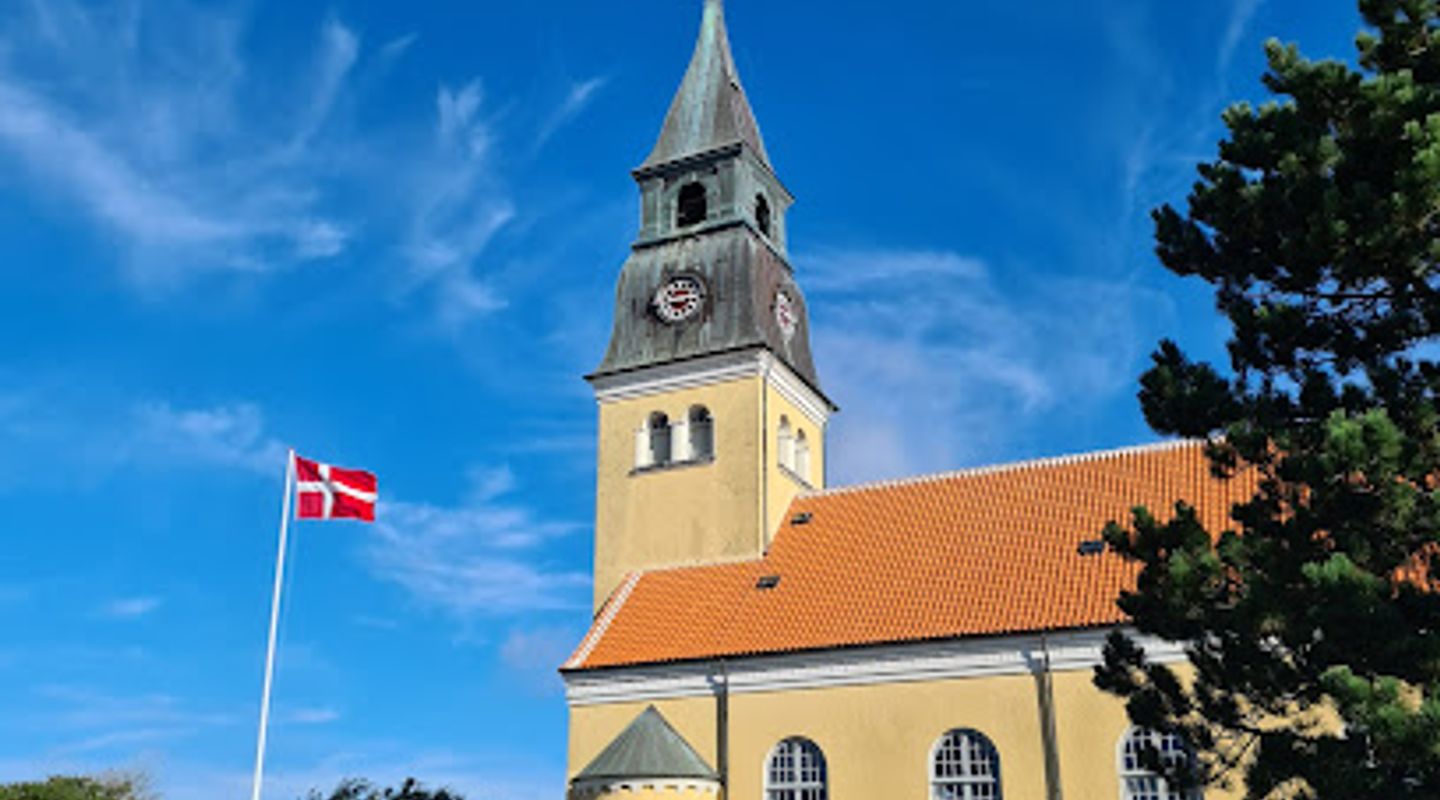
Skagen Kirke is the town’s distinctive Lutheran parish church, painted in warm Skagen yellow with a red-tiled roof and crisp white details. Standing in the historic heart of Skagen, it blends 19th‑century neoclassical design by Christian Frederik Hansen with early‑20th‑century adaptations by architect Ulrik Plesner. Inside, a serene blue ceiling, maritime ship models and a bright, welcoming nave reflect the town’s close bond with the sea and its fishing heritage.
On-site amenities
 Restrooms
 Seating areas
 Trash bins
 Information boards
Opening hours
- Every day10 am–6 pm
Opening hours as listed on the venue’s Google Business Profile. Hours can change for services and special events, so check with the venue before you go.
- Address
- Ved Kirken 2, 9990 Skagen
- Phone
- Website
Getting there
Walking from central Skagen
Local bus within Skagen area
Train and short walk from Skagen Station
Taxi within town limits
Discover more about Skagen Kirke
A seaside church at the heart of Skagen
Skagen Kirke sits right in the historic centre of Denmark’s northernmost town, its characteristic yellow walls and red roof echoing the uniform colour palette that defines much of Skagen’s architecture. The church is not especially tall or imposing, but its simple tower and clear lines make it a quiet focal point among low houses and cobbled streets. As you approach, the building feels woven into everyday life: a working parish church that also serves as a calm pause between galleries, harbour and beach.Step closer and the details begin to stand out. White cornices outline the gables, small round‑arched windows punctuate the façades, and the entrance doors are framed in understated classical mouldings. The churchyard is compact rather than monumental, and the overall impression is one of intimacy and friendliness rather than grandeur.
From sand‑buried past to new beginnings
Skagen’s story has long been shaped by shifting sands, and the church is no exception. For centuries, the town’s congregation worshipped at the older St. Lawrence church, located a couple of kilometres southwest of here. That medieval brick church was gradually claimed by drifting dunes, eventually becoming the famous Sand‑Buried Church whose tower still stands alone in the landscape today.When the old church was finally abandoned at the end of the 18th century, the need for a new parish church closer to the growing town became pressing. The present Skagen Kirke was built in 1841, marking a fresh chapter for local worship after generations of battling sand. In the early 1900s, as Skagen was flourishing as both a fishing port and an artists’ colony, the building was redesigned and expanded, reflecting the town’s new confidence and sense of identity.
Architects who shaped a coastal landmark
The first version of Skagen Kirke was designed by Christian Frederik Hansen, one of Denmark’s leading neoclassical architects. His influence is still visible in the church’s balanced proportions, clear geometry and restrained decoration. Inside, the nave follows a traditional longitudinal plan, but with a lightness and order that feel very much of the 19th century.In 1909–10, architect Ulrik Plesner reworked and enlarged the church in collaboration with designer Thorvald Bindesbøll. Together they introduced details that linked the building more closely to Skagen’s emerging architectural language: the warm yellow exterior, red tiles and carefully scaled windows that harmonise with surrounding houses. Later, in the late 20th century, artist Anne L. Hansen refreshed the interior colour scheme, adding the distinctive blue ceiling and contemporary decorative touches while respecting the historic structure.
An interior shaped by sea and light
Inside Skagen Kirke, the first impression is of light. The ceiling is painted a soft, sky‑like blue, creating the sense of being under a broad Nordic horizon even on overcast days. White walls and pale furnishings help to bounce daylight around the nave, while the chancel focuses attention on a simple altar and painted altarpiece, often depicting biblical scenes tied to hope and renewal.Hanging from the ceiling, model ships gently underline the town’s maritime heritage. This tradition of votive ship models is common in Danish sea churches and serves as a quiet reminder of the fishermen and sailors whose lives depended on the surrounding waters. A sculpted baptismal font, wooden pews and unobtrusive modern lighting complete the space, which feels contemplative without being overly formal.
Quiet moments in a living parish
Skagen Kirke functions above all as an active Lutheran parish church, hosting regular services, weddings, christenings and seasonal celebrations. Outside service times, it often opens for visitors to step in, sit for a few minutes and absorb the atmosphere. Organ music may drift from the gallery during rehearsals, while the muffled sounds of town life filter through the thick walls.For travellers, the church offers a different angle on Skagen’s story than the famous dunes or art museums. Here, the themes of light, sea and community that inspired the Skagen painters are translated into architecture, colour and small maritime details. Whether you spend a few minutes or linger longer on a bench, Skagen Kirke provides a gentle, reflective counterpoint to the windswept beaches and busy harbour outside.
Evendo Review Centre
 Google
Guest reviews
Best time to go
Quietest: Jan, Feb & Mar · before 7am or from 9pm
Busy times are Evendo estimates for a typical year, to help you plan. Actual crowds vary with events, school holidays and the weather.
Explore Skagen Kirke on the map
A handpicked selection of must-see spots near Skagen Kirke, mapped for you.
Get your free copy of our complete guide to Skagen Kirke, delivered straight to you.
Everything on this page, from opening hours and how to get there to Eve’s tips and the best time to go, in one PDF you can read offline, print or share.
Already have an account? Sign in
Your Skagen Kirke guide is ready.
We'll send it to · Not you? Sign out

Getting your guide ready…
We are putting together a fresh copy of the Skagen Kirke guide. This can take up to a minute.
This can take a few moments. If your browser asks, choose Allow so the download can start. You'll find the guide in your Downloads folder.
Nothing happened? Download it again
Sorry, the guide is taking longer than usual. Please try again in a minute, or get it by email instead.
Other nearby places you may find interesting
The closest places of the same kind, if this one is not quite what you had in mind.
-
-
-
-
-


Swipe for more places
More to explore near Skagen Kirke

 Best experiences near Skagen Kirke
 Best hotels near Skagen Kirke
 Best landmarks near Skagen Kirke
 Best attractions near Skagen Kirke
 Best shops near Skagen Kirke
 Best restaurants near Skagen Kirke
 Best bars near Skagen Kirke
Do you manage this location?
Take control to get all the benefits, like improved information, better appearance, and stronger visibility across AI-powered discovery.
Explore more
Explore more of Skagen
Discover Skagen, Denmark's northernmost town, where two seas meet, artists find inspiration, and nature's beauty is unparalleled.
Explore Skagen
Explore more of Denmark
Discover Denmark: A perfect blend of history, modern design, and the cozy concept of hygge. Explore vibrant cities, serene landscapes, and world-class cuisine.
Explore Denmark
