

Skagen Vandtårn, Skagen Travel Guide
Free Guide: Historic red-brick water tower turned summer viewpoint, offering a brisk climb and sweeping 360-degree views over Skagen’s rooftops, dunes and surrounding coastline.


A brief summary of Skagen Vandtårn
Historic red-brick water tower turned summer viewpoint, offering a brisk climb and sweeping 360-degree views over Skagen’s rooftops, dunes and surrounding coastline.
Skagen Vandtårn is a striking 1930s red-brick water tower rising above the rooftops of Denmark’s northernmost town. Once a vital part of Skagen’s water supply, the 34 m tower now serves as a seasonal viewpoint and small exhibition space. Climb around 120 steps for a 360-degree panorama over yellow houses, church spires, dunes and the nearby coastline. It is an easy, compact visit that pairs well with wandering Skagen’s charming town center.
On-site amenities
 Seating areas
 Trash bins
 Information boards
- Address
- Markvej 1, 9990 Skagen
Getting there
Train and walking from Skagen Station
Local bus within Skagen
Car or rental car from Frederikshavn
Discover more about Skagen Vandtårn
Red-Brick Tower Above a Seaside Town
Skagen Vandtårn is one of the most distinctive silhouettes in Skagen, a tall, angular water tower built in 1934 at the corner of Markvej in the heart of town. Its deep red bricks contrast with the soft yellow houses and white trim that define Skagen’s traditional architecture, making it a visible landmark from many streets. Originally constructed as crucial infrastructure for the town’s water supply, it once held a large reservoir high above ground to ensure steady pressure for homes and businesses spread across this windswept peninsula.Although no longer in use as a working water tower, the building retains the sturdy, utilitarian character of early 20th-century engineering. Simple lines, narrow window openings and a robust base give it an almost fortress-like appearance, softened only by the warm color of the brick and its setting among tidy streets, cafés and bakeries.
From Utility Structure to Viewpoint
When modern pumping technology made elevated tanks unnecessary, Skagen Vandtårn was retired from active service in the 1980s. Rather than demolish it, the town adapted the structure, opening the interior to visitors during the summer months. Inside, the old waterworks have been removed, leaving a vertical space dominated by the spiral of stairs leading toward the top platform.The climb involves roughly 120 steps and a steady ascent of 34 meters. There is no lift, so it rewards visitors prepared for a short but continuous walk upwards. Along the way, small landings offer brief pauses before the final push to the top. Occasional displays or simple interpretive material may outline the tower’s history and its role in Skagen’s development, adding context to what might otherwise be just a staircase.
Panoramic Views of Skagen and Beyond
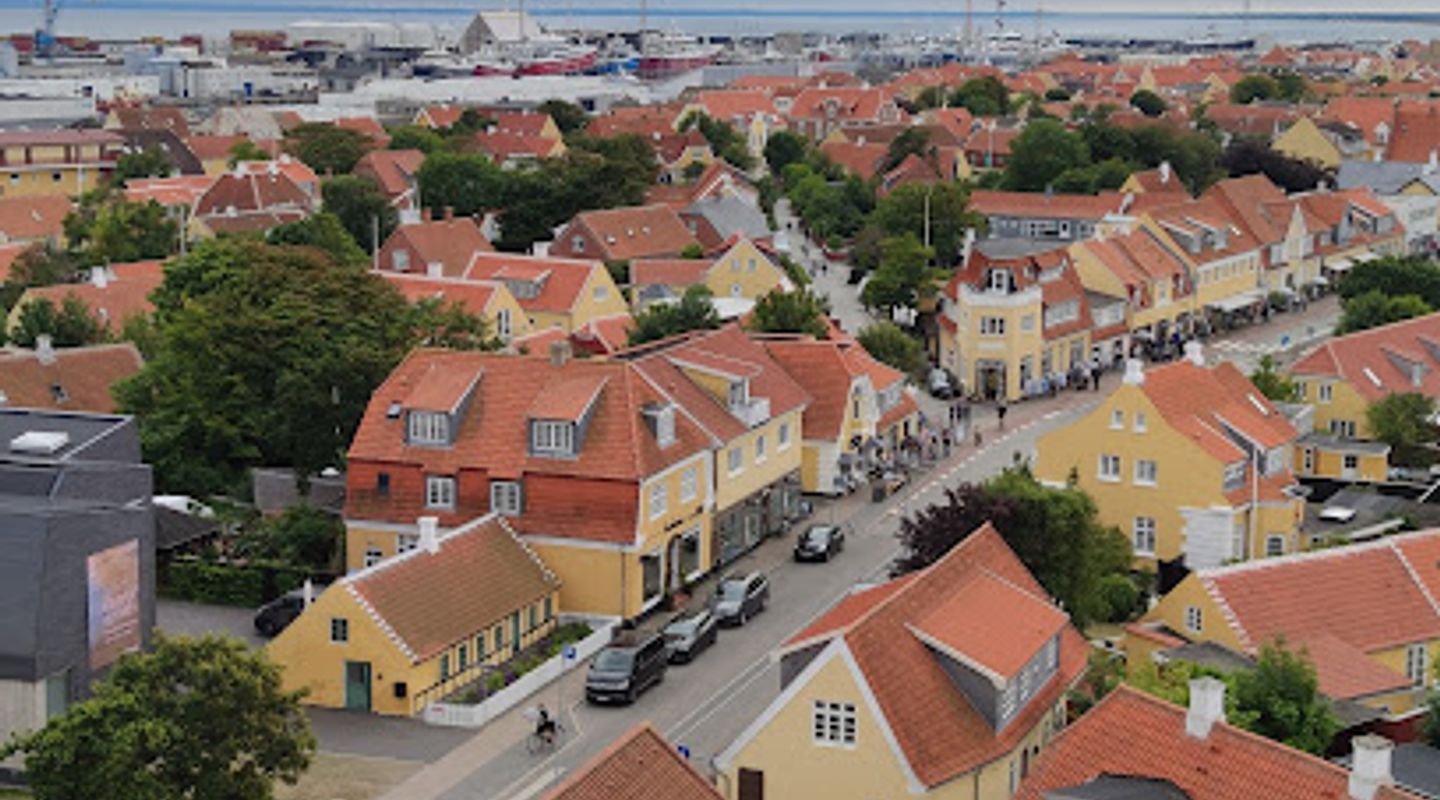
At the summit, an open viewing platform encircles the crown of the tower, presenting a full 360-degree panorama. To one side stretches the compact grid of central Skagen, with red roofs and ochre facades clustered along pedestrian streets and church spires. In clear weather you can trace the line of the harbor, fishing boats and pleasure craft, and the subtle curve of the coastline as it runs toward Grenen, where the two seas meet.Looking inland, low dunes and heathland spread across the flat landscape, punctuated by church towers and lighthouses on the horizon. The elevated perspective makes it easier to understand how the town fits between sea and sand, and why its light and wide horizons inspired generations of painters. On bright days, the North Jutland sky feels particularly expansive from this perch.
A Compact Stop in the Town Center
Because of its modest footprint, Skagen Vandtårn is usually a brief visit rather than a half-day commitment. A typical stop lasts under an hour, including the climb, time spent on the viewing platform and a few photos. This makes it ideal to combine with nearby museums, galleries, or a leisurely stroll through the surrounding streets lined with cafés and small shops.The entrance level is simple, reflecting the tower’s industrial origins more than any ornate interior design. In the immediate vicinity you will often find basic urban amenities such as places to sit, options for drinks or snacks, and other cultural attractions within walking distance, turning the tower into a natural waypoint in a broader exploration of Skagen.
Seasons, Weather and Visiting Conditions
Access to the top is typically limited to the summer period, often around June to August, with daytime opening hours and a small entrance fee charged at the door. Outside the main season, the tower exterior remains a familiar part of the townscape, but interior access may be restricted or closed, so checking current information before planning an off-season ascent is advisable.Weather strongly shapes the experience. On clear, mild days, the views are at their best, with distant dunes and coastline visible in detail. In windier conditions, the platform can feel exposed, even on otherwise pleasant days, and the staircase demands a bit more care from those with mobility concerns. Still, the tower’s central location, short visit time and striking outlook make it a memorable, if understated, highlight of a stay in Skagen.
Evendo Review Centre
 Google
Guest reviews
Best time to go
Quietest: Jan, Feb & Nov · before 9am
Busy times are Evendo estimates for a typical year, to help you plan. Actual crowds vary with events, school holidays and the weather.
Explore Skagen Vandtårn on the map
A handpicked selection of must-see spots near Skagen Vandtårn, mapped for you.
Get your free copy of our complete guide to Skagen Vandtårn, delivered straight to you.
Everything on this page, from opening hours and how to get there to Eve’s tips and the best time to go, in one PDF you can read offline, print or share.
Already have an account? Sign in
Your Skagen Vandtårn guide is ready.
We'll send it to · Not you? Sign out

Getting your guide ready…
We are putting together a fresh copy of the Skagen Vandtårn guide. This can take up to a minute.
This can take a few moments. If your browser asks, choose Allow so the download can start. You'll find the guide in your Downloads folder.
Nothing happened? Download it again
Sorry, the guide is taking longer than usual. Please try again in a minute, or get it by email instead.
Other nearby places you may find interesting
The closest places of the same kind, if this one is not quite what you had in mind.
-
-
-
-
-


Swipe for more places
More to explore near Skagen Vandtårn

 Best experiences near Skagen Vandtårn
 Best hotels near Skagen Vandtårn
 Best landmarks near Skagen Vandtårn
 Best attractions near Skagen Vandtårn
 Best shops near Skagen Vandtårn
 Best restaurants near Skagen Vandtårn
 Best bars near Skagen Vandtårn
Do you manage this location?
Take control to get all the benefits, like improved information, better appearance, and stronger visibility across AI-powered discovery.
Explore more
Explore more of Skagen
Discover Skagen, Denmark's northernmost town, where two seas meet, artists find inspiration, and nature's beauty is unparalleled.
Explore Skagen
Explore more of Denmark
Discover Denmark: A perfect blend of history, modern design, and the cozy concept of hygge. Explore vibrant cities, serene landscapes, and world-class cuisine.
Explore Denmark
