Leuchtturm Skagen, Skagen Travel Guide
Denmark's second-tallest lighthouse where two seas meet, offering panoramic views, bird migration exhibitions, and acclaimed Nordic cuisine.
Denmark's second-tallest lighthouse, standing 46 meters high on the Skagen Peninsula since 1858. Climb 210 spiral steps to panoramic views where the North Sea and Baltic Sea converge. The lighthouse doubles as a cultural hub with seasonal bird migration exhibitions, a café, and the acclaimed restaurant Blink at its base. Winter visits offer solitude and dramatic coastal landscapes; summer brings vibrant heathland blooms and golden-hour photography opportunities.
A brief summary to Leuchtturm Skagen
- Fyrvej 36, Skagen, 9990, DK
- Click to display
- Click to display
- Duration: 1.5 to 3 hours
- Mid ranged
-
 Outdoor
- Mobile reception: 4 out of 5
- Monday 10 am-4 pm
- Tuesday 10 am-4 pm
- Wednesday 10 am-4 pm
- Thursday 10 am-4 pm
- Friday 10 am-4 pm
- Saturday 10 am-4 pm
- Sunday 10 am-4 pm

Know before you go
Hi, I'm Eve. Here are a few practical things to know before exploring Leuchtturm Skagen.
- Visit during late afternoon for golden-hour photography. The lighthouse is open until sunset, making it ideal for capturing warm light on the grey stone and surrounding landscape.
- Book a table at Blink restaurant in advance, especially during summer. Request a terrace seat and consider beginning your meal with champagne on the lighthouse platform for an unforgettable experience.
- Winter visits (November–April) offer solitude and dramatic coastal scenery. The self-service ticket system allows access from 6:00 AM to 10:00 PM at a reduced rate of 50 DKK.
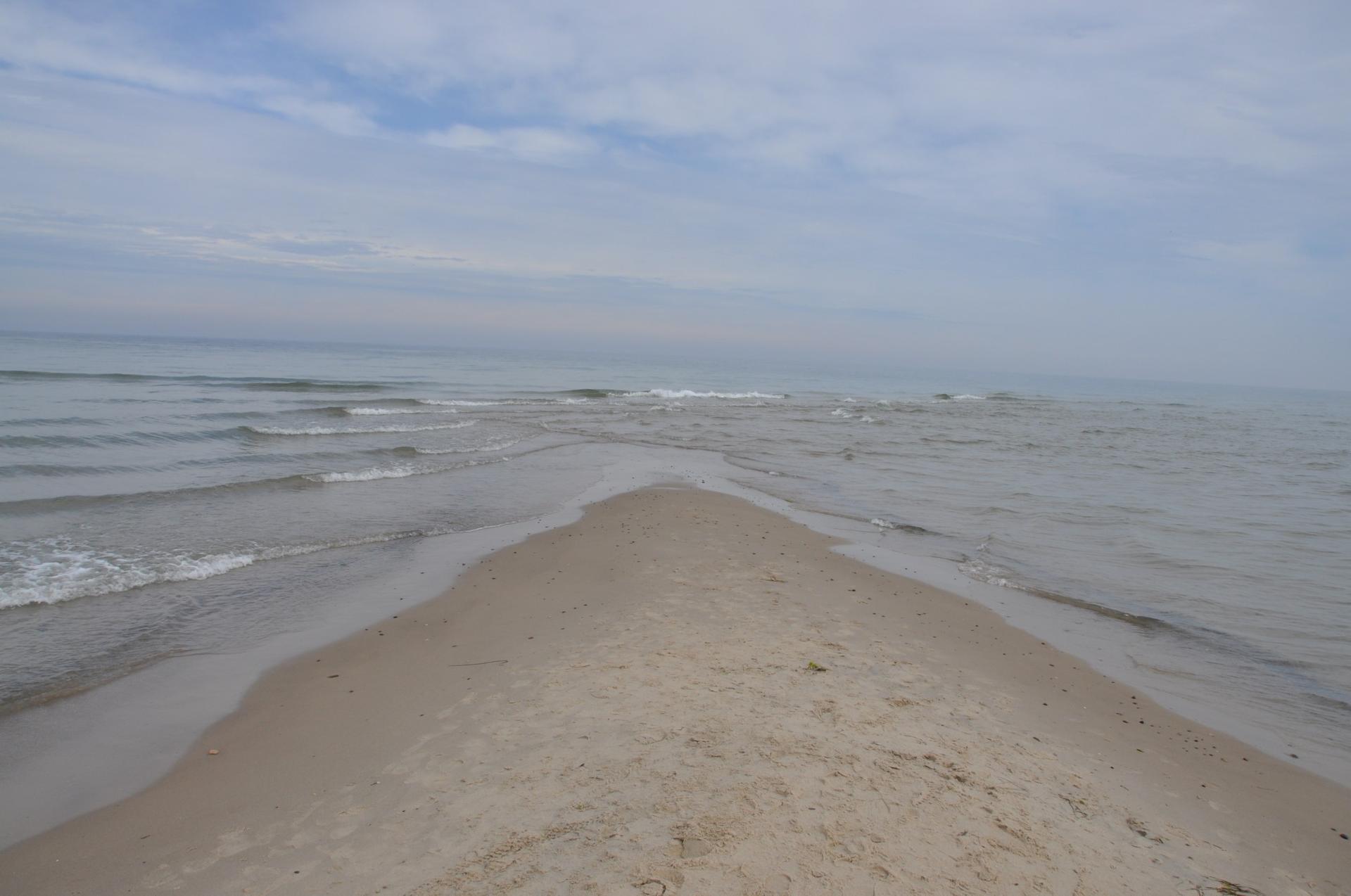
- Combine your visit with a walk to Grenen, where the North Sea and Baltic Sea visibly converge. The lighthouse serves as a natural starting point for exploring the peninsula's unique geography.
- Bring sturdy footwear for the 210-step spiral staircase climb. The steps are narrow and winding; the ascent is moderately demanding but manageable for most visitors with reasonable fitness.
Do you manage this location?
Take control to get all the benefits, like improved information, better appearance, and stronger visibility across AI-powered discovery. Learn more about listing your business on Evendo
Activate your presenceOther nearby places you may find interesting
The closest places of the same kind, if this one is not quite what you had in mind.

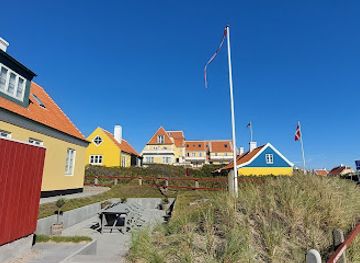
Explore Leuchtturm Skagen on the Map
A handpicked selection of must-see spots near Leuchtturm Skagen, mapped for you.
Getting There
-
Car from Skagen Town Centre
Drive north from Skagen town centre toward Grenen on Fyrvej road. The lighthouse is located at Fyrvej 36, approximately 4 kilometres from the town centre, with a travel time of 8–10 minutes. Free parking is available in the dedicated lot beside the lighthouse from September to May; during summer (June–August), parking requires a ticket purchased on-site. The road is well-maintained and clearly signposted.
-
Bicycle from Skagen Town Centre
A pleasant cycling route of approximately 4 kilometres takes 15–20 minutes from Skagen town centre. Follow Fyrvej northward toward Grenen; the route is relatively flat but includes a gentle uphill section approaching the lighthouse. Bicycle parking is available at the site. This is a popular and scenic route, particularly during summer months.
-
Walking from Skagen Town Centre
A 4-kilometre walk takes approximately 50–60 minutes from Skagen town centre. The route follows Fyrvej road northward; while walkable, the road has traffic and limited dedicated pedestrian paths for portions of the journey. The final approach includes an uphill section. Walking is most practical for those with time and reasonable fitness; cycling or driving is recommended for most visitors.
-
Guided Tour or Shuttle Service
Local tour operators in Skagen offer guided visits to the lighthouse, typically including transport from town, admission, and commentary on the site's history and ecology. These services operate year-round with varying frequency; inquire at Skagen tourist information or accommodation providers for current options and pricing.
For the on-the-go comforts that matter to you
-
 Restrooms
-
 Drink Options
-
 Food Options
-
 Seating Areas
-
 Information Boards
-
 Visitor Center
Discover more about Leuchtturm Skagen
A Monument to Maritime Navigation and Danish Engineering
The Grey Lighthouse, inaugurated on November 1, 1858, stands as Denmark's second-tallest lighthouse at 46 meters, surpassed only by Dueodde Lighthouse on Bornholm by a single meter. Designed by architect N.S. Nebelong and constructed over four years at a cost of 200,000 rigsdalers, this imposing grey structure was built to guide seafarers through the treacherous waters of Skagerrak and Kattegat. Its light, originally a 400-watt sodium lamp flashing every four seconds, remains visible 20 nautical miles away and continues to serve as a vital navigational aid for modern shipping. The lighthouse's strategic placement at the center of the Skagen Peninsula ensures its beam reaches both seas, fulfilling its dual purpose of warning and guiding vessels through one of Europe's busiest maritime corridors.The Ascent and the View
Visitors ascend 210 steps of a tightly wound masonry spiral staircase to reach the observation platform at the lighthouse's crown. The climb, though demanding, rewards with breathtaking panoramic vistas across the Skagen Peninsula—a landscape where two seas visibly meet in a dramatic convergence of water and sky. From this vantage point, the dune landscape unfolds in all directions, revealing the raw, windswept beauty of Denmark's northernmost tip. The view is particularly striking during late afternoon, when golden-hour light bathes the landscape in warm tones, making it an exceptional spot for landscape and architectural photography.Seasonal Rhythms and Year-Round Access
The lighthouse operates year-round, though with distinct seasonal schedules. From April through October, the exhibition and café open daily from 10:00 AM to 4:00 PM, with the lighthouse remaining accessible until sunset. During winter months (November to April), the lighthouse opens from 6:00 AM to 10:00 PM via self-service ticket machine, offering a quieter, more introspective experience. Admission prices reflect seasonality: during high season (April–October), adults pay 85 DKK, children aged 4–15 pay 30 DKK, and students with valid cards pay 60 DKK. In winter, a flat rate of 50 DKK applies to all visitors. Free parking is available September through May; during summer (June–August), parking requires a ticket.Cultural Hub: Exhibitions, Birdwatching, and Artistic Engagement
Since May 2017, the lighthouse has evolved beyond its navigational function to become a cultural and natural history center. Seasonal exhibitions focus on local bird migration, transforming the lighthouse into a birdwatching hub during spring and autumn when thousands of migratory species pass through the region. The exhibitions contextualize the lighthouse within the broader ecological and historical narrative of Skagen. Art exhibitions and installations complement the natural history displays, creating a dynamic space where maritime heritage, ornithology, and contemporary art intersect. This multifaceted approach attracts both casual visitors and serious naturalists.Culinary Excellence at the Lighthouse Base
At the foot of the lighthouse, housed in the historic 1858 stone buildings, sits the restaurant Blink—a beacon of New Nordic cuisine. Chef and owner Matilde Grue, who trained in Michelin-starred kitchens in Copenhagen, has created a dining experience that celebrates the surrounding landscape through foraged ingredients. The menu changes daily based on what local fishermen deliver and what grows in the dunes: sea herbs, berries, and coastal plants supplement fresh seafood. Diners can enjoy leisurely lunch or seasonal evening menus, with the option to begin dinner with champagne atop the lighthouse itself. The small terrace overlooks the sea, offering an intimate setting where food, history, and nature converge.The Landscape: Heathland, Dunes, and Coastal Drama
The lighthouse stands within a distinctive coastal ecosystem. During late summer and early autumn, the surrounding heathland blooms in vivid purple, while sea buckthorn berries glow golden in the sun—a natural spectacle that frames the grey stone tower. The dunes shift constantly, shaped by wind and tide, creating an ever-changing landscape. To protect the lighthouse from erosion, artificial barriers have been constructed, a testament to the ongoing struggle between human heritage and natural forces. Winter visits reveal a starker, more austere beauty: reduced crowds, dramatic skies, and the sound of wind and waves dominate the experience.












Your all‑in‑one travel companion app
Explore expert travel guides, compare and book tours, experiences, hotels, and more—all from the palm of your hand. Download now for seamless trip planning wherever your wanderlust takes you.


Explore More of Skagen
Looking beyond Leuchtturm Skagen? Discover Skagen for broader travel guides, local hot-spots, and regional highlights.
Explore Skagen