

Historiecenter Dybbøl Banke Travel Guide
Free Guide: Experience the dramatic 1864 war through immersive reconstructions and sensory storytelling on Denmark's most significant battlefield.


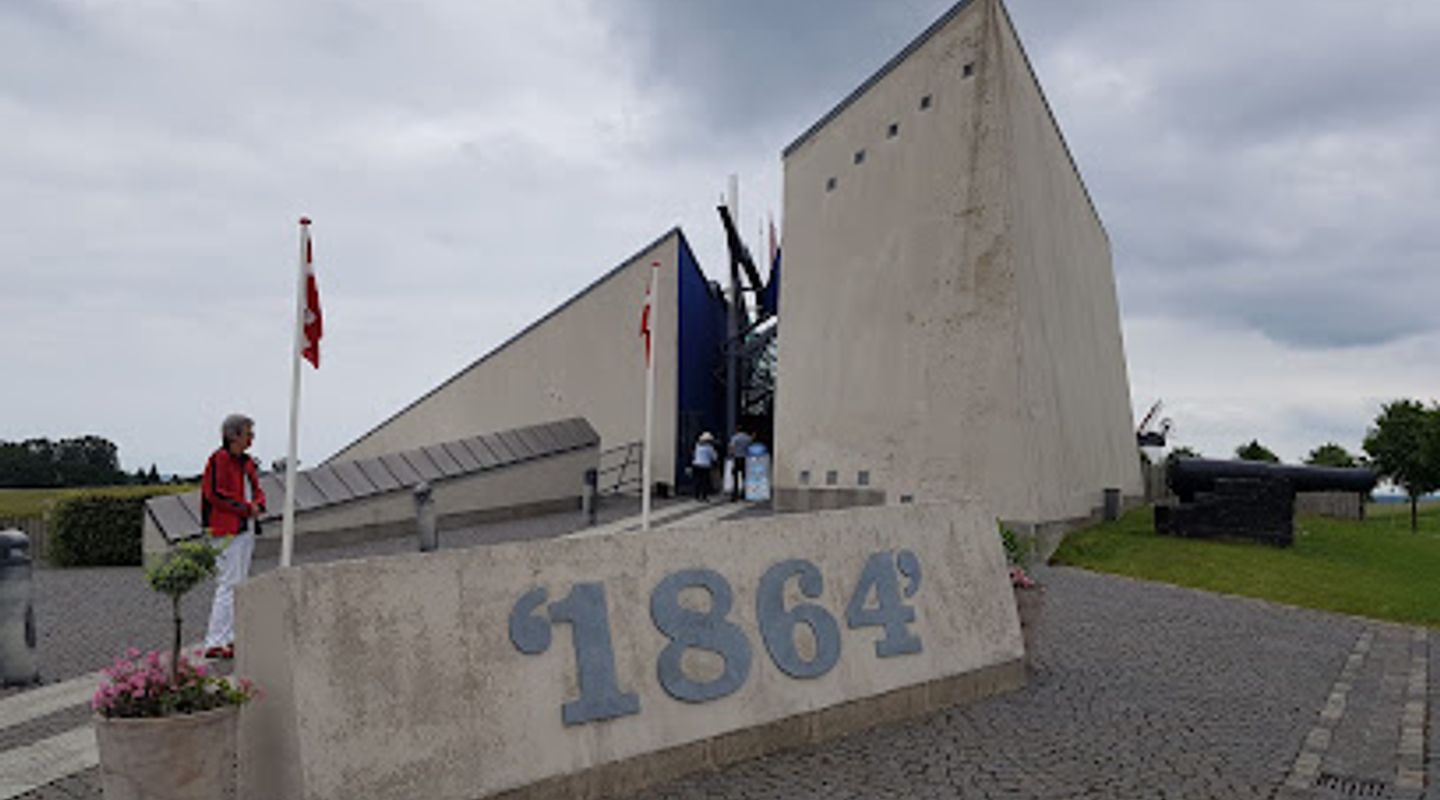
A brief summary of Historiecenter Dybbøl Banke
Experience the dramatic 1864 war through immersive reconstructions and sensory storytelling on Denmark's most significant battlefield.
Step into the dramatic events of Denmark's 1864 war at this immersive history centre located on the battlefield of Dybbøl Banke near Sønderborg. Through historically accurate reconstructions, sensory storytelling, and interactive exhibits, visitors experience life as a soldier during one of Europe's most pivotal conflicts. The centre features barracks, fortifications, and a cinema, with seasonal programming that changes throughout the year. Typically requires 2–3 hours to explore fully.
On-site amenities
 Restrooms
 Food options
 Seating areas
 Sheltered areas
 Information boards
 Visitor centre
Opening hours
- Every day10 am–5 pm
Opening hours as listed on the venue’s Google Business Profile. Hours can change for services and special events, so check with the venue before you go.
- Address
- Dybbøl Banke 16, 6400 Sønderborg
- Phone
- Website
Getting there
Bus from Sønderborg Town Centre
Car from Sønderborg
Walking from Dybbøl Mill
Cycling from Sønderborg
Discover more about Historiecenter Dybbøl Banke
The Battlefield Transformed into Living History
Historiecenter Dybbøl Banke occupies the exact location where one of Denmark's most significant military battles unfolded in 1864. Rather than presenting history behind glass, this centre immerses visitors directly into the dramatic events of the Second Schleswig War through reconstructed soldier camps, authentic fortifications, and period-accurate barracks. As you move through the grounds, the sensory experience intensifies—the thundering noise of cannons mixes with the screams of wounded soldiers, creating an emotional connection to the soldiers who fought and died here. The centre's approach transforms a historical site into a visceral encounter with the past.
A Turning Point in European History
The war of 1864 marked a watershed moment not only for Denmark but for the entire European political landscape. The conflict resulted in Denmark losing 40 percent of its land area and approximately 38.5 percent of its population, fundamentally reshaping the nation's borders and identity. The battle at Dybbøl Banke became a symbol of Danish military courage and sacrifice, and the site itself evolved into a powerful national monument. Understanding this battle provides crucial context for comprehending modern European history, as the territorial changes and political consequences rippled across the continent for generations. After World War I, Denmark recovered part of the lost territory in 1920, establishing what is now South Jutland.
Immersive Exhibits and Seasonal Programming
The centre features multiple themed experiences that rotate with the seasons, ensuring that repeat visitors encounter fresh narratives and activities. Exhibits include soldier weaponry demonstrations, explorations of the entrenchments and fortifications, and storytelling sessions that bring individual soldiers' experiences to life. A cinema presents historical narratives, while the barracks behind the frontier lines reveal the exhausted reality of young men between bloody engagements. The daily programme varies significantly during holiday periods—winter holidays feature activities such as "Soldatens våben" (The Soldier's Weapon), "Skanserne på Dybbøl" (The Fortifications), and "Kanonfortælling" (Cannon Stories). This seasonal variation means the experience differs depending on when you visit, with summer offering the most comprehensive programming.
Practical Considerations for Your Visit
The centre operates from April through October with extended hours from 10:00 to 17:00 daily. Winter holiday weeks (such as week 7 in February) offer limited programming from 10:00 to 15:00 on weekdays, with activities held outdoors in the cold—visitors are advised to bring warm clothing and sturdy winter boots. Tours are conducted primarily in Danish, though English-language materials and cards provide explanations of key exhibits. Dogs are welcome on-site if kept on a leash with proper waste management, though they cannot enter the cinema due to loud noise levels. A combined ticket for both Historiecenter Dybbøl Banke and the nearby Dybbøl Mill is available online during the main season, offering savings compared to purchasing separate tickets.
Connection to Dybbøl Mill and Regional History
Adjacent to the history centre stands Dybbøl Mill, one of Denmark's most iconic national symbols. The mill itself became a powerful emblem of Danish resilience during the 1864 war and remained a symbol of Danish-minded resistance during the subsequent German occupation period (1864–1920). The mill operated as a functional grain mill until 1990 and now houses exhibitions about its own history and its role as a national monument. Visiting both sites together provides a more complete understanding of how the 1864 conflict shaped Danish national identity and regional memory.
Evendo Review Centre
 Google
Guest reviews
Best time to go
Quietest: Jan, Nov & Dec · before 9am or from 5pm
Busy times are Evendo estimates for a typical year, to help you plan. Actual crowds vary with events, school holidays and the weather.
Explore Historiecenter Dybbøl Banke on the map
A handpicked selection of must-see spots near Historiecenter Dybbøl Banke, mapped for you.
Get your free copy of our complete guide to Historiecenter Dybbøl Banke, delivered straight to you.
Everything on this page, from opening hours and how to get there to Eve’s tips and the best time to go, in one PDF you can read offline, print or share.
Already have an account? Sign in
Your Historiecenter Dybbøl Banke guide is ready.
We'll send it to · Not you? Sign out

Getting your guide ready…
We are putting together a fresh copy of the Historiecenter Dybbøl Banke guide. This can take up to a minute.
This can take a few moments. If your browser asks, choose Allow so the download can start. You'll find the guide in your Downloads folder.
Nothing happened? Download it again
Sorry, the guide is taking longer than usual. Please try again in a minute, or get it by email instead.
Other nearby places you may find interesting
The closest places of the same kind, if this one is not quite what you had in mind.
-
-
-
-
-


Swipe for more places
More to explore near Historiecenter Dybbøl Banke
-
 Best experiences near Historiecenter Dybbøl Banke
-
 Best hotels near Historiecenter Dybbøl Banke
-
 Best landmarks near Historiecenter Dybbøl Banke
-
 Best attractions near Historiecenter Dybbøl Banke
-
 Best shops near Historiecenter Dybbøl Banke
-
 Best restaurants near Historiecenter Dybbøl Banke
-
 Best bars near Historiecenter Dybbøl Banke


Do you manage this location?
Take control to get all the benefits, like improved information, better appearance, and stronger visibility across AI-powered discovery.
Explore more
Explore more of Sønderjylland
Sønderjylland: A Journey Through Denmark's Scenic Landscapes, Rich History, and Vibrant Traditions.
Explore Sønderjylland
Explore more of Denmark
Discover Denmark: A perfect blend of history, modern design, and the cozy concept of hygge. Explore vibrant cities, serene landscapes, and world-class cuisine.
Explore Denmark
