

Sønderjylland Archaeology Museum Travel Guide
Free Guide: Discover 10,000 years of Southern Jutland at Haderslev’s archaeology museum, where Bronze Age gold, bog finds and historic farmsteads bring the past to life.


A brief summary of Sønderjylland Archaeology Museum
Discover 10,000 years of Southern Jutland at Haderslev’s archaeology museum, where Bronze Age gold, bog finds and historic farmsteads bring the past to life.
Sønderjylland Archaeology Museum in Haderslev, also known as Arkæologi Haderslev, delves into 10,000 years of Southern Jutland’s past through superbly preserved local finds. Inside the purpose-built museum you encounter Denmark’s oldest burial site, exquisite Bronze Age gold bowls, Iron Age bog weapons and Viking objects, while the adjoining open-air section showcases historic farm buildings, a rare post mill and ancient burial mounds, bringing the region’s rural history vividly to life for adults and children alike.
On-site amenities
 Restrooms
 Drink options
 Food options
 Seating areas
 Sheltered areas
 Trash bins
 Information boards
 Visitor centre
Opening hours
- Every day10 am–4 pm
Opening hours as listed on the venue’s Google Business Profile. Hours can change for services and special events, so check with the venue before you go.
- Address
- Dalgade 7, 6100 Haderslev
- Phone
- Website
Getting there
Regional train and local bus from Kolding
Intercity train and bus via Vojens from Hamburg or Flensburg
Car from the E45 motorway corridor
Discover more about Sønderjylland Archaeology Museum
Ten Millennia of Southern Jutland Under One Roof
Archaeology Haderslev is the archaeological branch of Museum Sønderjylland, housed in a modern building a short stroll from Haderslev’s historic centre. Step inside and you are taken on a chronological journey stretching roughly 10,000 years, from the first hunter-gatherers who followed the retreating ice to the complex farming societies of the Bronze and Iron Ages and beyond.The museum is rooted in a spectacular 19th‑century discovery: two magnificent gold bowls from the Late Bronze Age, unearthed near Haderslev and still among the museum’s most iconic treasures. Around them a much larger collection has grown, drawn entirely from the surrounding region. Every display case, from stone tools to medieval artefacts, represents an object once buried beneath Southern Jutland’s fields, bogs and farmsteads.
Burial Grounds, Bog Offerings and Viking Craftsmanship
One of the museum’s most compelling features is its focus on how people treated the dead and the divine. You can examine Denmark’s oldest known burial site, whose simple grave goods offer poignant clues to the beliefs and daily life of some of the country’s earliest inhabitants. Nearby, reconstructed cremation graves and urn fields illustrate how funeral practices evolved as communities settled and farming took hold.Equally striking are the bog finds, lifted from the dark, oxygen‑poor peat that preserved them for centuries. Iron Age weapons, shields and wooden objects hint at ritual offerings in wetlands that were once regarded as sacred thresholds. Viking‑age pieces, including an intricate harness bow, reveal a world of fine metalwork, horse‑gear and long‑distance contacts, connecting local farms to trading networks stretching far beyond the Baltic.
From Bronze Age Gold to Everyday Rural Life
Although the glittering gold bowls naturally draw attention, much of the museum’s charm lies in humbler objects: spindle whorls, potsherds, iron tools and fragments of jewellery. Displayed thoughtfully, they map the slow transformation of Southern Jutland from scattered settlements to a structured agrarian landscape. Text panels and models explain how houses were built, how fields were laid out and how people coped with changing climate and shifting political borders.Later sections broaden the story, touching on the wars of the 19th and 20th centuries and the shifting Danish–German border. These exhibits place archaeological finds in a larger narrative of identity and nationhood, showing that the soil beneath Haderslev has long been contested, cultivated and carefully recorded by professional archaeologists today.
Historic Buildings in the Open-Air Museum
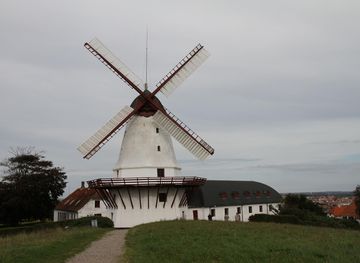
Behind the main building, the open‑air museum extends the story into three dimensions. Here, historic farms and outbuildings from around Southern Jutland have been re‑erected, complete with timber framing, thatched roofs and cobbled yards. Walking between them, you sense how closely everyday life was tied to the land, with barns, byres and living quarters arranged around sheltered courtyards.A particular highlight is the rare post mill, its wooden body pivoting around a central post to face the wind. It speaks of a time when grain, ground by wind power, was the basis of local prosperity. Scattered across the grounds are prehistoric burial mounds and traces of older field systems, tying the open‑air setting directly to the ancient landscapes evoked inside the museum.
Hands-On Encounters and Family-Friendly Details
Throughout the galleries, small interactive elements help younger visitors connect with the past. Children can sift through a sandbox with replica finds, handle simple tools or try traditional tasks such as grinding grain, discovering how heavy a quernstone feels after only a few minutes of work. These activities, while modest, give a tactile sense of the labour that underpinned prehistoric households.Information is primarily in Danish, but object layouts, reconstructions and clear timelines make the exhibitions accessible even if you do not speak the language. Occasional English texts and helpful staff bridge remaining gaps. Combined with the atmospheric open‑air area, the museum offers a compact yet surprisingly rich introduction to Southern Jutland’s deep past in a single, manageable visit.
Evendo Review Centre
 Google
Guest reviews
Best time to go
Quietest: Jan, Feb & Nov · before 8am or from 7pm
Busy times are Evendo estimates for a typical year, to help you plan. Actual crowds vary with events, school holidays and the weather.
Explore Sønderjylland Archaeology Museum on the map
A handpicked selection of must-see spots near Sønderjylland Archaeology Museum, mapped for you.
Get your free copy of our complete guide to Sønderjylland Archaeology Museum, delivered straight to you.
Everything on this page, from opening hours and how to get there to Eve’s tips and the best time to go, in one PDF you can read offline, print or share.
Already have an account? Sign in
Your Sønderjylland Archaeology Museum guide is ready.
We'll send it to · Not you? Sign out

Getting your guide ready…
We are putting together a fresh copy of the Sønderjylland Archaeology Museum guide. This can take up to a minute.
This can take a few moments. If your browser asks, choose Allow so the download can start. You'll find the guide in your Downloads folder.
Nothing happened? Download it again
Sorry, the guide is taking longer than usual. Please try again in a minute, or get it by email instead.
Other nearby places you may find interesting
The closest places of the same kind, if this one is not quite what you had in mind.
-
-
-
-
-


Swipe for more places
More to explore near Sønderjylland Archaeology Museum
-
 Best experiences near Sønderjylland Archaeology Museum
-
 Best hotels near Sønderjylland Archaeology Museum
-
 Best landmarks near Sønderjylland Archaeology Museum
-
 Best attractions near Sønderjylland Archaeology Museum
-
 Best shops near Sønderjylland Archaeology Museum
-
 Best restaurants near Sønderjylland Archaeology Museum
-
 Best bars near Sønderjylland Archaeology Museum


Do you manage this location?
Take control to get all the benefits, like improved information, better appearance, and stronger visibility across AI-powered discovery.
Explore more
Explore more of Sønderjylland
Sønderjylland: A Journey Through Denmark's Scenic Landscapes, Rich History, and Vibrant Traditions.
Explore Sønderjylland
Explore more of Denmark
Discover Denmark: A perfect blend of history, modern design, and the cozy concept of hygge. Explore vibrant cities, serene landscapes, and world-class cuisine.
Explore Denmark
