

Rødvig Beach Travel Guide
Free Guide: A gentle, family-friendly strand on South Zealand’s Stevns coast, where soft sand, shallow Baltic waters and harbour life meet in an easygoing seaside setting.


A brief summary of Rødvig Beach
A gentle, family-friendly strand on South Zealand’s Stevns coast, where soft sand, shallow Baltic waters and harbour life meet in an easygoing seaside setting.
Rødvig Beach is a sheltered sandy stretch on the South Zealand coast, just west of the small fishing harbour of Rødvig. Backed by dunes and low greenery rather than high-rise development, it offers shallow, gently shelving water that is especially suitable for children and cautious swimmers. The beach runs for over a kilometre, with views along the Stevns coastline and easy access to the harbour promenade, cafés and the wider landscape of Stevns Klint, a UNESCO-listed coastal area.
On-site amenities
 Restrooms
 Drink options
 Drinking water
 Food options
 Seating areas
 Sheltered areas
 Trash bins
 Information boards
Opening hours
- Every dayOpen 24 hours
Opening hours as listed on the venue’s Google Business Profile. Hours can change for services and special events, so check with the venue before you go.
- Address
- Østersøvej 5, 4673 Rødvig Stevns
Getting there
Regional train from Copenhagen
Car from Køge and South Zealand
Bicycle from the Stevns area
Discover more about Rødvig Beach
Soft Sands on the Edge of a Fishing Harbour
Rødvig Beach unfolds west of the working harbour in the small coastal town of Rødvig, on the Stevns Peninsula in South Zealand. Here, the sandy shoreline forms a natural continuation of the harbour promenade, shifting quickly from boats and masts to dunes and open sea views. It is a classic Danish strand: low-key, easy to reach, and deeply tied to the rhythm of local life.The sand is fine and pale, broken by patches of dune grass and the occasional piece of driftwood. On calm days the Baltic Sea lies almost glassy, with only ripples lapping the shore. When the wind picks up, small waves roll in, but the beach still feels intimate compared with Denmark’s wilder North Sea coast.
Safe, Shallow Waters for Laid-Back Bathing
One of the defining features of Rødvig Beach is its shallow, gently shelving seabed. The water stays relatively low for quite a distance, making it well suited to families with young children and anyone who prefers to wade slowly into the sea rather than plunge. Local information describes the strand as particularly child-friendly, with soft sand underfoot and generally mild conditions in summer.Simple beach access paths lead through the dunes to the water, and there is space to spread out a towel, set up a windbreak, or play casual beach games. The atmosphere leans more towards slow afternoons and sandcastle building than high-energy beach parties. On cooler days, the shore remains inviting for bracing walks in the sea breeze.
Between Stevns Klint and the Open Baltic
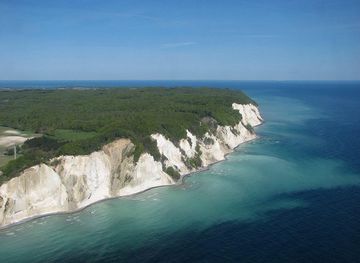
Although the main line of the UNESCO-listed Stevns Klint rises a few kilometres to the north, Rødvig still feels very much part of this special coastline. Looking along the shore, you sense the transition from softer, sandy stretches to the chalk cliffs that make the region so geologically important. The Baltic horizon is wide and open, with changing light that gives the beach a different character from morning to late evening.Rødvig itself grew as a harbour town serving the inland countryside, and the coexistence of fishing boats, marina life and beachgoers gives the waterfront a distinct identity. After time on the sand, it is easy to wander back towards the pier and watch trawlers come and go, or simply sit and listen to halyards tapping on masts.
Everyday Amenities and Simple Comforts
Facilities around Rødvig Beach are modest but practical. Being adjacent to the harbour and town means you do not feel isolated: restrooms, places to buy drinks or an ice cream, and spots to sit in the shade are all within a short stroll. Information boards in the wider area explain more about the Stevns coastline, its geology and cultural history, helping to place the beach in a broader landscape.The setting is informal rather than manicured. Expect grassy patches, simple paths and a natural dune edge instead of a heavily built-up promenade. This relaxed approach fits the character of the region, where agricultural fields, small villages and coastal nature meet the sea.
A Gentle Base for Exploring Stevns
For travellers, Rødvig Beach works both as a destination in itself and as a starting point for exploring Stevns Klint and the rest of South Zealand. Many visitors combine a swim or a seaside picnic with walks along the coast or time in the harbour. The beach rewards unhurried visits: lingering to watch the changing sky, feeling the cooling wind on a hot day, or returning in the evening when the light softens over the Baltic.Whether you use it as a family-friendly bathing spot, a quiet place to breathe before heading to the cliffs, or simply a patch of sand to watch the waves, Rødvig Beach encapsulates the understated charm of Denmark’s eastern shores.
Evendo Review Centre
 Google
Guest reviews
Best time to go
Quietest: Jan, Feb & Dec · before 6am or from 10pm
Busy times are Evendo estimates for a typical year, to help you plan. Actual crowds vary with events, school holidays and the weather.
Explore Rødvig Beach on the map
A handpicked selection of must-see spots near Rødvig Beach, mapped for you.
Get your free copy of our complete guide to Rødvig Beach, delivered straight to you.
Everything on this page, from opening hours and how to get there to Eve’s tips and the best time to go, in one PDF you can read offline, print or share.
Already have an account? Sign in
Your Rødvig Beach guide is ready.
We'll send it to · Not you? Sign out

Getting your guide ready…
We are putting together a fresh copy of the Rødvig Beach guide. This can take up to a minute.
This can take a few moments. If your browser asks, choose Allow so the download can start. You'll find the guide in your Downloads folder.
Nothing happened? Download it again
Sorry, the guide is taking longer than usual. Please try again in a minute, or get it by email instead.
Other nearby places you may find interesting
The closest places of the same kind, if this one is not quite what you had in mind.
-
Stevns Klint UNESCO World Heritage Stand on the edge of a white Danish cliff where a thin dark band in the rock marks the asteroid impact that ended the dinosaurs and reshaped life on Earth.
-
Roneklint Fyr Small historic lighthouse at the mouth of Præstø Fjord, with shallow child‑friendly beaches, rich snorkelling waters and tranquil coastal scenery.
-
Stevns Lighthouse Historic lighthouse on the edge of Stevns Klint, blending maritime heritage with wide Baltic Sea views and windswept chalk‑cliff scenery near Store Heddinge.
-
Gjorslev One of Denmark’s oldest inhabited medieval castles, Gjorslev combines Gothic stonework, moats and beech forest walks in a quietly atmospheric manor landscape.
-
Kalvehave Labyrintpark A 20,000 m² outdoor maze park of puzzles, illusions and giant games, turning a day in rural South Zealand into relaxed, brain-teasing fun for all ages.
Swipe for more places
More to explore near Rødvig Beach

 Best experiences near Rødvig Beach
 Best hotels near Rødvig Beach
 Best landmarks near Rødvig Beach
 Best attractions near Rødvig Beach
 Best shops near Rødvig Beach
 Best restaurants near Rødvig Beach
 Best bars near Rødvig Beach
Do you manage this location?
Take control to get all the benefits, like improved information, better appearance, and stronger visibility across AI-powered discovery.
Explore more
Explore more of South Zealand
Discover South Zealand, where dramatic cliffs, historic castles, and charming coastal towns create the perfect Danish escape.
Explore South Zealand
Explore more of Denmark
Discover Denmark: A perfect blend of history, modern design, and the cozy concept of hygge. Explore vibrant cities, serene landscapes, and world-class cuisine.
Explore Denmark
